For the table
La Mirande
Avignon · Provence
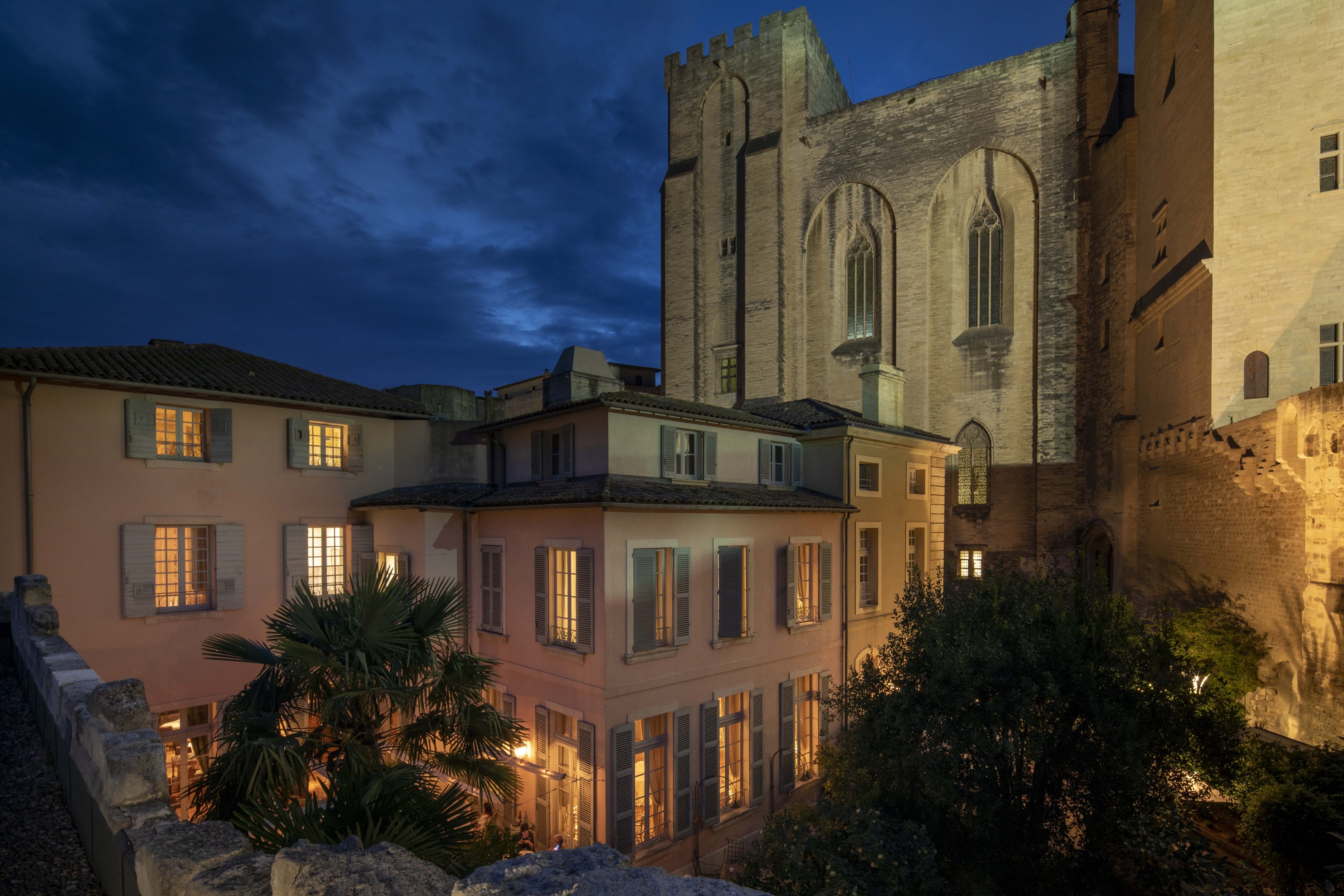
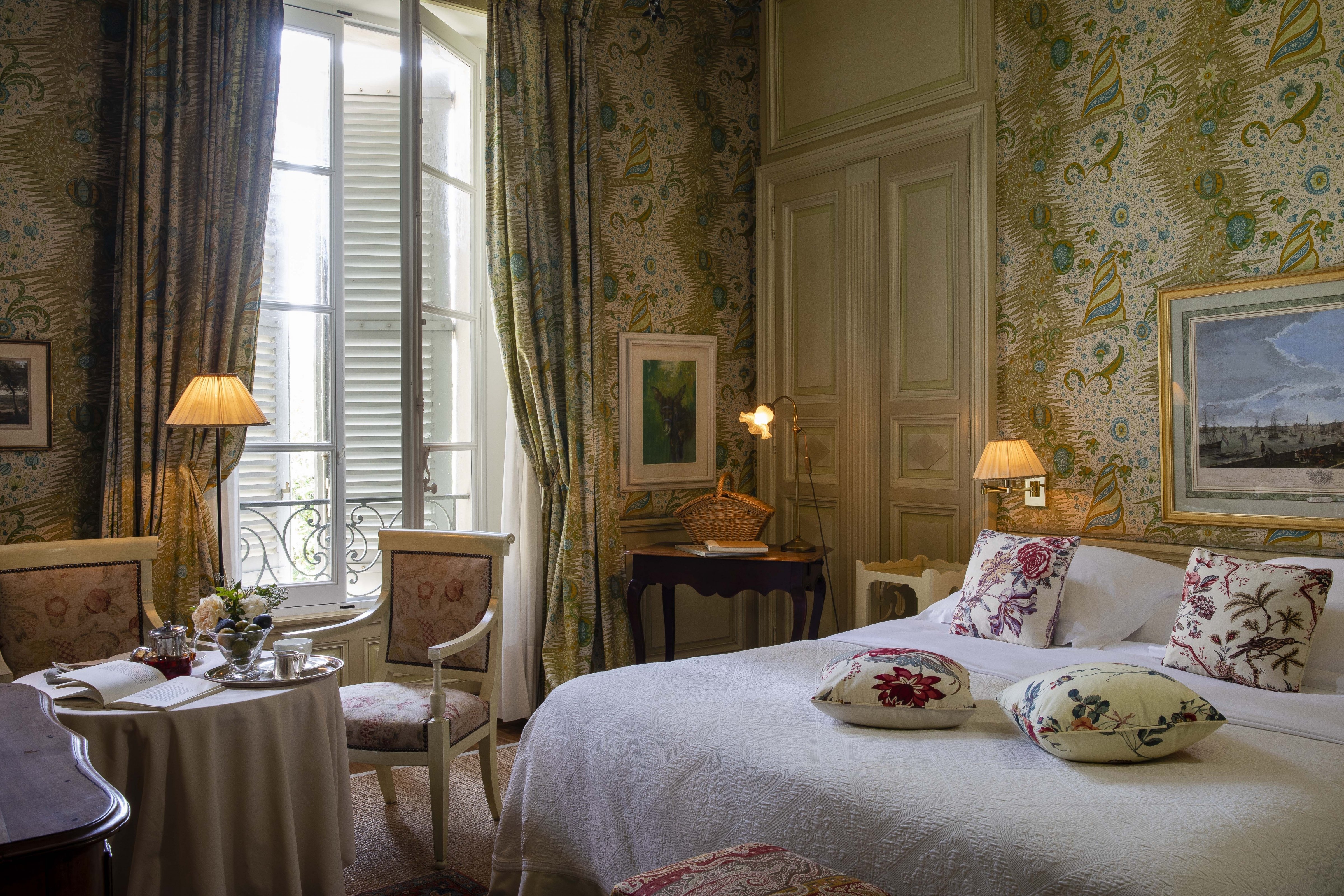
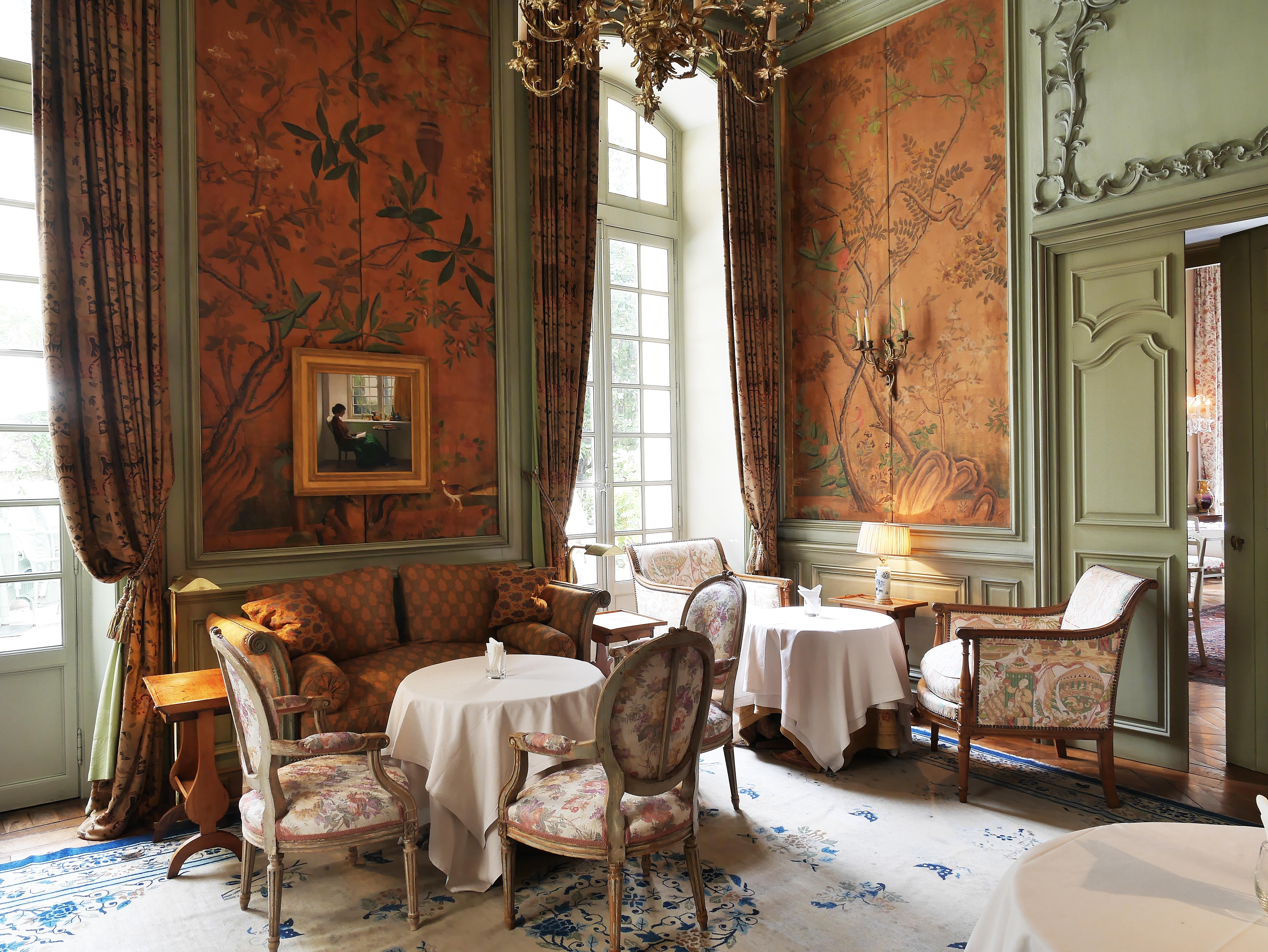
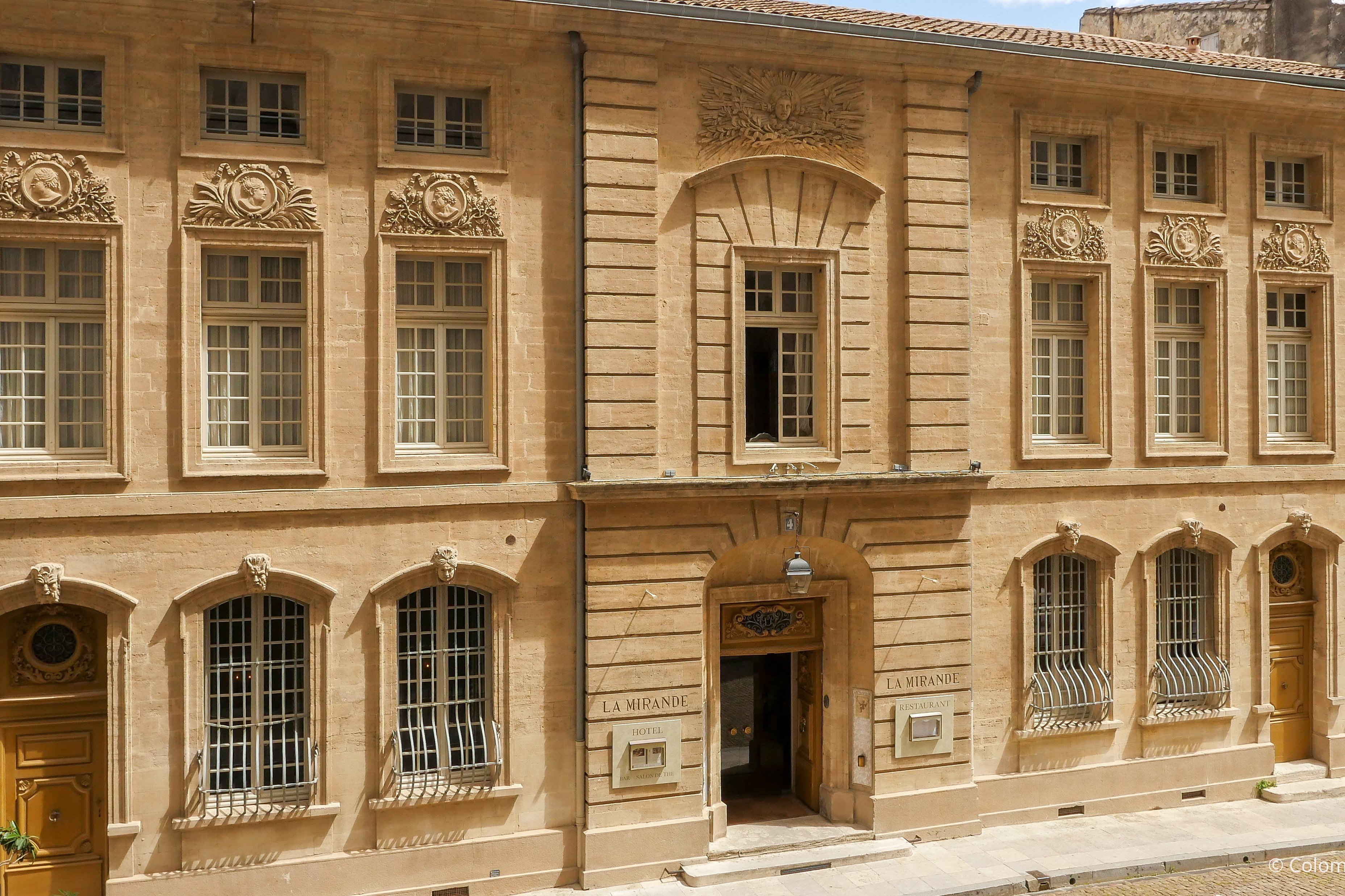
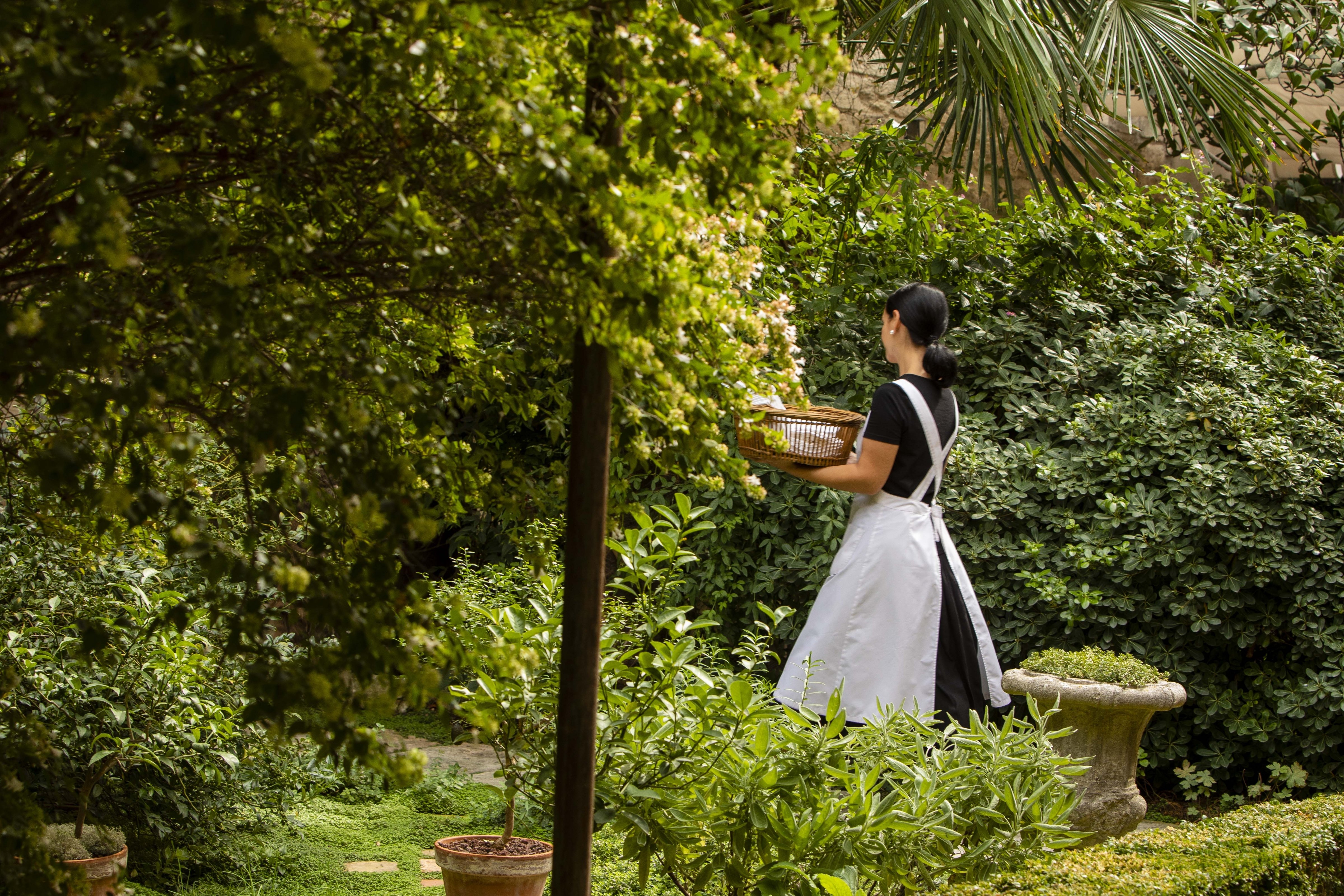
The house stands directly beneath the popes' palace, close enough that the floodlit ramparts lean over the garden after dark. Inside, nothing declares itself. There are painted panels and faded toile, worn rugs and good furniture, a salon you might find in a family that had held on to its eighteenth-century skin. The twenty-six rooms are each their own, some giving onto the walled garden, others onto the old lanes, and the restoration is the rare sort that resisted the urge to modernise. You stay in a period, not in a brand.
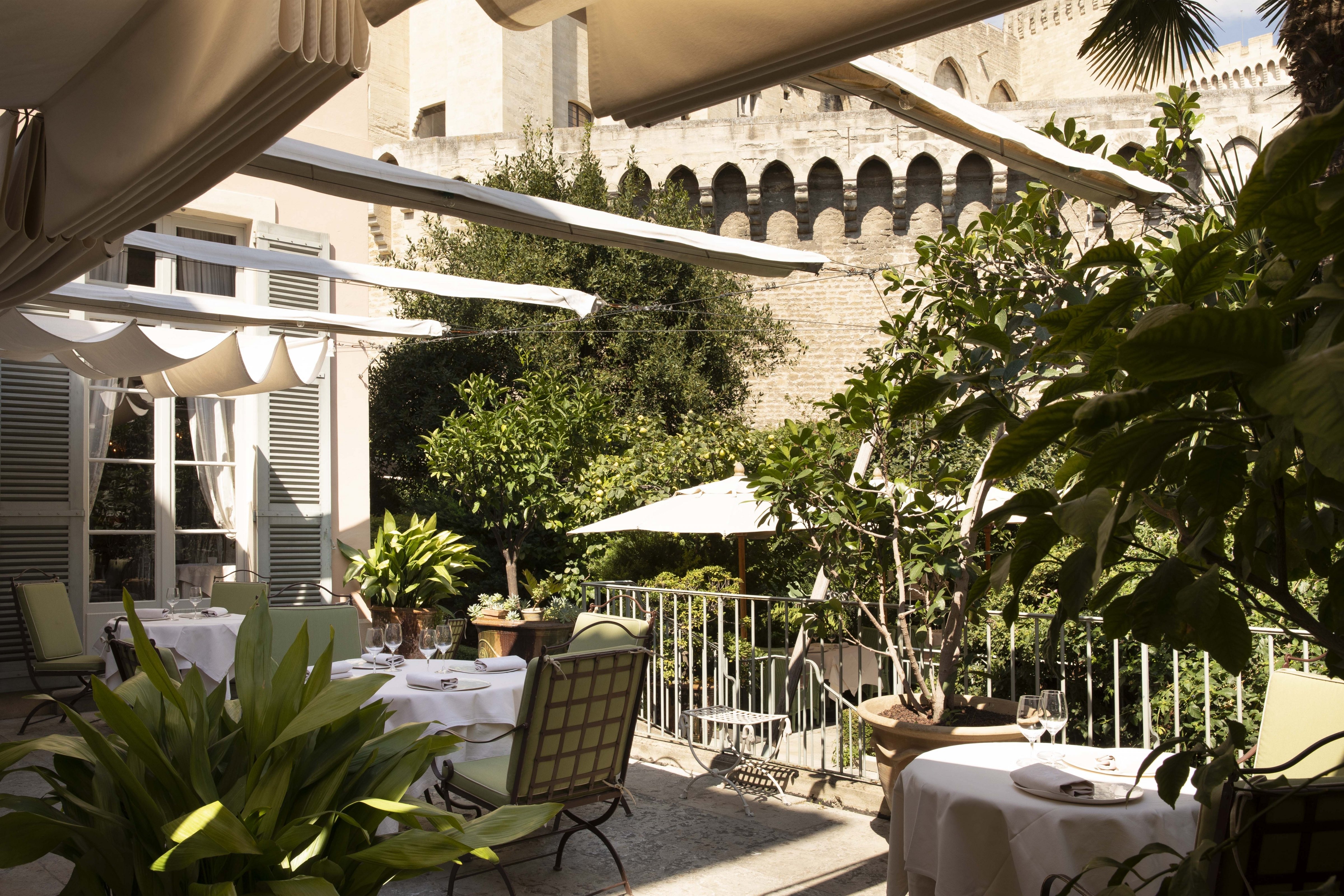
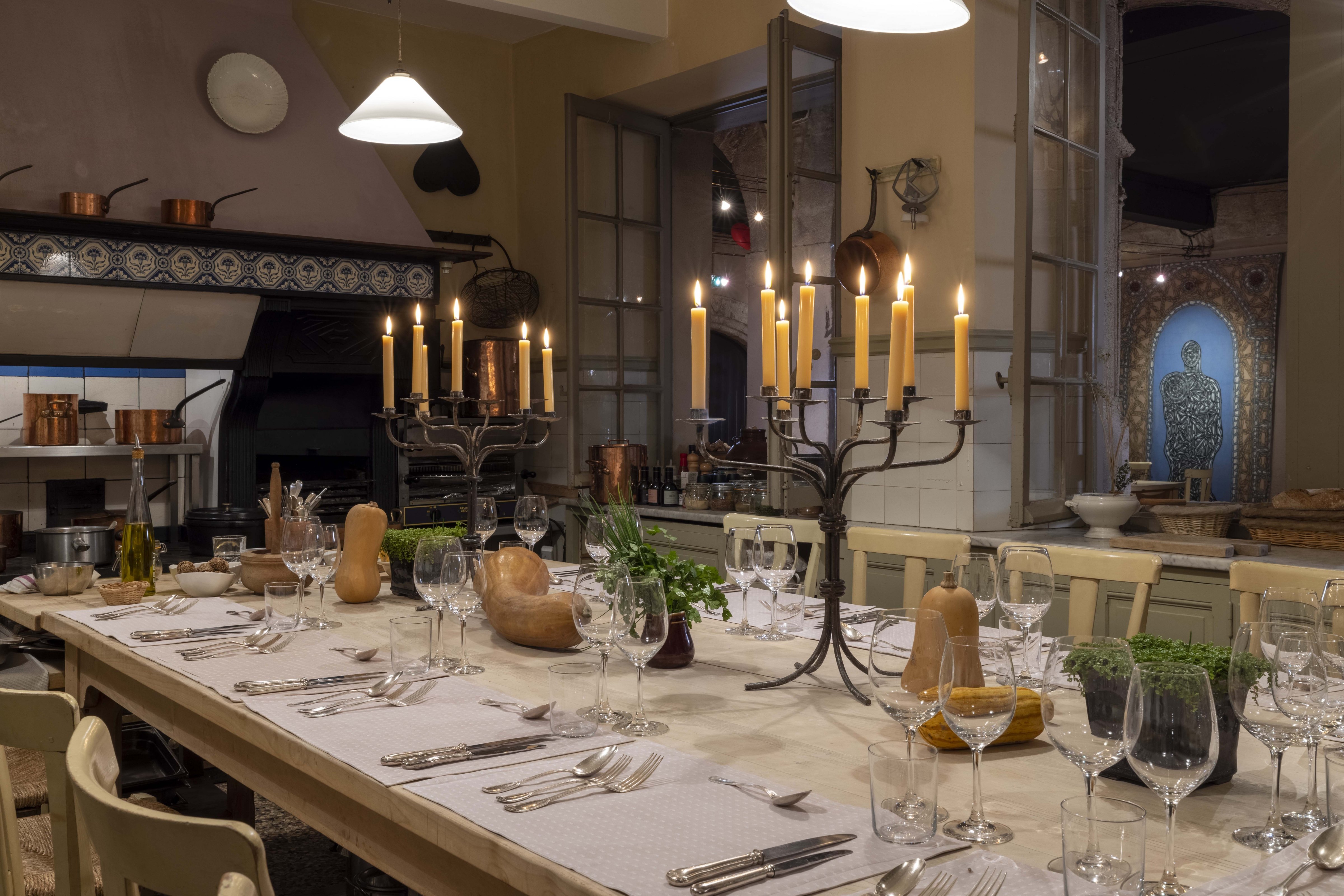
This is a house that takes its kitchen seriously. Le Restaurant holds a Michelin star, now under the Italian chef Michele Donvito, Provence read in a precise modern hand, taken in the courtyard garden when the weather allows. Le Bistrot keeps a simpler regional register. The one to plan around is La Table Haute, a single long table set in the original kitchen, copper pans on the wall and candles down the middle, where a few guests sit to a set menu cooked at the old range. There is a cooking school as well, which tells you where the priorities lie.
Avignon is a city most travellers pass through on the way to the Luberon, and that is their loss. From the door you reach the Palais des Papes in two minutes and the Rhône in ten, with Châteauneuf-du-Pape and the wider Vaucluse within easy reach. What earns its place here is how complete the thing is: a true historic house, run with warmth rather than ceremony, and a table worth the journey on its own. It is small, central and much in demand, so book well ahead and ask for a room on the garden side.
One selection at a time, in your inbox. Subscribe →
A former cardinal's palace at the foot of the Palais des Papes, central Avignon, Provence.
Five-star; 26 rooms and suites; an 18th-century town house kept as a private home.
Le Restaurant (one Michelin star, chef Michele Donvito) · Le Bistrot Pamard · La Table Haute · Le Mirage · Bar & Tea Room.
Palais des Papes, Pont Saint-Bénézet and the Rhône; the vineyards of Châteauneuf-du-Pape.
Free, one to one, on WhatsApp. Tell me your dates and I will point you to the right places.
Plan with me on WhatsApp