Ground Truth
Spend a fortnight anywhere between Orange and the sea and you stop asking whether the mistral will arrive. You ask which morning. It is a cold, dry wind out of the north and northwest, and it comes down the Rhone valley to the Gulf of Lion with a steadiness that reads less like weather than like temperament.
The cause is geometry. High pressure builds over France to the northwest while a low sits off the Ligurian coast, and the air dragged between them looks for the easiest way south. It finds the Rhone corridor, the gap between the Massif Central on one side and the Alps on the other. Funnelled through that channel the wind picks up speed. It averages around fifty kilometres an hour through the day, can pass ninety in the valley, drops away at night, and in winter it holds for the better part of a fortnight. Locals reckon it blows as often as a hundred days a year.
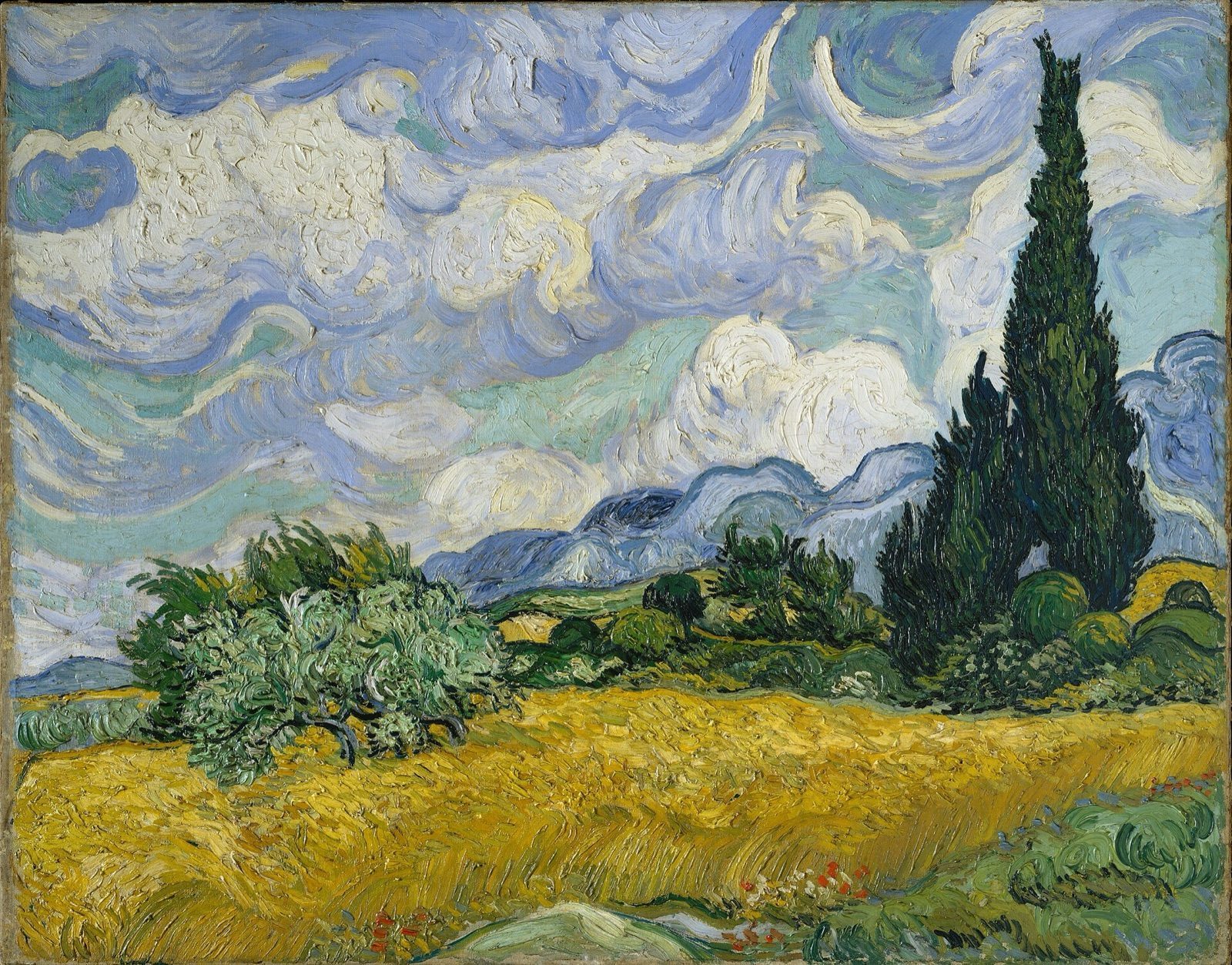
What it gives back is light. The mistral clears the sky of haze and cloud and hands Provence the hard, washed brightness the painters came south for. Van Gogh worked straight through it at Arles, cursing the way it shook the easel and pinning his canvases down to keep going. The same wind dries the vines after rain and holds back the fungal rot that warmer, stiller country lives with, which is why the growers forgive a thing that can flatten young wheat in an afternoon.
The mistral is not a spell of bad weather. It is the climate of Provence, turning up in person.
You can read it in how the place is built. The old farmhouses, the mas, present a near-blind wall to the north, the openings and the door set on the sheltered side. Cypresses run in tight files along the field edges, planted as a screen rather than for the look of them, and leaning for good. In the towns the bell towers are open cages of wrought iron, made so the gale blows straight through rather than leaning on the stone until it goes.
It gets into the people too, or so they will tell you. There is a durable local habit of blaming the mistral for frayed nerves and ragged sleep, a wind you can hold responsible for the mood you would rather not own. Whether or not it touches a single temper, the fact that the story has lasted tells you how far into the place the wind has worked.
So plan around it rather than against it. Take the table on the leeward side of the square, keep a layer in the bag even in July, and save the long lunch for the hour it eases. Provence in the mistral is not the stillness of the postcard. It is brighter and harder than that, and more fully itself, a country that has spent centuries learning how to lean.
One selection at a time, in your inbox. Subscribe →