For the place
Dar Ben Gacem
Medina of Tunis · Tunisia
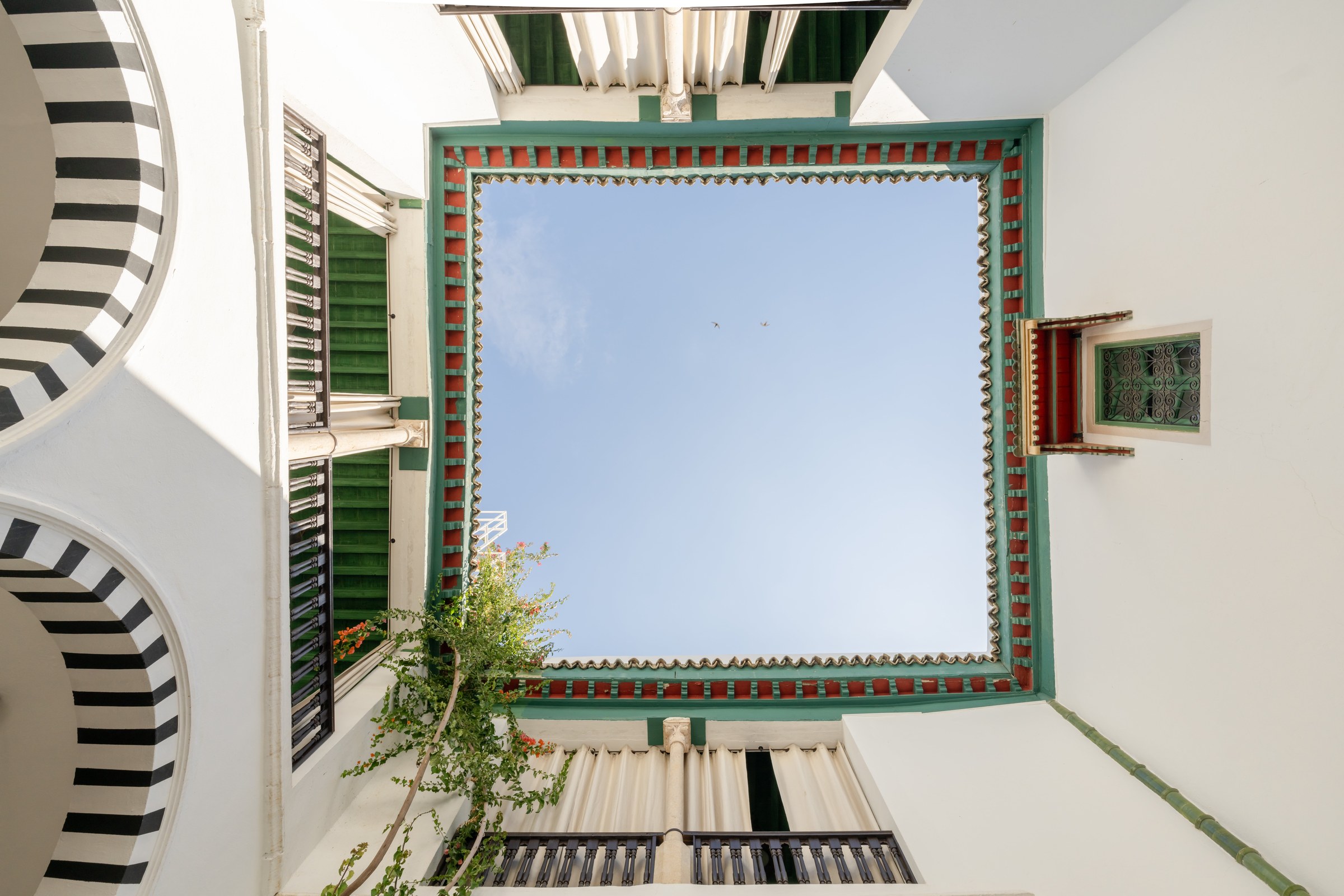
A dar is a house turned inward, its life facing a courtyard rather than the street, and the medina of Tunis is full of them behind blank walls and studded doors. Most have been left to crumble or carved up into flats. Two of them, a few paces apart on the Rue du Pasha, have been brought back instead.
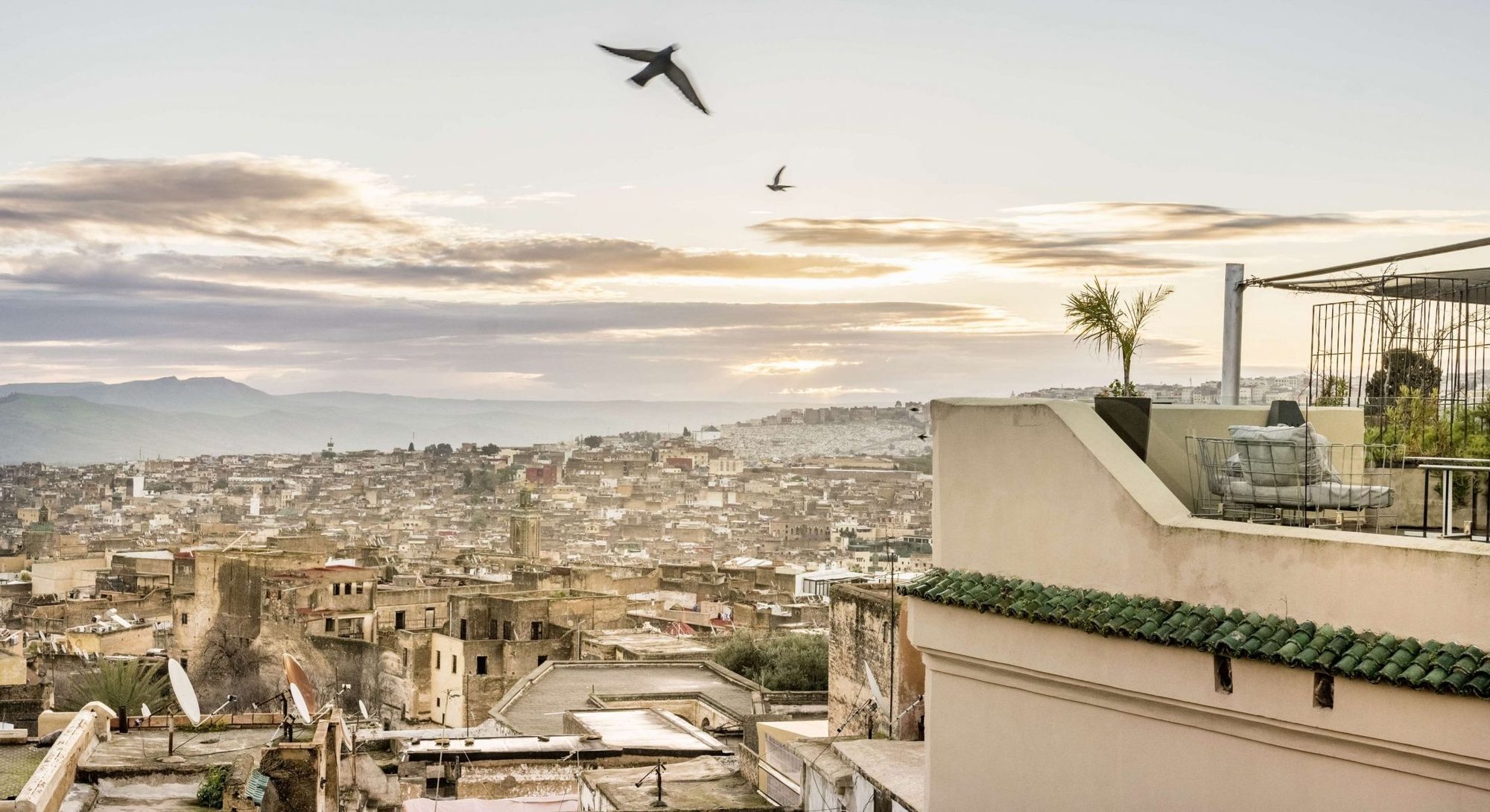
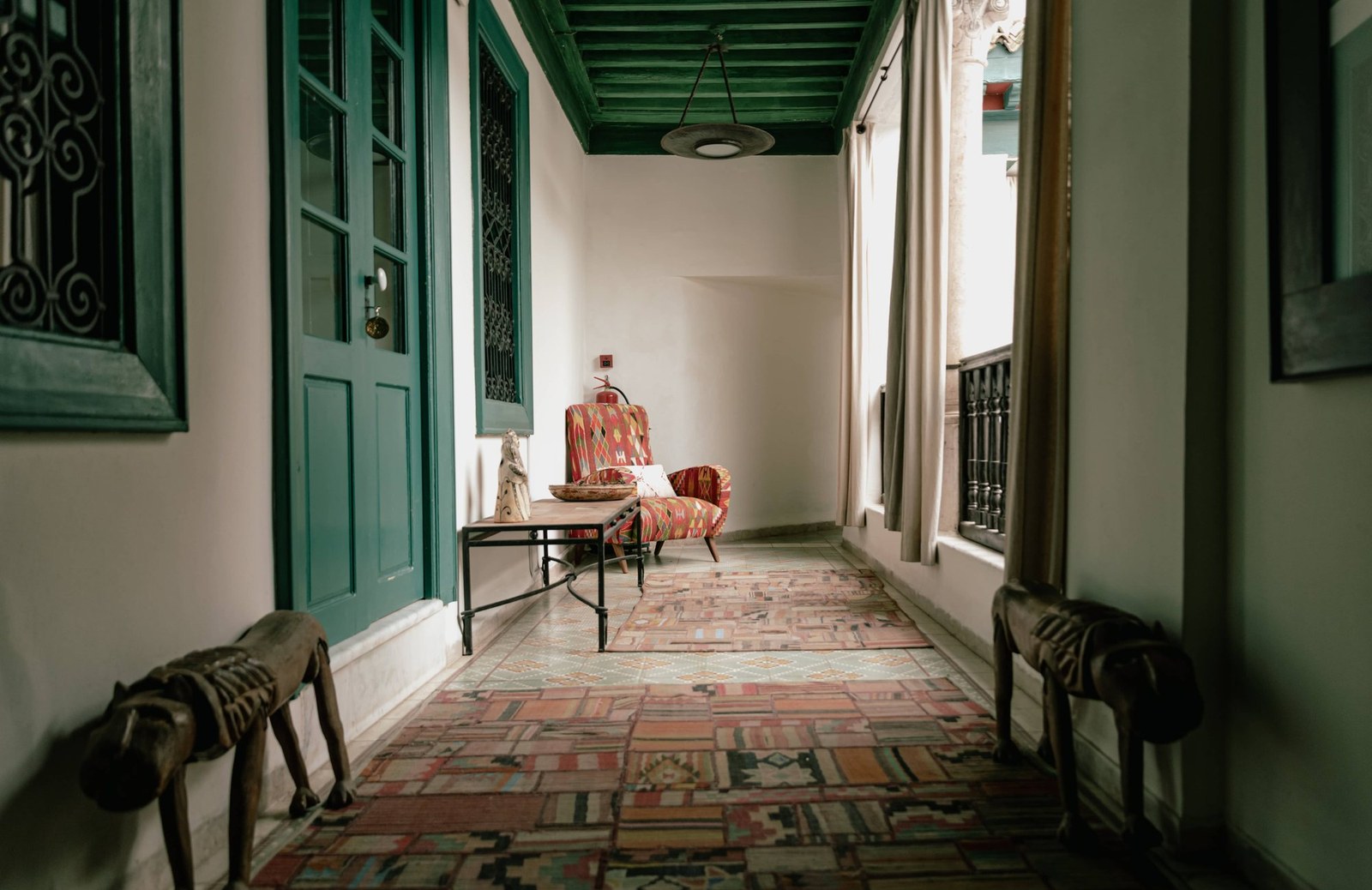
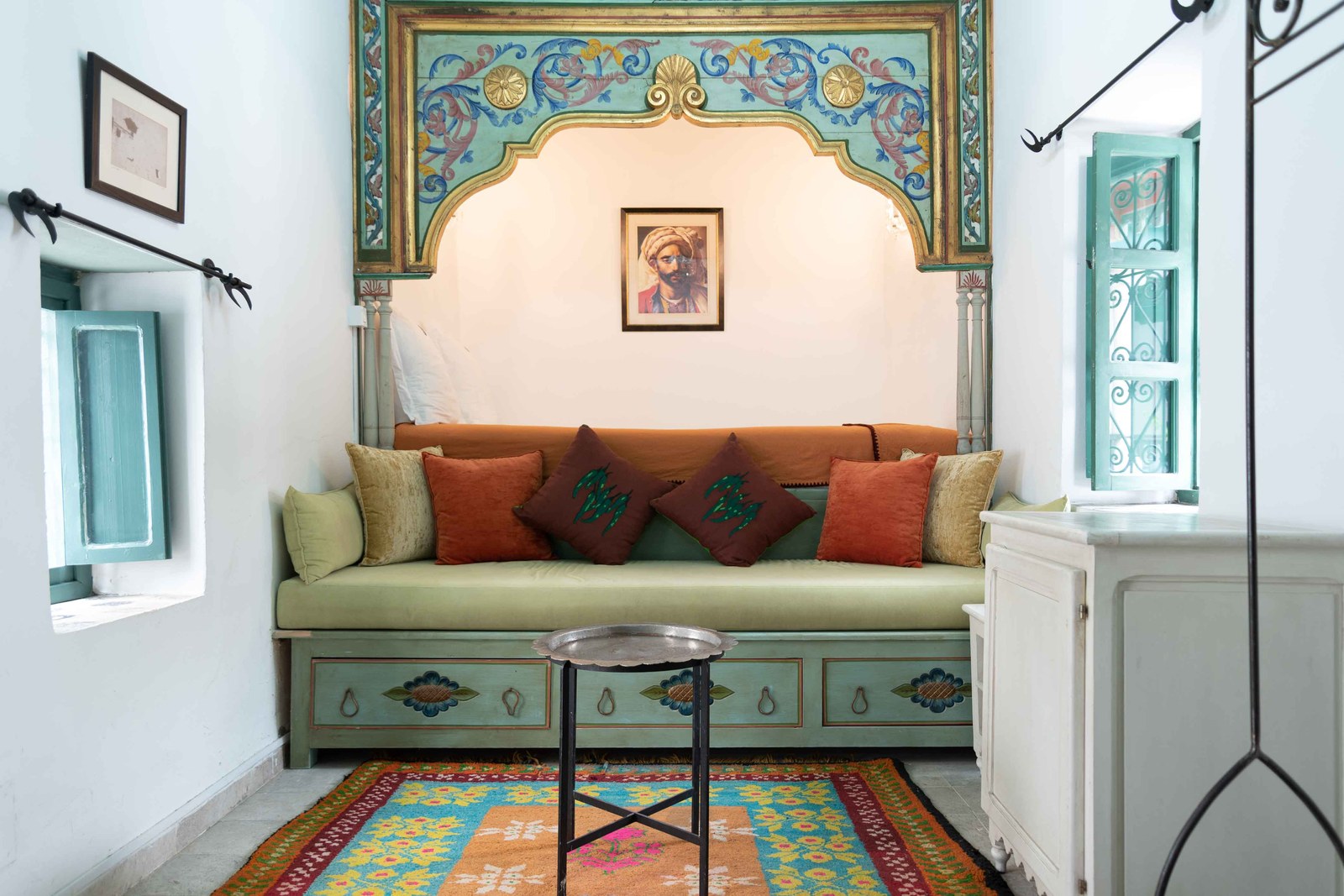
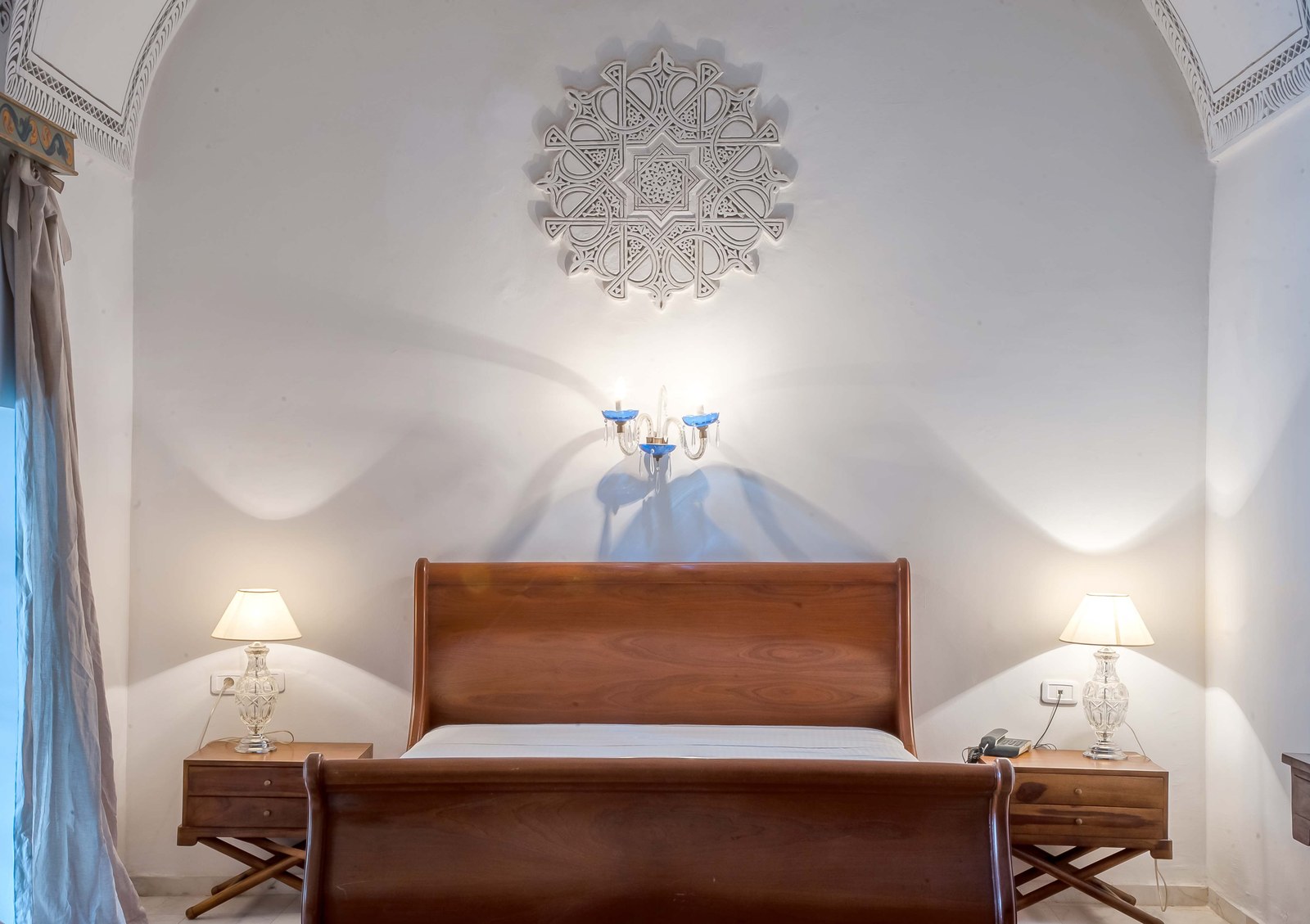
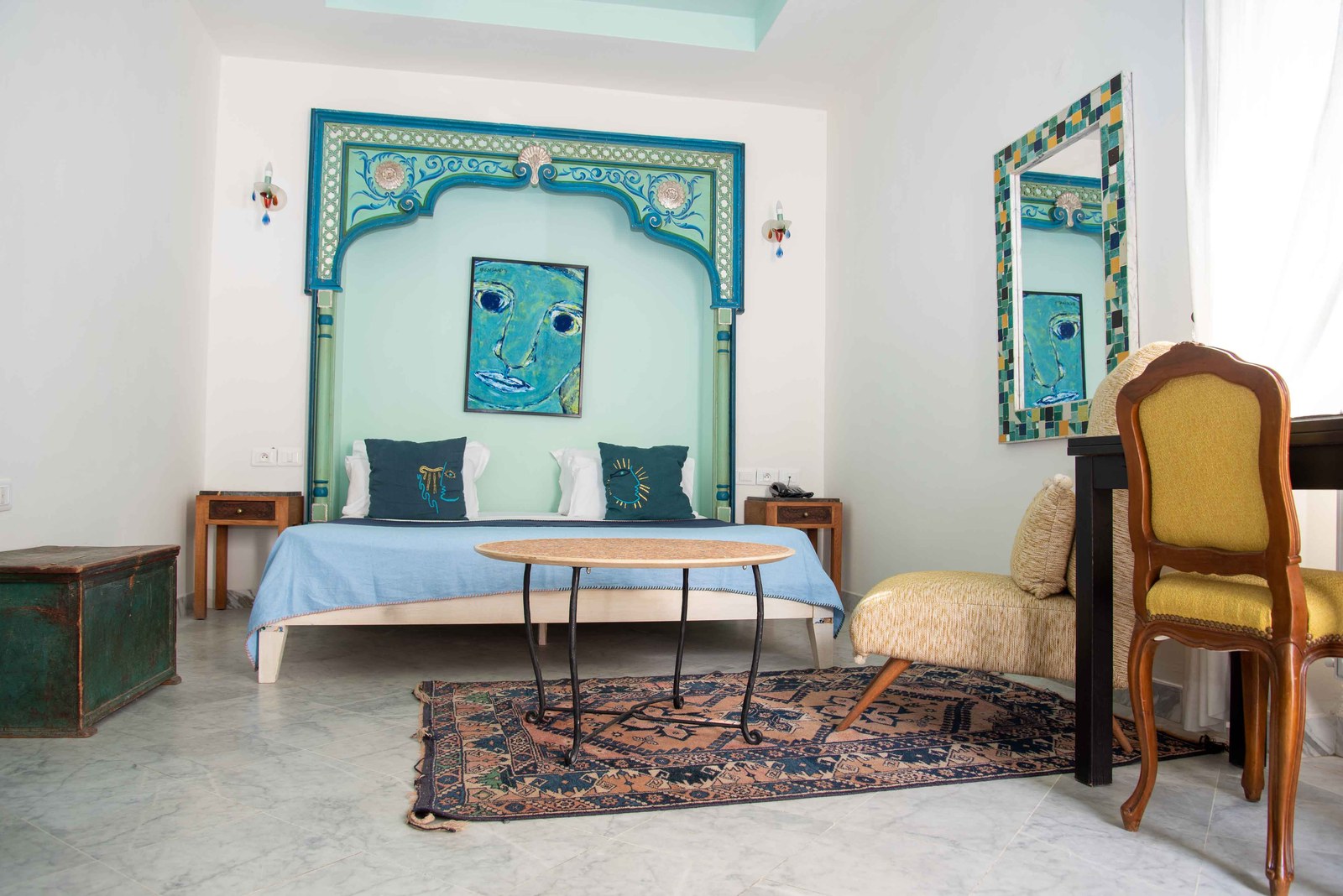
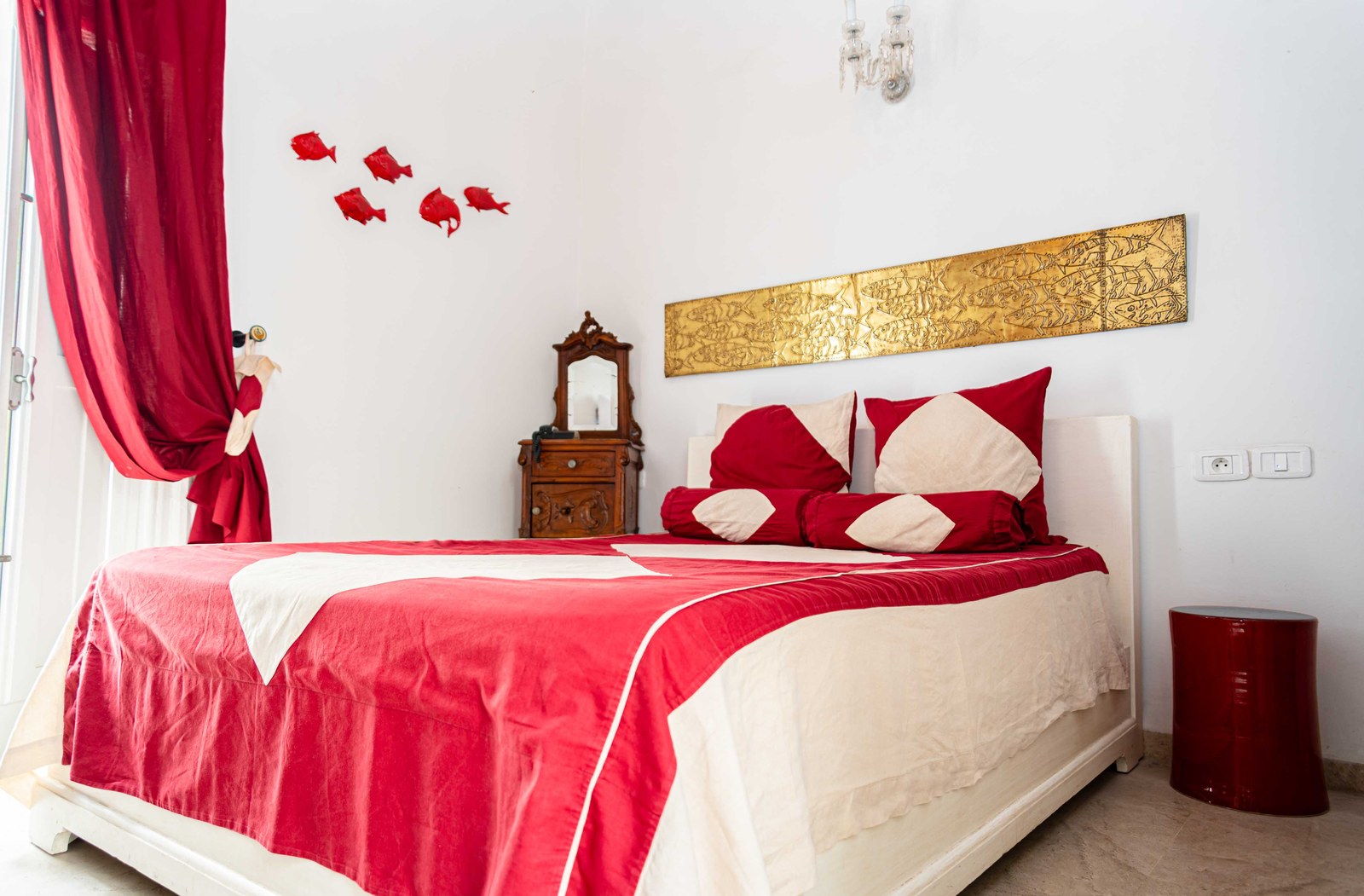
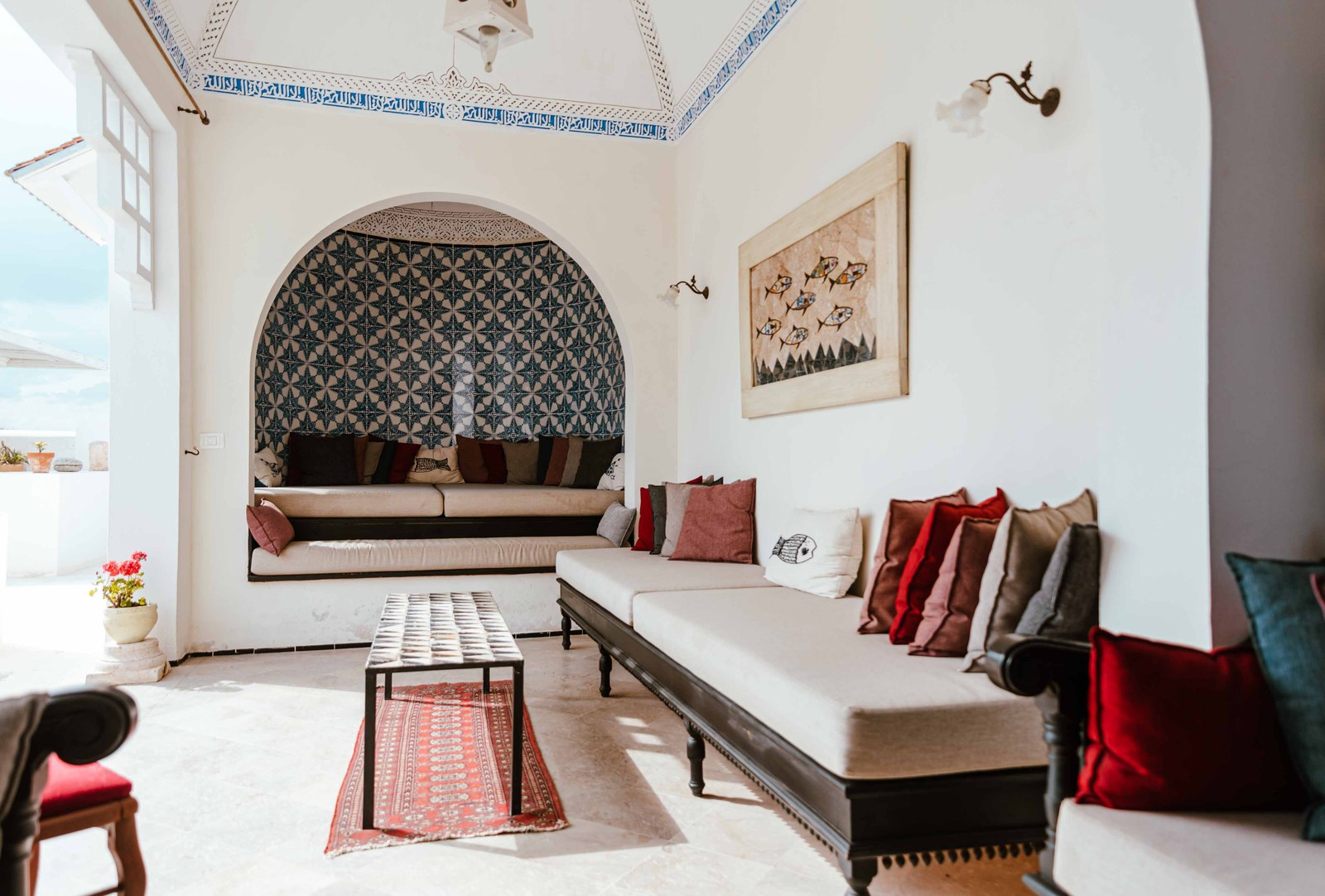
Dar Pasha and Dar Kahia each fold around their own tiled patio, the rooms opening off galleries under horseshoe arches. There are fifteen in all and no two are alike: one carries a painted wooden ceiling, another a canopy bed hung in red, a third a whitewashed vault with a carved plaster medallion set into it. The tilework is the city's own Qallaline craft, blue and green and ochre, run up the walls and around the doorframes and repeated, in a quieter key, in every room. Up on the roof the quarter opens out, a low sea of terraces and washing lines and the odd minaret, and the call to prayer crosses it five times a day. This is a working neighbourhood, not a stage set, and the house sits down in the middle of it rather than above it.
There is no restaurant here in the usual sense. The day begins with a Tunisian breakfast on the roof or in the courtyard, bread and olive oil and preserves, harissa if you want it, coffee scented with orange blossom. Past that the house will cook on request and, better still, walk you out into the medina to eat, to the bakeries and the brik stalls and the lablabi counters it has known for years. Come hungry and let it lead.
Dar Ben Gacem is the work of Leila Ben Gacem, who restored the two houses and runs them as a social enterprise, turning the takings back into the fabric of the medina and the crafts that made it. In the basement she has opened a small museum, Dehliz El Zliz, more than two hundred Qallaline tiles gathered over decades and laid out to tell the story of the city's potters. That is the reason to come. Not a spa or a pool, of which there are none, but a night spent inside the old city with people trying to keep it standing. Fifteen rooms and a good many stairs mean it will not suit everyone, and the medina around it is loud and lived-in rather than hushed. For anyone who wants Tunis from the inside, there is nowhere we would rather send you. The other house we keep in this medina, Dar El Jeld, is grander and has the kitchen; this one has the soul.
One selection at a time, in your inbox. Subscribe →
On Rue du Pasha in the UNESCO-listed medina of Tunis, Tunisia.
Two restored dars, Dar Pasha and Dar Kahia; fifteen individually designed rooms; a social enterprise.
A Tunisian breakfast on the roof; home cooking and medina food walks arranged rather than a restaurant.
The Zitouna mosque and the covered souks; the old-city gates; Carthage and Sidi Bou Said a short drive out.
Free, one to one, on WhatsApp. Tell me your dates and I will point you to the right places.
Plan with me on WhatsApp