Turned inward, by design
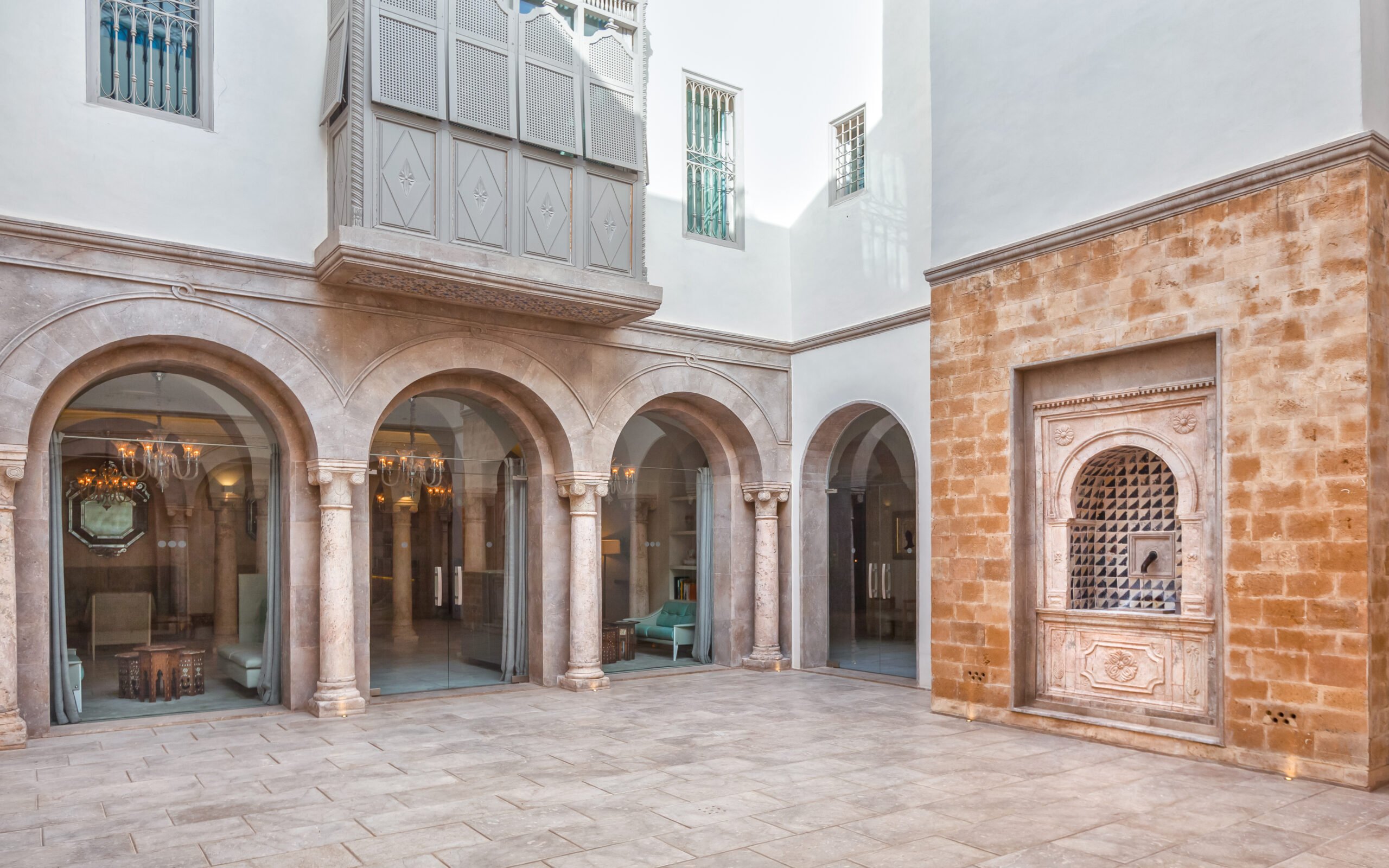
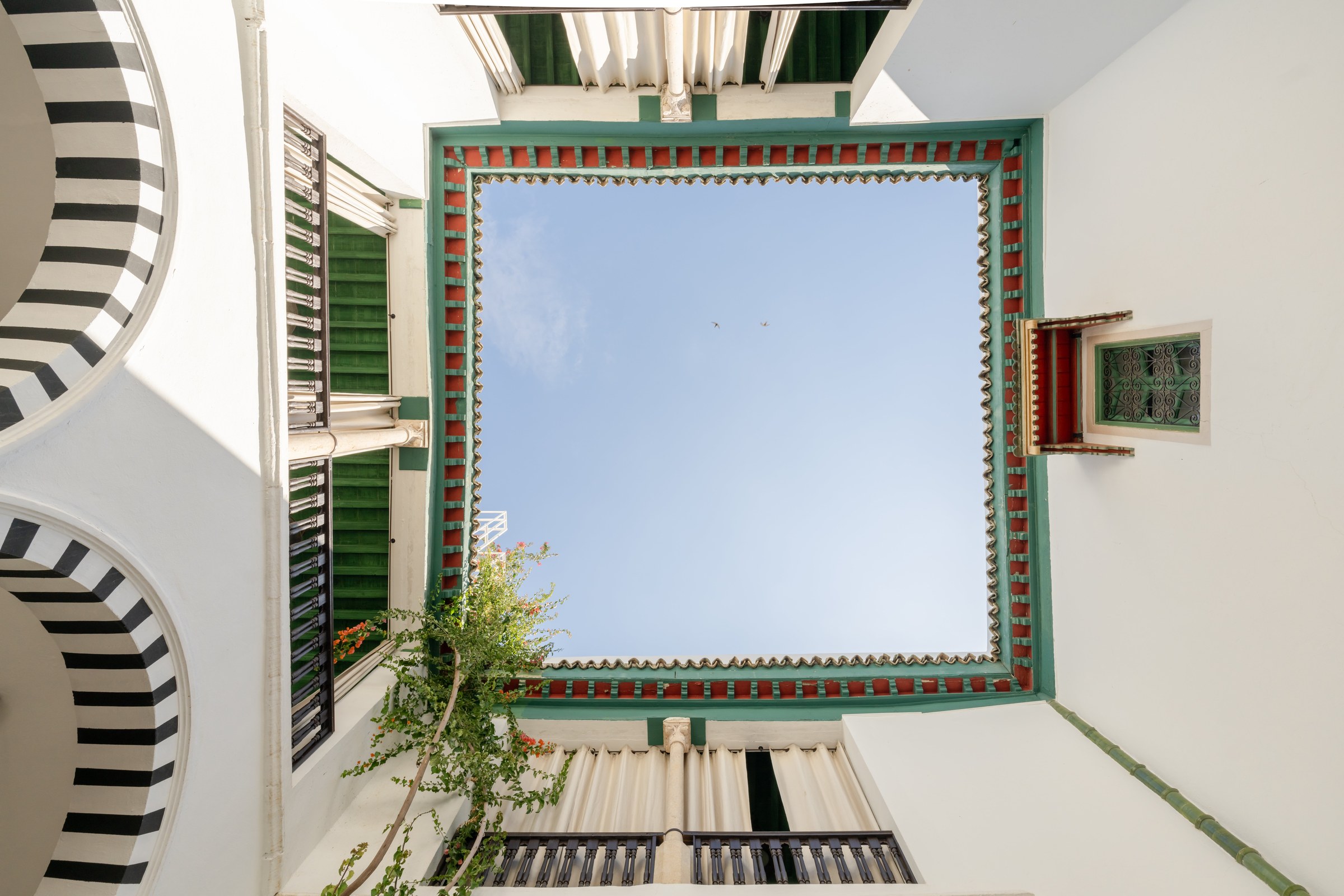
The two houses are Dar Pasha and Dar Kahia, both raised in the seventeenth century and both folded around their own tiled patio. You come in off a narrow lane through a low door, and the city noise drops away in a step. The rooms open off galleries under horseshoe arches, one floor stacked on the next, and the daylight arrives from above, funnelled down the shaft of the courtyard rather than let in through the walls. This is the old logic of the medina, a house built to face itself.
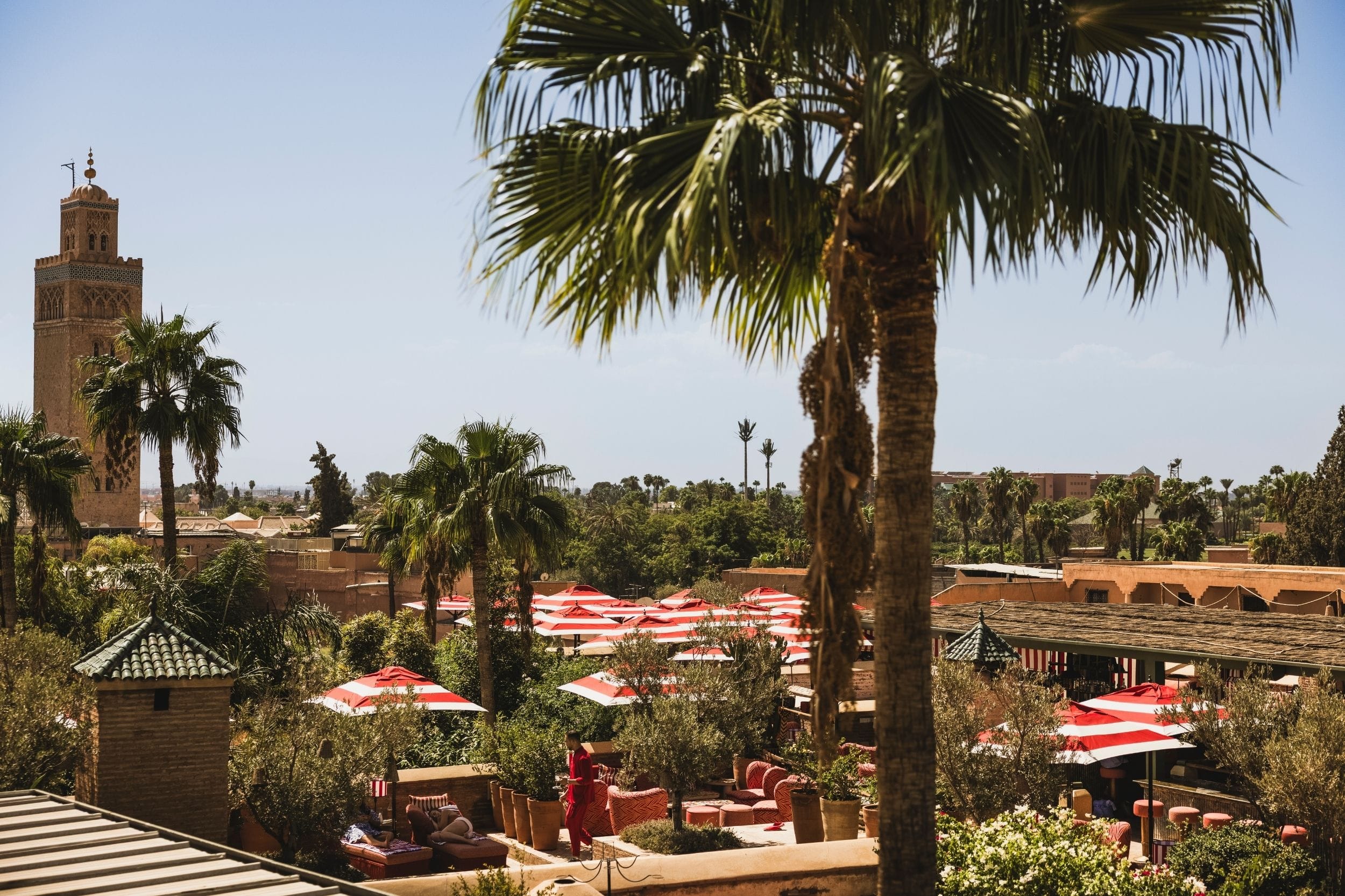
Underfoot and up the walls runs the city's own tilework, the blue and green and ochre of the Qallaline kilns, laid around the doorframes and repeated in a quieter key in every room. Up on the roof the quarter opens out, a low grey sea of terraces and washing lines with the odd minaret standing out of it, and the call to prayer crosses the whole thing five times a day. Nobody has tried to hush the neighbourhood into a spa. The house sits down in the middle of a working quarter rather than above it, and it keeps the street's hours.
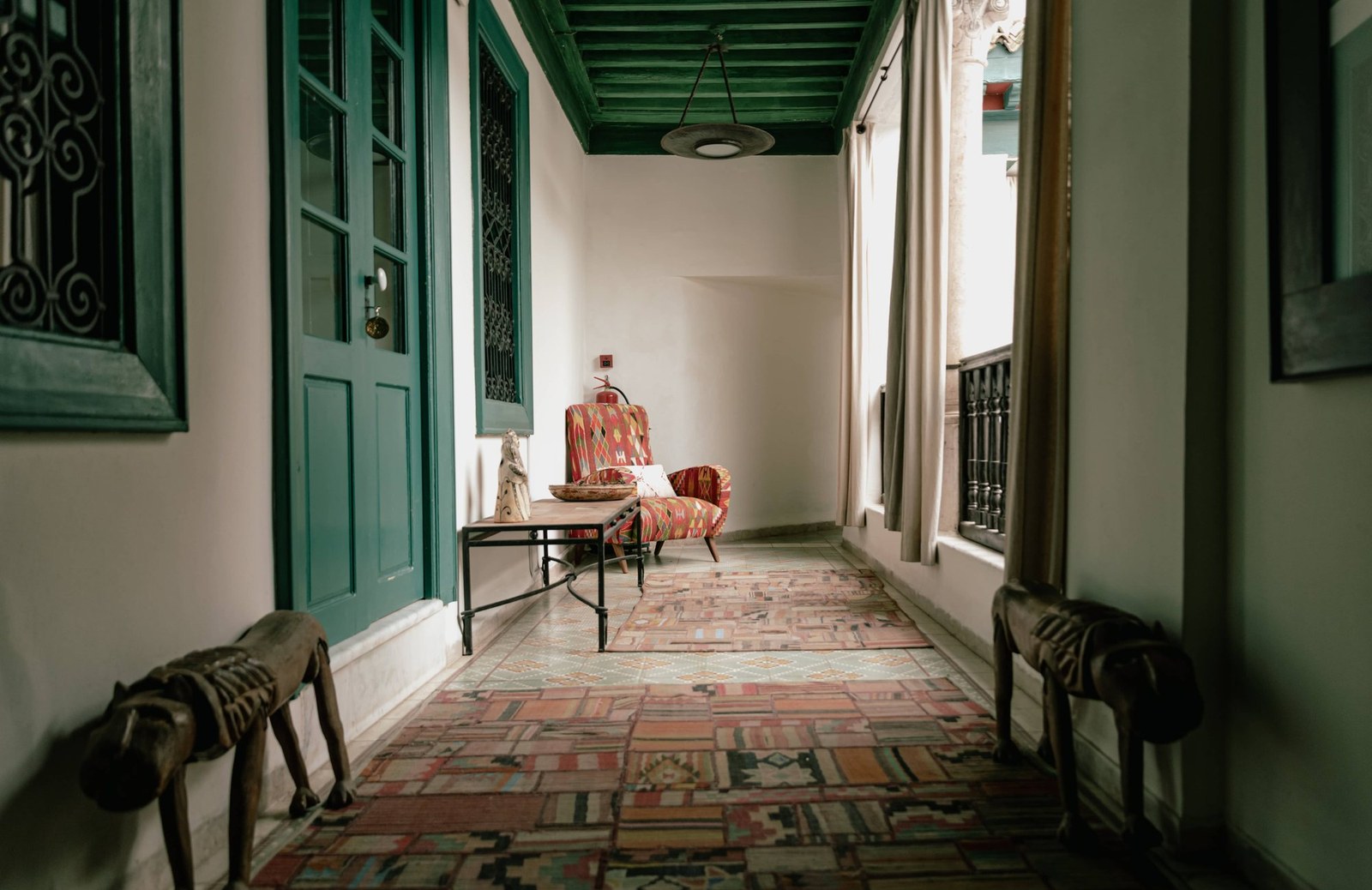
A dar keeps its best face for the courtyard, and shows the street a wall.
Fifteen, and no two alike
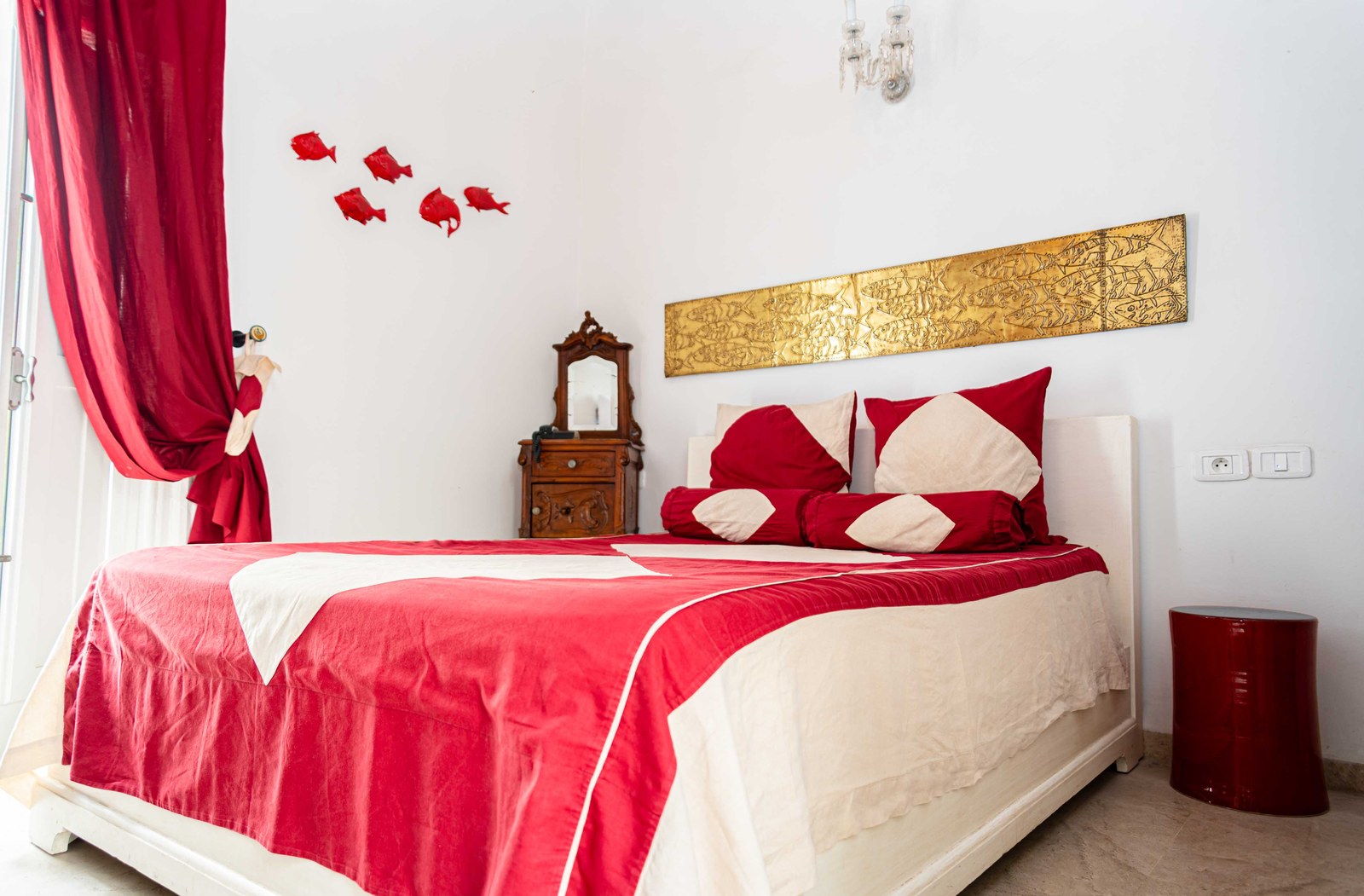
There are fifteen rooms across the two houses and none of them repeats. One carries a painted wooden ceiling, another a whitewashed vault with a carved plaster medallion set into the crown of it, a third a canopy bed hung in red against bare lime plaster. The restoration kept what it found. Carved doors, hand-painted arches, the intricate gypsum work that Tunisian craftsmen call naqch hadida, the ceramic panels run up the walls, all of it left where centuries of the house had put it and mended rather than replaced.
That is a harder thing to pull off than it sounds. A room shaped by hand and inheritance does not sit flush, and the light falls at odd angles across a plaster boss or a tiled niche. The furniture is a magpie mix, old chests and kilim seats and the occasional Louis chair that drifted in from somewhere and stayed. It reads as a family house that has been lived in for a very long time, which is more or less the truth of it, and it is worth more than any matched suite of five identical rooms would be.
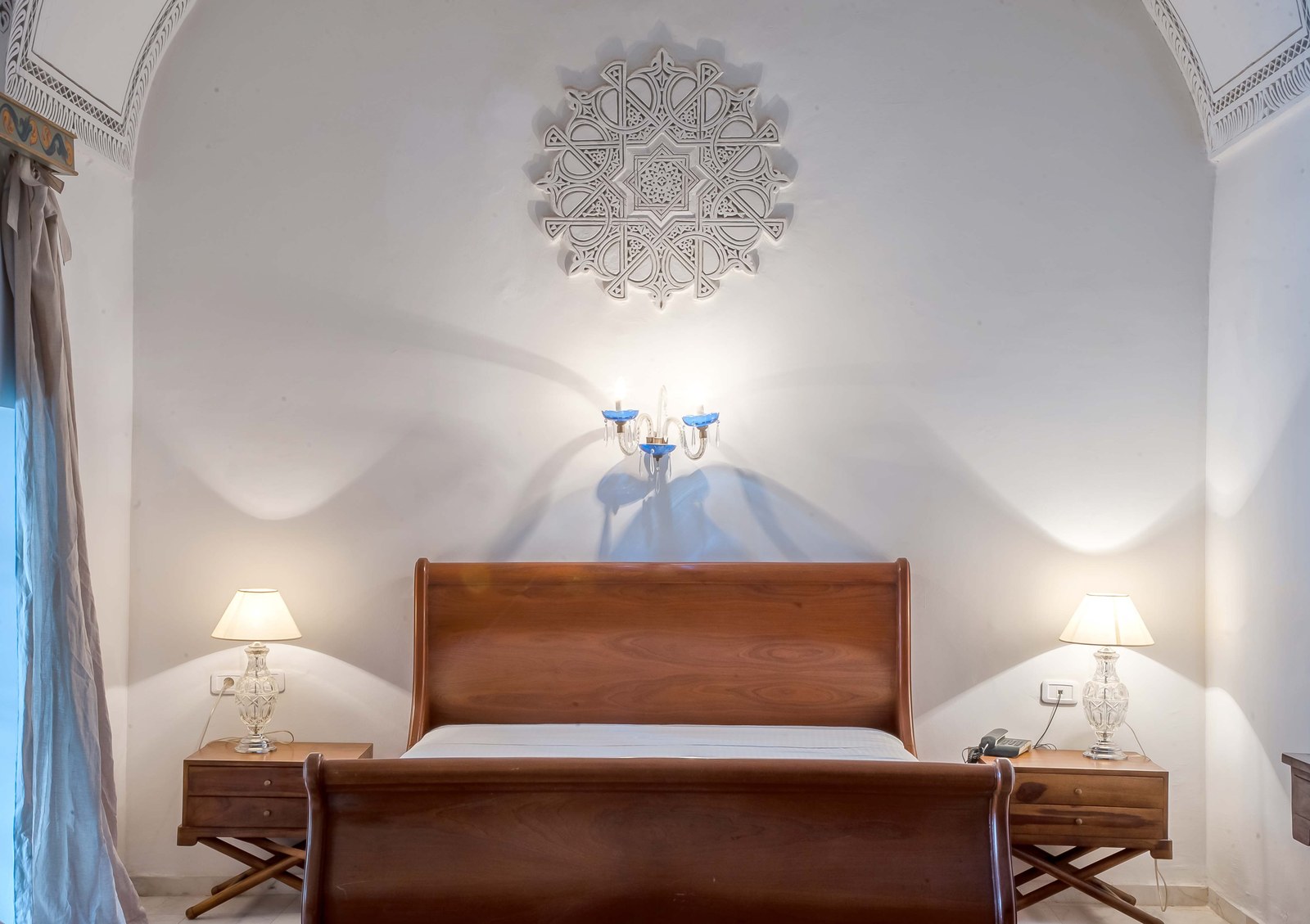
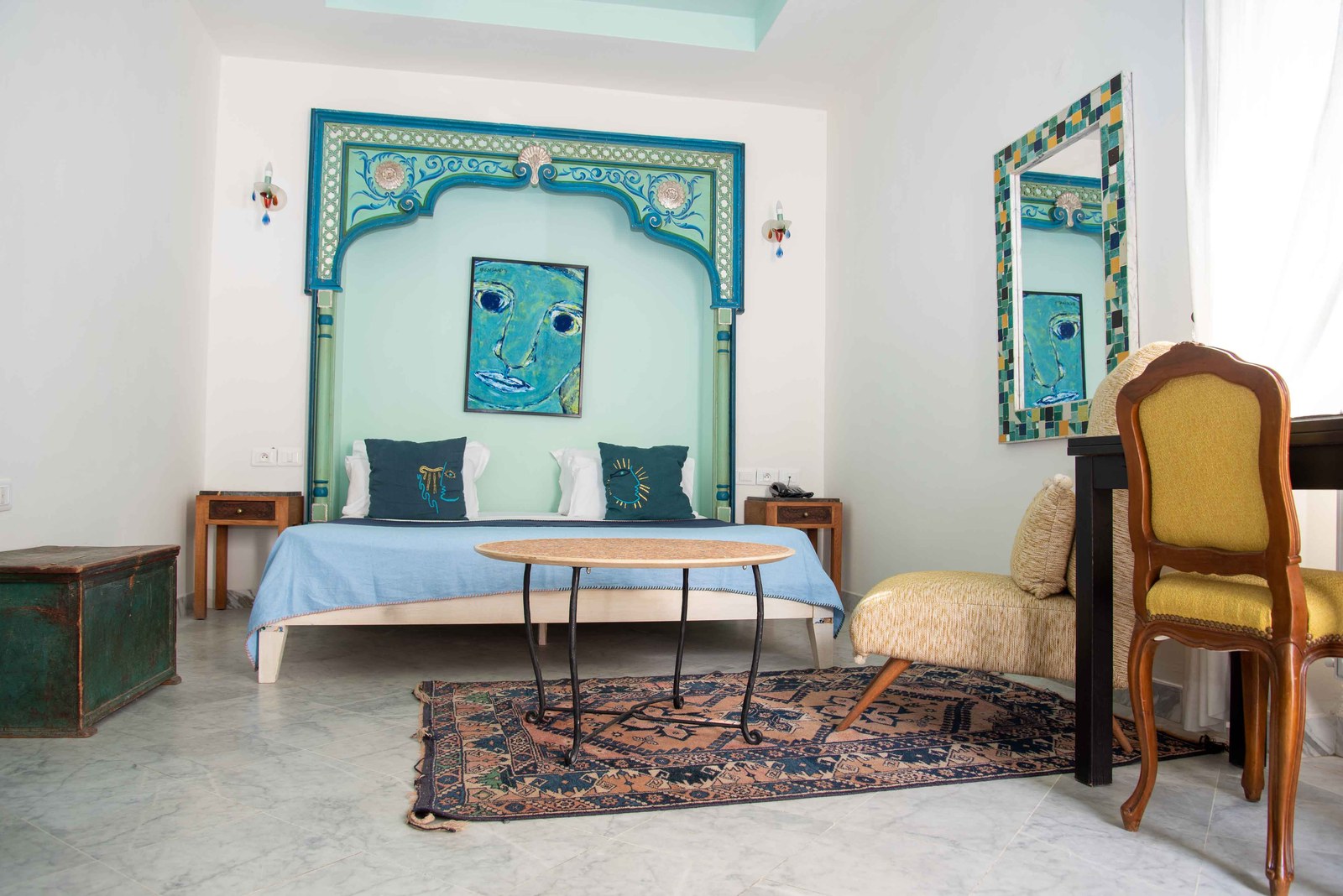
No two rooms are the same, because no two were drawn. They were inherited.
The woman keeping it standing
Dar Ben Gacem is the work of Leila Ben Gacem, who trained as a biomedical engineer at Boston University before she came home to a different sort of repair. In 2006 she founded Blue Fish, a social enterprise set up to help Tunisian artisans, women above all, carry their craft to a wider market. The two houses came later and follow the same instinct. They are run not as a hotel that happens to sit in the old city but as a way of keeping the old city alive, the takings turned back into the fabric of the medina and the trades that made it.
The clearest sign of that sits in the basement. Dehliz El Zliz is a small museum of more than two hundred Qallaline tiles, gathered over decades and laid out to tell the story of the city's potters, a craft that had all but gone out. Breakfast is Tunisian and taken on the roof or in the courtyard, bread and olive oil and preserves, harissa if you want it, coffee scented with orange blossom. There is no restaurant in the usual sense. The house will cook on request, and it would rather walk you out into the medina to the bakeries and the brik stalls and the lablabi counters it has known for years. Come hungry, and let it lead.
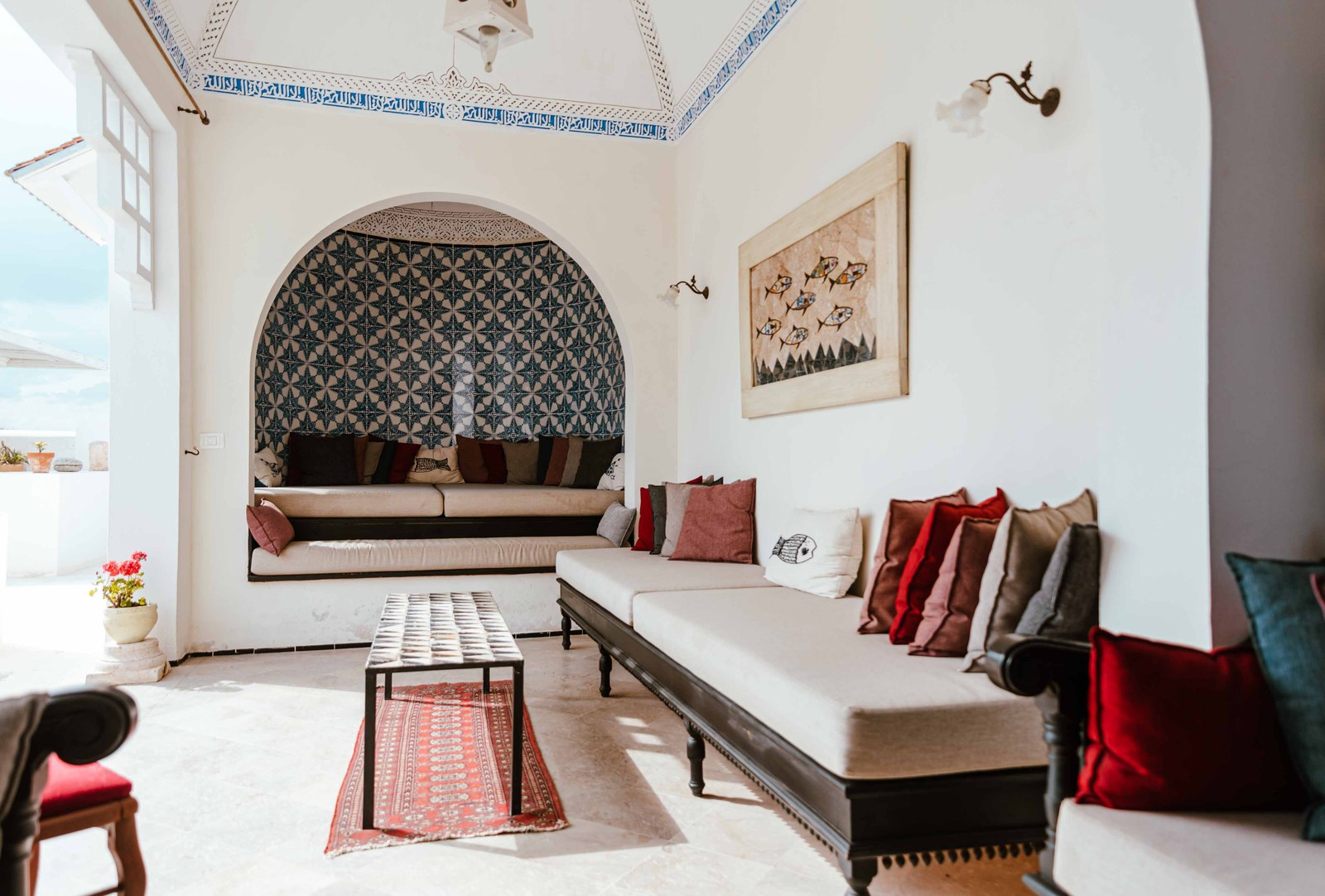
The takings go back into the walls that made them.
Dar Ben Gacem is not the house to book for a pool or a spa, because it has neither. What it has is a night spent inside the old city with people trying to keep it standing, and a basement that tells you why the effort matters. Fifteen rooms and a good many stairs mean it will not suit everyone, and the medina around it stays loud and lived-in rather than hushed. For anyone who wants Tunis from the inside rather than from a terrace above it, we can think of nowhere better to send you.
Photos: Dar Ben Gacem (official), with credit.