Behind a studded door
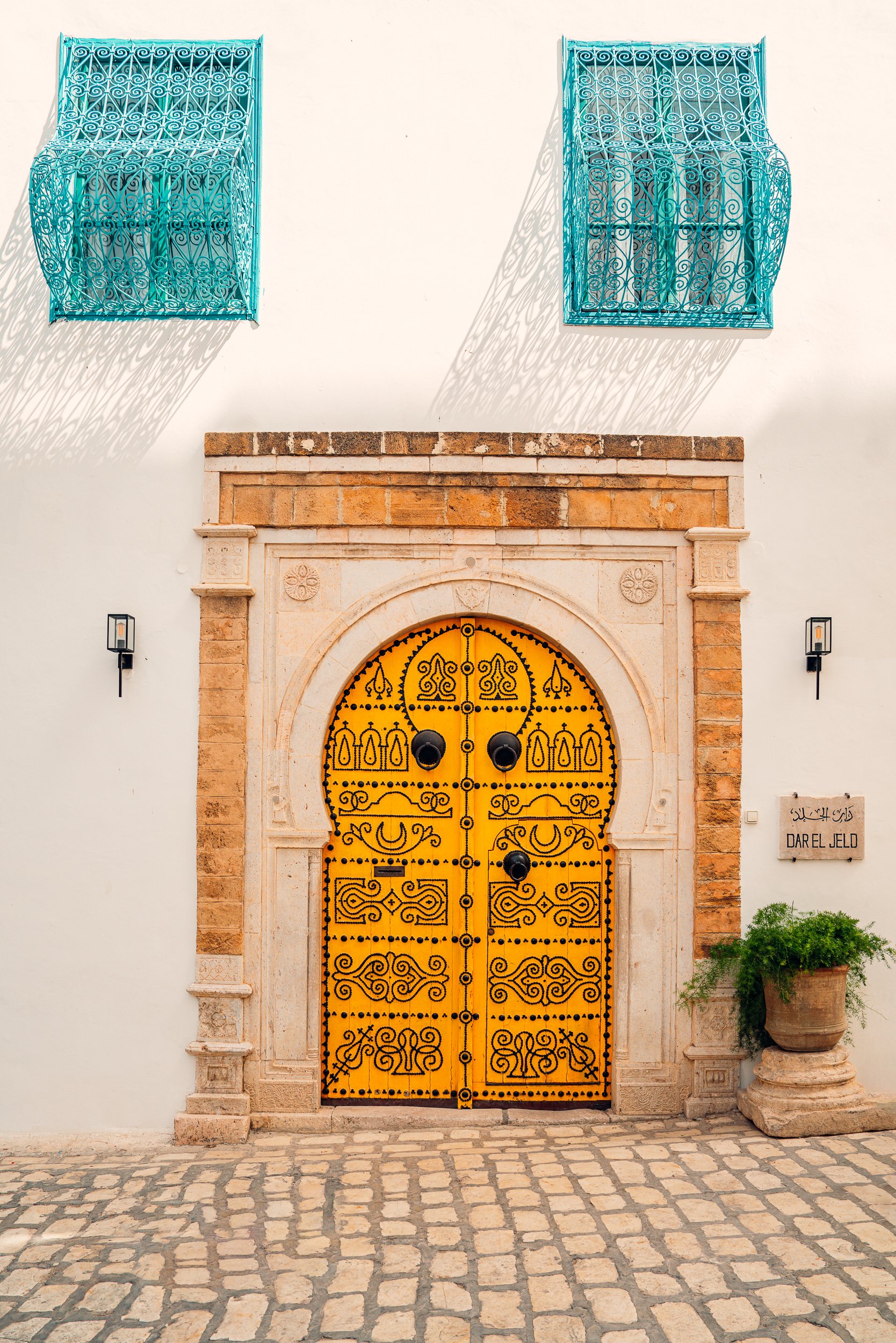
You find it the way you find anything worth having in the medina of Tunis, by getting a little lost. The old town is a UNESCO World Heritage site and it reads like one, a dense weave of covered souks and prayer halls that has grown by accretion since the seventh century. Street names give out. Cars stop at the edge. What you follow instead is the studded door, ochre and yellow under an iron window cage, on a lane that gives no sign of what stands behind it.
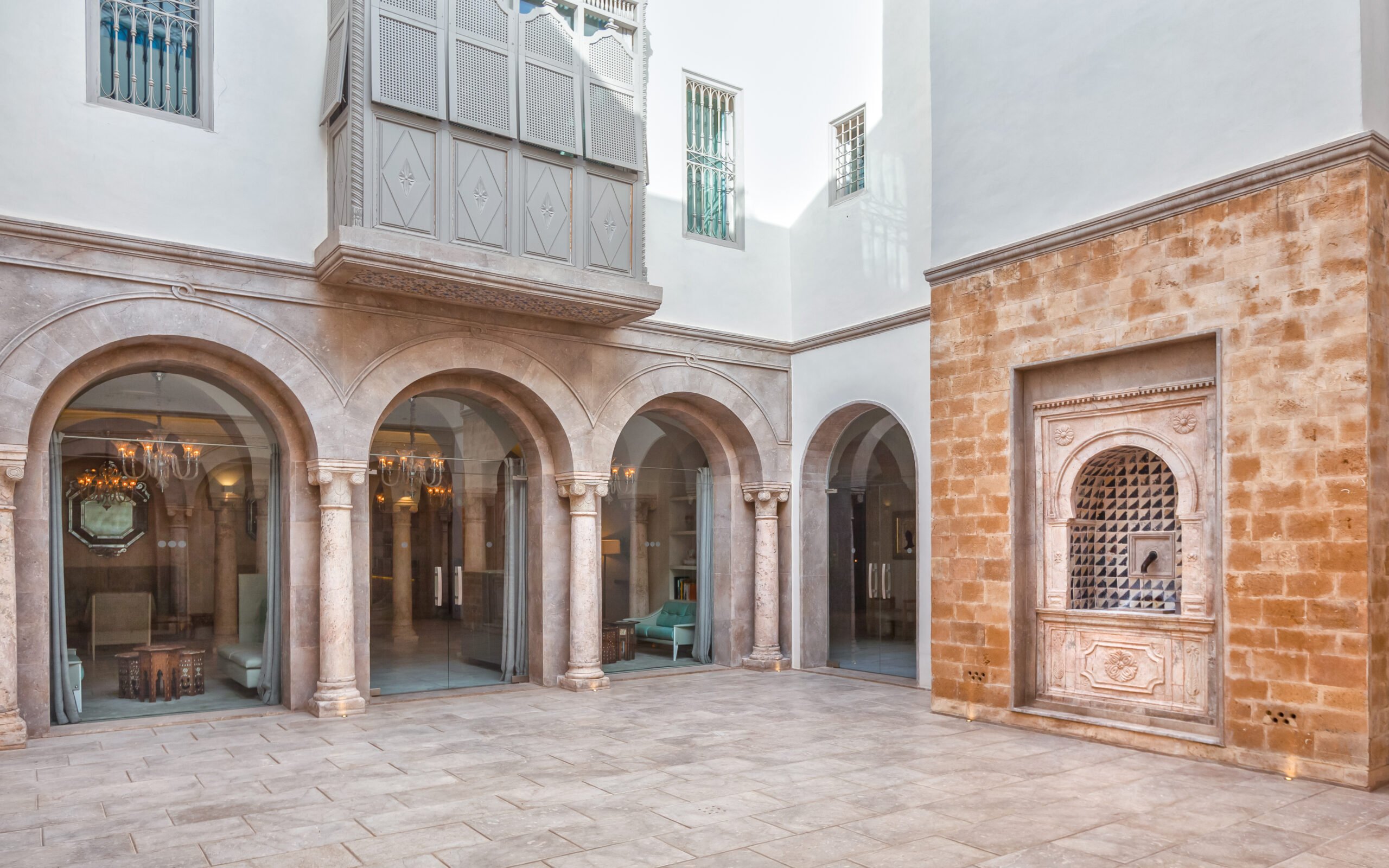
Behind it is a house that has kept to itself since the eighteenth century. Dar El Jeld began as a patrician family's palace, one of the grand private residences the ruling class raised within the walls, and it holds to the old logic of such houses. The rooms face inward, away from the street and the noise, and gather instead around a courtyard. The hotel that opened here in 2018 changed the use without unpicking the plan. You step off a crowded lane into sudden quiet, and the city carries on a wall's thickness away.
The rooms face away from the street, which is how a house in the medina keeps a secret.
Sixteen suites around a courtyard
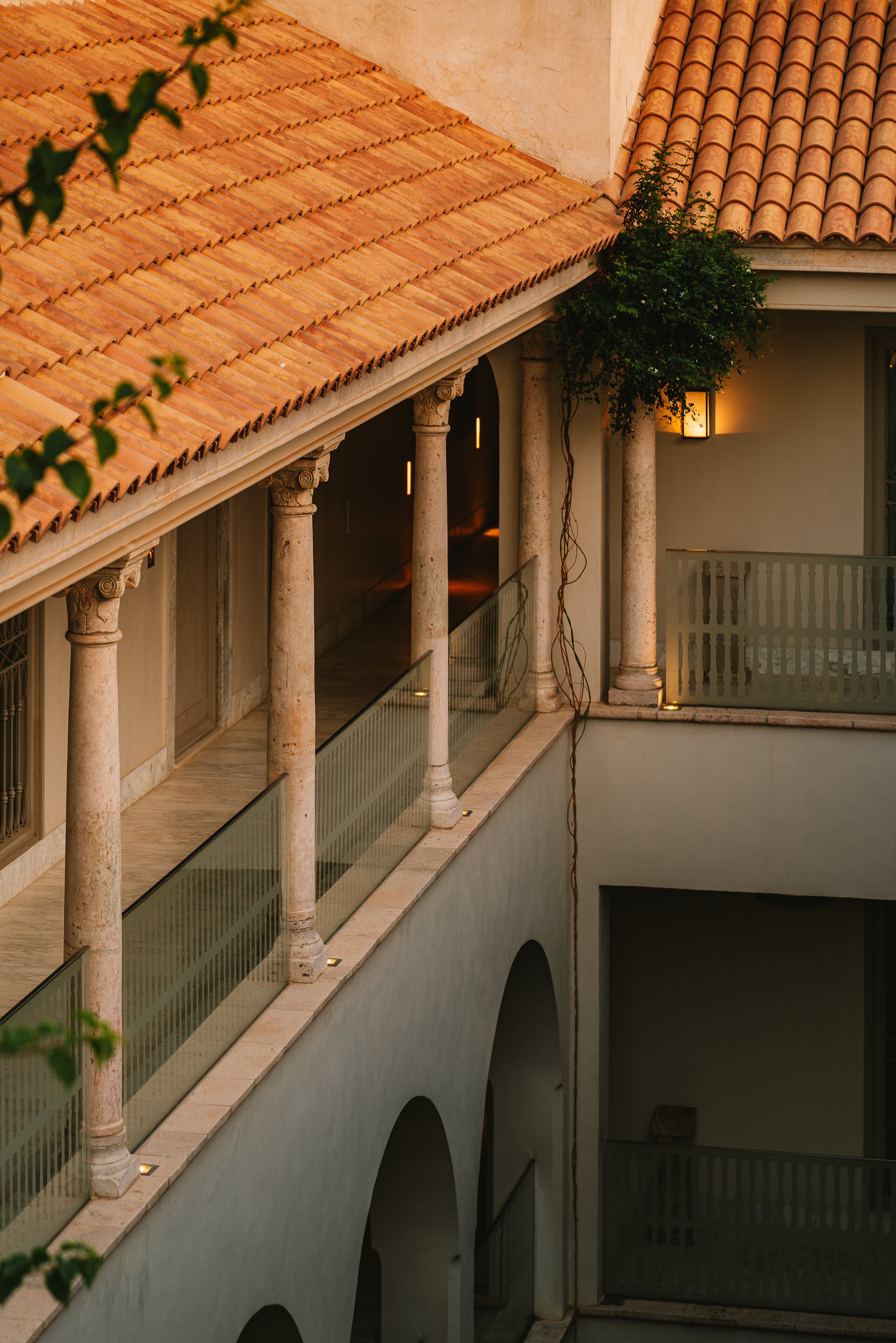
What the restoration recovered is a set of adjoining patrician houses, each a dar in the local sense, worked back into a single hotel of sixteen suites. The courtyard does the ordering. A marble floor holds the cool through the day, stone columns carry the arcades, and blue and ochre tilework climbs the walls to meet carved plaster and painted wooden ceilings. Venetian mirrors take what light comes down from the open square of sky. None of it strains for a look. It is the craft the house was built with, mended by hands that still know how.
The suites are large, the smallest of them starting around sixty-five square metres, and they carry the same vocabulary indoors, the tiled alcoves and the deep window seats and the low, cool light you want to lie down in. Below, a traditional hammam and spa keep to the old ritual of the bath. It is a small place, and it never quite reads as a hotel. It reads as a house you have been handed the keys to, which is the rarer thing and the harder one to build.
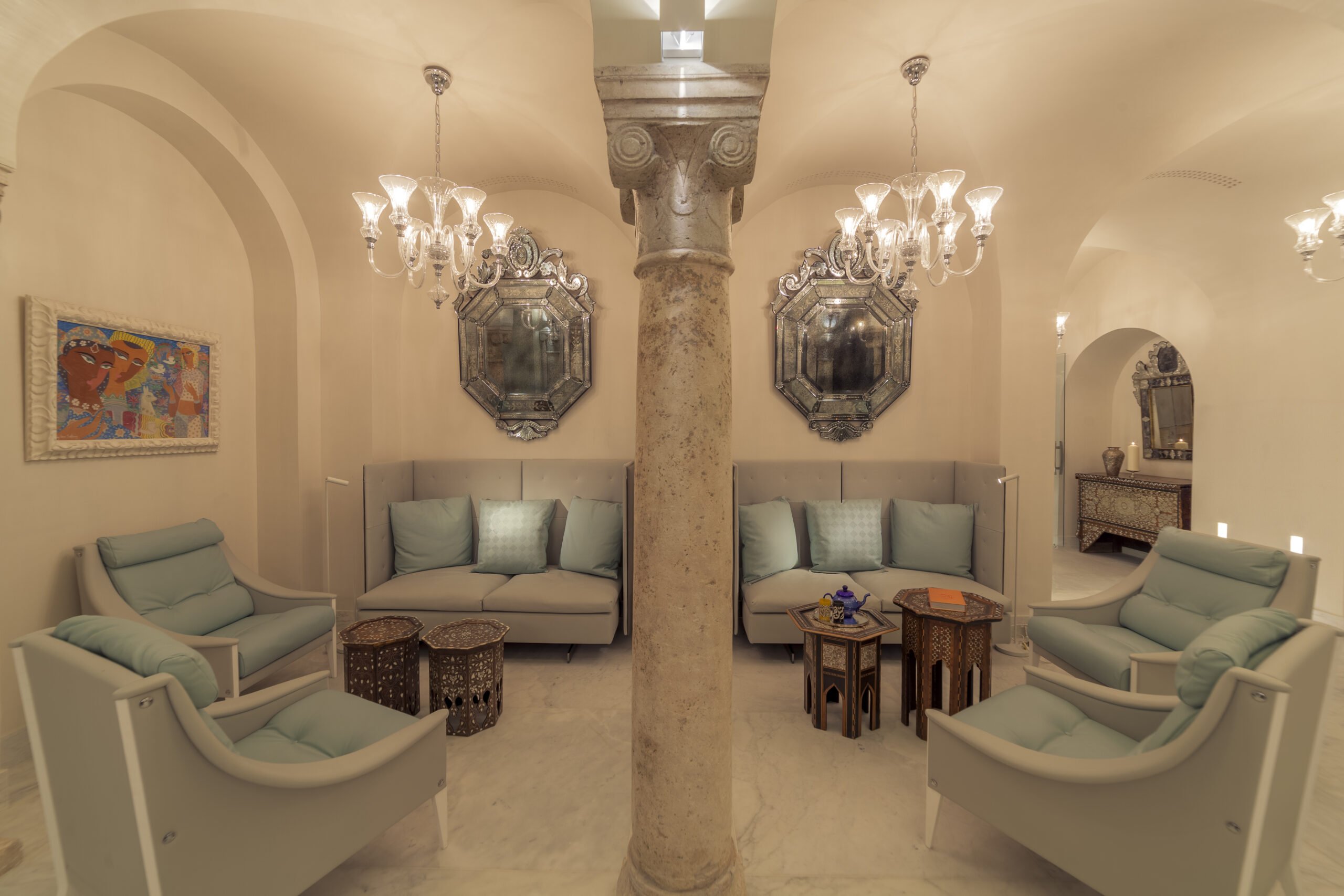
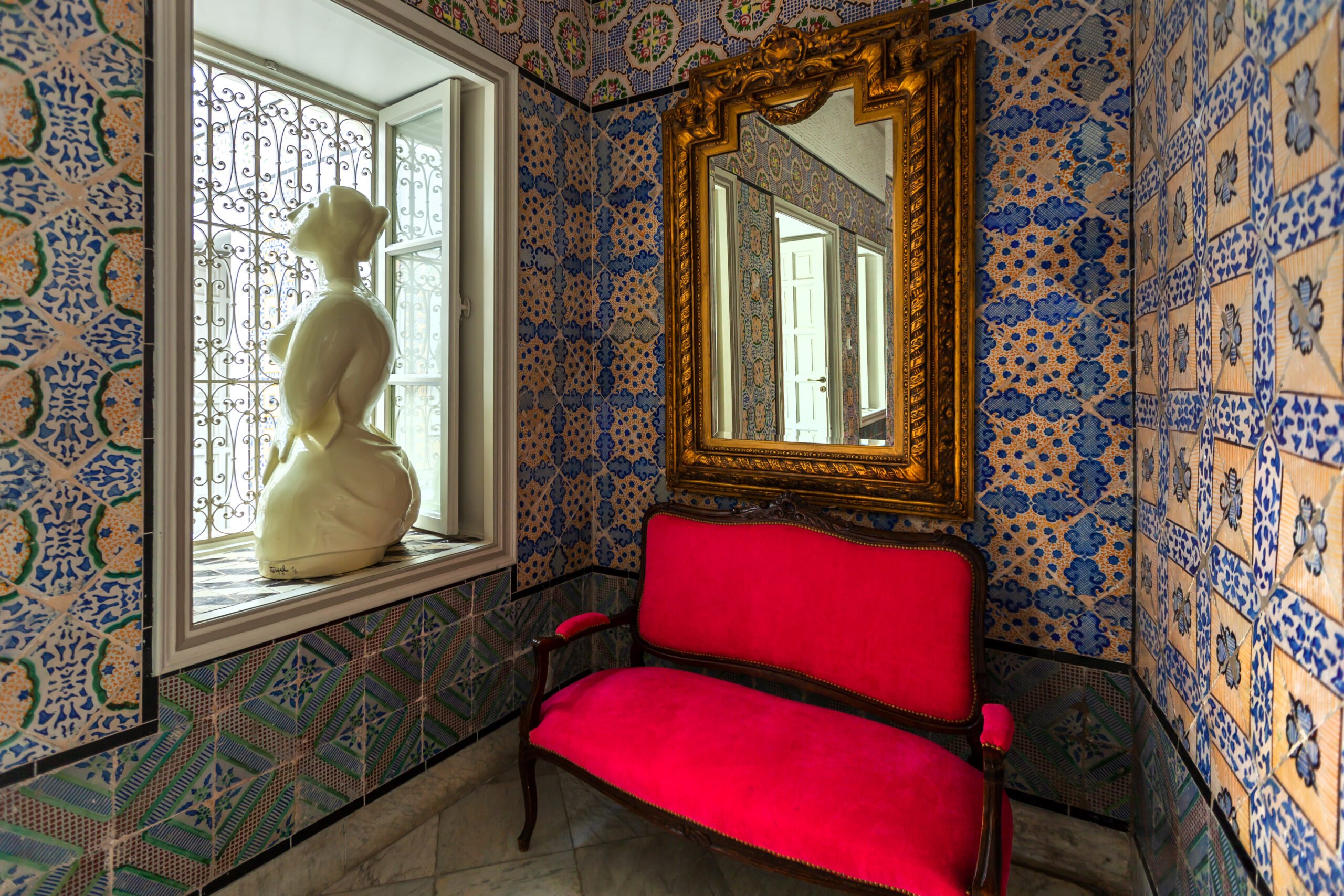
You are not handed a room. You are handed a house.
The name people knew first
Many people knew the name long before there were rooms to book. The Dar El Jeld restaurant, in its own house across the lane, has served the grand version of Tunisian cooking for more than three decades, the briks and slow tagines and feast-day couscous, in a domed hall lit by candles and chandeliers and, most evenings, by live music. It became a table for the city, the place its own celebrities and visiting delegations came to sit. The hotel grew out of the restaurant rather than the other way round, and the cooking still sets the tone.
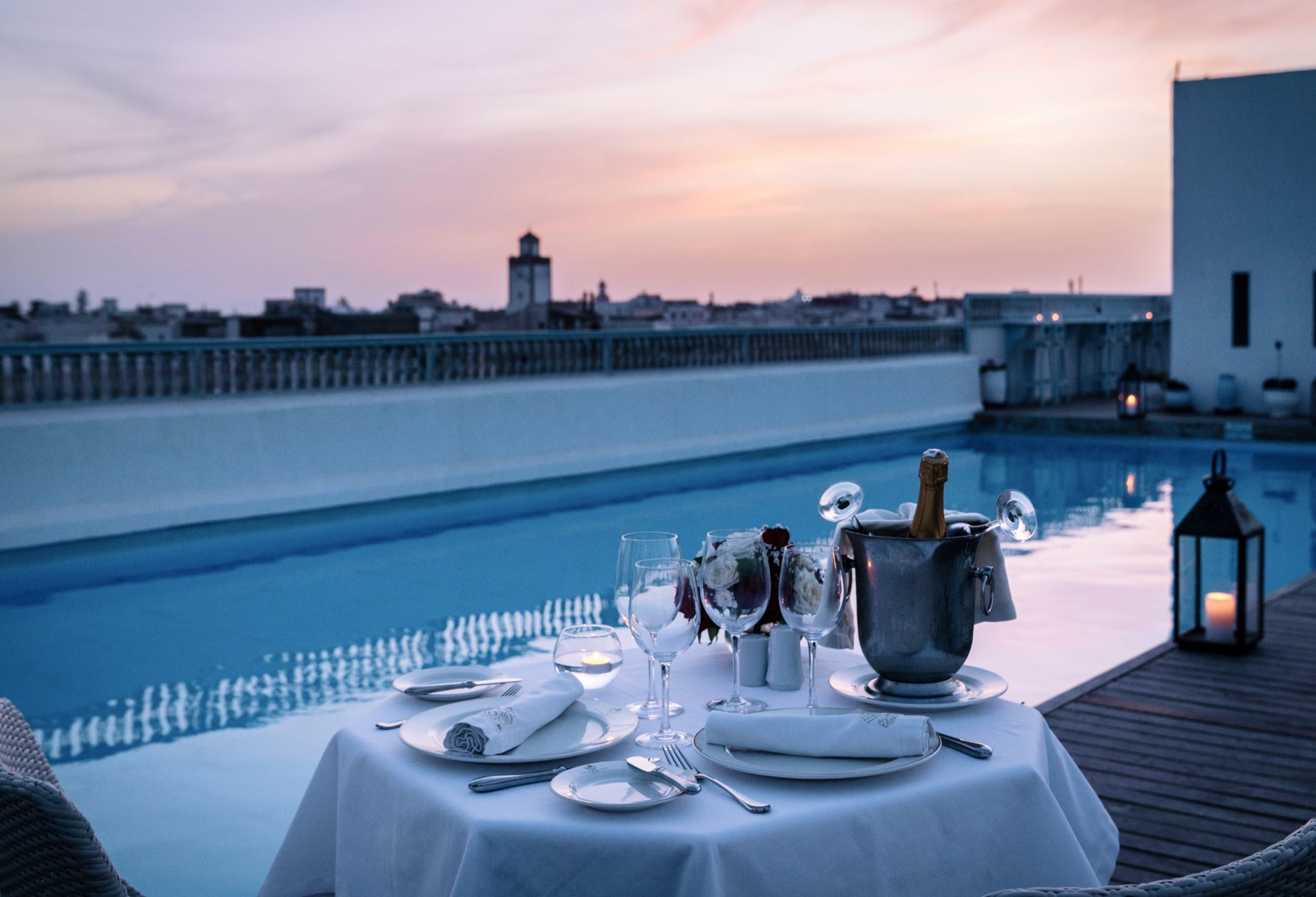
Upstairs is the other table, and the quieter one. The rooftop looks out over the whitewashed domes and minarets of the old town, the medina falling away below while the call to prayer crosses it, and the sunset does most of the work. Breakfast comes as a spread of Tunisian pastries and preserves under the arcades. You eat well here, and you eat where you are, which on this stretch of the map is not a thing to take for granted.
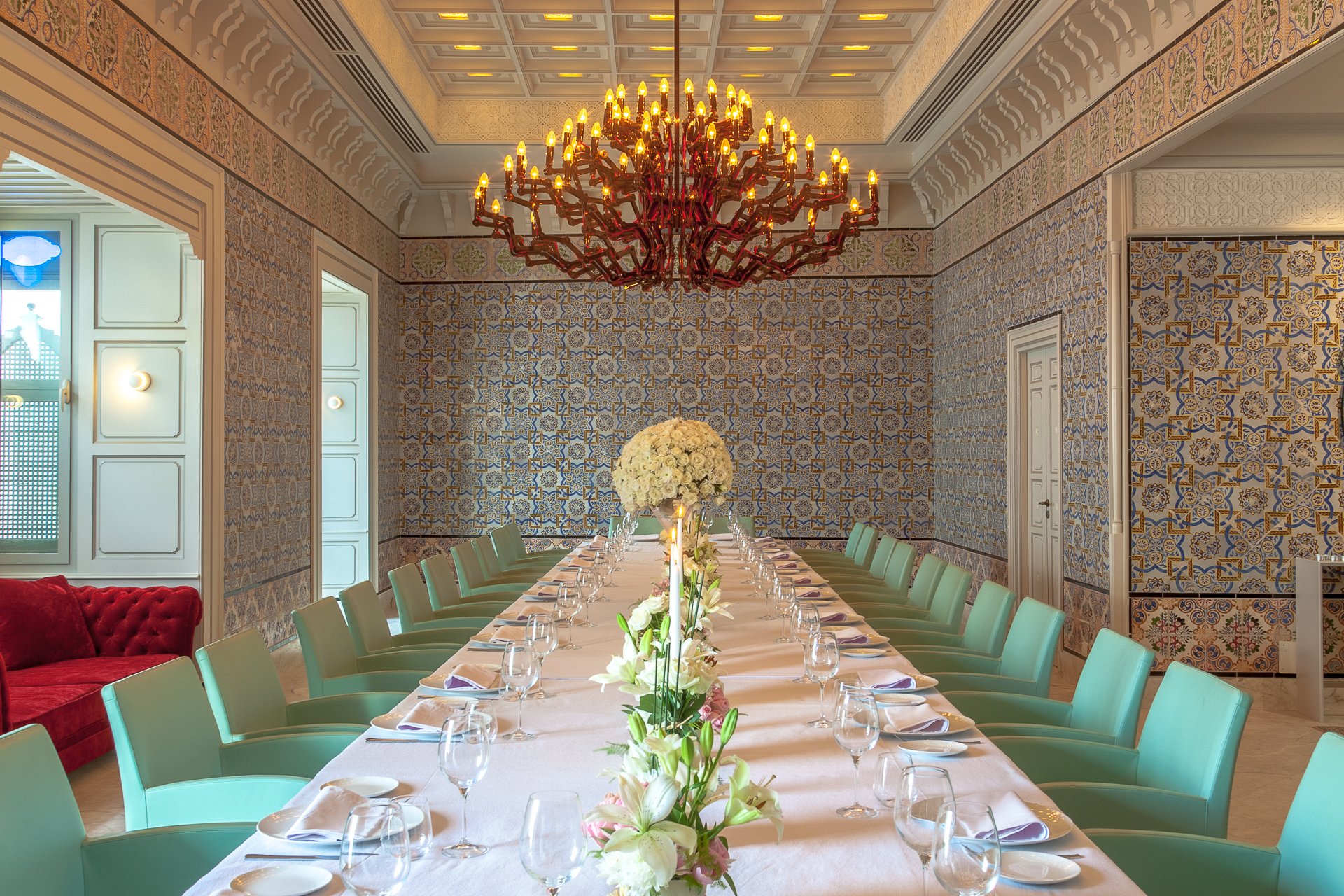
The hotel grew out of the restaurant, and the kitchen still keeps the tone.
Tunis is on few luxury maps, and that is much of the appeal. Dar El Jeld gives you the medina from the inside, a UNESCO labyrinth you step into from your own door rather than survey from a coastal resort half an hour off. The restoration is serious, the table is a genuine institution, and the sixteen suites keep the place closer to a private house than a hotel. It is a city stay, not a beach one, and the old town goes about its business right outside. When you want the sea, Sidi Bou Said and the ruins of Carthage are a short drive north.
Photos: Dar El Jeld Hotel & Spa (official), with credit.