Inside the walls
Essaouira sits on the Moroccan Atlantic, an old fishing port ringed by ramparts the Portuguese and then a French engineer laid out in the eighteenth century. The medina behind them is a grid, unusually for a Moroccan town, straight streets of white houses and blue doors, a UNESCO site since 2001. The trade winds comb the beach so hard that the town has become a place for windsurfers and for anyone who prefers their summer with a breeze in it. Orson Welles shot much of his Othello here. Every June the Gnaoua festival fills the squares.
L'Heure Bleue Palais keeps a quiet corner of all this. The building went up on the site of an old fondouk, the caravan inn where traders once stabled their animals and slept above them, and later served as a grand private residence. The Azoulay family took it on at the turn of the century and, after three years of work, opened it as a hotel in 2004. Relais & Châteaux took it into the fold two years later.
Dark wood and marble
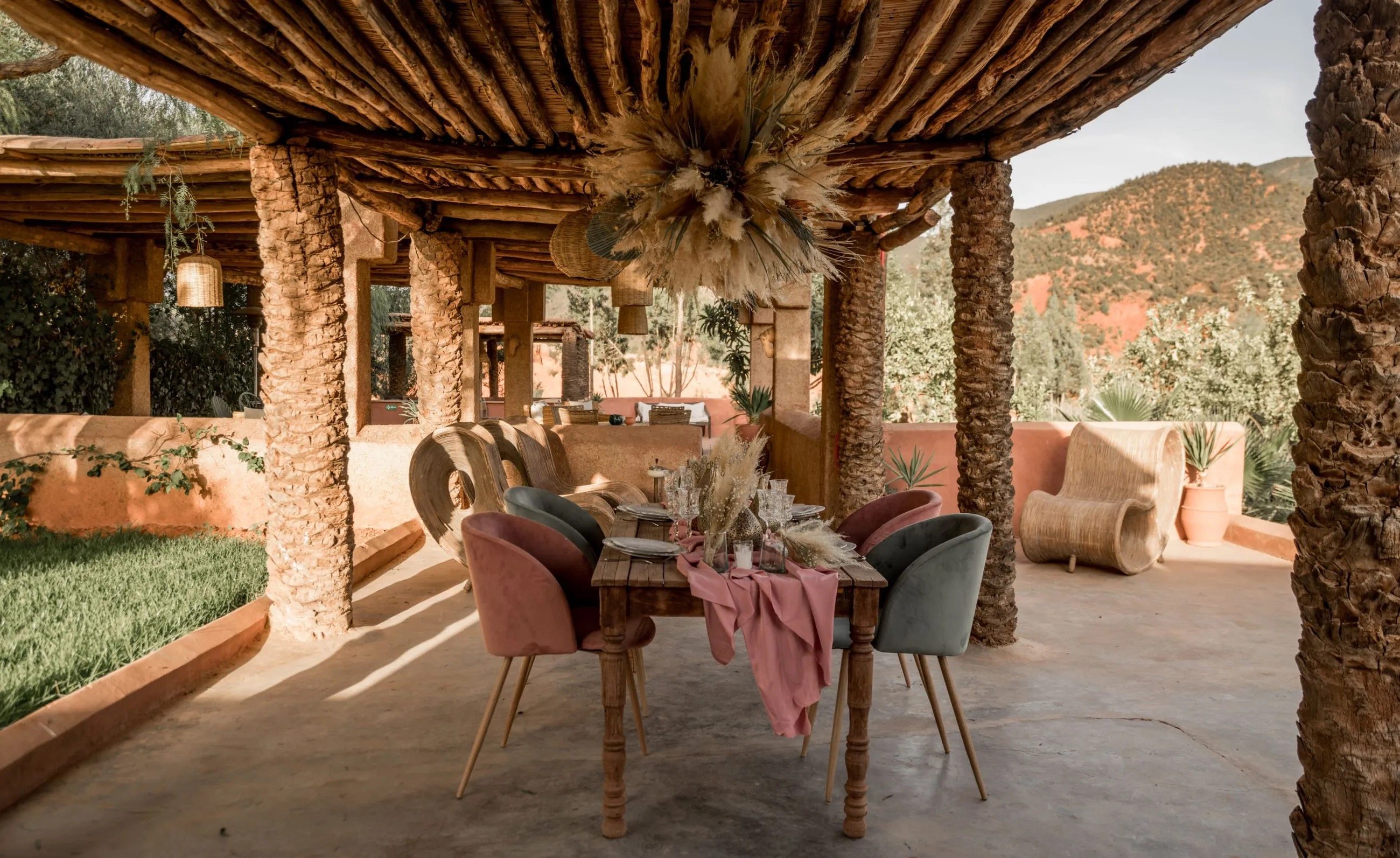
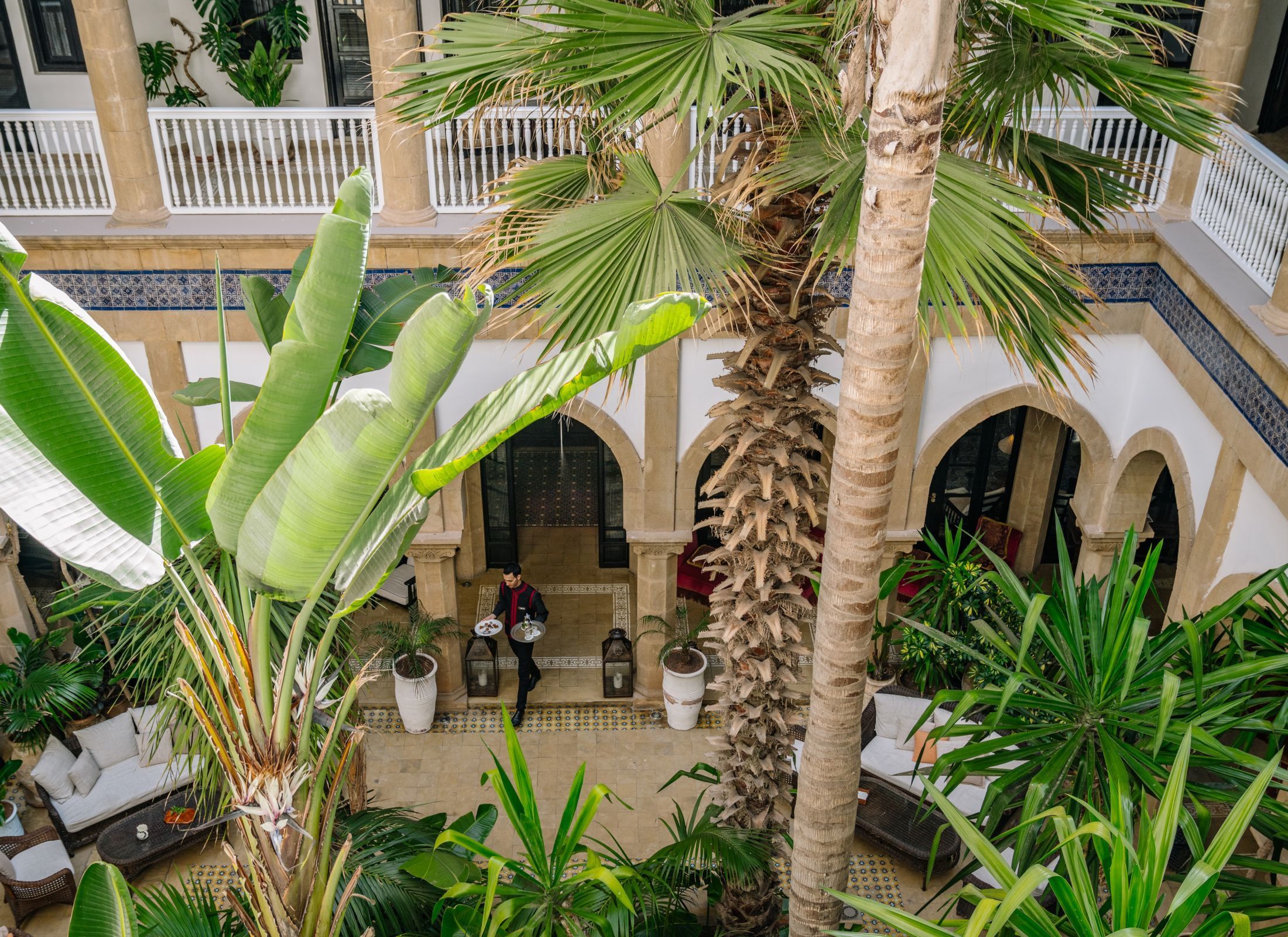
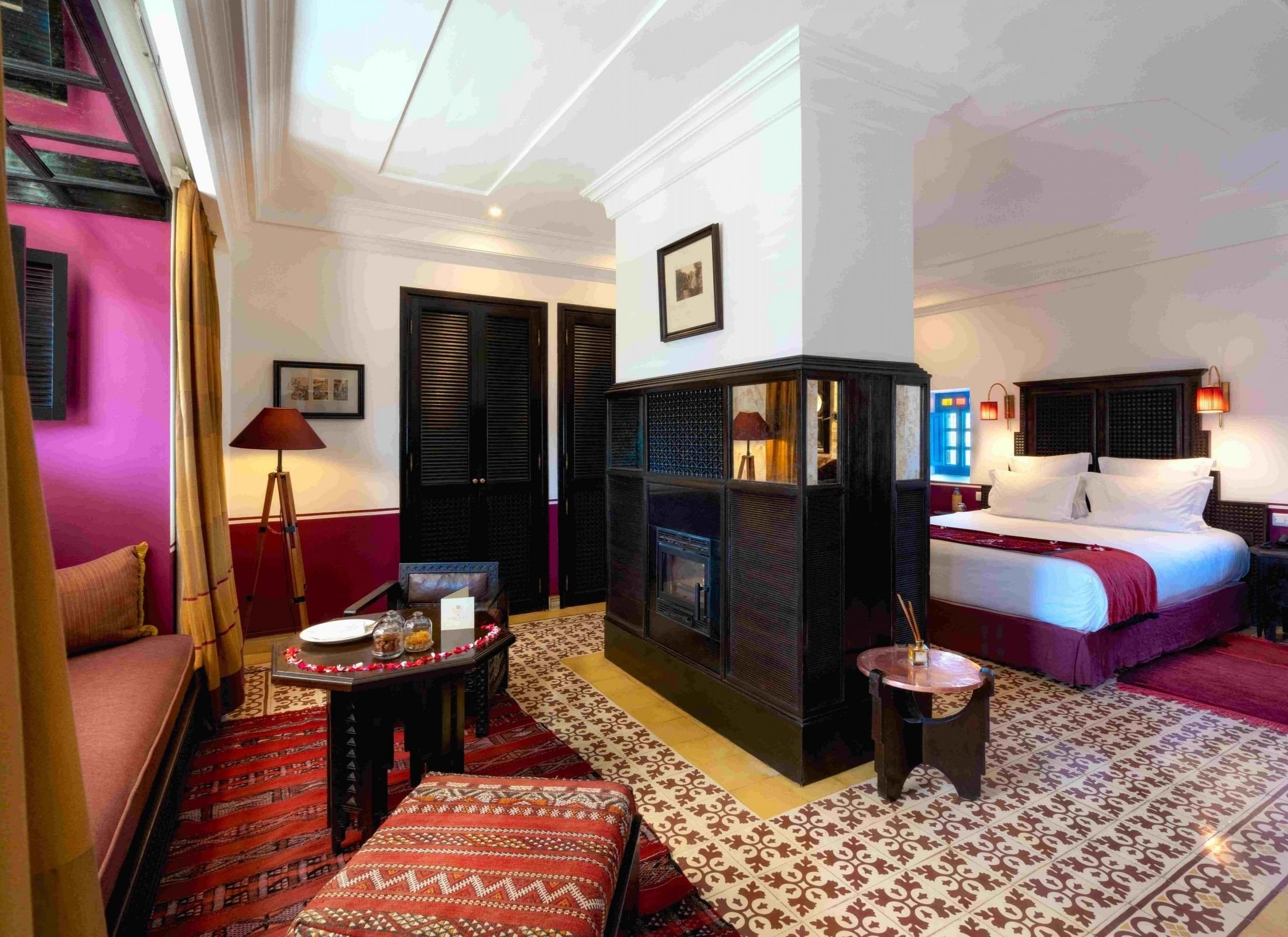
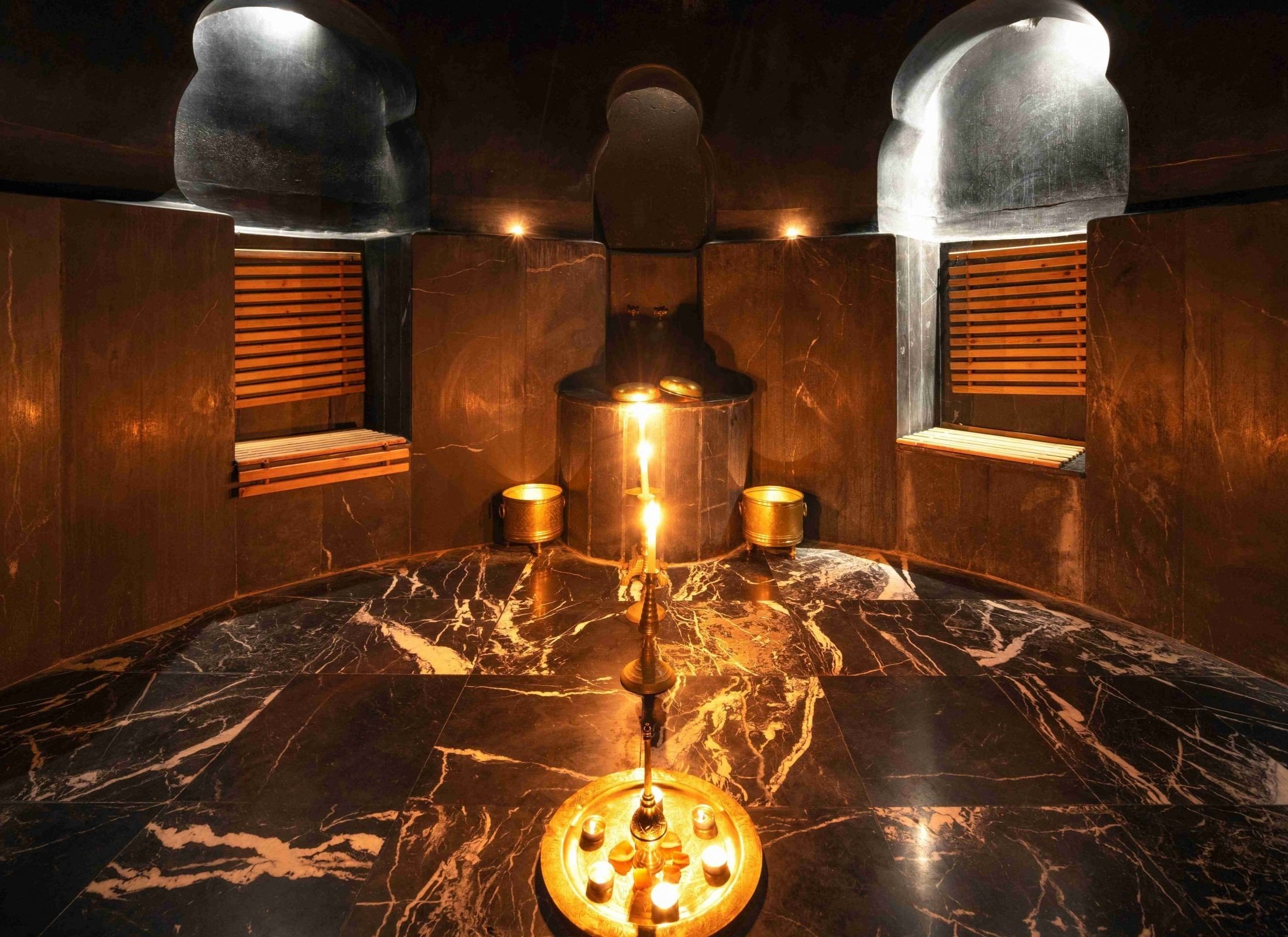
Inside, the palais reads less like the riads around it than like a colonial club that has been left to age well. Dark wood, worn leather, marble underfoot, a fire lit in the cooler months. Thirty-three rooms and suites climb around the planted courtyard, each done in a slightly different key, African, Portuguese, English, Oriental, so that no two feel cut from the same cloth. There is a spa below, a traditional hammam in dark marble, the sort of room built for silence.
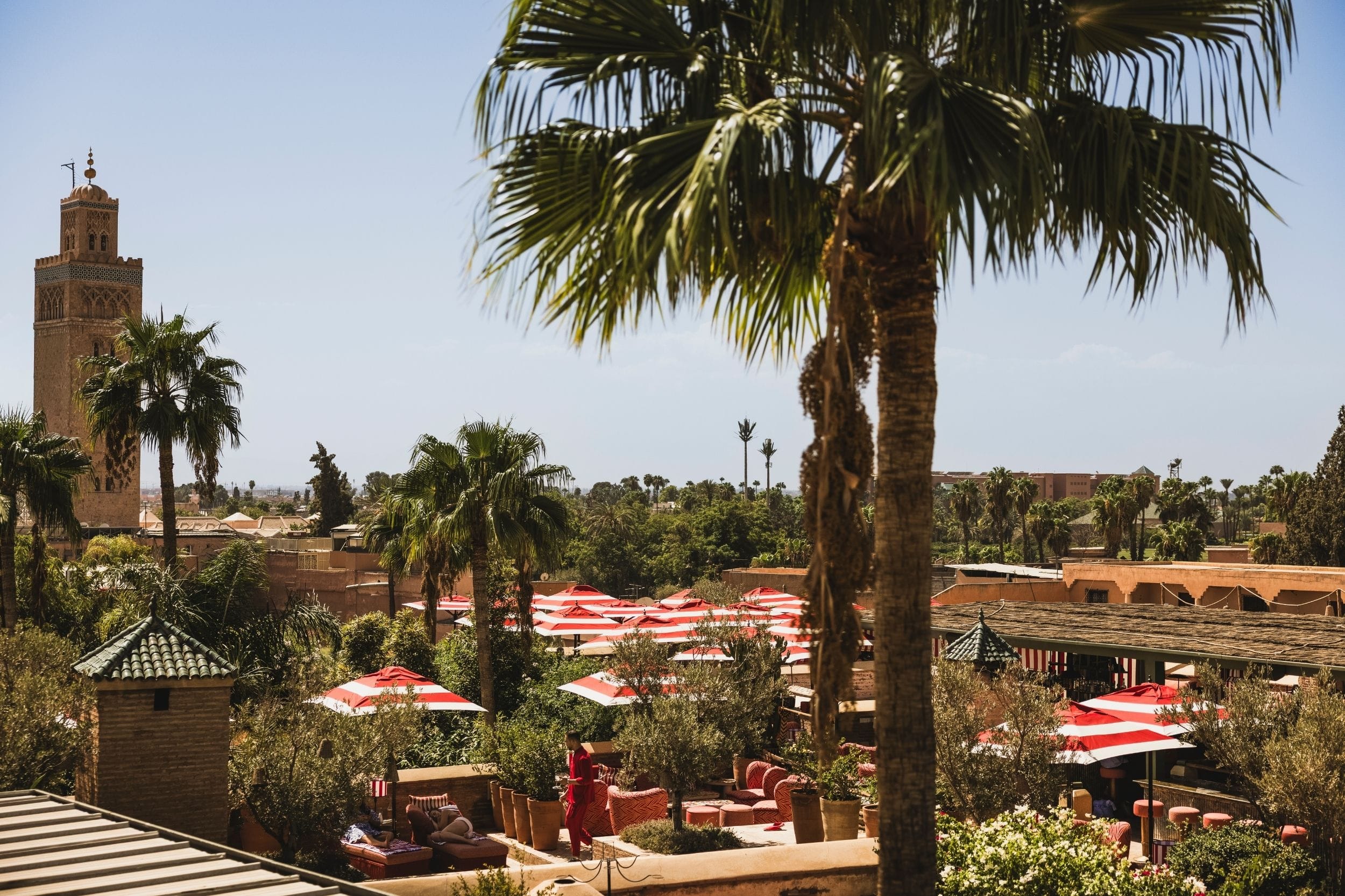
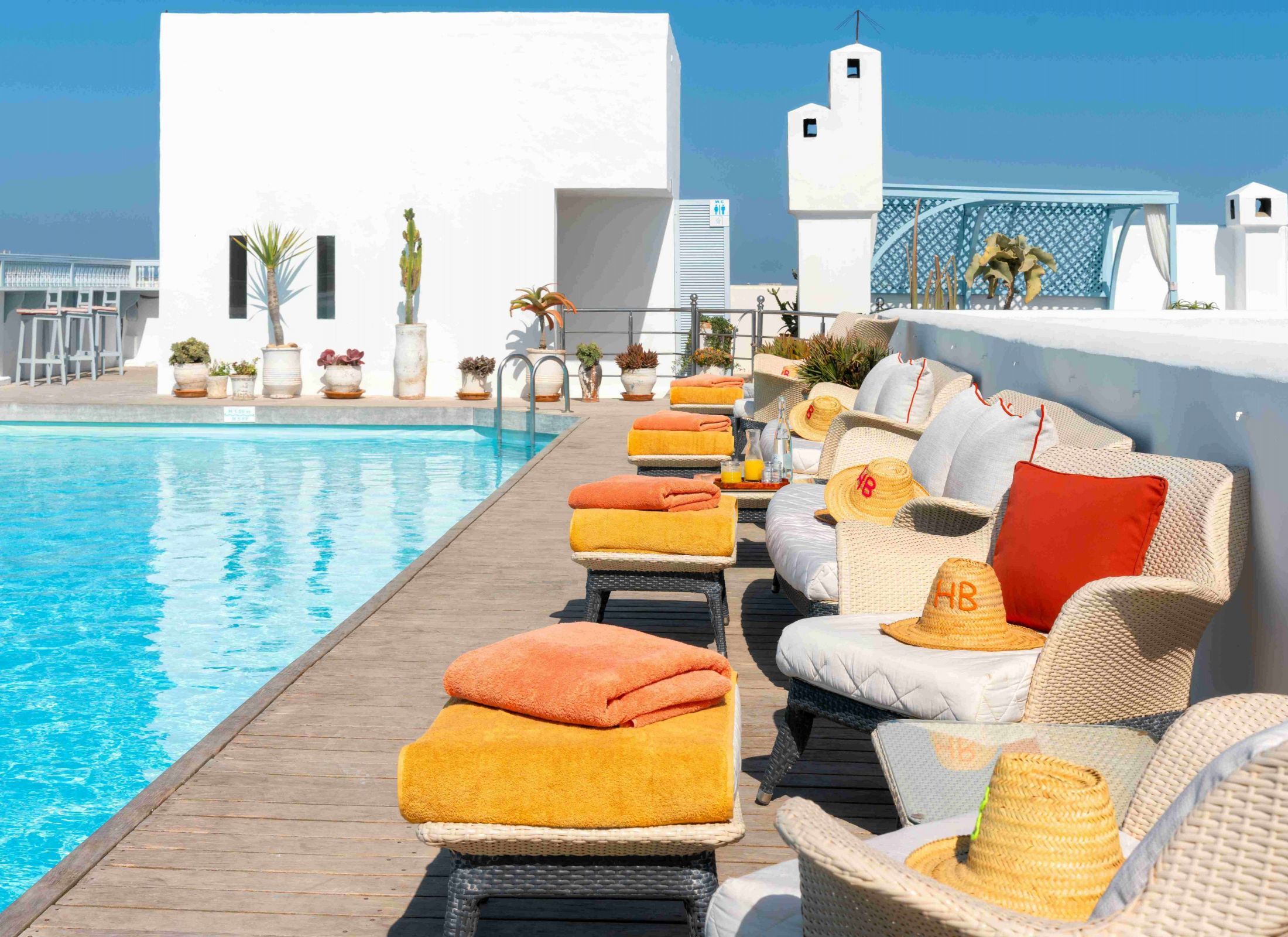
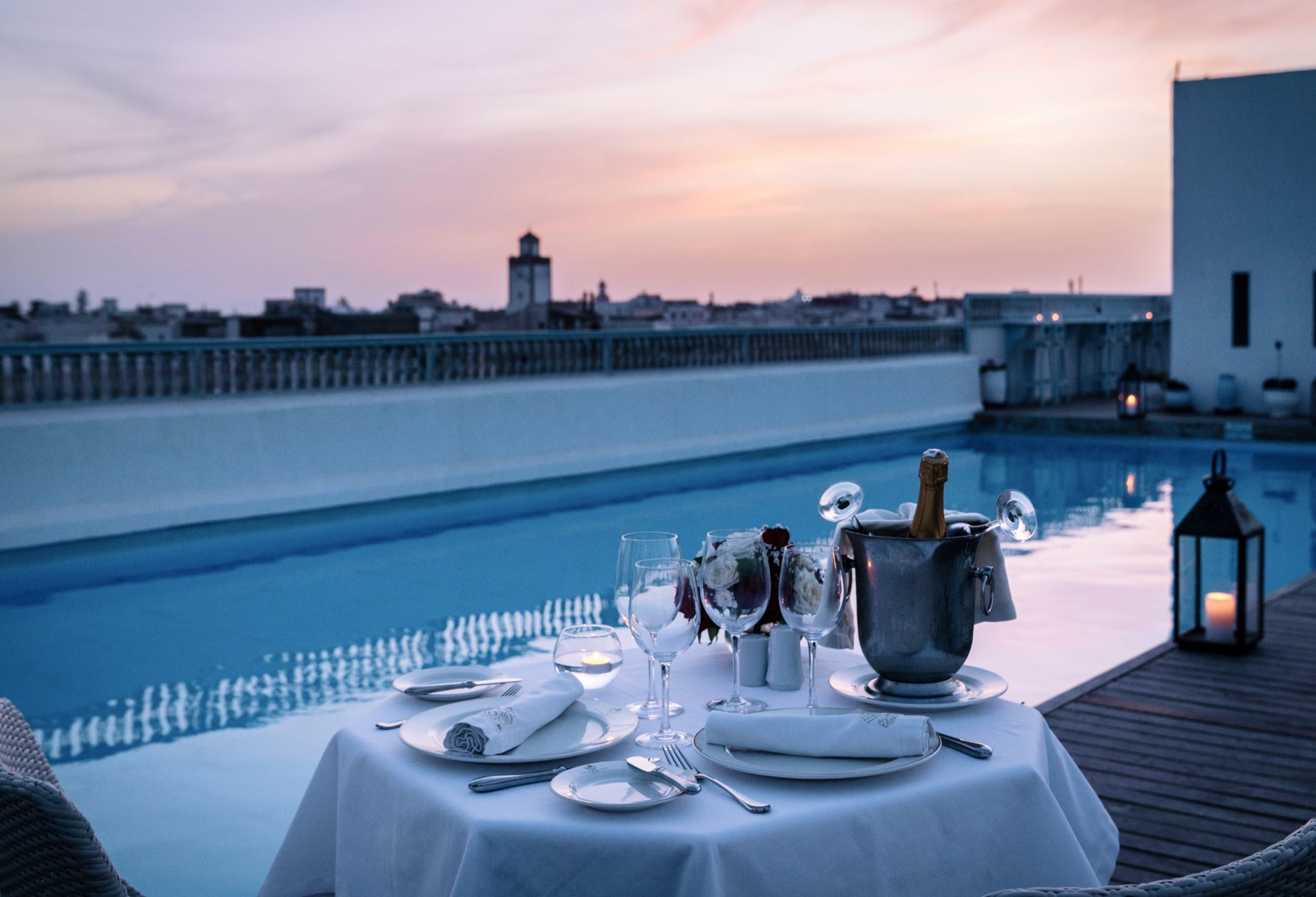
The house keeps its best trick for the top. Take the lift to the roof and the whole medina opens out, flat white terraces falling away to the harbour, the ocean beyond, and a heated pool set at the very edge. It is the perch every other roof in the town would like to have, and it belongs to this one.
The perch every other roof in the town would like to have.
The English lounge and the roof
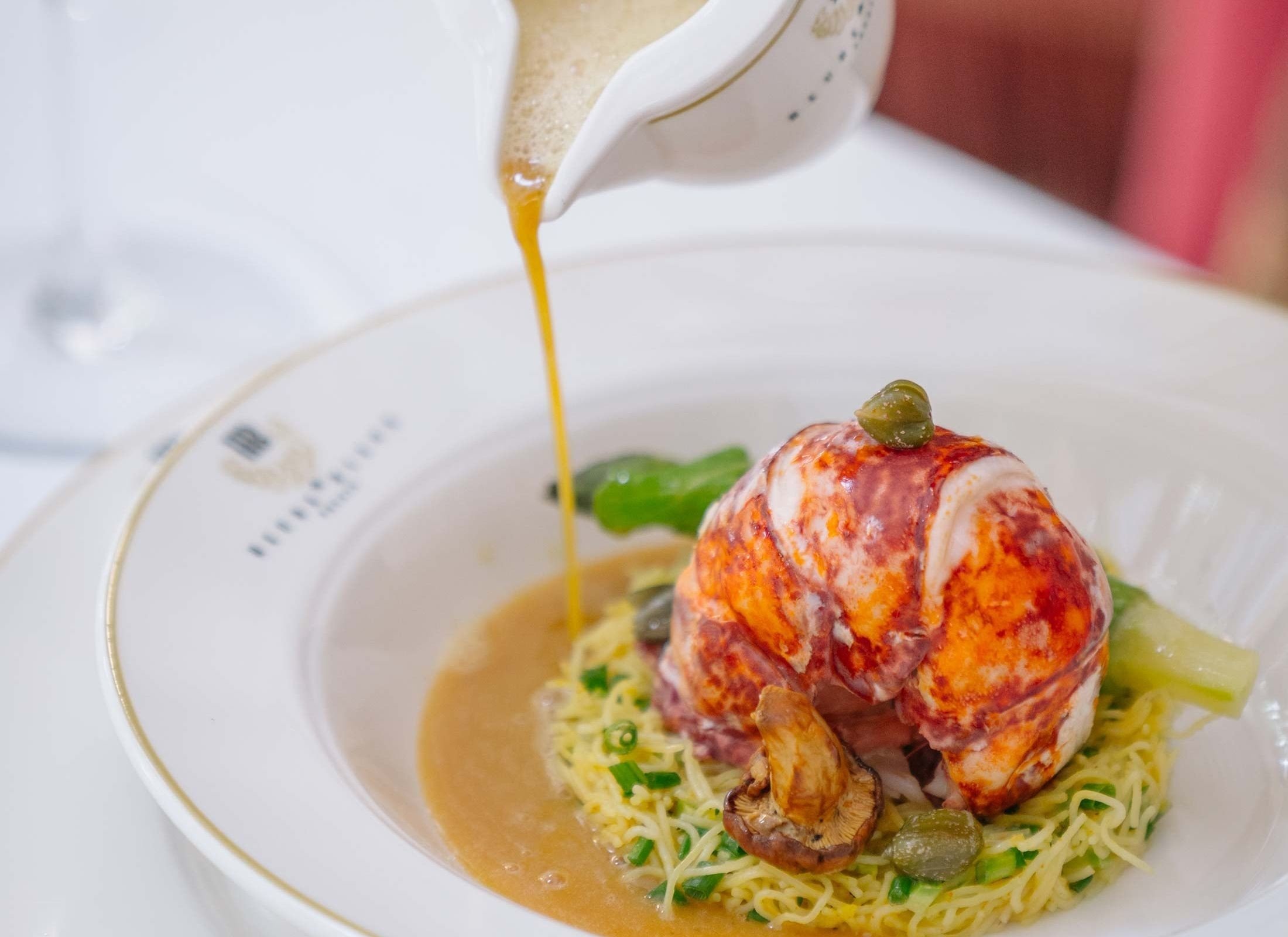
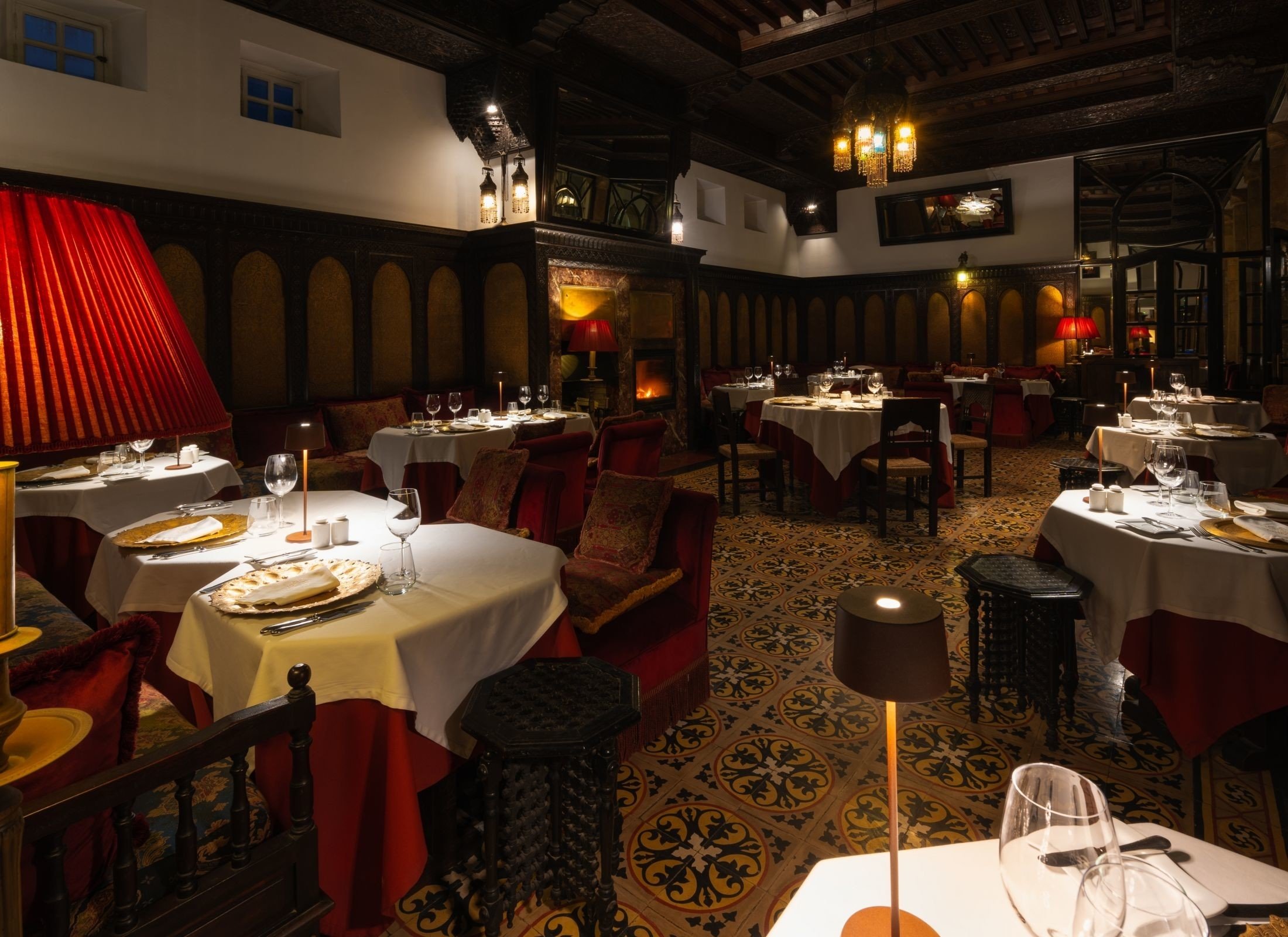
Two rooms carry the cooking. The Salon Anglais is the formal one, low and clubby under a carved ceiling, red banquettes and lamps, a fire at one end, where chef Ahmed Handour gives Moroccan flavours a French hand. Through the warm months SAMA takes the roof, plates eaten with the ramparts and the water in view. There is a Salon Oriental for the days the wind gets up, and breakfast in the courtyard is worth rising for.
The food is taken seriously without being made a performance of. For those who want to carry some of it home, the house runs cookery courses with the chef, the cuisine of a thousand flavours passed across a working kitchen rather than a stage.
Essaouira is one of the Atlantic's great walled towns, and this old palais owns the best perch in it. The building carries real history in its bones, the service the Relais & Châteaux stamp, and the roof hands you the town, the port and the ocean at once. It is a large house by medina standards, and busy in season. Ask for a room off the courtyard, and keep the roof for the blue hour.
Photos: L'Heure Bleue Palais (official), with credit.