Raised, not converted
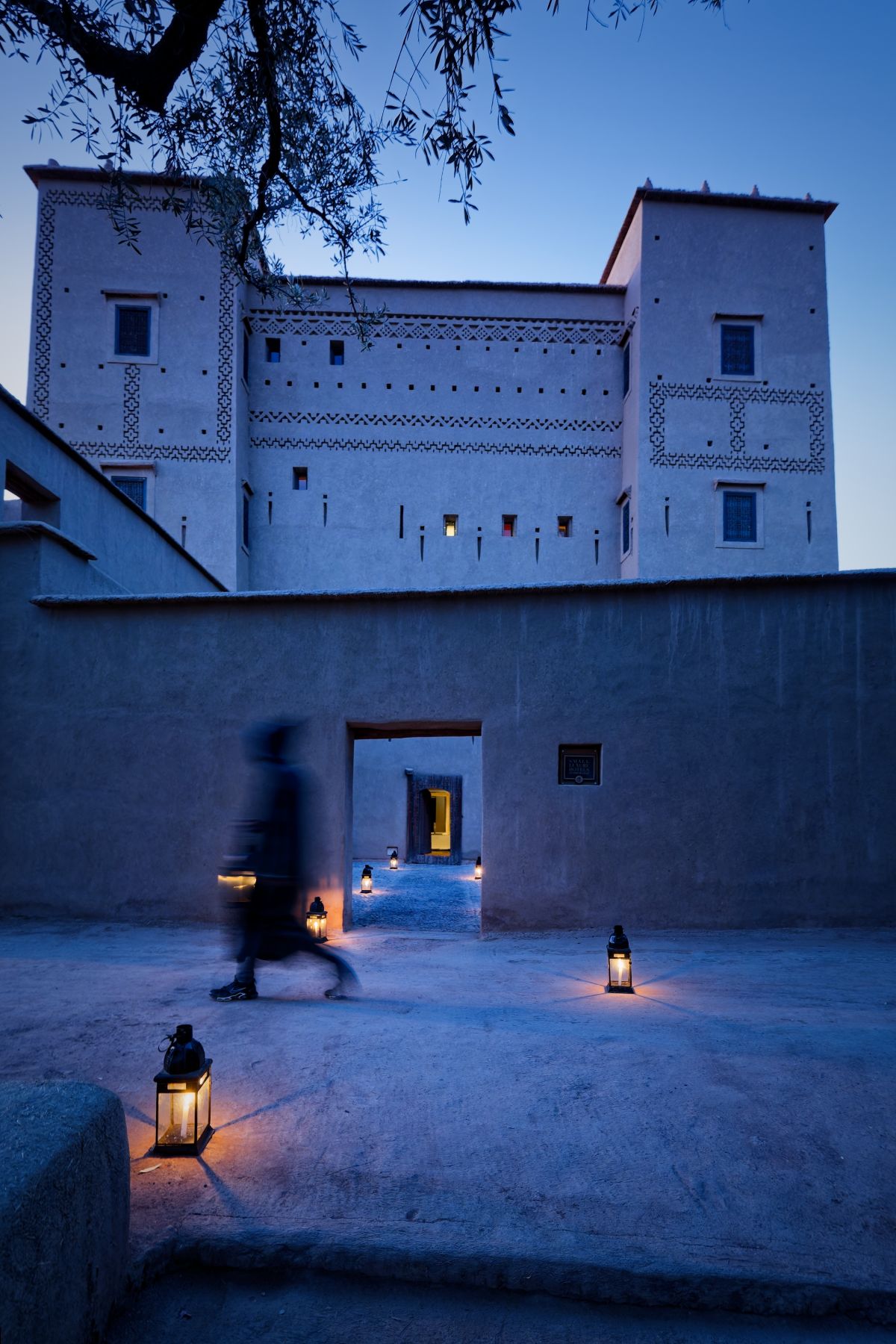
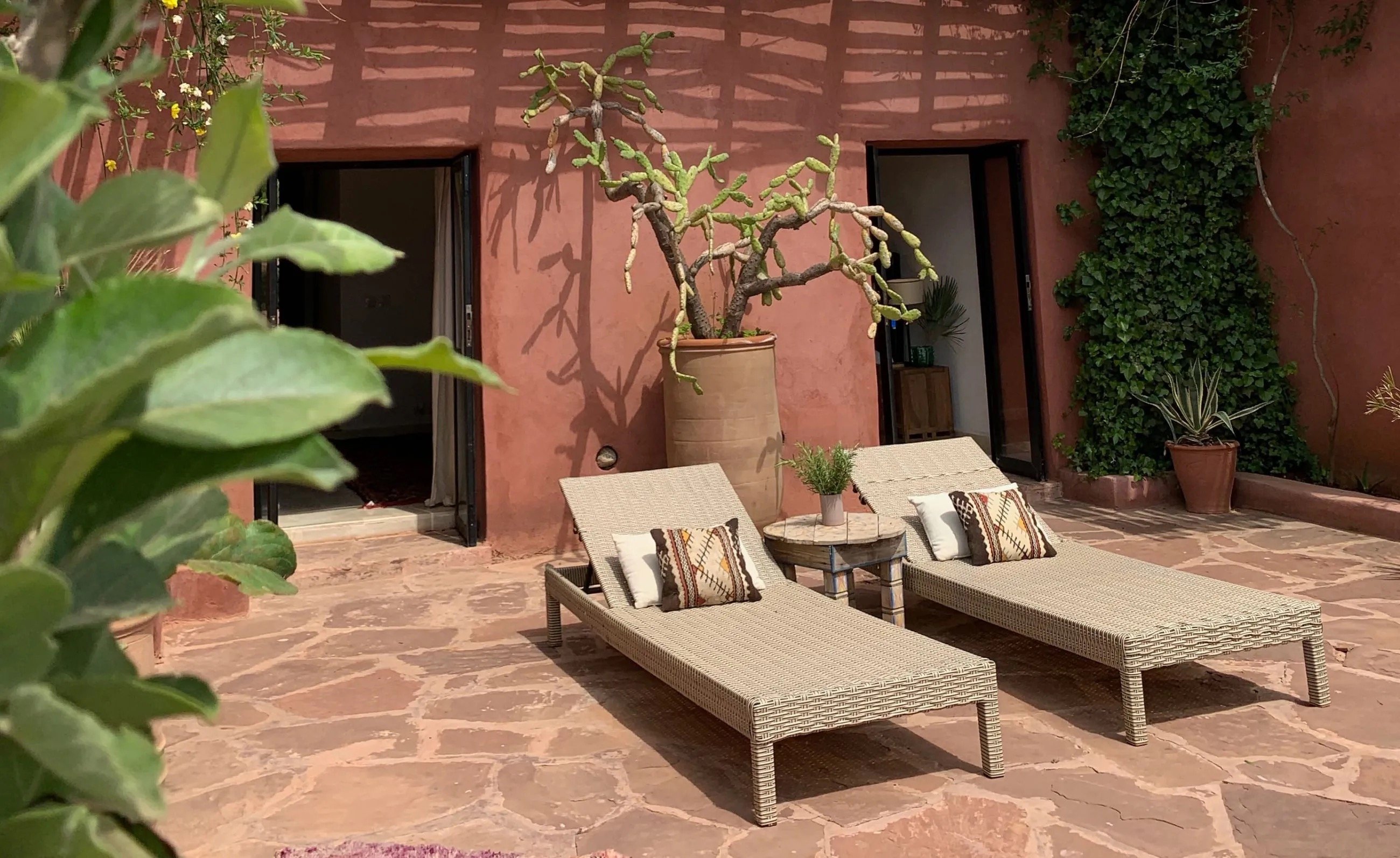
The first thing you notice is the quiet. The second is that the building looks as though the hill pushed it up rather than the other way round. It was raised, not converted: packed by hand from pisé, the rammed earth the Berber masons have used here for centuries, and left the colour of the ground it stands on. From across the valley you can barely tell where the hill ends and the walls begin.
That is the whole point of it. The kasbah keeps forty-two rooms, fifteen in the main building and the rest strung through the gardens and a newer Retreat set apart on the slope, and none of it announces itself. The thick earth walls hold the day's heat and give it back at night, the hot water comes off the sun, and for somewhere this high and this dry the place stays green, terraced down through mimosa and pepper and orange trees to a pool held in a warm hollow. It runs light on the land, and it wears that lightly.
Done one at a time
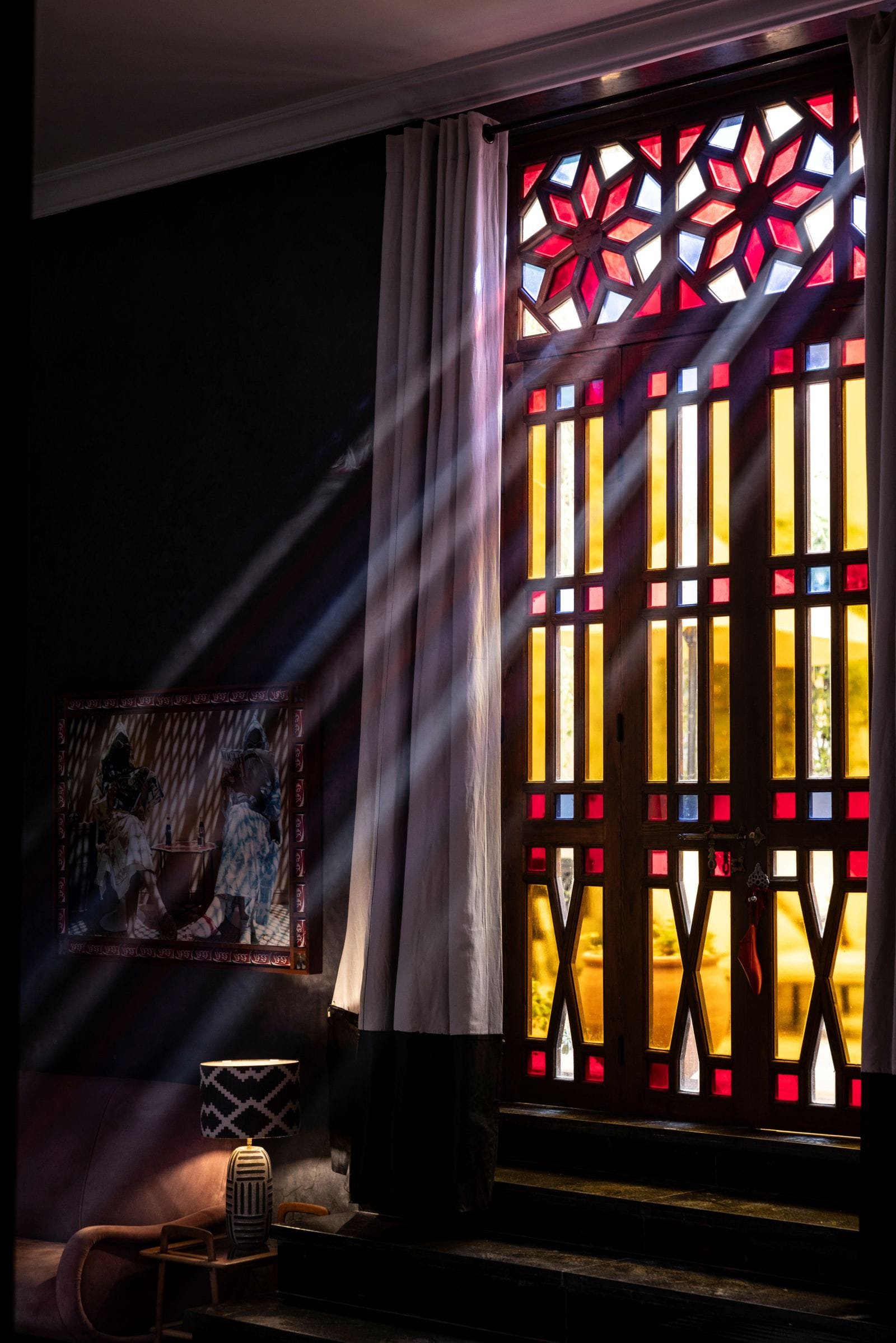
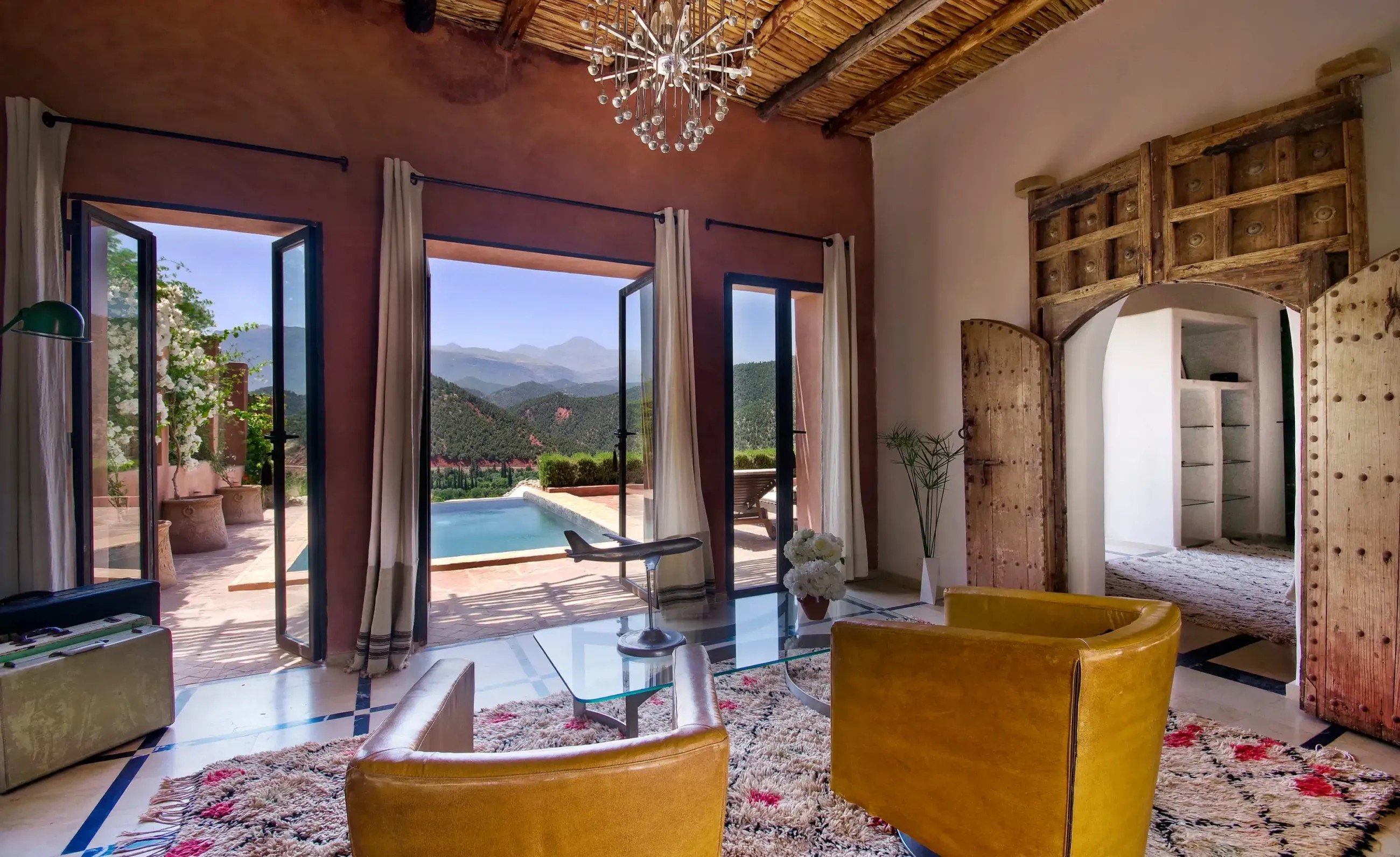
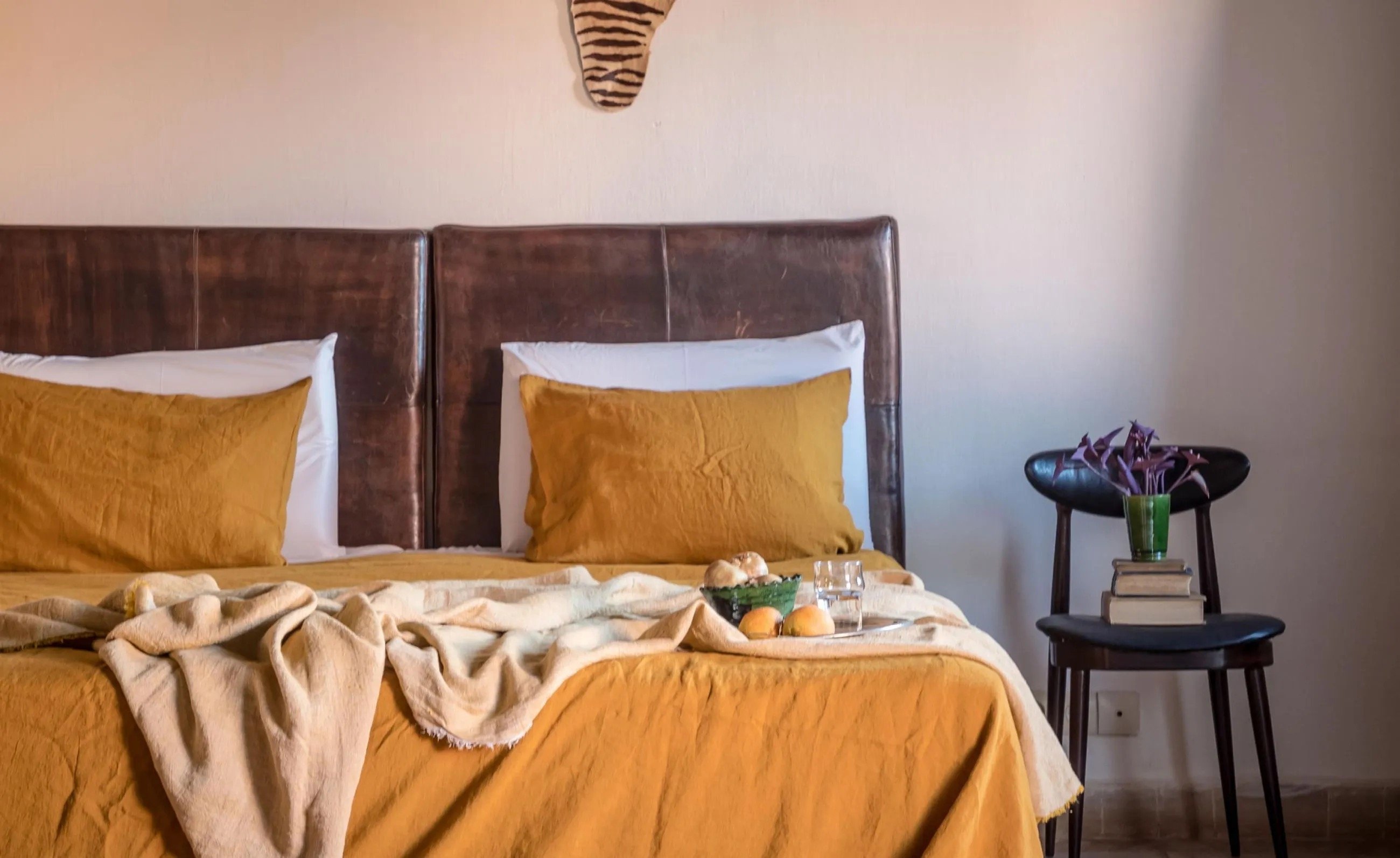
The rooms are done one at a time, and it shows in a way the identical-key hotels never manage. Berber rugs on the floors, mid-century chairs, old studded doors set into new white plaster, a leather headboard the colour of dark honey against a wall left rough. Most open onto a private terrace with the ground falling away below, so the view arrives before you have put your bag down: green valley, red hills, and behind them the Atlas with snow still on it into the spring.
Nothing here strains to be grand. A door that has clearly lived another life somewhere first, a rug worn soft in one corner, a chandelier hung over a plain earth ceiling and left to make its own case. The effect is of a house someone furnished slowly, out of things they liked, rather than a scheme installed in a week.
The road in is short. The climb back out of your own hurry is not.
Whatever they cut that morning
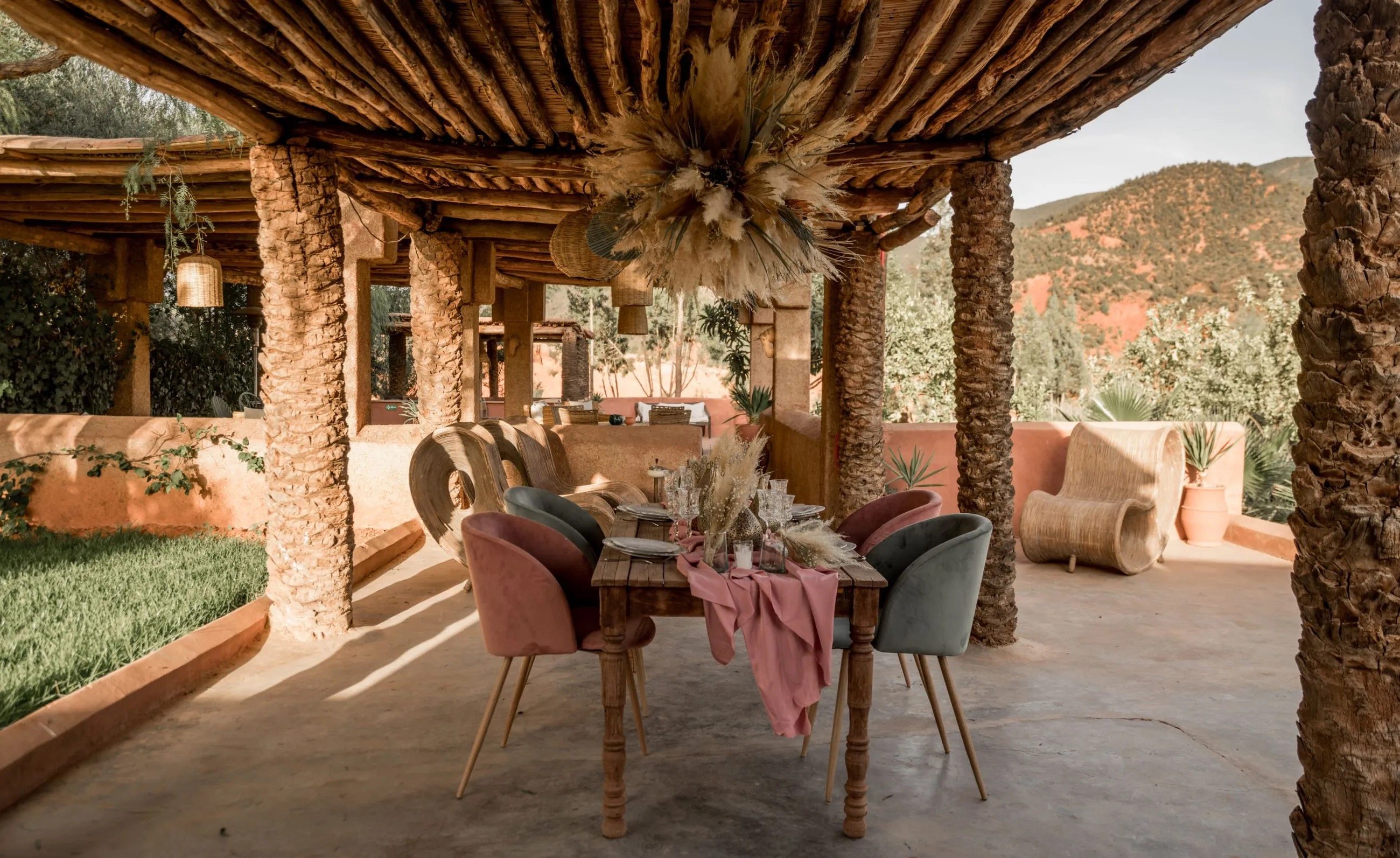
The kitchen works off its own gardens, and the menu turns on what they cut that morning. It is Moroccan mostly, with a European hand laid over it lightly, and you eat it wherever the day happens to leave you. Lunch by the pool, a picnic carried out onto the hill, a pack made up for a walk up the valley, dinner by candlelight on a terrace once the light has gone and the peaks have finished going pink.
Nobody here is chasing a star, and the food is better for it. They feed you well, in the open air, at the pace the valley sets. Below the gate the Ourika runs down past its Berber villages towards the waterfalls at Setti Fatma, and Marrakech sits within the hour when you want it, which up here is not often.
Marrakech has no shortage of grand riads, and most visitors never leave the medina. Bab Ourika is the argument for driving out: it trades the city for silence and altitude, sets the Ourika Valley and its Berber villages on the doorstep, and hands you the High Atlas at every window. The last climb to the gate is rough, which is exactly what keeps the day-trippers below. We would take it for the setting alone, and we would give it two or three nights, not one.