Nearer to Libya than the Nile
The drive is the first thing anyone tells you about, and they are right to. From Cairo it is the better part of a day, west across the sand until the tarmac starts to feel like a rumour. Siwa kept its own Berber language and its own calendar long after the rest of Egypt moved on, an island of date palms and springs set in a great deal of nothing. The place has been receiving strangers since Alexander came looking for the oracle, and it has never seemed to hurry for any of them.
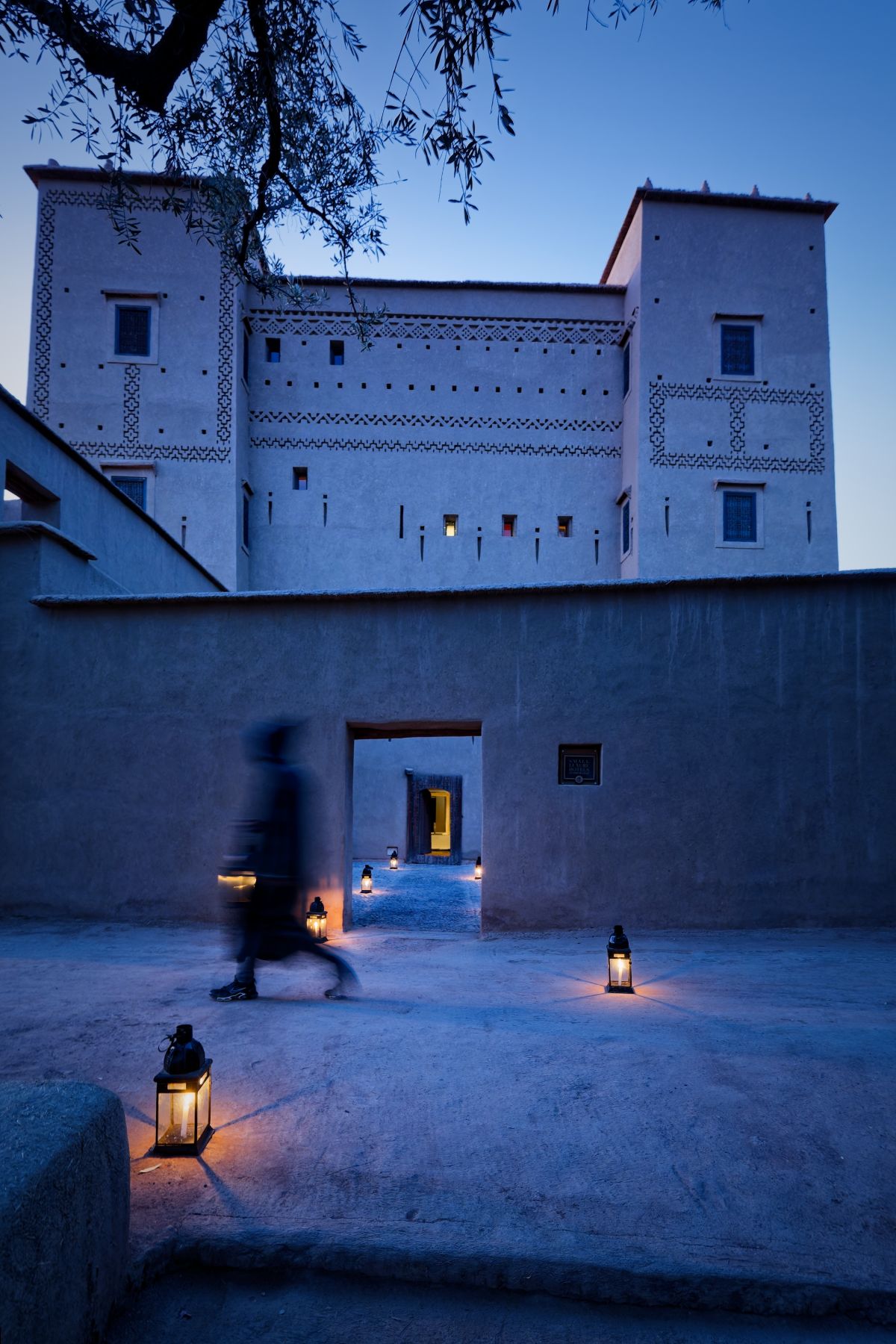
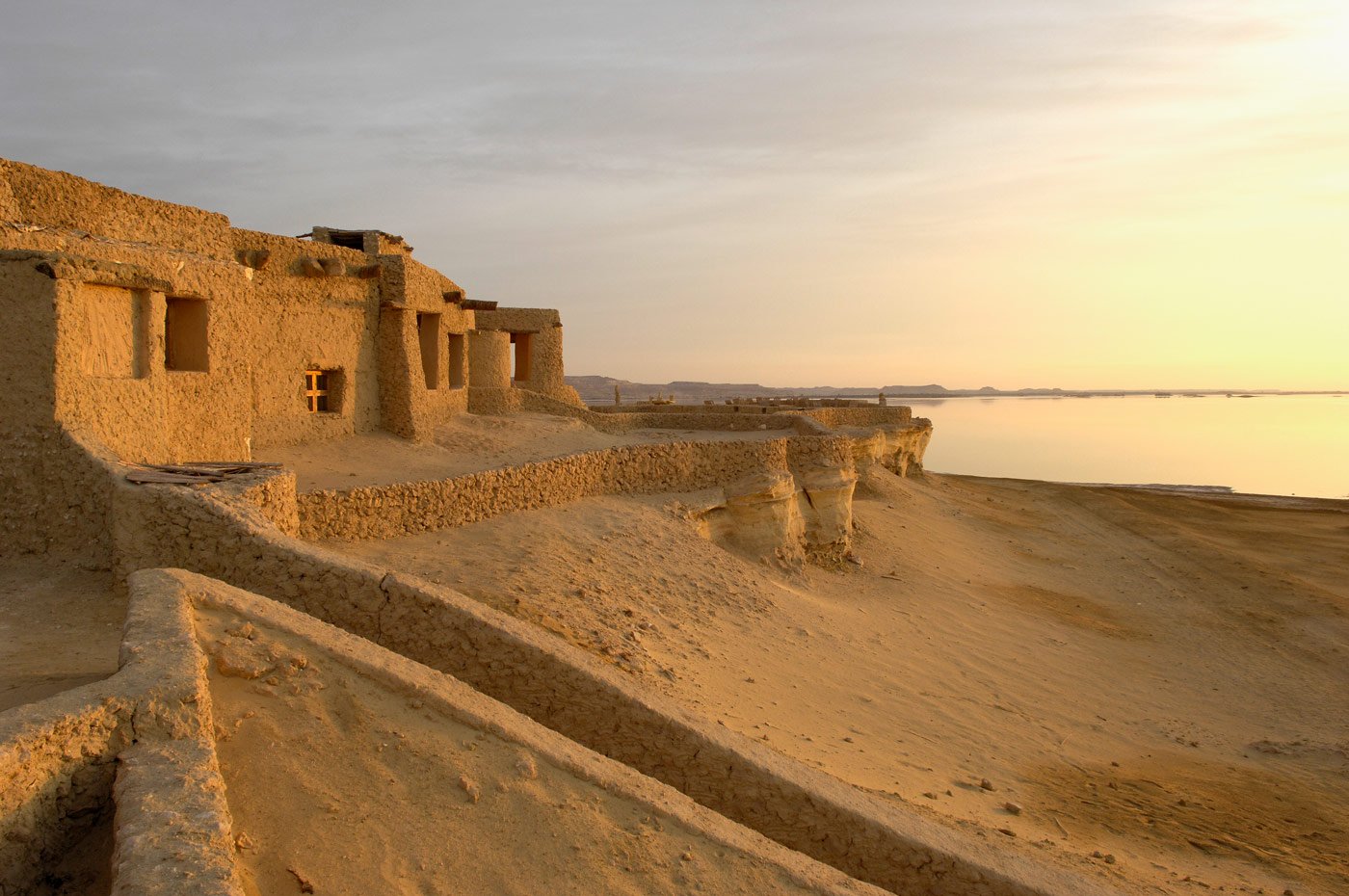
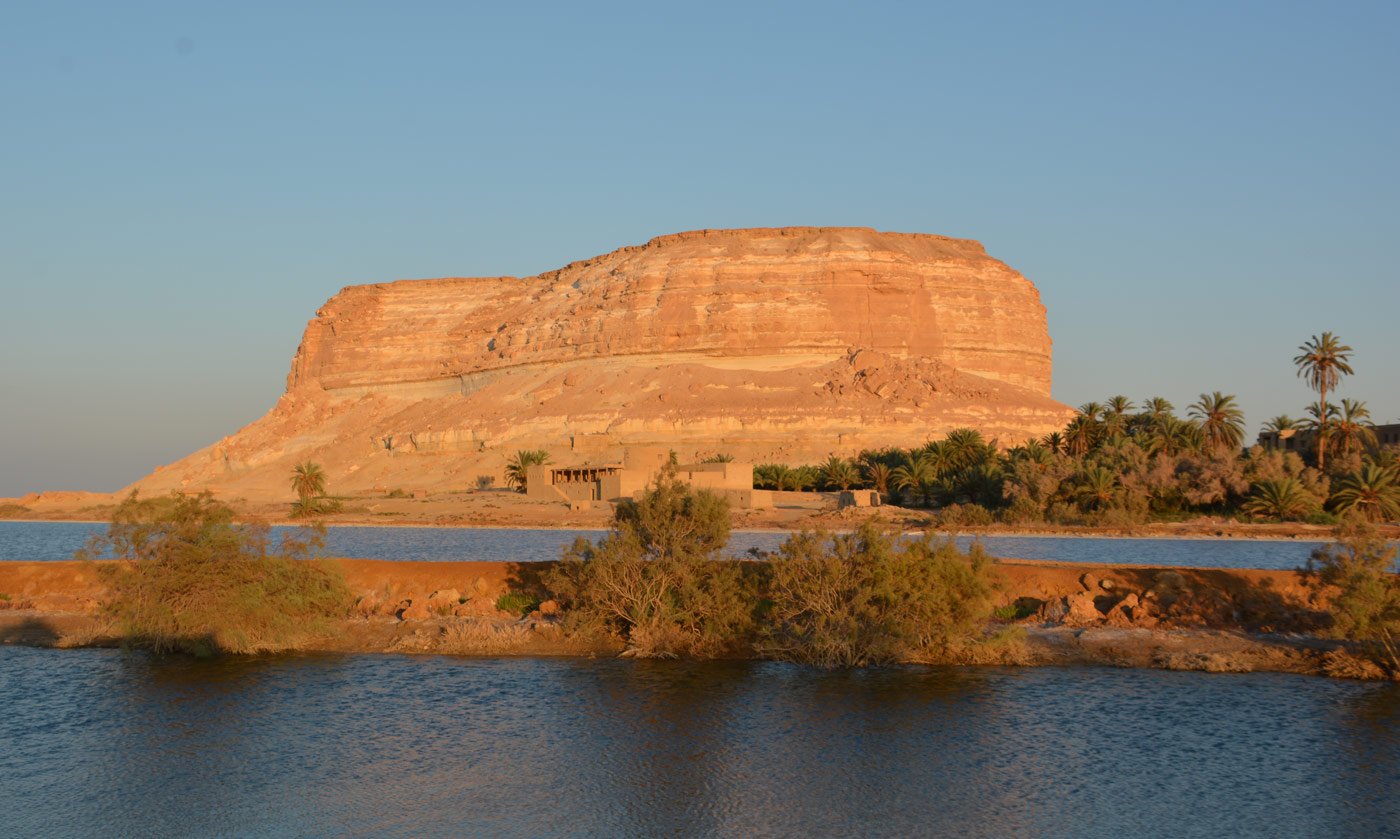
Adrère Amellal means the white mountain in the Amazigh tongue spoken here, and the lodge is built straight into the rock at the base of the monolith that gives it the name. The walls are kershef, the old Siwan mix of salt-rock, clay and straw, laid up thick and pale so the heat of the day never quite gets in and the cold of the night never quite gets out. There are around forty rooms and no two are alike, which is what happens when a building is shaped by hand rather than drawn on a screen.
There is no reception desk and no lift. The building was grown, not planned.
A house without switches
There is no electricity at Adrère Amellal, and this is not a shortage but the entire argument. After sundown the lodge is lit by beeswax candles set into niches carved to hold them, by oil lamps, and by a desert sky that carries more stars than most of us have seen in a lifetime. The rooms have no switches and no sockets, no screen to glance at, nothing that hums. Water is heated by the sun. What the quiet does to a person takes a night or two to land, and then it is difficult to give up.
The rooms follow the Siwan grammar rather than fight it. The larger salt suites are carved and washed in blocks of the local rock salt, faintly translucent when a candle is set behind them; the plainer chambers keep to thick walls, low arches and windows cut to frame the lake or the mountain. Nobody has added anything the desert would not recognise.
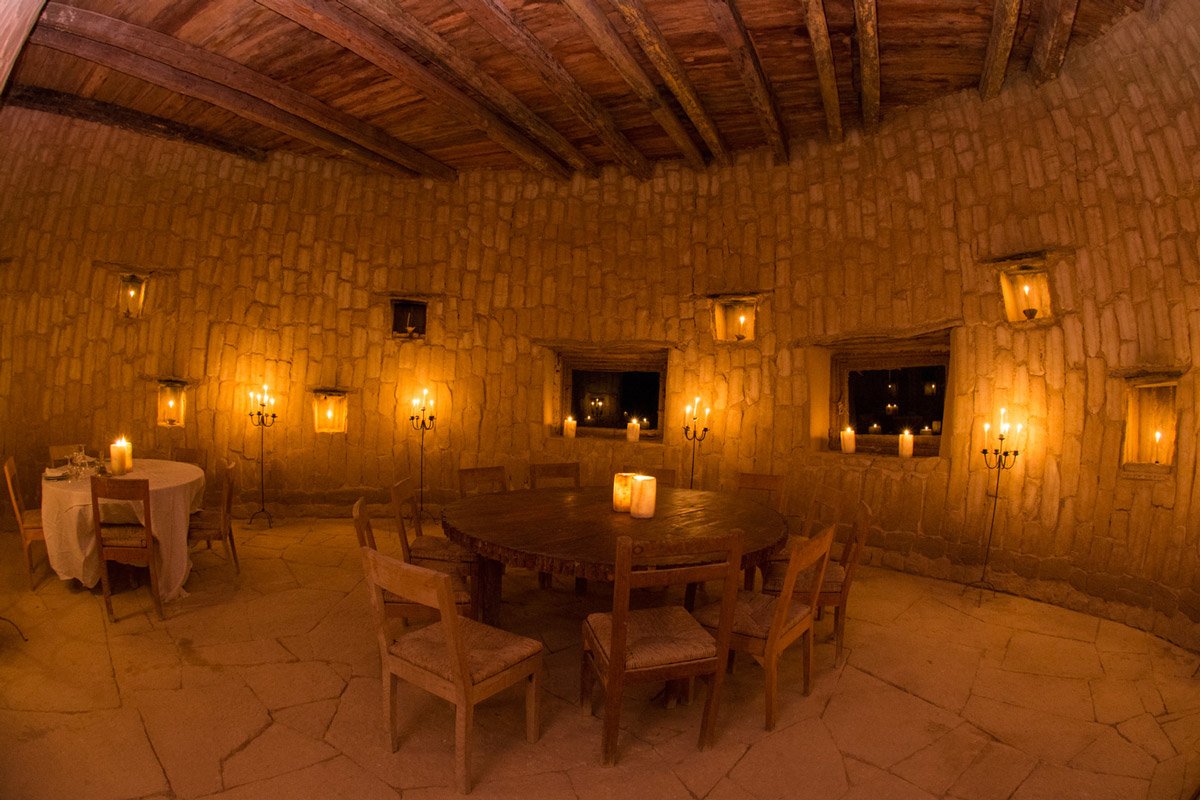
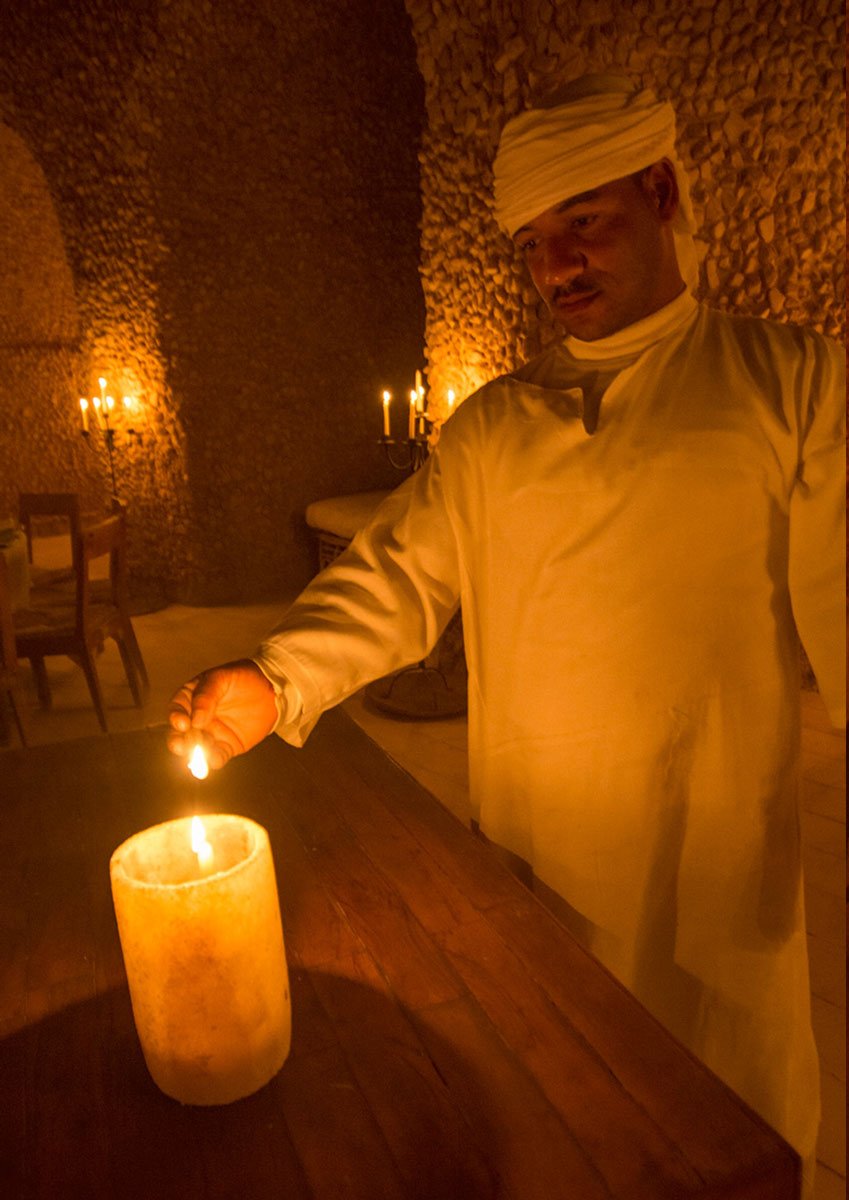
You do not notice how much noise a modern room makes until you spend a night in one that makes none.
Where the evening is best
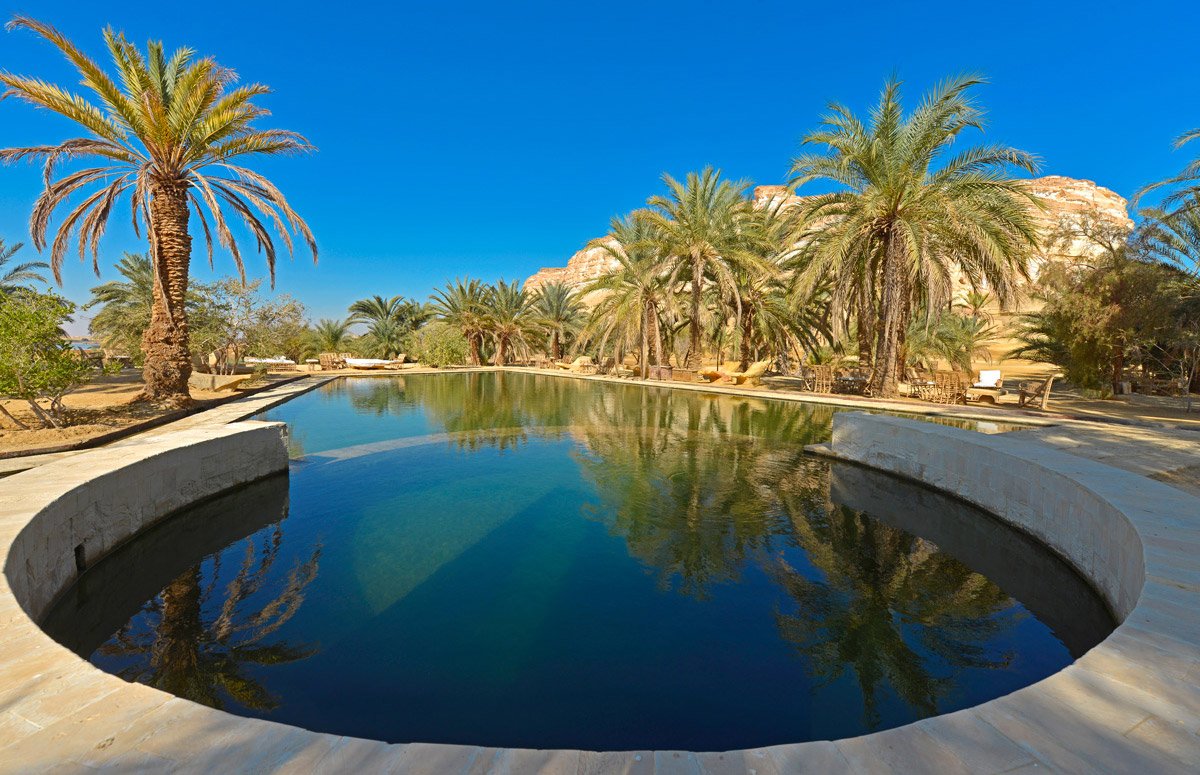
A natural spring feeds a pool at the heart of the palm grove, deep and clear and cold enough to shock the heat out of you, ringed by date palms that stood here long before the lodge did. Meals do not sit in a single dining room. Breakfast goes out under the palms, lunch tends to find the water, and dinner is taken by candlelight inside one of the kershef halls or out on the sand where the stars come down to the horizon.
The kitchen leans almost entirely on the garden beside it. Herbs and vegetables are cut that morning, local dates are worked into the sweets, and the bread comes from the property's own oven. It is Egyptian cooking with a lighter European hand, and it tastes of the ground it was grown in rather than of some idea imported from a city. An hour or two across the sand stands the Temple of the Oracle, where Alexander is said to have put his questions to the god Amun in 332 BC and come away satisfied with the answers.
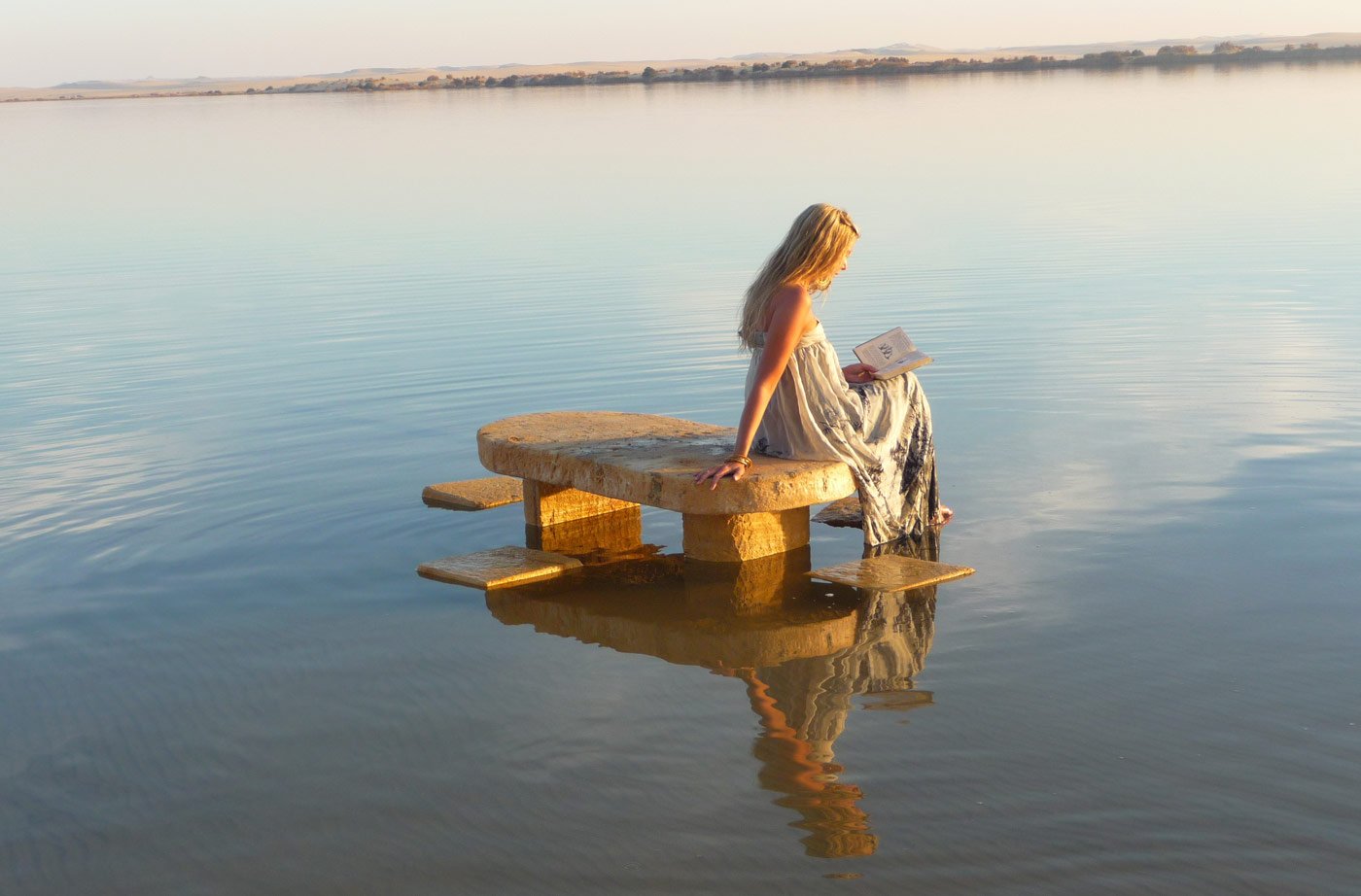
The table is laid where the evening is best, and the evening is always somewhere.
Adrère Amellal does not compete on thread counts or spa menus, and it would lose if it tried. What it offers is rarer and much harder to build: a genuinely remote place, made by hand from what the desert gives, run less as a hotel than as a case for keeping Siwa as it is. You come for the walk up the mountain at dusk and the swim in a cold spring under a sky thick with stars. You come, in the end, for the long empty drive that keeps the crowds away by being long and empty. There is no wifi and no air-conditioning. That is not an oversight, it is the whole point.
Photos: Adrère Amellal (official), with credit.