Ground Truth
Stand on the quay at Aigio at dusk and the gulf looks settled. A long blue corridor, mountains on both sides, a ferry crawling across it towards the mainland. It is not settled. The ground beneath this water is one of the fastest-opening rifts on the planet, and every year the far shore drifts a little further off.
The Gulf of Corinth is a rift, a stretch of crust being pulled until it thins and drops. Geologists put the pull at roughly a centimetre and a half a year in the western basin, the two coasts easing apart on a north-northeast line. That sounds like nothing. Over the life of a civilisation it is a great deal. The gulf you sail today did not hold this shape when the first Greeks built along it, and it will keep growing long after we have gone.
A sea does not always arrive as a flood. Sometimes it opens under your feet, patiently, one earthquake at a time.
The rift keeps its accounts in earthquakes. In 373 BC the city of Helike stood on the southern shore, near where Aigio is now. One winter night the ground failed and the sea came in, and by morning the city was gone, drowned in shallow water where boatmen for centuries said they could still make out its ruins. Ancient writers never let it rest. Some believe the memory reached Plato and helped shape his story of Atlantis.
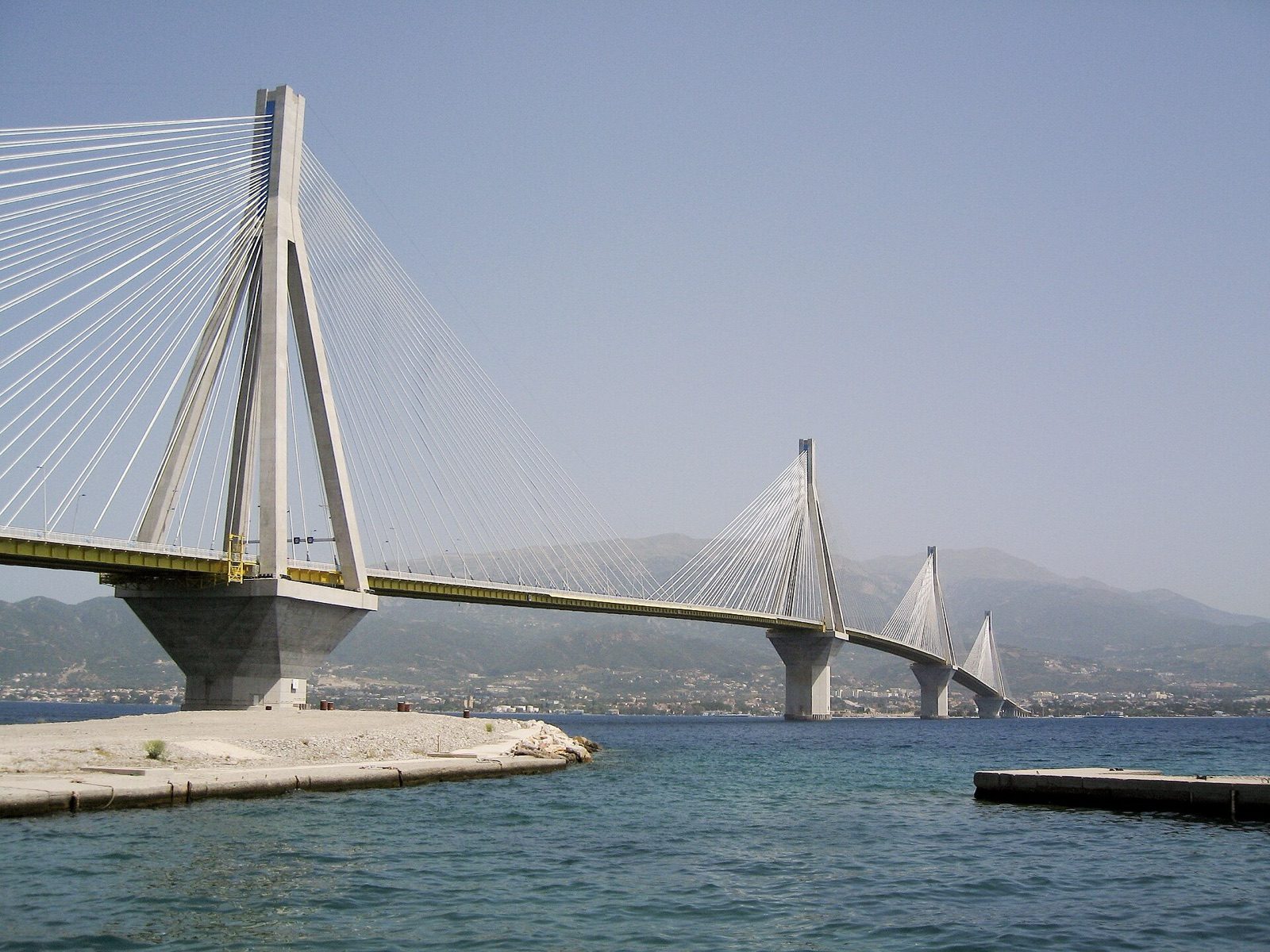
You can read the same forces in the newest thing on the water. Where the gulf narrows towards Patras the Rio-Antirrio bridge crosses in a single sweep, its deck hung so that it rides the shocks and the slow widening of the strait rather than braces against them. It is one of the few great bridges built in open conversation with a moving seabed. To drive across it is to trust engineers who took the rift at its word.
None of this shows on a calm afternoon. The water is warm, the tavernas along the shore fry small fish, the light turns pink on the peaks of Helmos. That is the strangeness of the place. A slow catastrophe and an ordinary Greek summer keep the same coast, and only the instruments, and the old stories, will tell you which of them is winning.