Ground Truth
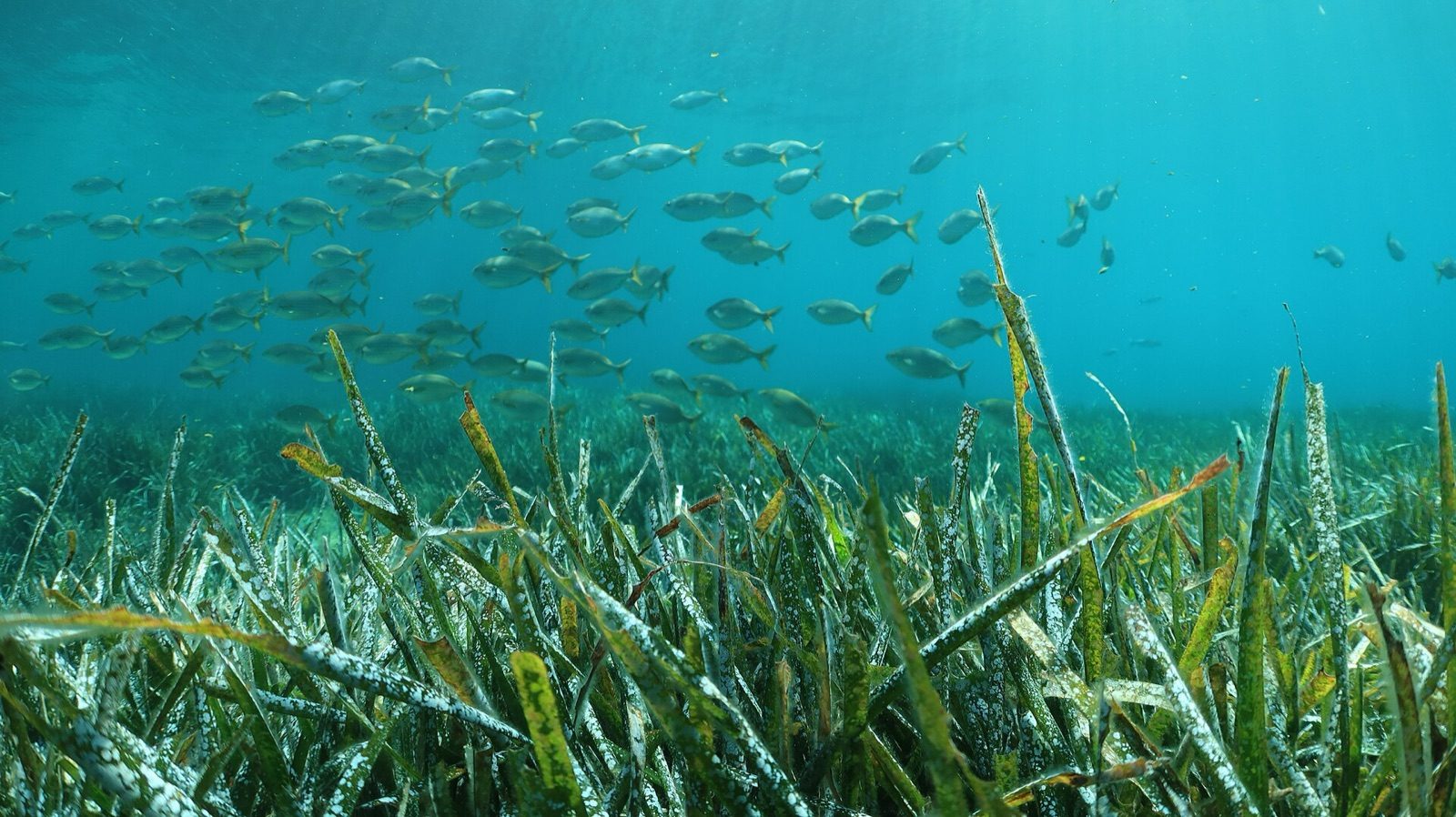
We tend to look for the Mediterranean's great survivors on land. The olive bent over a Mani threshing floor. The cedar holding a Lebanese ridge. The oldest of them all is somewhere none of us can stand. It lies a few metres under the turquoise between Ibiza and Formentera, a meadow of seagrass called Posidonia oceanica, and parts of it may have been alive since before the last ice age closed in.
In 2012 a team led by Sophie Arnaud-Haond sampled meadows the length of the sea, from Cyprus to Spain. Off Formentera they found a stretch of Posidonia that was genetically identical over as much as fifteen kilometres. One organism, cloning itself sideways, century after century. Working back from how slowly the plant spreads, the researchers put its age somewhere between eighty thousand and two hundred thousand years. The figure most often repeated is a hundred thousand. Either way it was here long before the first stone of Giza was cut.
A single plant, older than farming, older than cities, holding a sea in place while we argue about the weather.
Posidonia is not seaweed. It is a true flowering plant that went back to the water, with roots, leaves and, in autumn, fruit that drifts ashore as the pale fibrous balls beach walkers across the basin will know. Its meadows are the engine room of the coast. They shelter the young of the fish we later eat. They pump oxygen into the shallows and bury carbon in their root mats for thousands of years, which is why scientists now file them under blue carbon. The clarity we prize in Balearic water is largely their doing. The leaves comb sediment out of the current and hold it down, and the sea above settles into that particular readable blue.
Stand on a boat anywhere off the Pityusic islands on a still morning and the pattern is easy to read. The dark ribbons below are not rock. They are the plant, and the paler sand channels between them are the gaps it has not yet filled.
It is also in trouble. Anchors drag furrows through meadows that take a human lifetime to close. Warming water and coastal building have pushed the plant into retreat across much of the sea. UNESCO listed the Ibiza and Formentera meadows as World Heritage in 1999, and divers off the Balearics now replant by hand what a single careless afternoon can tear up. We find that order of time humbling. A plant that has outlasted every empire that ever claimed this water can still be undone by a chain and a skipper in a hurry.