Ground Truth
Anyone who has spent an August in the Cyclades knows the sound before the name. A steady, dry roar off the north that starts mid-morning, builds through the afternoon, rattles the shutters and then, most nights, drops away to nothing. This is the Meltemi, the great northerly of the Aegean, and to plan a summer here without accounting for it is to misread the place entirely.
The Greeks and Turks call it Meltemi. Meteorologists call it the Etesian wind, from the Greek for yearly, because it arrives on schedule. It blows from June to September, strongest from mid-July to mid-August, and it comes down out of the north and north-west with a reliability that borders on the institutional.
The mechanism is simple enough to sketch on a napkin. High pressure sits over the Balkans and central Europe while a deep thermal low forms over the baking Anatolian plateau. Air pours from the high towards the low, and the Aegean happens to lie directly in its path. Squeezed between islands and funnelled through the gaps in mountain ranges, that flow accelerates. On the worst days it reaches force seven or eight, and the sea between Mykonos and Ikaria turns into a field of white.
You do not fight the Meltemi. You read the forecast, you choose the leeward side of the island, and you learn to love the shade of a north-facing wall.
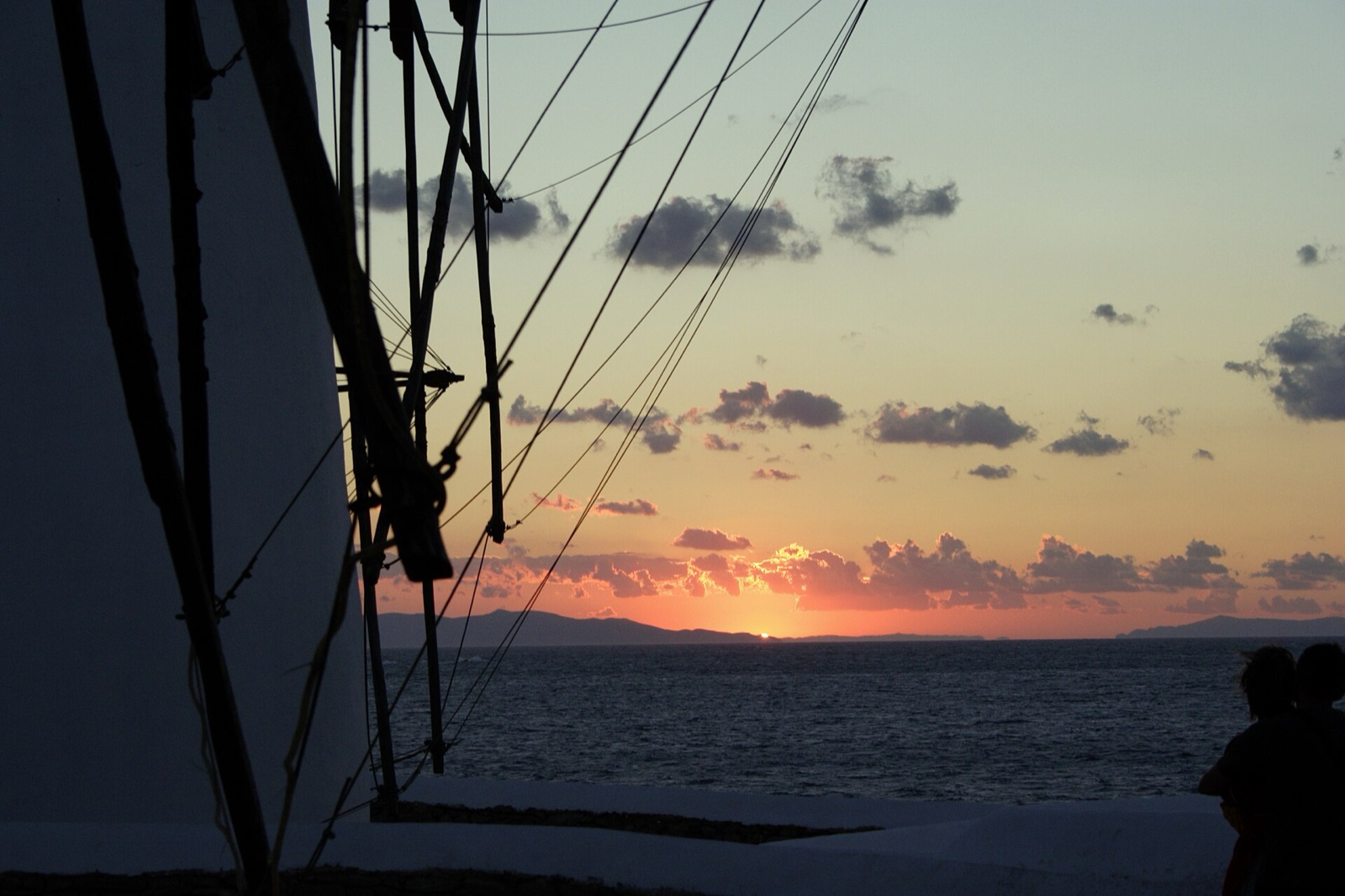
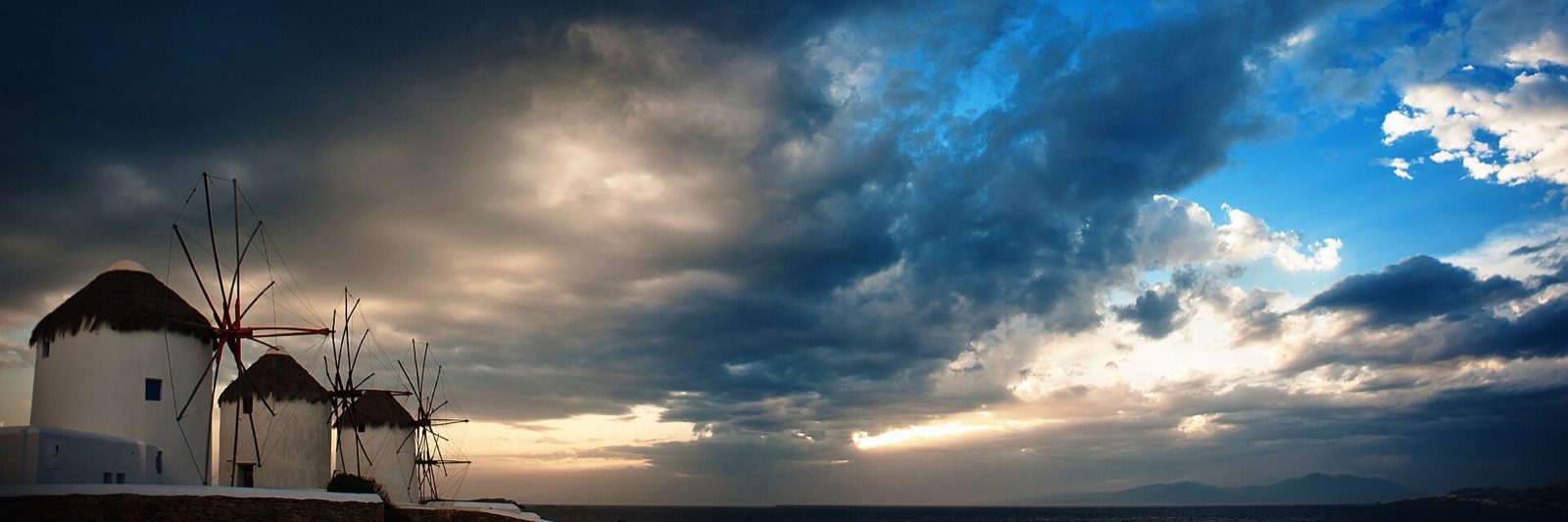
The wind is why the Cyclades look the way they do. The cubic, whitewashed houses turn their backs to the north, their windows small and their walls thick. Chapels tuck into hollows. The famous windmills of Mykonos and Kythnos were not decoration but industry, sited on exposed ridges precisely to catch the thing everyone else was hiding from. For centuries the Meltemi ground the islands' grain.
It ruled the sea lanes too. Ancient sailors timed their passages around it, running south with the wind on the quarter and waiting, sometimes for days, for a lull before beating back north. The modern ferry captain does much the same, and a cancelled crossing in high summer is almost always the Meltemi's doing, not a storm's.
There is a compensation, and it is considerable. The wind is dry and relatively cool, so it scrubs the humidity from the air and keeps the heat bearable when the mainland is gasping. The light turns hard and clean, the kind that flattens nothing and sharpens everything. Sit on the sheltered south of an island with a cold glass and the Meltemi becomes the most agreeable air-conditioning ever devised.
So treat it as a fact of the itinerary, not an inconvenience. Book the calmer weeks at the shoulders of summer if flat water matters to you. Otherwise, pick your side of the rock, and let the oldest force in the Aegean do what it has always done.
The Meltemi blows across the Aegean from roughly June to September. It is at its strongest and most dependable from mid-July to the end of August, then eases through September. Outside those months it is rare, which is why its grip on the forecast loosens as autumn comes in.
Most days it runs at force 4 to 6 on the Beaufort scale. On its hardest days, usually in the central Aegean around the Cyclades, it reaches force 7 to 8 — strong enough to raise white caps across the open sea and to cancel ferries.
The Cyclades take the full force — Mykonos, Tinos, Syros, Paros, Naxos, Ios and Amorgos — where the flow is funnelled and accelerated between the islands. Ikaria and the eastern Aegean feel it too. The Saronic Gulf near Athens and the Ionian islands on the west of the country stay largely sheltered.
A cancelled crossing in high summer is almost always the Meltemi rather than a storm, so check the forecast before booking island hops on exposed, open-water routes. For swimming, choose the leeward southern side of an island; north-facing beaches turn choppy and cold. For windsurfers that same wind is a gift, which is why Paros and Naxos draw boards from all over the world.
Meteorologists call it the Etesian wind, from the Greek etesios, meaning annual, because it arrives on schedule each year. In Turkish the same wind is the meltem. All three names describe the one dry northerly that defines the Aegean summer.

One selection at a time, in your inbox. Subscribe →