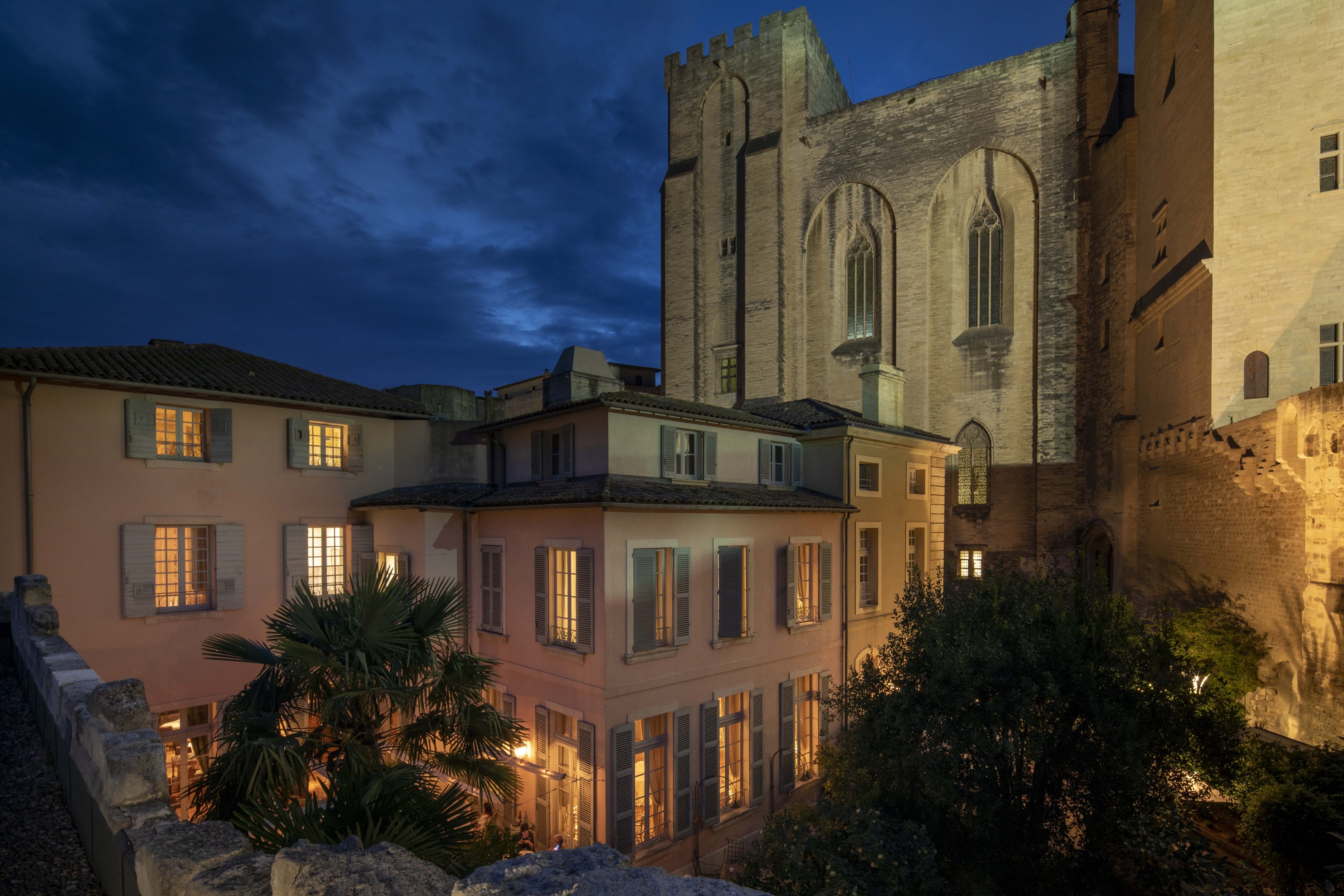
Seven centuries, one address
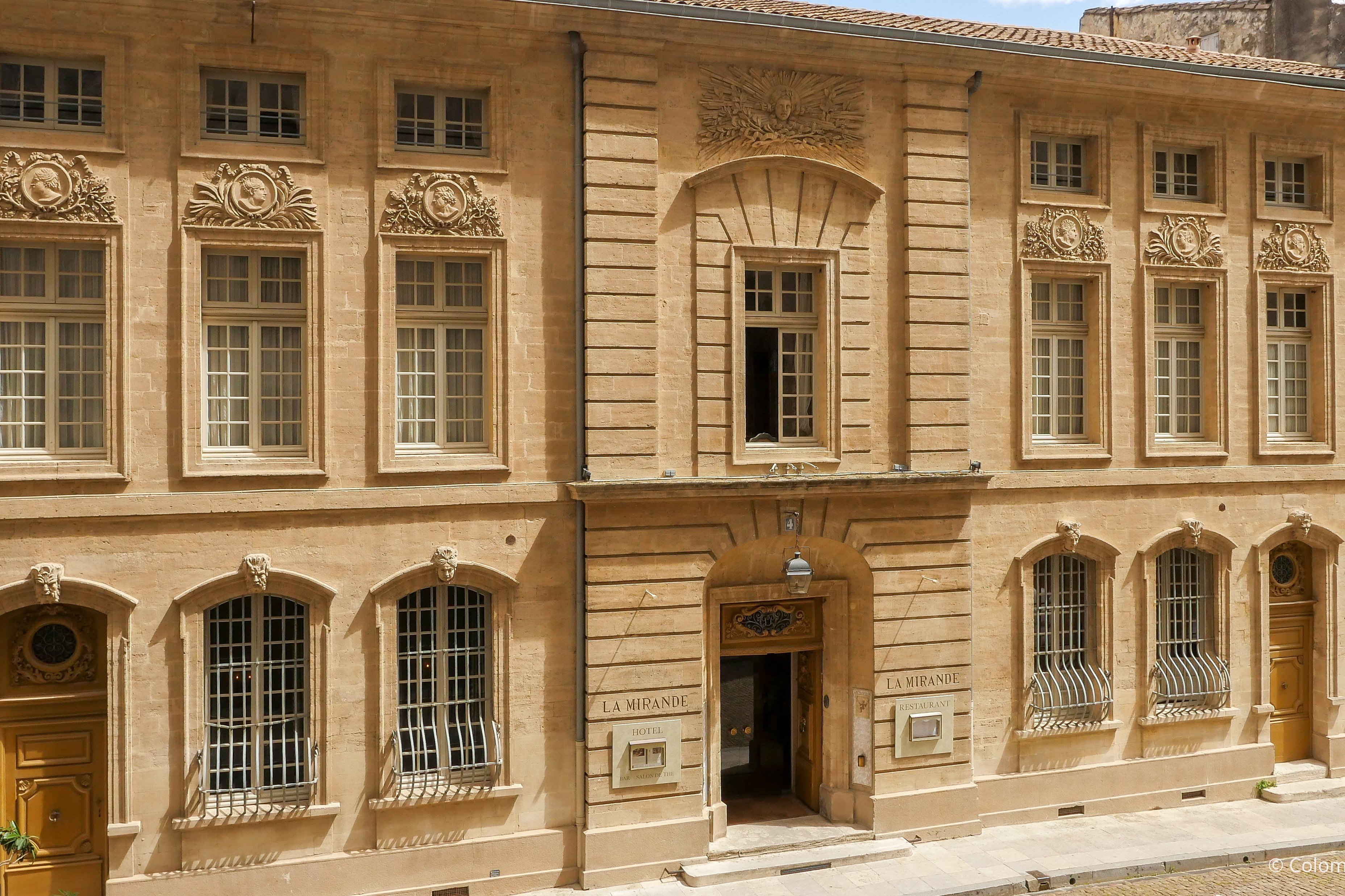
In 1309 a cardinal named de Pellegrue, a nephew of Pope Clement V, built a livrée on this spot, one of the grand residences that went up around the papal court in the years when Avignon, not Rome, held the popes. It stayed in cardinals' hands until 1410. What you see from the square now is later work: after Claude de Vervins acquired the remains in 1653, his son had the architect Pierre Mignard draw the calm classical front that still faces the street. The Pamard family bought the house in 1796 and held it for two hundred years, which is why old Avignon still calls it the Hôtel Pamard.
The present chapter is the Steins'. The family acquired the building in 1987 and gave it three years, working with the Paris decorator François-Joseph Graf and the Avignon architect Gilles Grégoire. They did the rare, patient thing and restored rather than modernised, laying back in the panelling, the block-printed cottons and the salvaged stone until the rooms read as though they had never stood empty. It opened as a hotel in 1990 and has changed remarkably little since.
Staying inside a period
There are twenty-six rooms and suites, and no two are alike. Some look onto the walled garden, others onto the medieval lanes, and the floodlit ramparts of the popes' palace lean over the whole thing after dark. Inside there is painted panelling and faded toile, worn rugs and good furniture, the salon of a family that had held on to its eighteenth-century skin. Nothing is loud. Nothing announces the year.
The discipline of the restoration is the point. Where most houses of this vintage have been smoothed and updated into anonymity, La Mirande kept its grain: the patina, the weight of the doors, the sense that the pieces were chosen once and then left alone. You stay inside a period, not inside a brand.
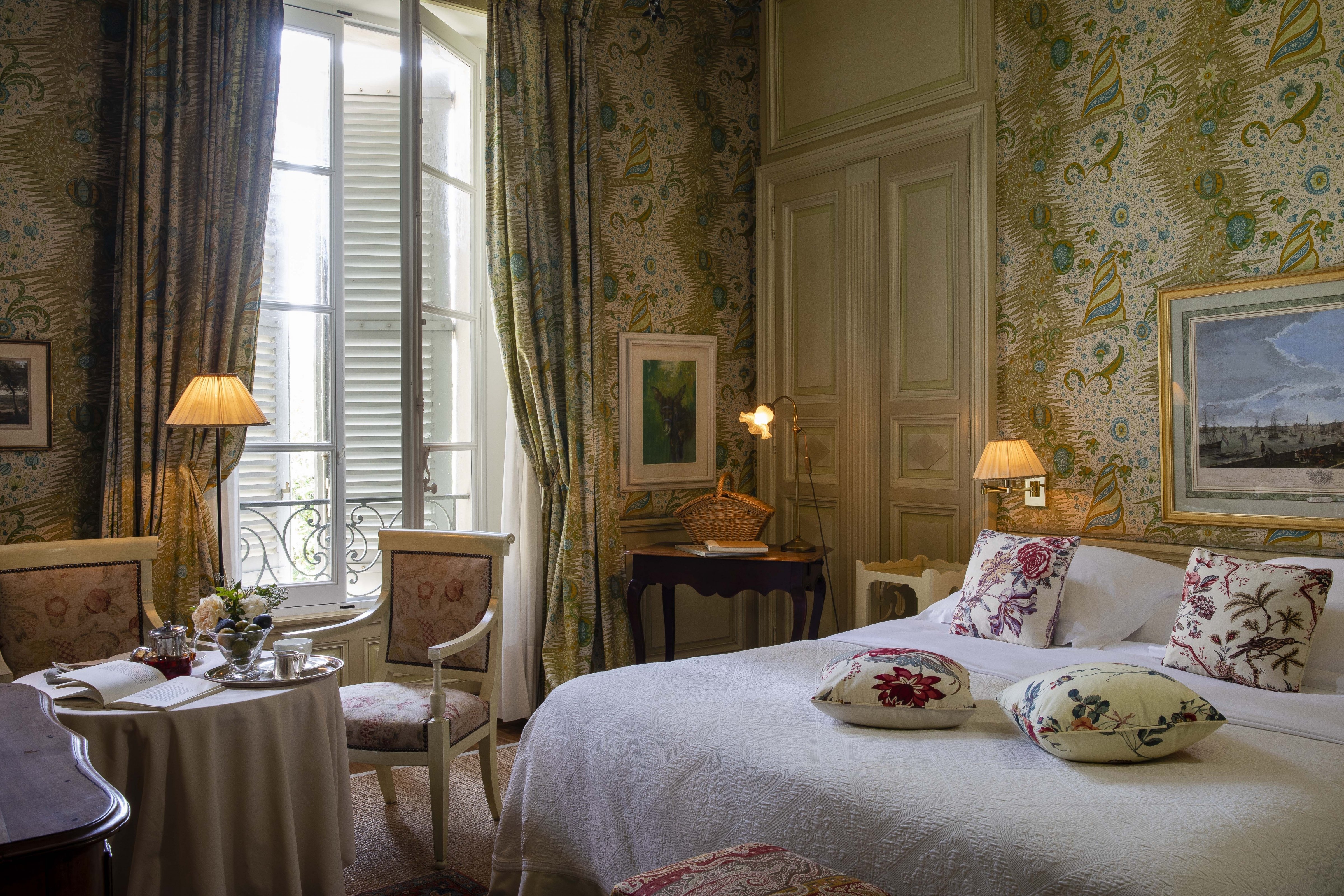
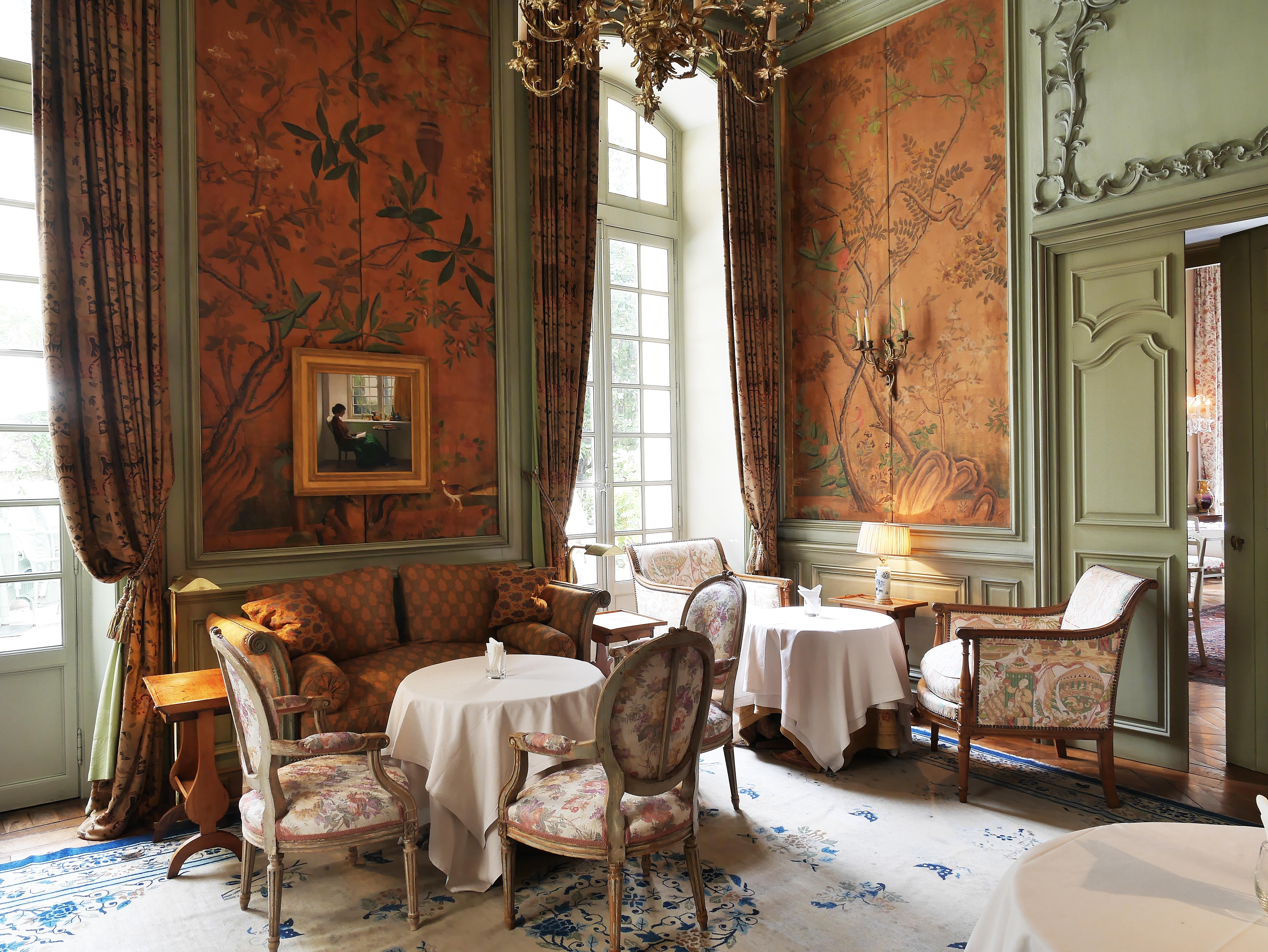
The rare restoration that resisted the urge to modernise, and kept the grain of the place.
A star, and one long table
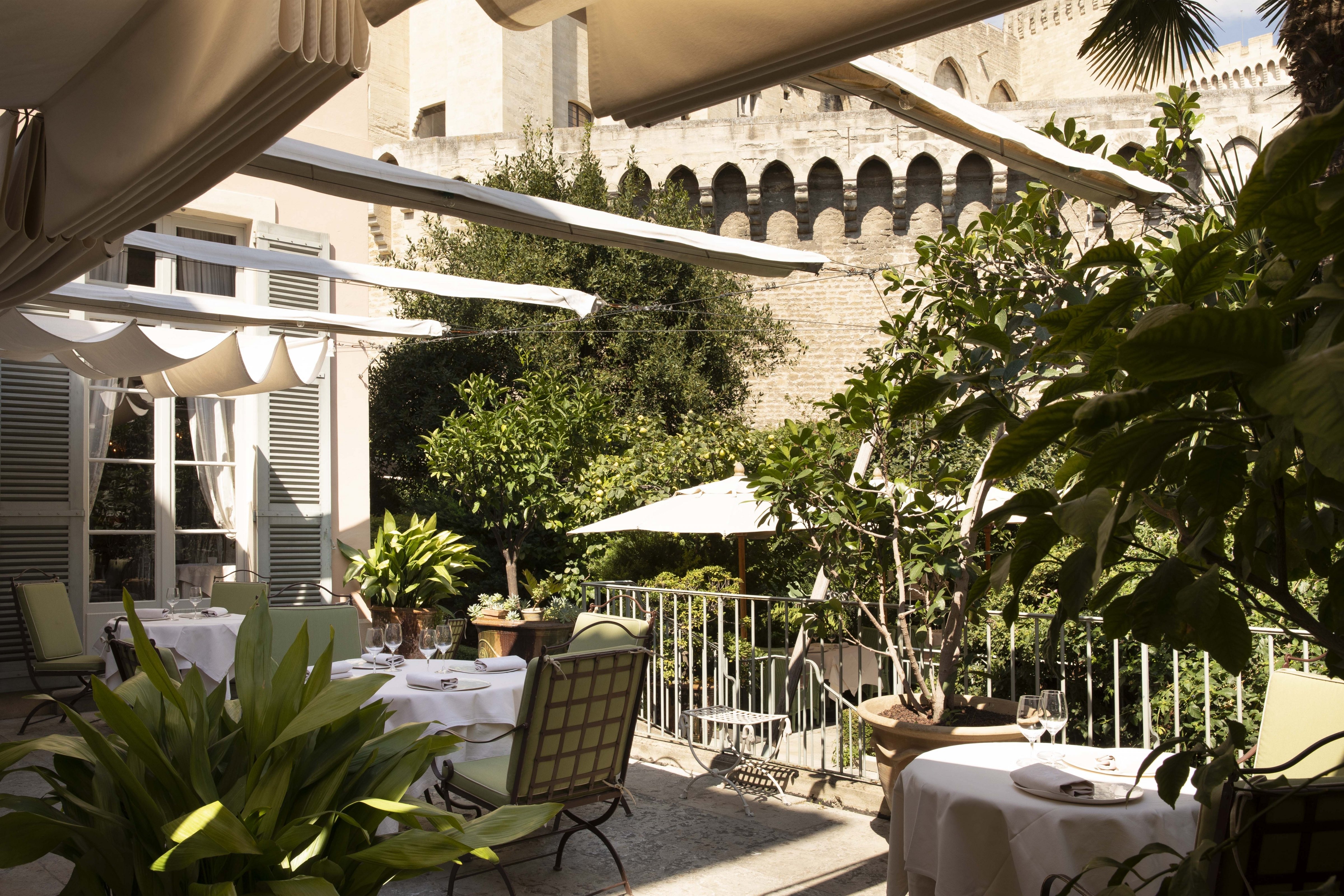
A house this careful about its rooms tends to be serious about its kitchen, and this one is. Le Restaurant holds a Michelin star and a Michelin Green Star for its sustainable cooking, taken in the courtyard garden when the weather allows. The kitchen passed in early 2026 to the Italian chef Michele Donvito, who came by way of Alexandre Mazzia's three-star room in Marseille and succeeded Florent Pietravalle. Next door, Le Bistrot Pamard keeps a plainer, regional register.
The one to plan around is La Table Haute. In the original nineteenth-century kitchen, copper on the walls and candles down the middle, a handful of guests sit to a set menu cooked at the old range, part dinner, part quiet theatre. A cooking school has run in the same room since 1994, which tells you where the house keeps its heart. Both are small and much wanted, so book well ahead.
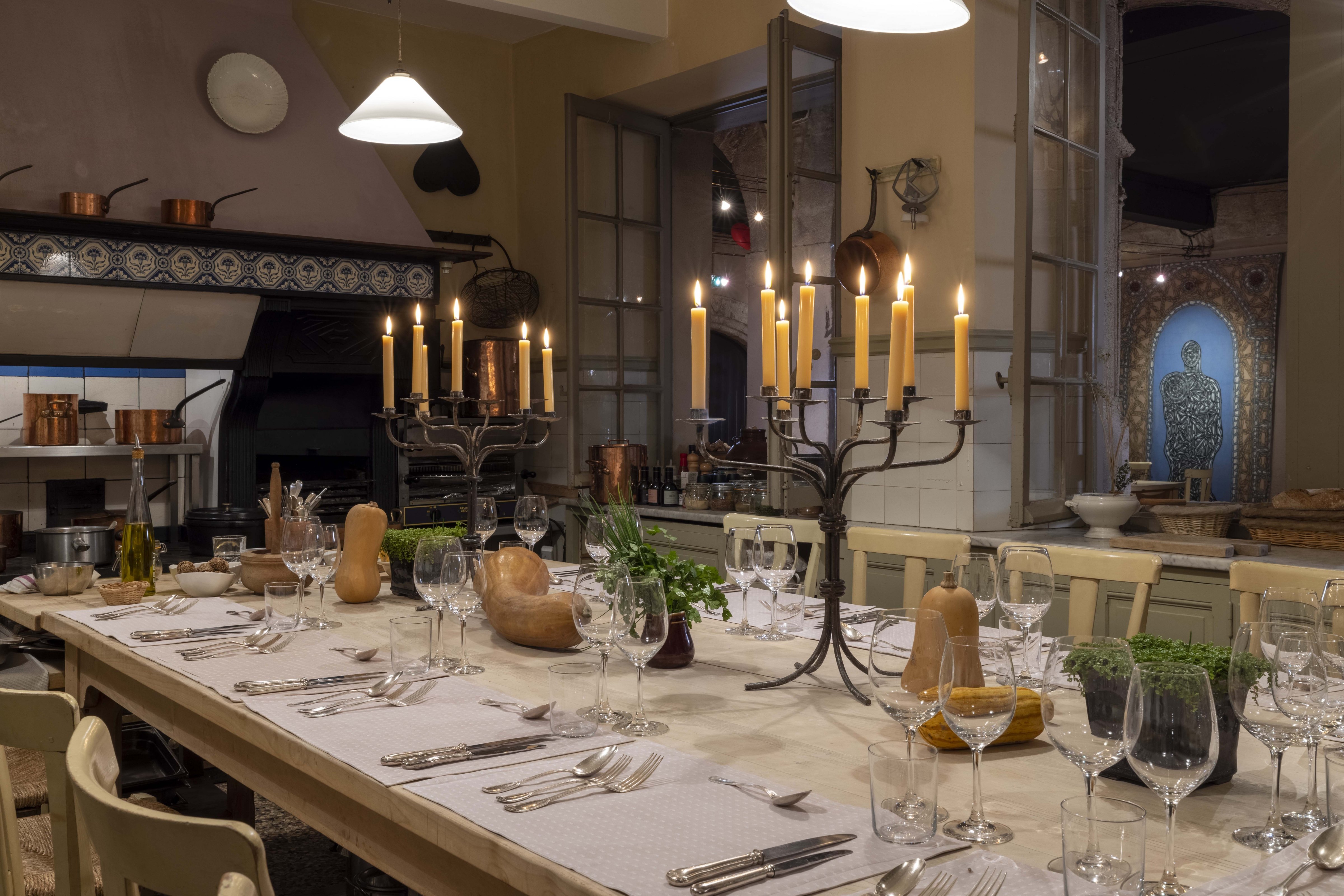
La Mirande is continuity made comfortable: a cardinal's palace that skipped the museum and became a home instead, with a star in the kitchen and seven centuries in the walls. We have not yet stayed, so this stands as a researched profile rather than a first-hand verdict. On the evidence, and on the address, it earns the closer look.
VANE note. This is a researched profile, not yet a first-hand VANE verdict. A full review carries a stay date, an independence disclosure and the writer's own account. Photos: La Mirande (official), with credit.