Field Notes
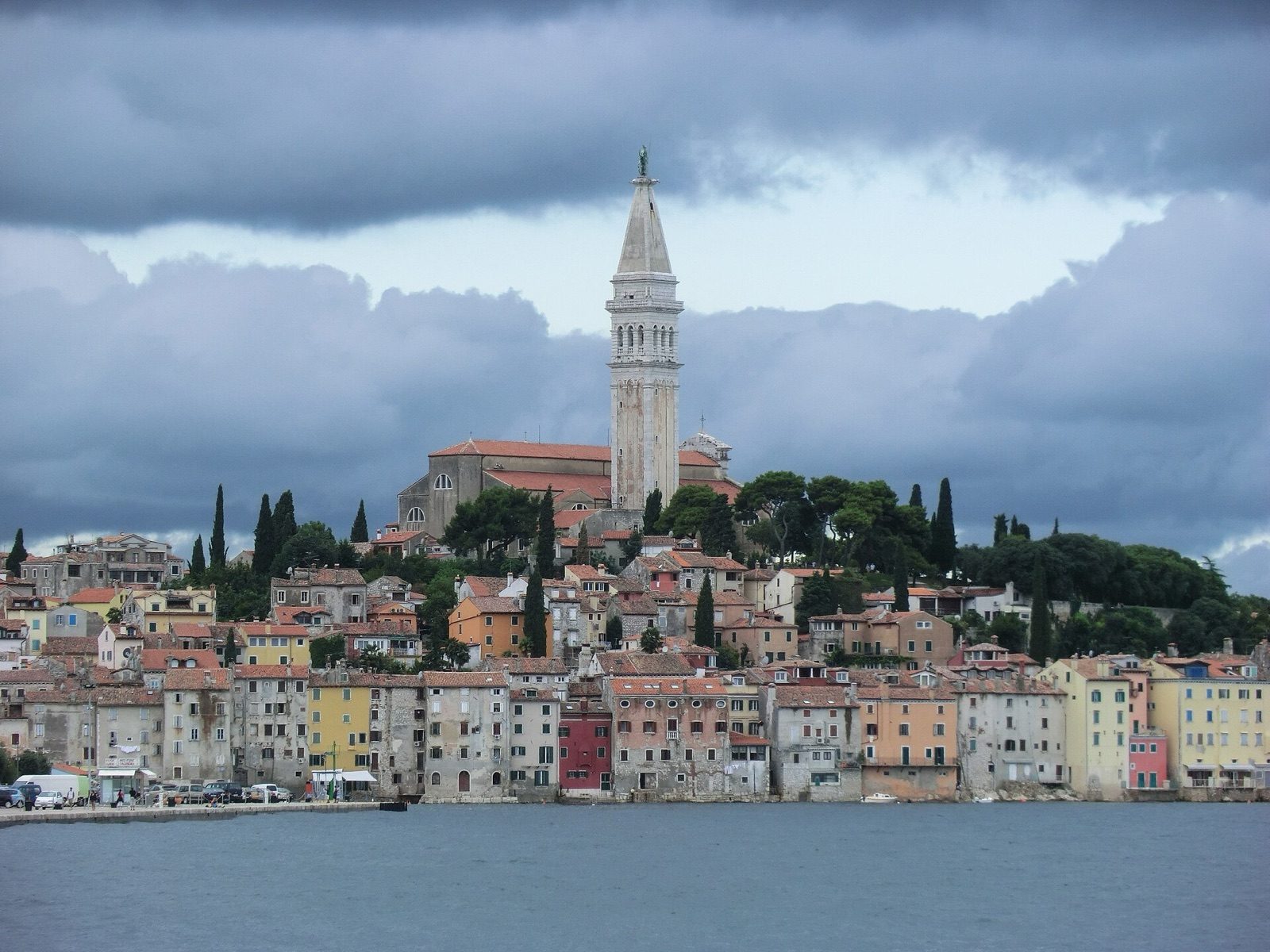
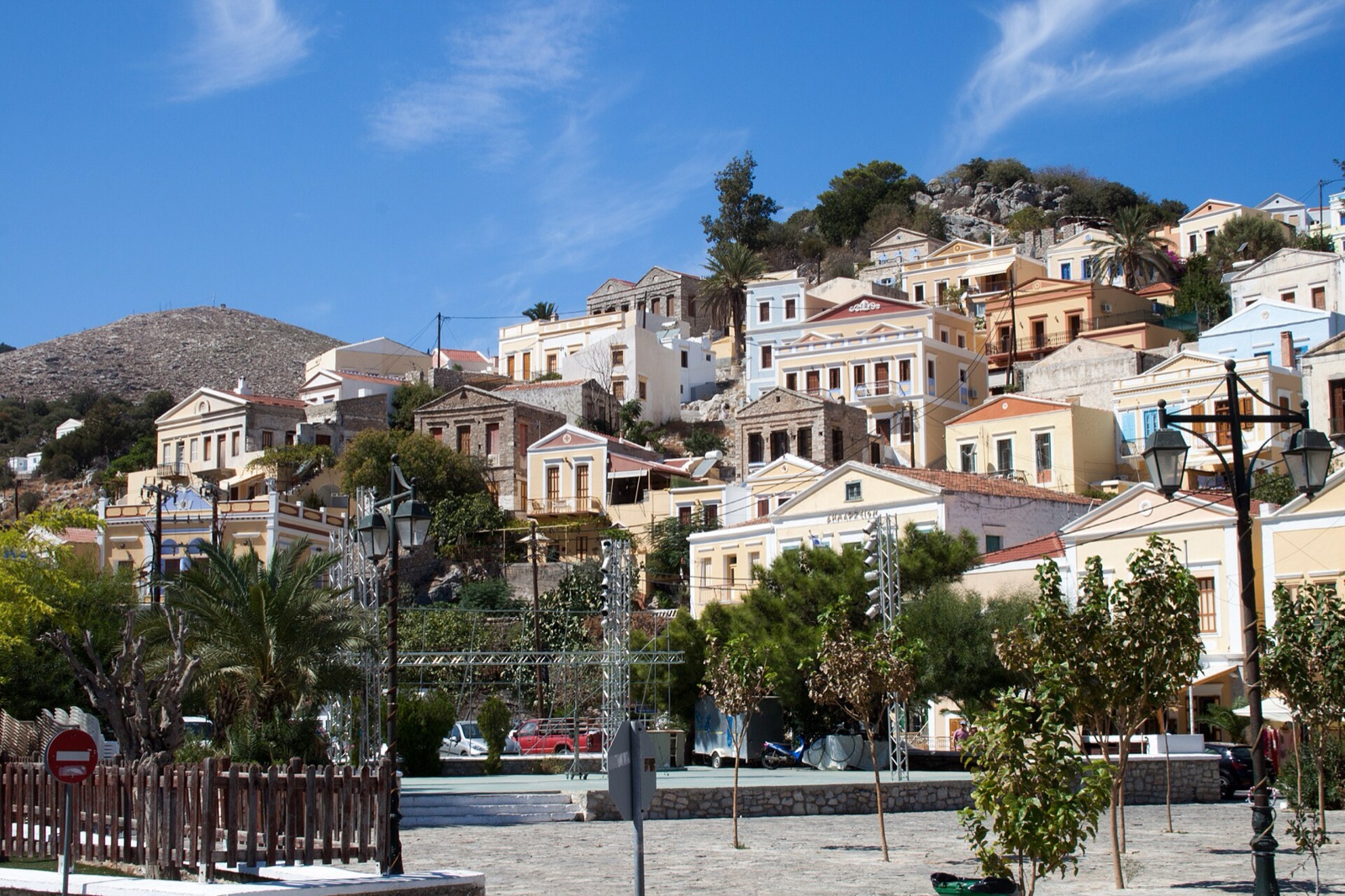
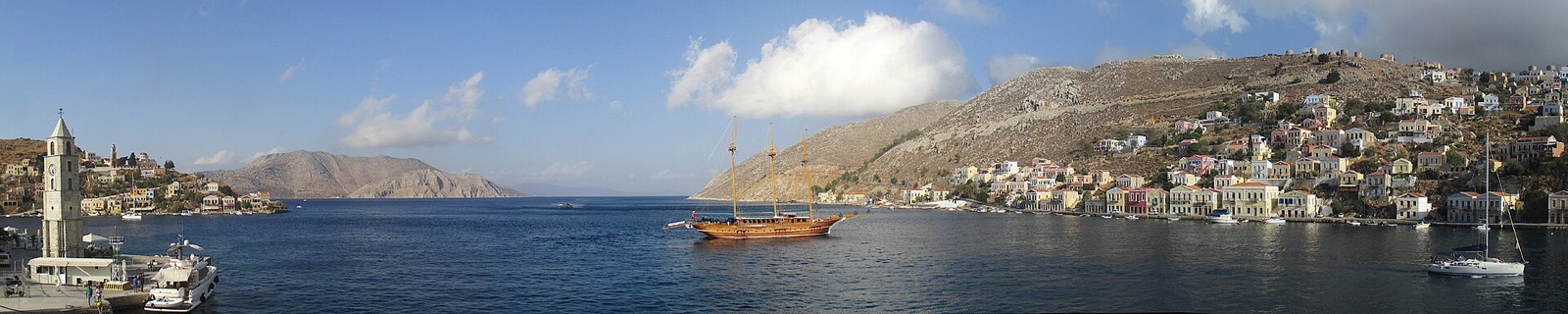
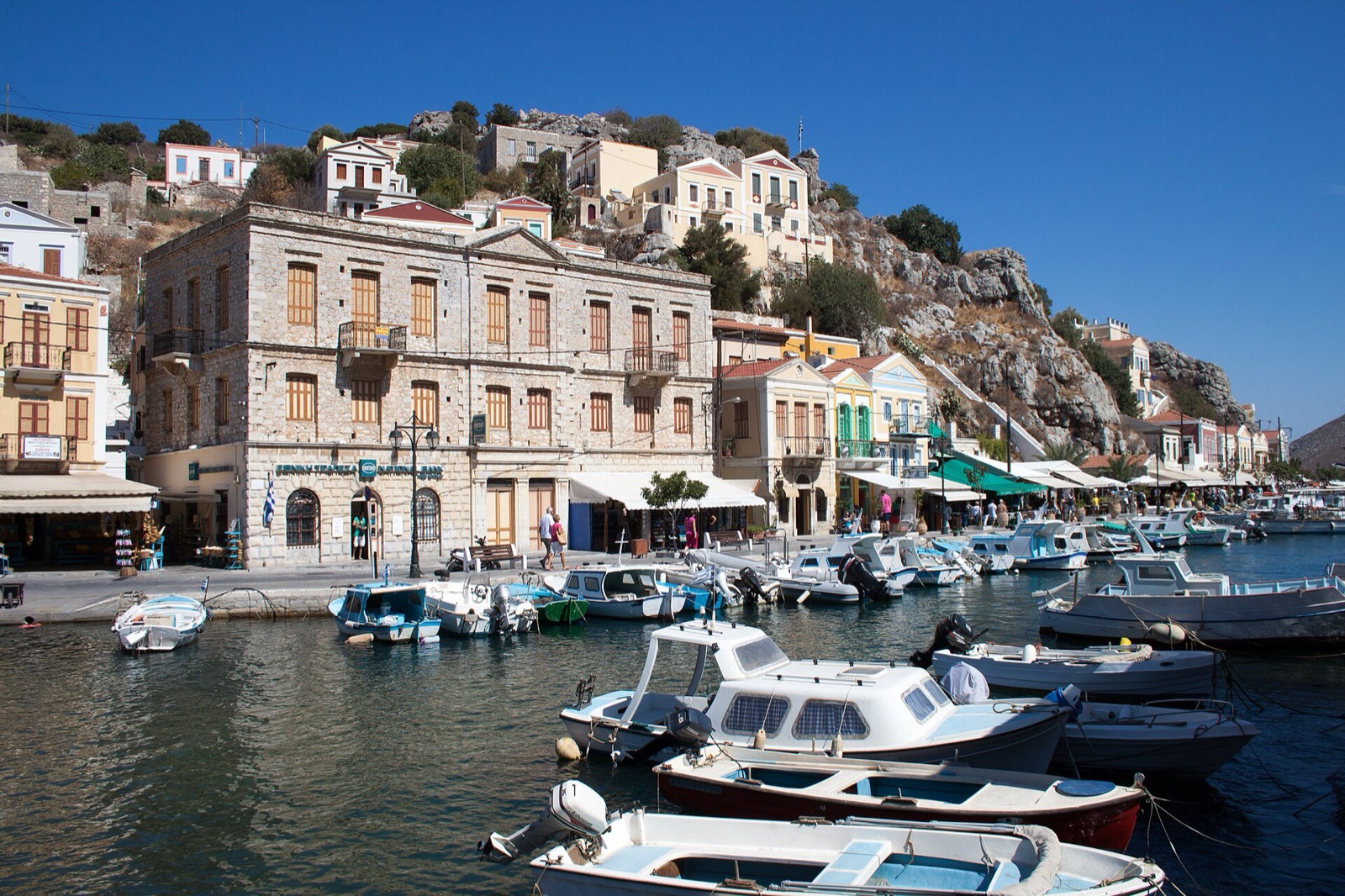
The boat from Rhodes rounds the last headland and the harbour opens all at once. Gialos climbs both sides of the inlet in tiers of ochre, terracotta and a particular faded blue, house above house, until the bare rock takes over. There is no gradual approach, no outskirts to pass through. You are simply in it, and the whole port is looking back at you.
The colour is money. For most of the nineteenth century Symi lived off the sea floor. Its men went down for sponges, first on a held breath with a stone to sink them, later in the heavy copper helmets that crippled and killed as many as they made rich. The fleet worked the coasts of North Africa and sold its catch as far as London and New York. At its height the island held around 22,500 people, more than lived on Rhodes. By the 2021 census that number had fallen to roughly 2,600.
Every one of these fading facades was paid for by a man holding his breath in the dark, somewhere off the Libyan coast.
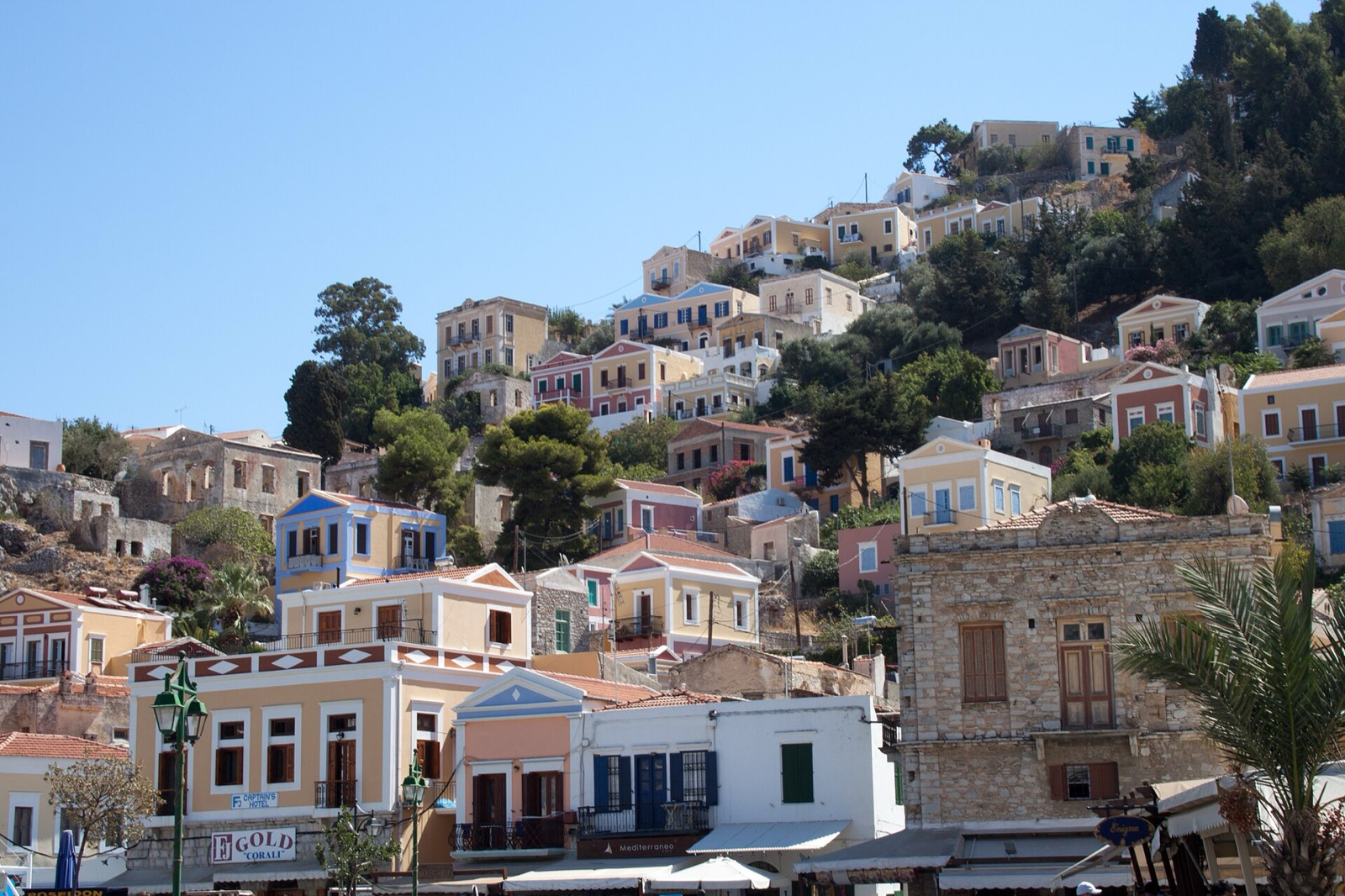
The wealth built upward. Merchant families raised tall neoclassical houses with pedimented windows and painted plaster, each floor a small declaration of standing, and set them on the slope so that the port reads like an amphitheatre with the water for a stage. Then the trade broke. The Italians who ruled the Dodecanese banned diving through the First World War, Kalymnos took the business, and the families drifted away. Many of the finest houses stood empty for decades. Some still do, roofless behind an intact and perfectly proportioned front wall.
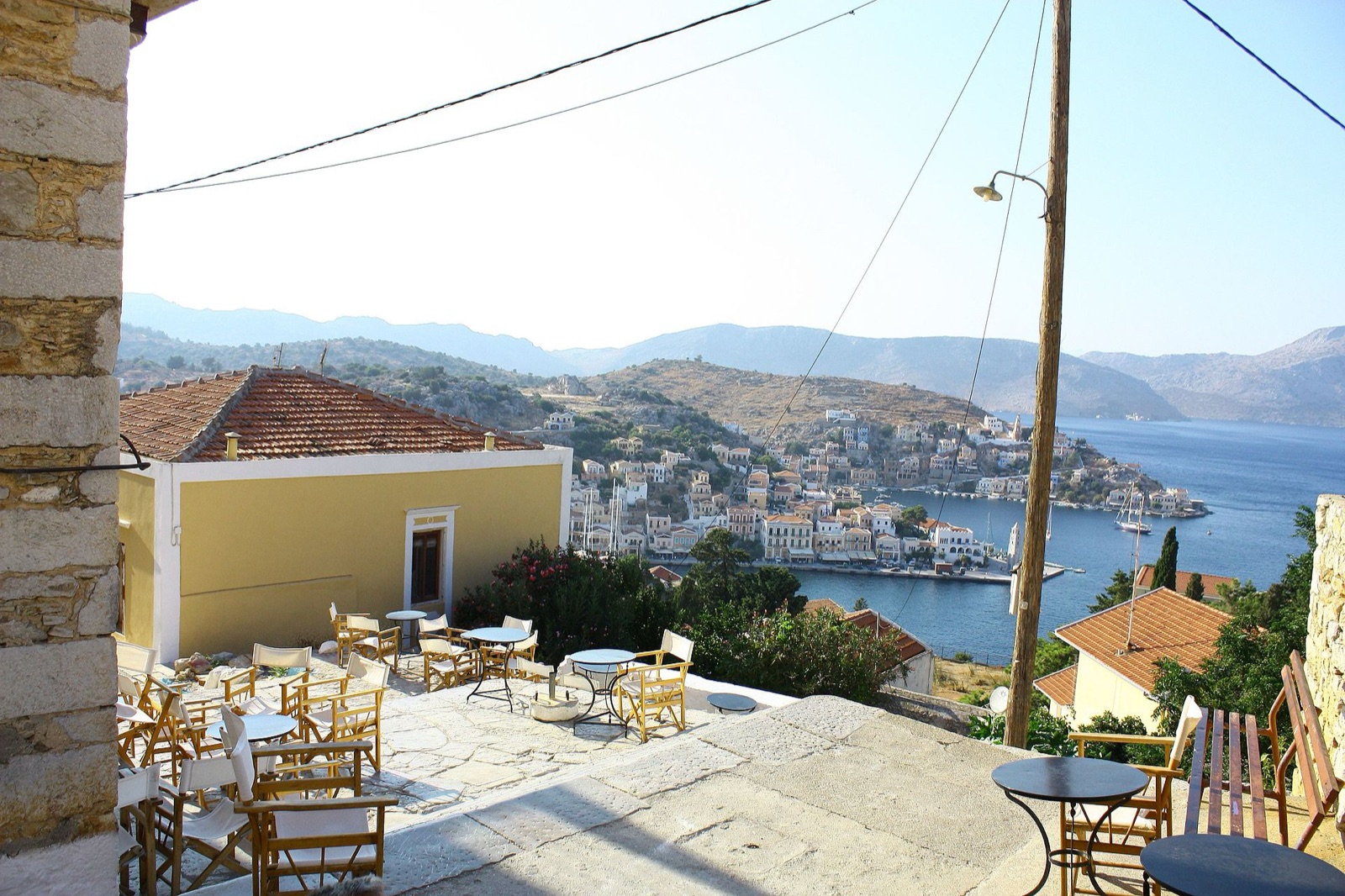
The proper way to read the place is on foot. Climb the Kali Strata, the broad stone stair of some five hundred steps that ties Gialos to Chorio, the old capital on the ridge above. It was cut so the wealthy could walk home in some comfort. Halfway up the harbour noise thins out. Restored mansions stand beside gutted ones, a cat asleep on a warm sill, a whitewashed chapel folded into a corner where the path turns.
We always time it for the evening. Around five the excursion boats cast off for Rhodes and take the crowd with them, and the quay exhales. The tavernas reset their tables, a fisherman sorts his lines, the light goes amber and then rose as the sun drops behind the far ridge. For an hour the painted town belongs again to the few thousand who never left it.
One selection at a time, in your inbox. Subscribe →