Field Notes
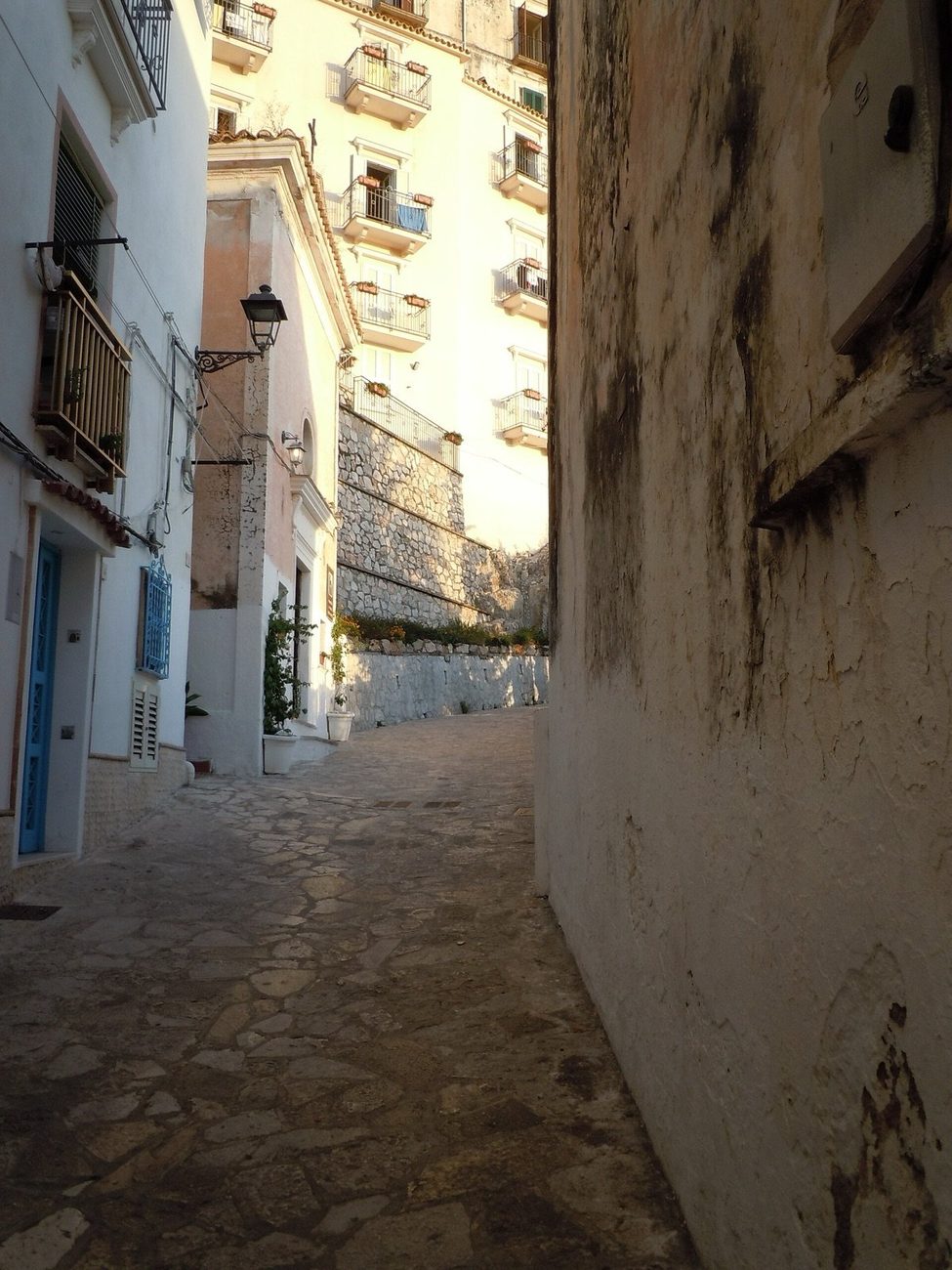
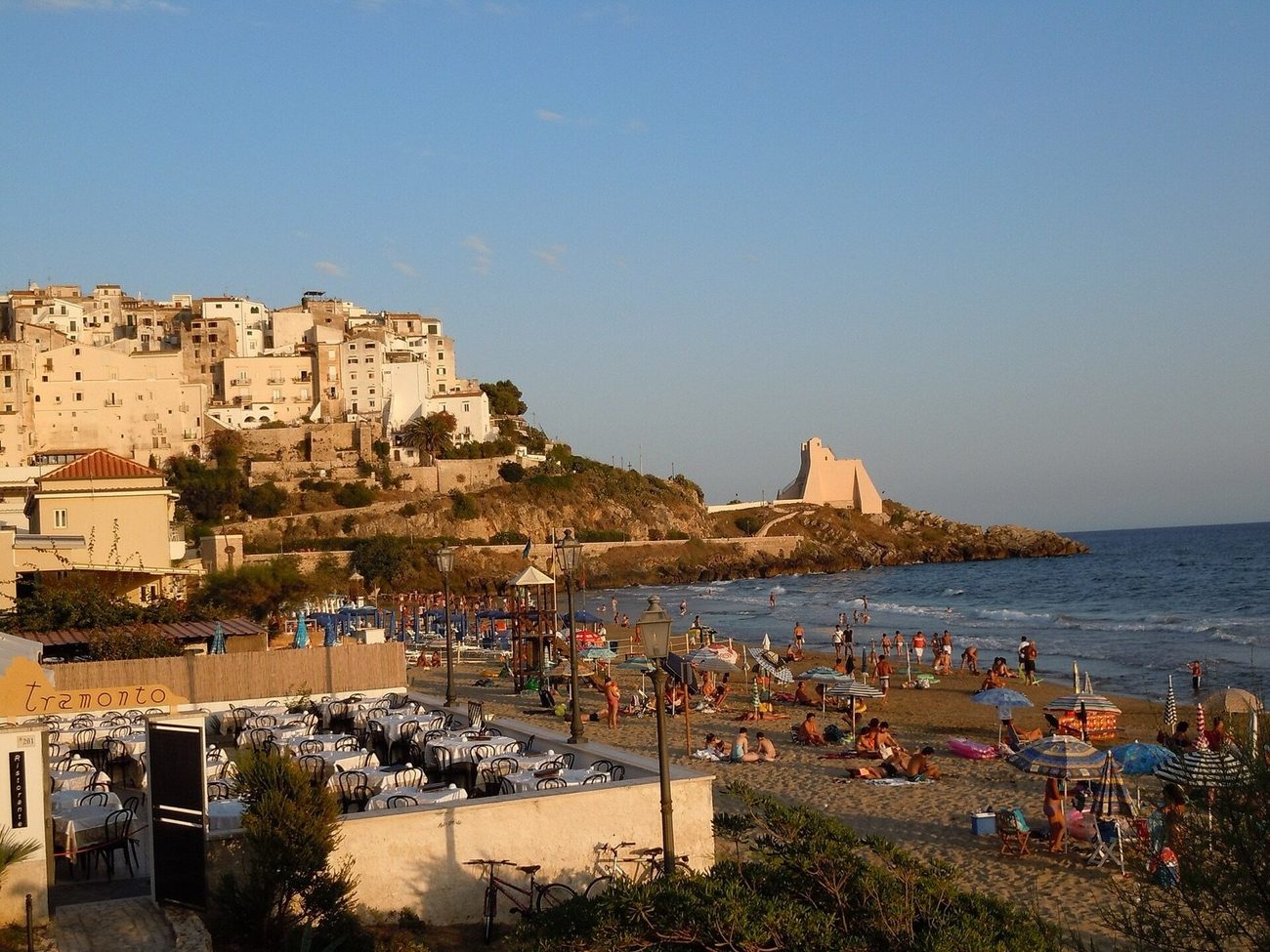
The town makes you earn the view. From the coast road between Terracina and Gaeta you see it late, a white wedge of houses stacked on a promontory with the sea on three sides. We parked below and climbed. The lanes narrow as they rise, whitewashed and cool, strung with washing and the smell of someone's lunch, and they open without warning onto a terrace and all that blue.
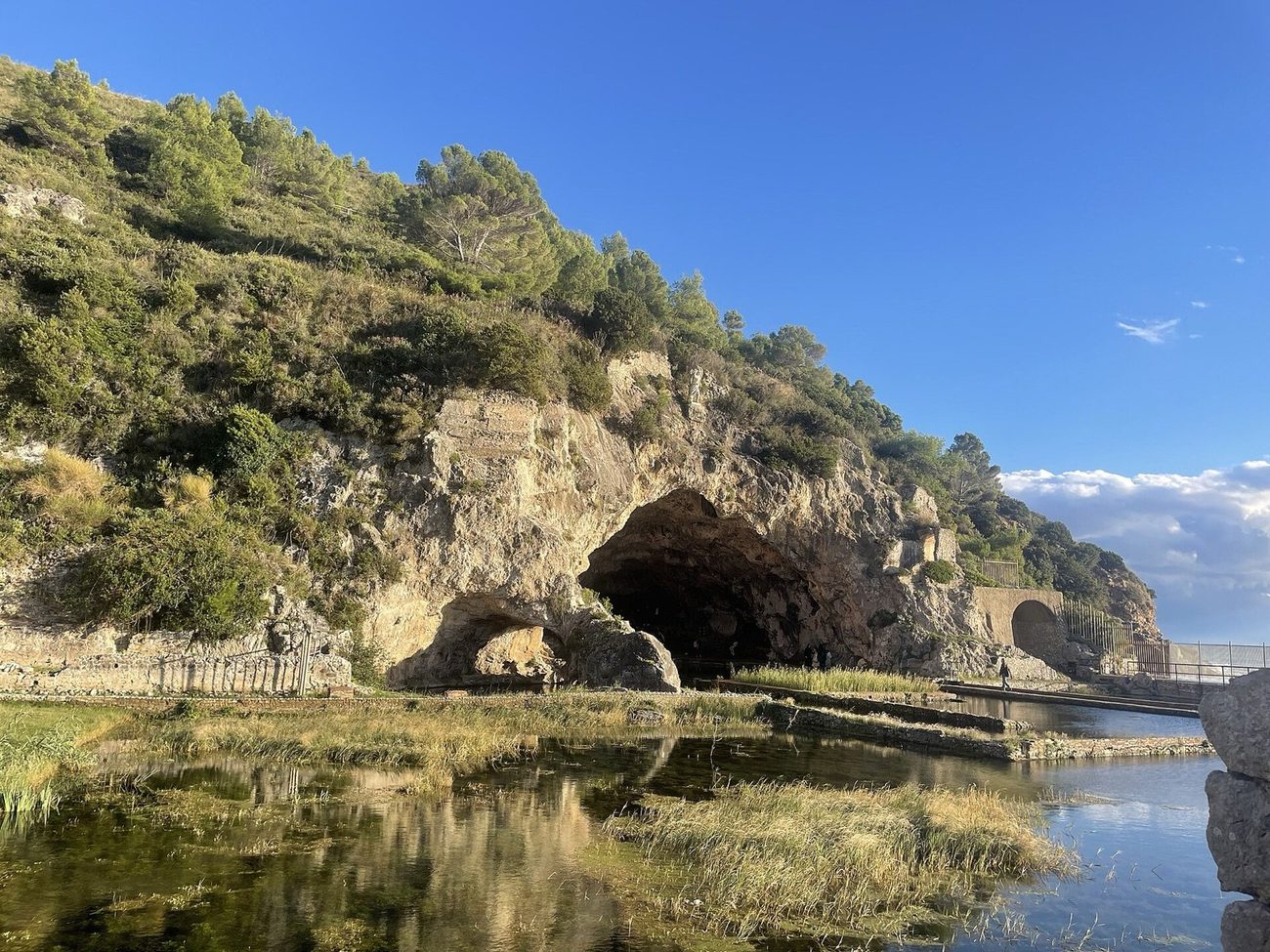
The name comes from the Latin spelunca, a cave. Everything here points back to one. A short walk along the shore, under the headland, the sea has bitten a great grotto into the rock, and two thousand years ago an emperor made it his dining room. Tiberius built a villa around it and turned the cave into a banqueting hall, with pools and a small island where the couches stood and the water came almost to the table.
He filled the dark with Homer. Vast marble groups once stood in the grotto, Ulysses and his men driving a stake into the blinded Polyphemus, the sea monster Scylla seizing sailors from a ship. These were scenes of men in trouble at sea, set where a man who had turned his back on Rome could watch them over his wine. The pieces lay smashed and forgotten until 1957, when the crews cutting the new coast road found them, thousands of fragments, and the long work of reassembly began.
An emperor dug his dining room out of the sea and lined it with Homer, then ate while the marble drowned his sailors.
The museum that holds them opened on the site in 1963, a low building a few steps from the water, and the reconstructed groups are worth the drive alone. Suetonius and Tacitus pass down a story that the grotto's roof once fell in while Tiberius dined, and that a courtier named Sejanus threw himself over the emperor to shield him, a favour that bought him his rise. Stand at the cave mouth, with the swell working at the rock, and you believe it.
The old town above was not built for pleasure. After Rome fell, people left the villa and climbed the promontory of Saint Magnus for safety, and for centuries they read the horizon for sails. In 1534 the corsair fleet of Barbarossa came ashore and carried much of Sperlonga into slavery. The watchtowers along this coast still stand. The place that reads today as pure holiday, white cubes and a long pale beach, spent most of its life with its back to a dangerous sea.