Ground Truth
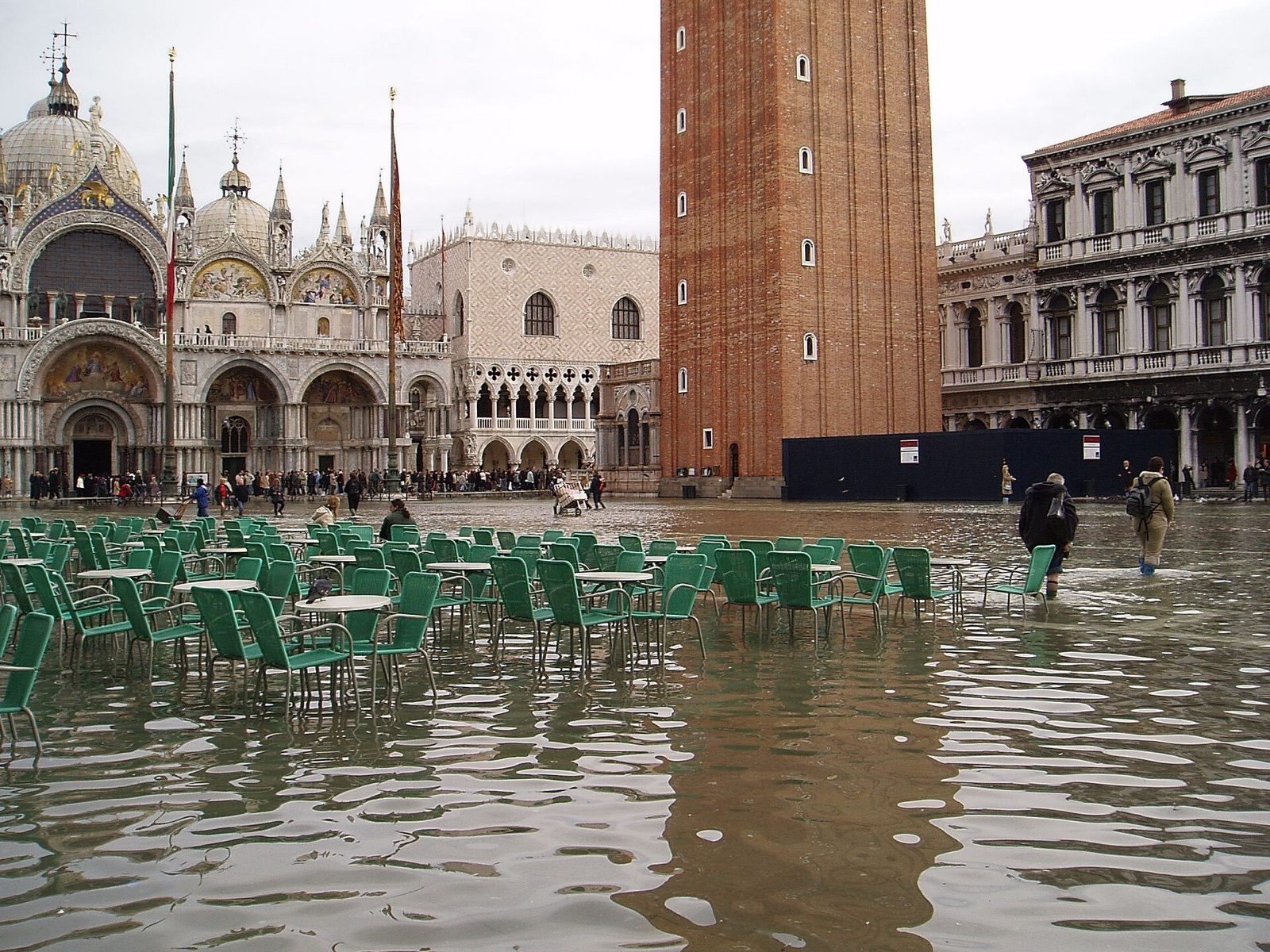
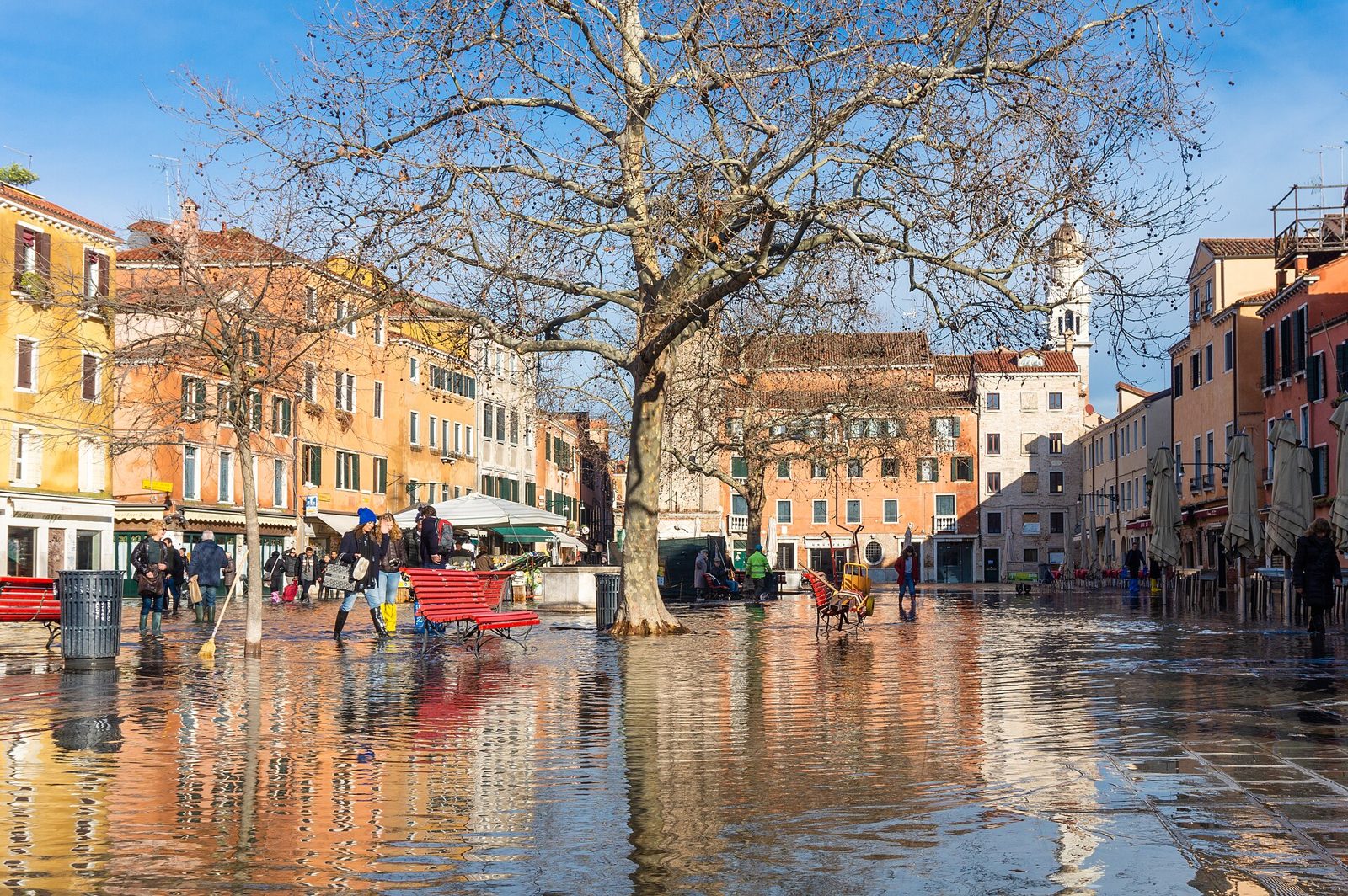
Venice sits a hand's breadth above its lagoon, and a few times each winter the water comes up to meet it. The Venetians call it acqua alta, high water, and on the worst mornings it fills the Piazza San Marco, the lowest point in the city, before it reaches anywhere else. Duckboards go down, boots come out, and the city carries on above its own reflection.
It is a stack of causes arriving together. A high astronomical tide is the base. Add a scirocco pushing up the length of the Adriatic, a deep low over the north of Italy lifting the sea a little more, and a long-period seiche sloshing in the enclosed gulf, and the water can rise a metre or more over its ordinary mark. The flood of November 1966 reached almost two metres and changed how Italy thought about the city.
Since 2020 a line of hinged steel gates, the MOSE, can be raised across the three inlets to shut the lagoon off from the sea when a big tide is forecast. It has kept the worst water out on the days it has been used, though what it will cost the lagoon's own life is still being argued.
A high tide, a scirocco and a deep low, all arriving in the same hour.
For a visitor the lesson is simple. Check the tide table the way you would a weather forecast, keep to the raised walkways when the siren sounds, and understand that the flood is not a freak but a rhythm the city has lived inside for a thousand years.
Acqua alta is the exceptional tide peak that periodically floods much of Venice.
Comune di Venezia, tide centre