For the place
Argos in Cappadocia
Uçhisar · Cappadocia, Turkey
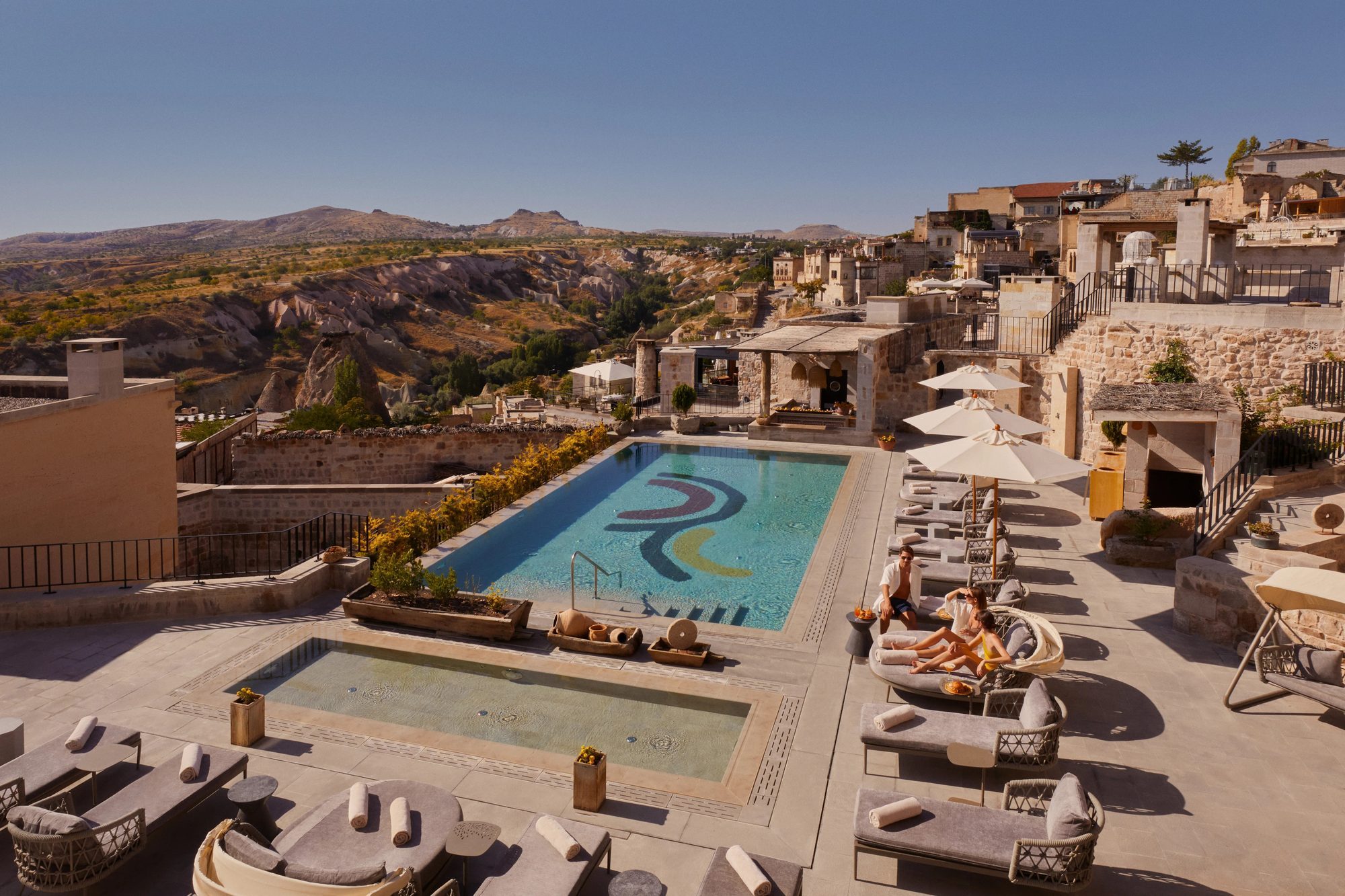
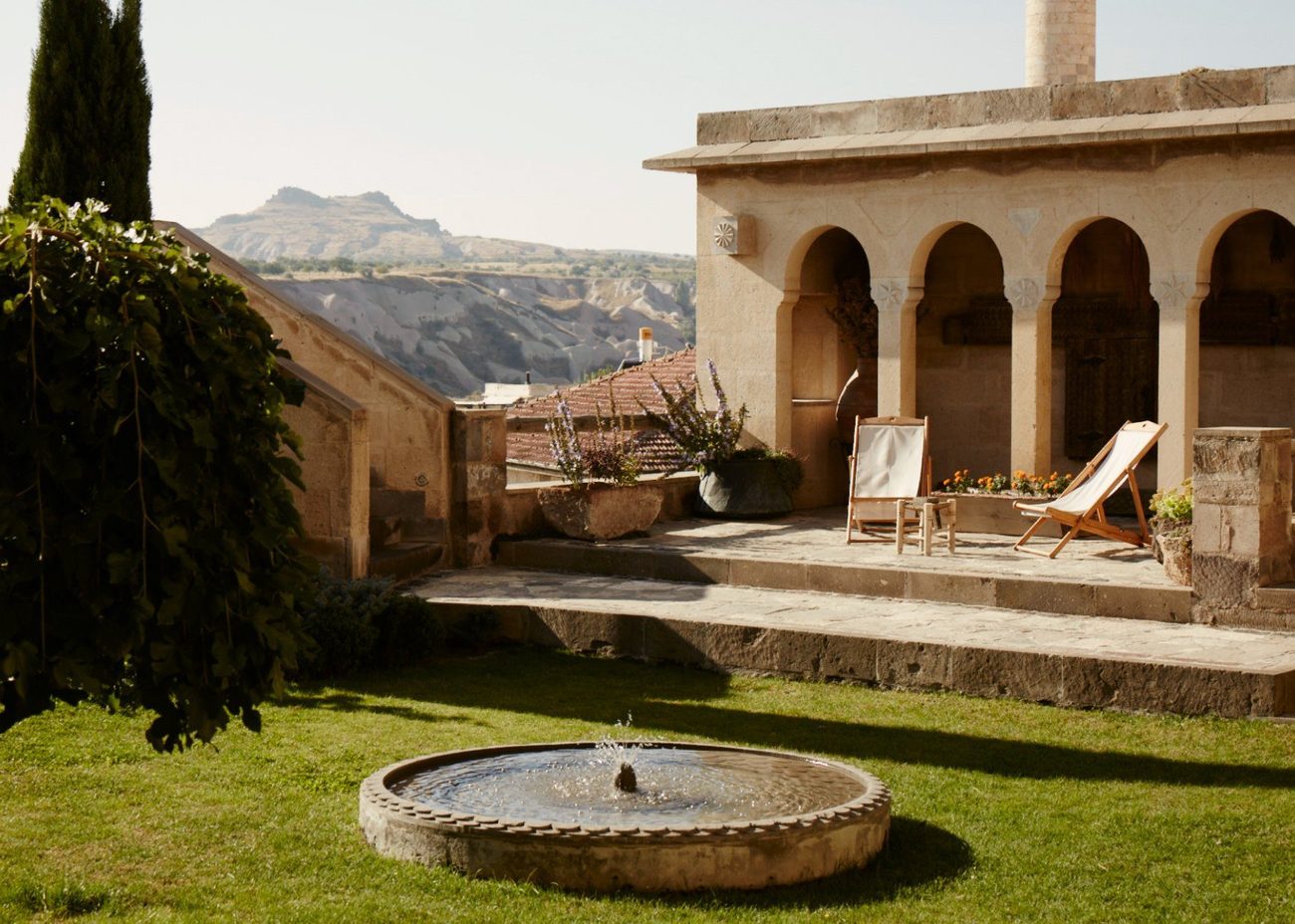
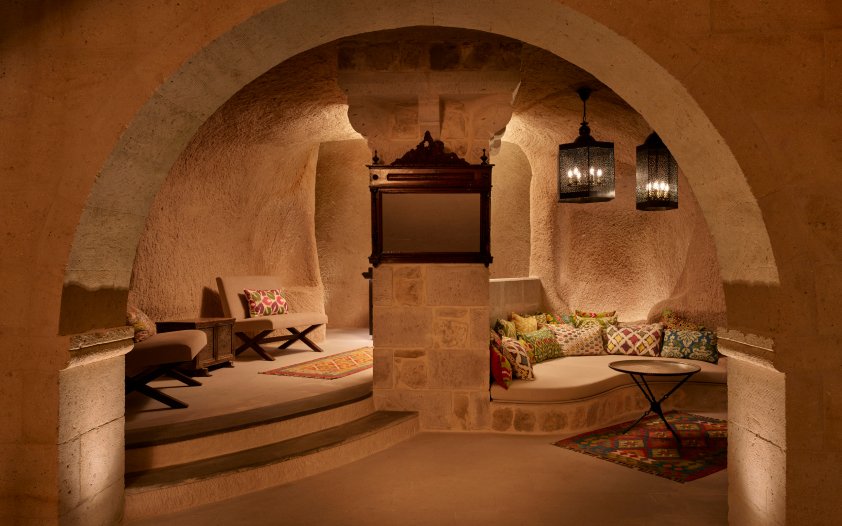
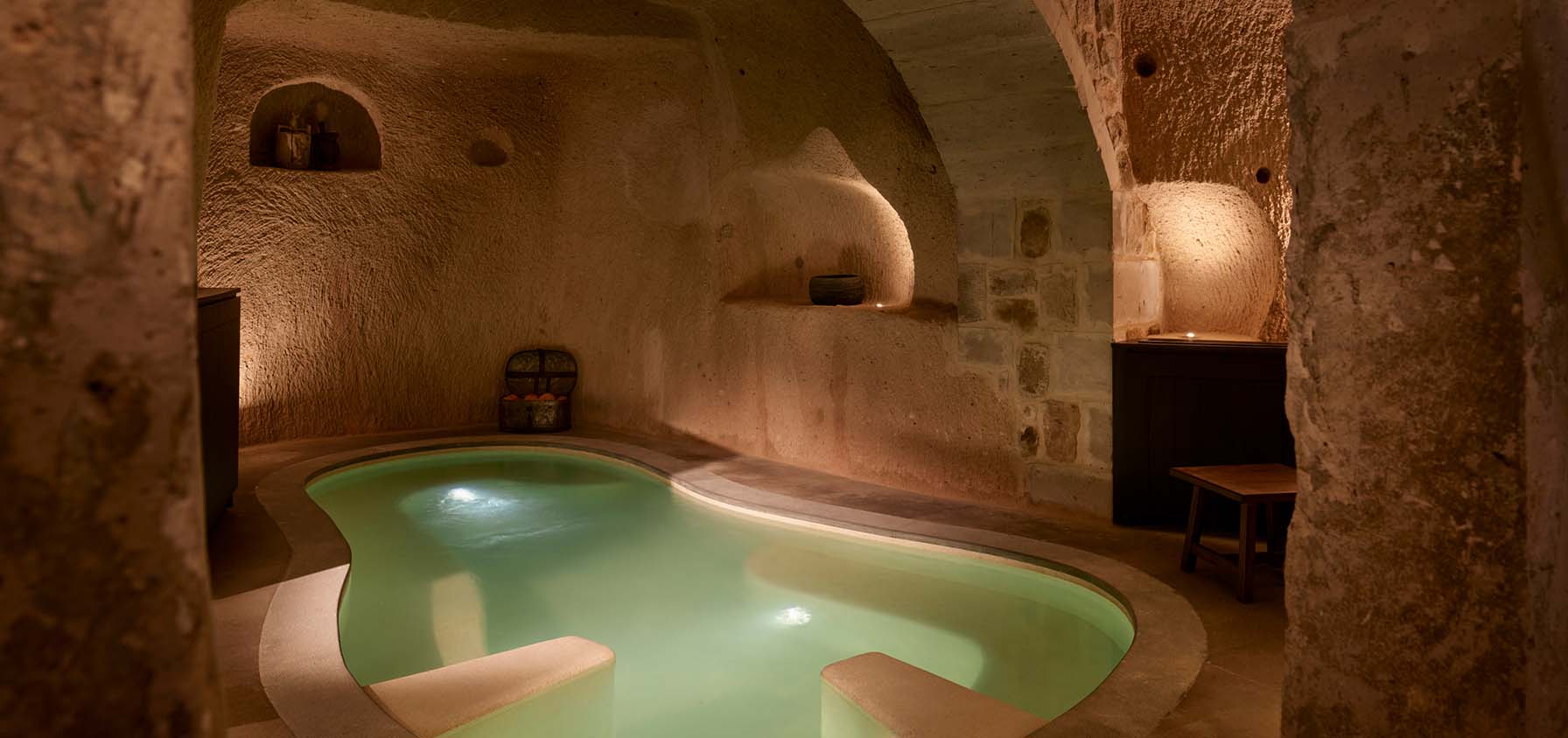
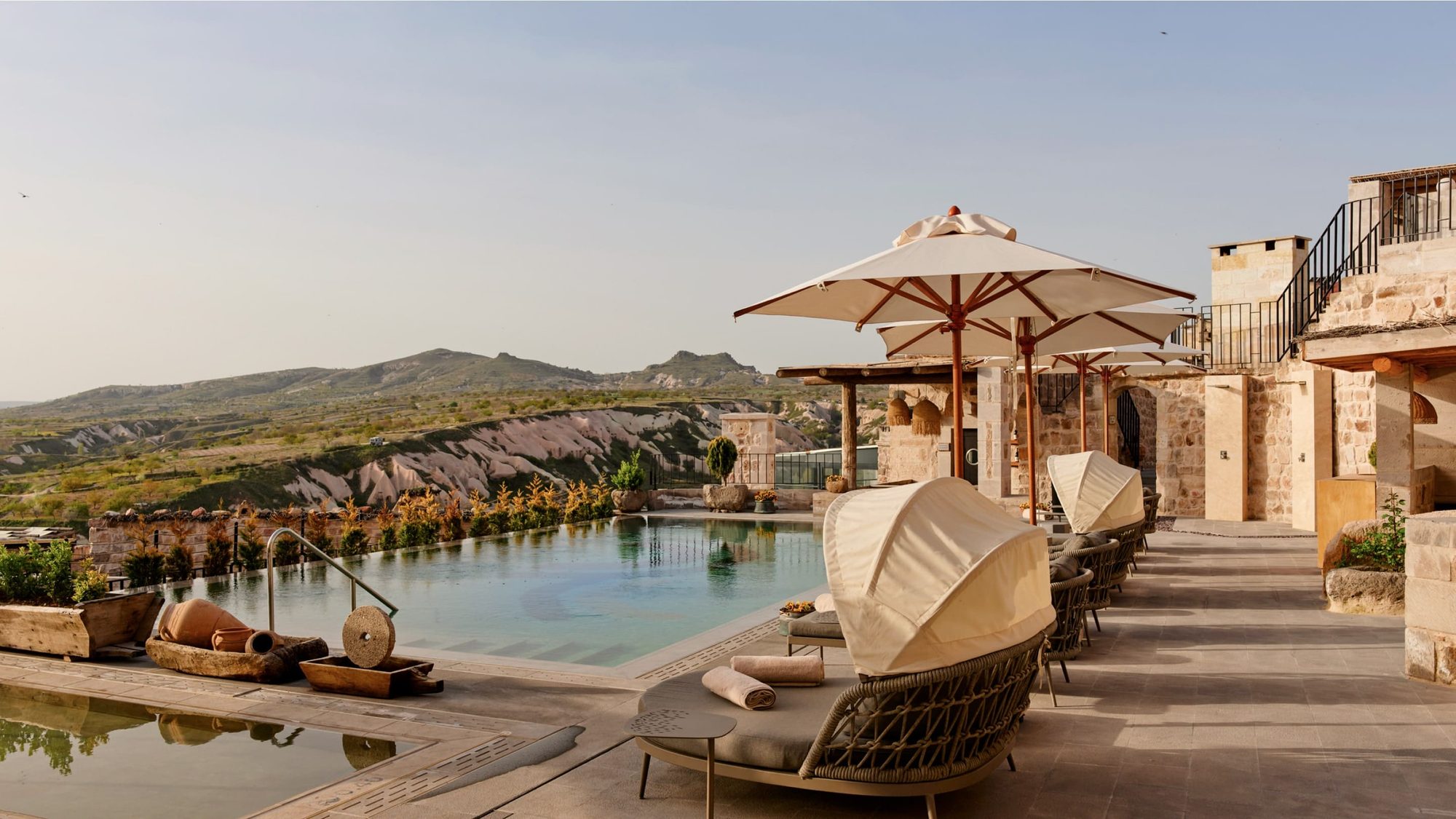
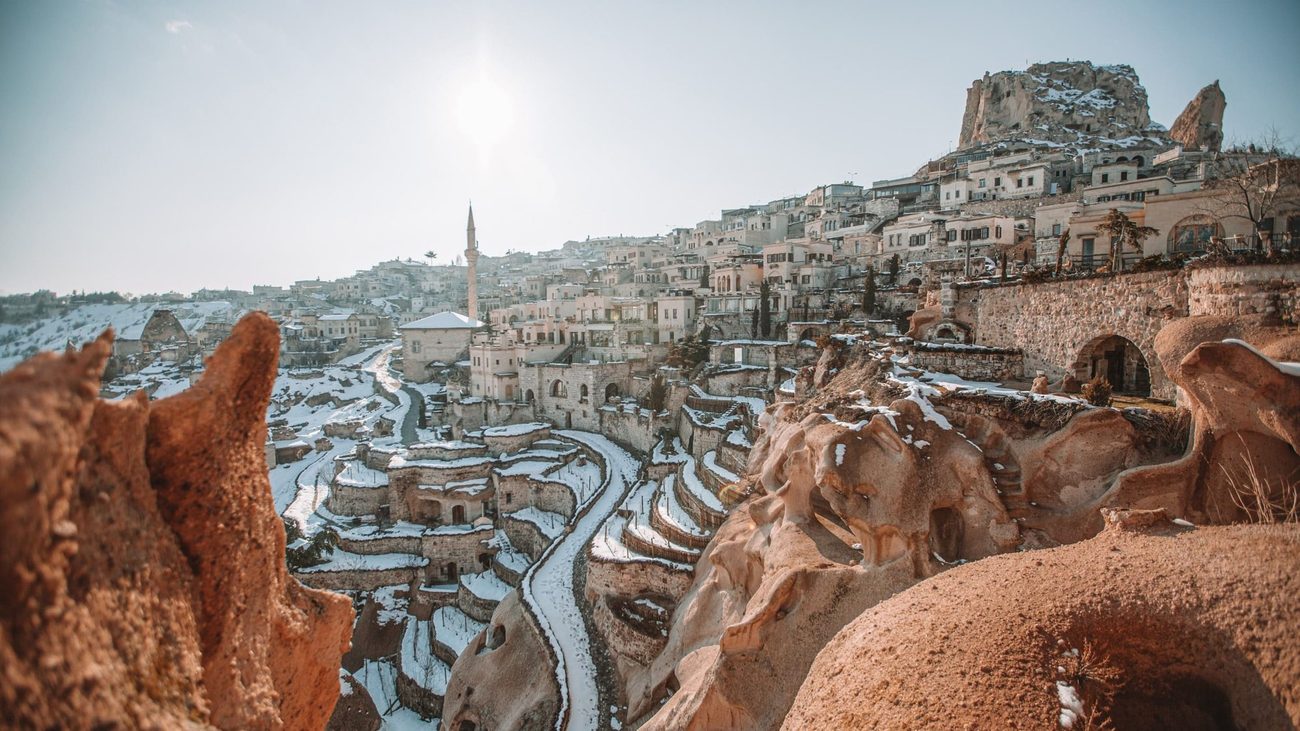
Argos sits at the top of Uçhisar, the highest village in Cappadocia, where stone houses and a ruined castle stand over Pigeon Valley and, on a clear morning, Mount Erciyes far to the south. The hotel is less a building than a reconstructed quarter: seventy-one rooms threaded through seven separate houses and the caves beneath them, joined by lanes, courtyards and a tangle of tunnels uncovered during the works. Many of the suites are carved straight into the volcanic tuff, cool in summer and quiet in a way hotels rarely manage, a few with a small pool sunk into the cave floor. At dawn the balloons go up over the valley and the terraces fill to watch them.
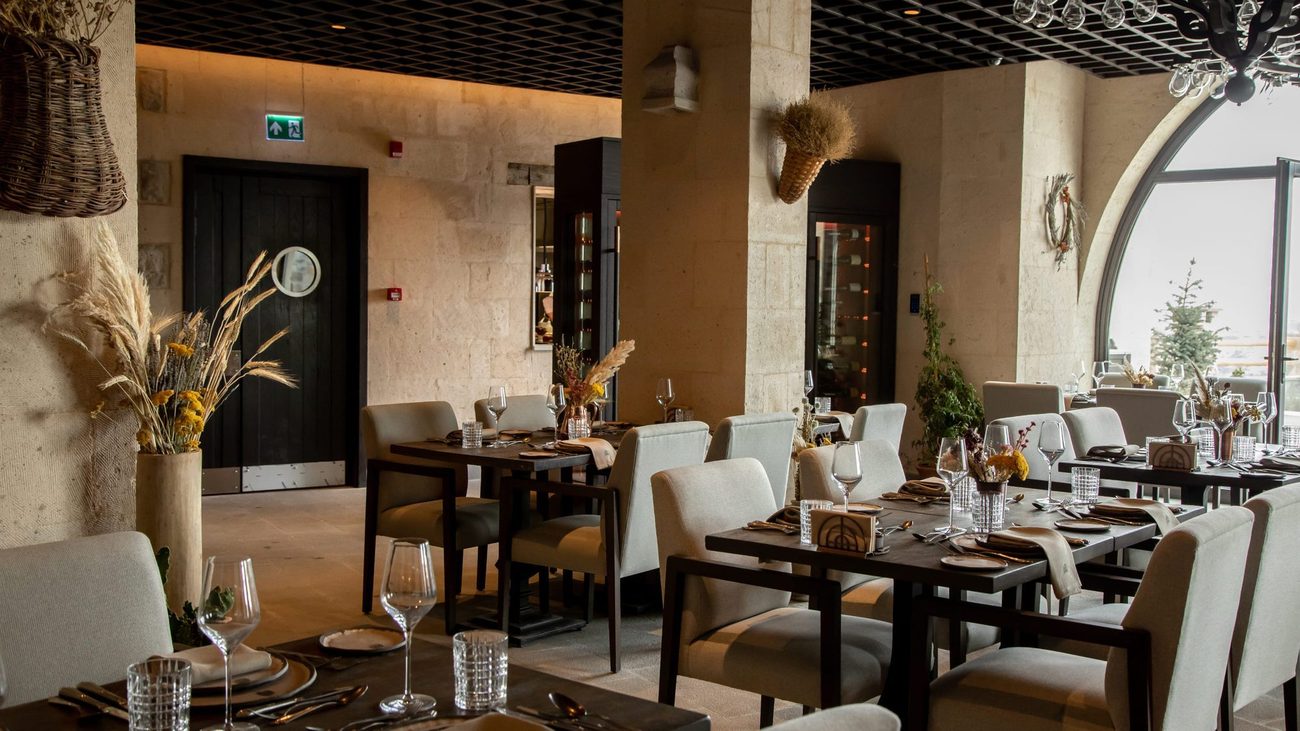
Two restaurants share the cooking. Nahita keeps to Anatolian dishes, Seki ranges wider, and both lean on a kitchen garden and a strict sixty-kilometre sourcing rule that holds the menu close to its ground. The real pleasure is underground. The cave cellar keeps some twenty-two thousand bottles, weighted toward Turkish growers, and the estate farms twenty-one hectares of its own vineyard on the slopes above the Kızılırmak, one of the oldest wine regions anywhere. A sommelier will sit you down among the bottles and pour through it.
Cappadocia has no shortage of cave hotels, and most trade on the novelty alone. Argos is the one that treated the rock as heritage rather than gimmick. The fourteen-year restoration turned up the Bezirhane, a vast rock-cut hall that was once part of the monastery and now holds acoustic and Sufi recitals in near-perfect natural sound. It is a large hotel, and on a full week you feel it, but the spread across houses and caves keeps it from reading like one. Take a cave suite high on the hill and the valley, the balloons and a thousand years of dug stone are yours alone.
One selection at a time, in your inbox. Subscribe →
Uçhisar, above Pigeon Valley, Cappadocia, Turkey.
71 rooms and suites across seven houses and caves; many carved into the rock, some with a private pool.
Nahita (Anatolian) · Seki · Argos Cellar.
Uçhisar Castle; Göreme and its open-air museum; the Pigeon and Rose valleys.
Free, one to one, on WhatsApp. Tell me your dates and I will point you to the right places.
Plan with me on WhatsApp