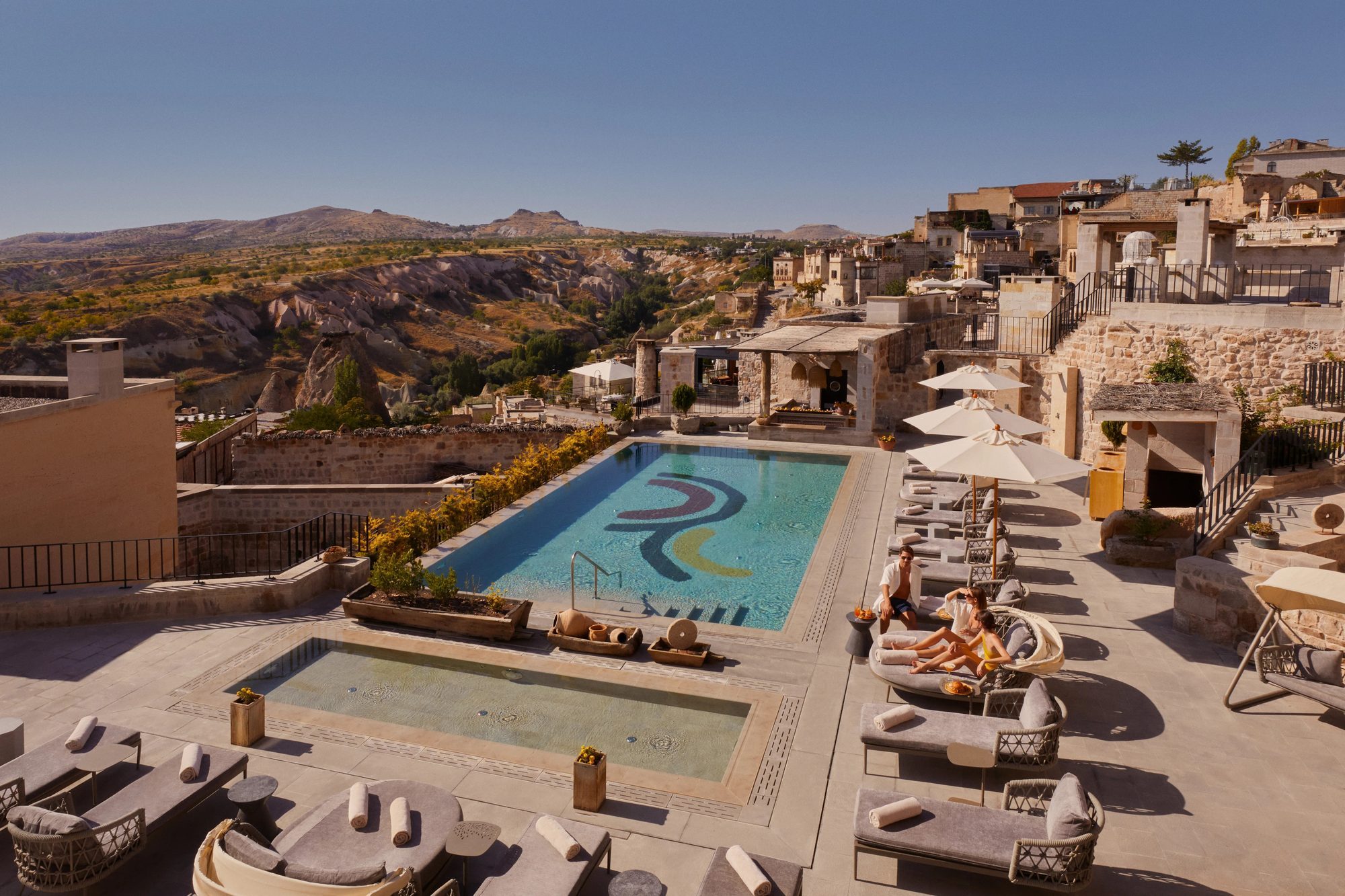
A village threaded through a village
Uçhisar stands at the highest point in Cappadocia, a knot of stone houses gathered under a castle rock that the local people hollowed out for defence centuries ago and can still climb today. From the top the ground drops away into Pigeon Valley, its soft cliffs pocked with the dovecotes that gave it the name, and on a clear morning the snowcap of Mount Erciyes shows far to the south. Argos does not sit apart from this village. It is woven into it. Seventy-one rooms and suites are spread across seven separate old houses and the caves beneath them, joined by lanes, courtyards, a mill house and a tangle of tunnels that the restoration uncovered as it went.
The effect is that you never quite feel you are in a hotel of seventy-odd keys, even though you are. You cross a courtyard to breakfast, climb a stepped lane to your room, pass a wall that was standing a thousand years before you arrived. At first light the balloons lift off the valley floor in their dozens, and the terraces fill quietly to watch them go up. It is the one moment the whole place turns to face the same way.
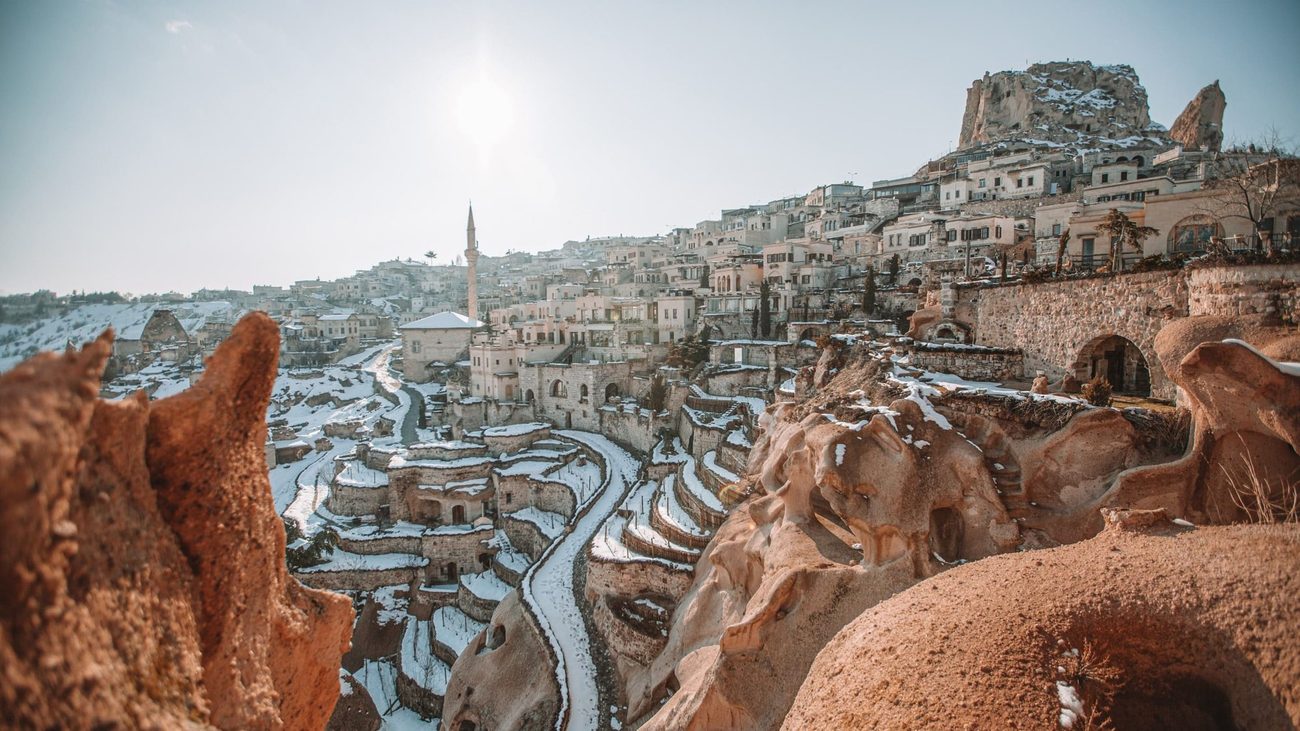
Not a hotel set beside a village, but a village put back to use.
Fourteen years of digging out
The volcanic tuff of Cappadocia cuts like cheese and sets like stone, which is why people have been carving homes, churches and whole underground cities into it since antiquity. Argos worked with that grain rather than against it. Many of the suites are cut straight into the rock, cool through a Cappadocian summer and silent in a way ordinary walls cannot manage, and a handful have a small pool sunk into the cave floor. The rooms climb the hill in no particular order, so the higher ones give you the valley, the balloons and a stretch of dug stone that is, for the length of your stay, yours alone.
The long restoration turned up more than bedrooms. Beneath the houses the team found the Bezirhane, a vast rock-cut hall that had once belonged to the monastery on the site, its old linseed-oil press still readable in the stone. Rather than fill it in they cleaned it out, and it now holds recitals in an acoustic so true it needs no help from a speaker. A chapel, a caravanserai from the Silk Road years and a mill house survived the same way, repurposed rather than replaced. This is the part most cave hotels skip. It is also the part that took the fourteen years.
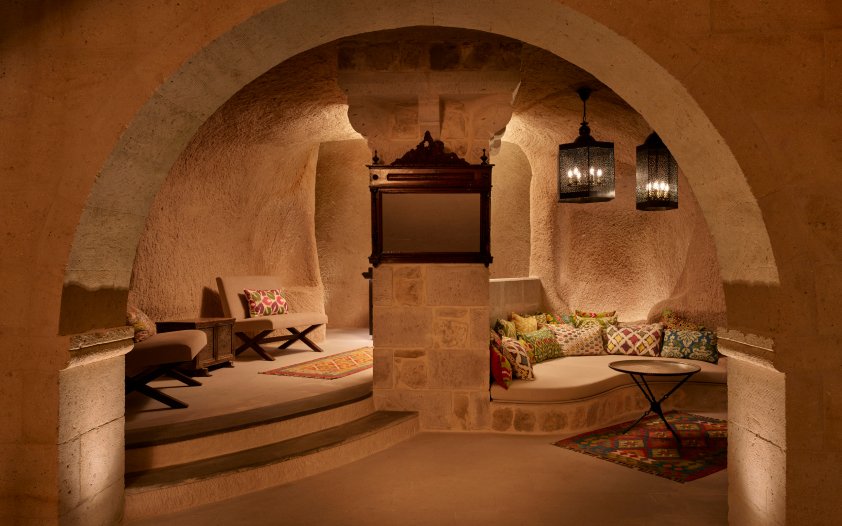
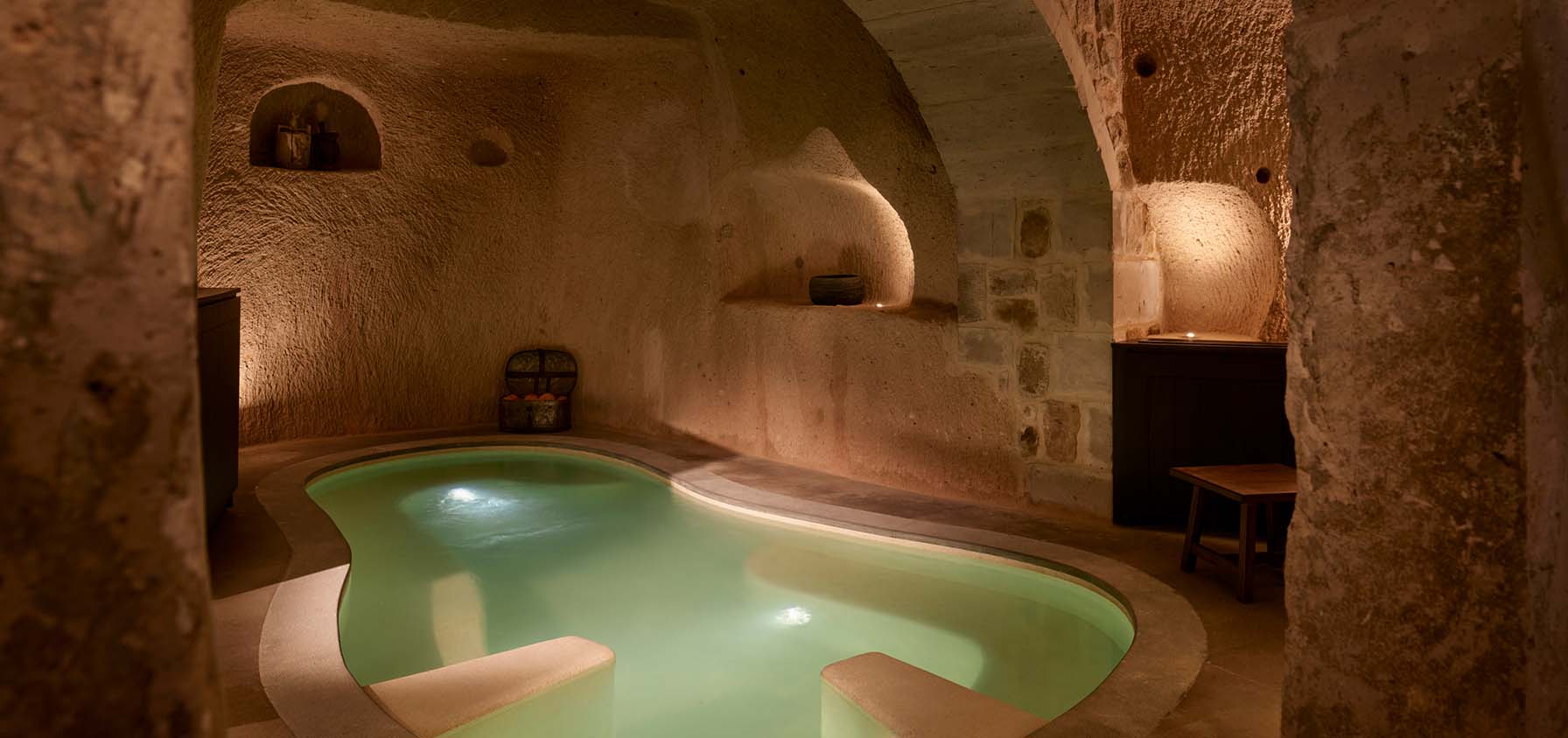
They treated the rock as heritage, not as a gimmick.
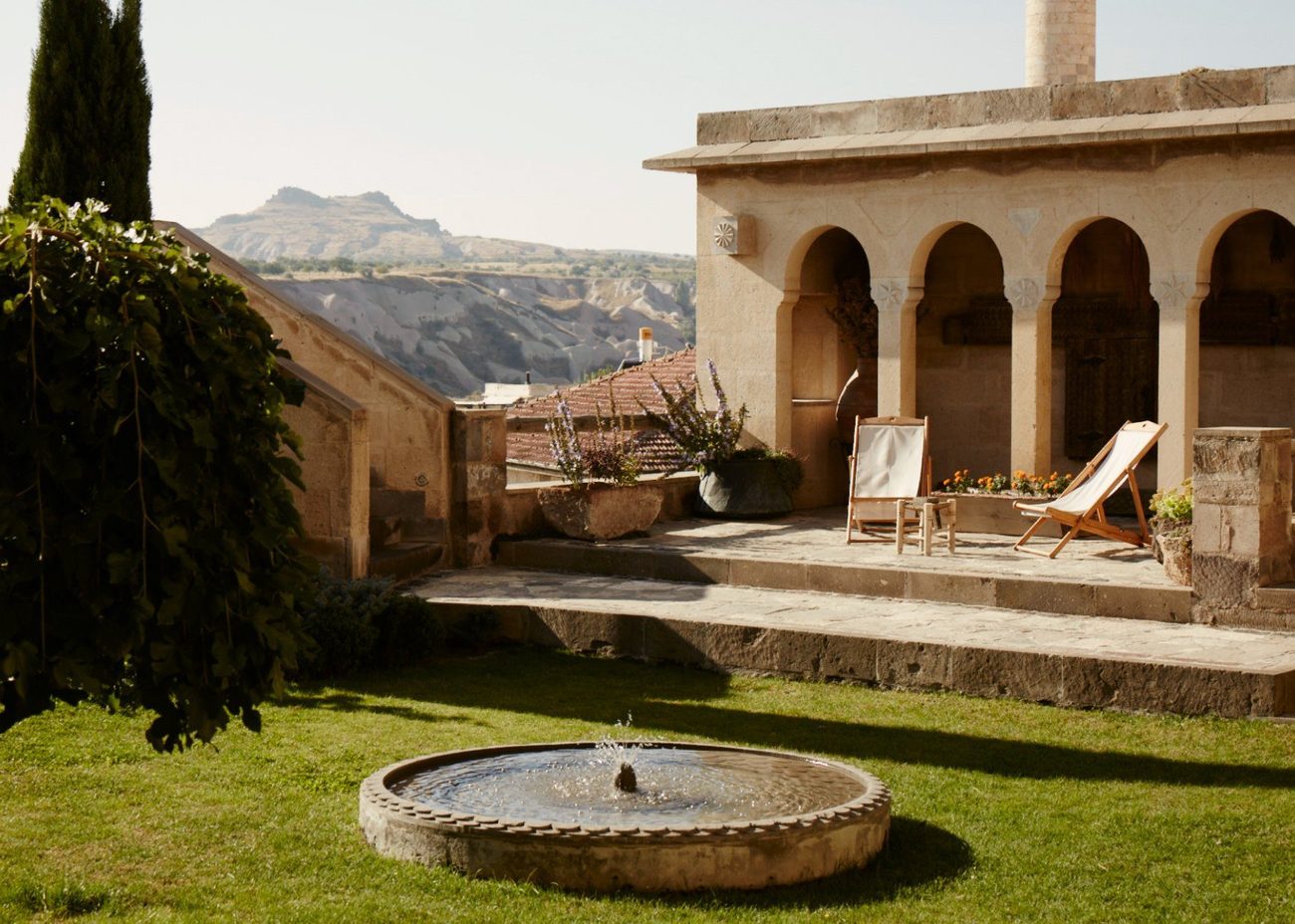
A cellar deeper than the kitchen
Two restaurants carry the cooking. Nahita keeps close to Anatolian dishes, Seki ranges a little wider, and both draw on the hotel's own kitchen garden and a short local-sourcing habit that keeps the menu tied to its ground. Much of what you eat has come a very few miles. A fermentation room downstairs holds pickles put up by families in the village, which tells you plainly enough where the kitchen's loyalties lie.
The real depth is literally underground. The cave cellar keeps in the region of twenty-two thousand bottles, weighted heavily toward Turkish growers, and the estate works twenty-one hectares of its own vineyard on the slopes above the Kızılırmak, in one of the oldest wine-making regions anywhere on earth. A sommelier will sit you down among the racks and pour through it, and the surprise, if you have never taken Turkish wine seriously, is how much there is to take seriously. You come to Cappadocia for the rock. You can quite happily stay for the cellar.
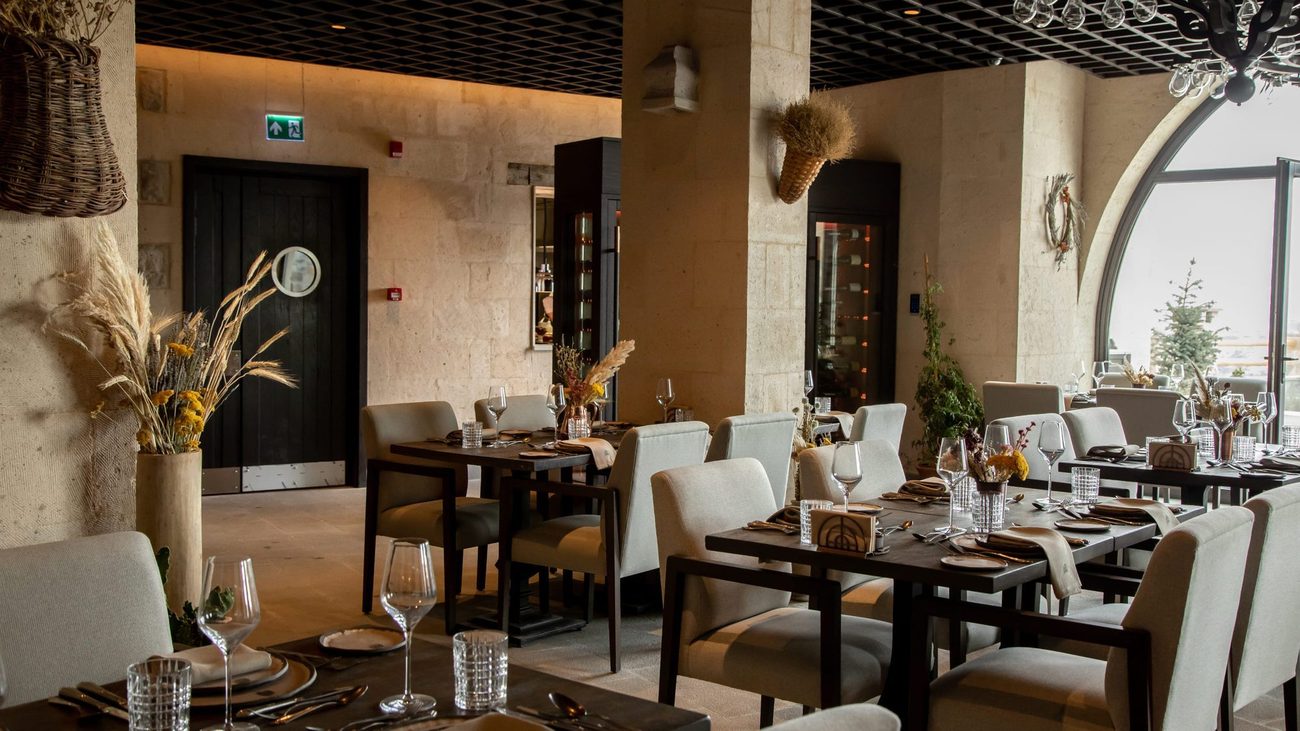
You come for the rock. You can happily stay for the cellar.
Cappadocia sells the cave as a photograph, a single night under a carved ceiling before the morning balloon. Argos is the argument for the opposite: a place made slowly, out of a monastery and a village and a Silk Road stop, that happens to be somewhere you can sleep. It is a large house and on a full week you can feel the size of it, but the spread across seven houses and the caves below keeps it from ever reading as one. Take a cave suite high on the hill, go up early for the balloons, spend an evening in the cellar, and the fourteen years make their own case. That is why it is in VANE.
Photos: Argos in Cappadocia (official), self-hosted with credit.