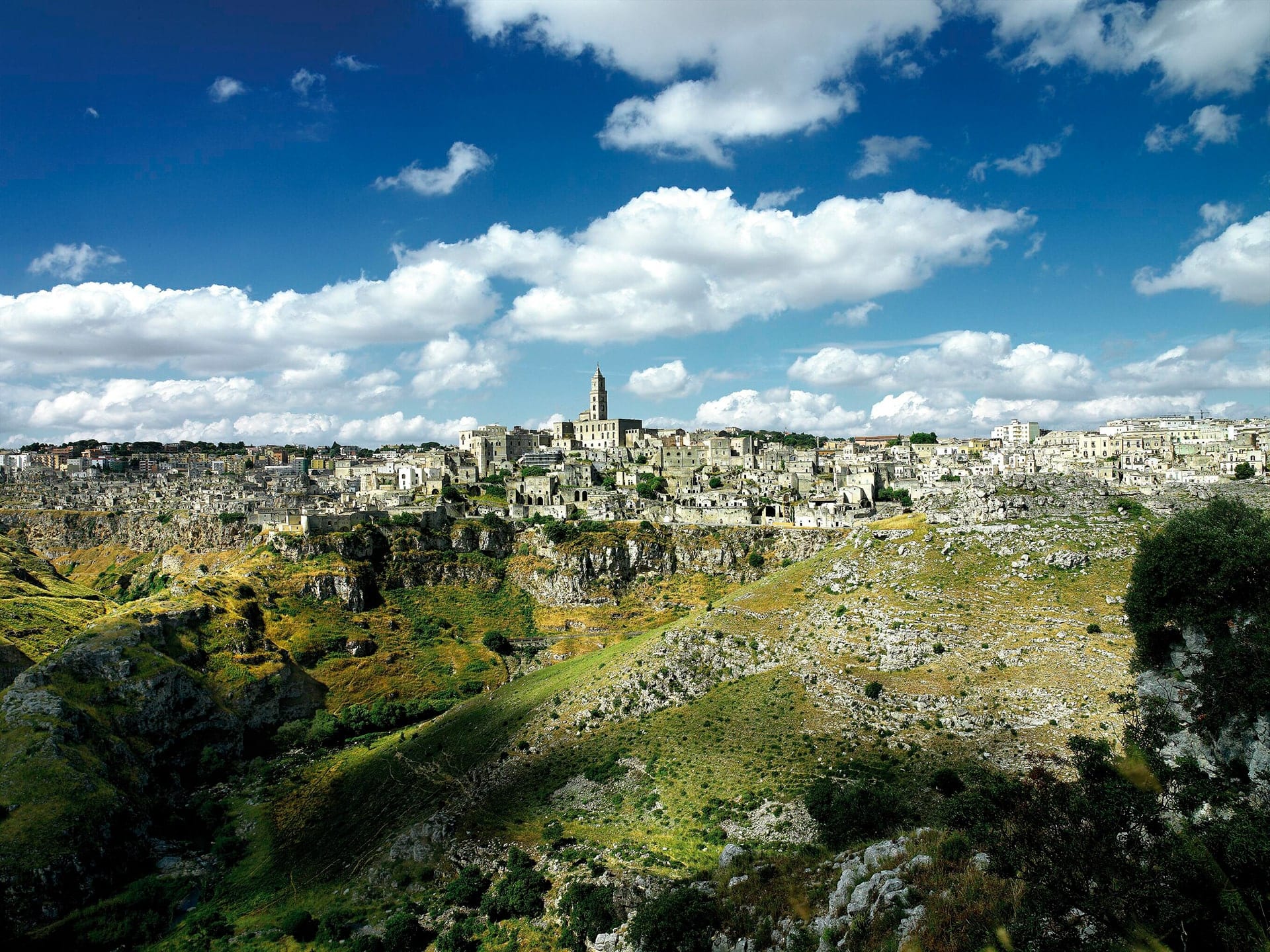
The shame the country locked away
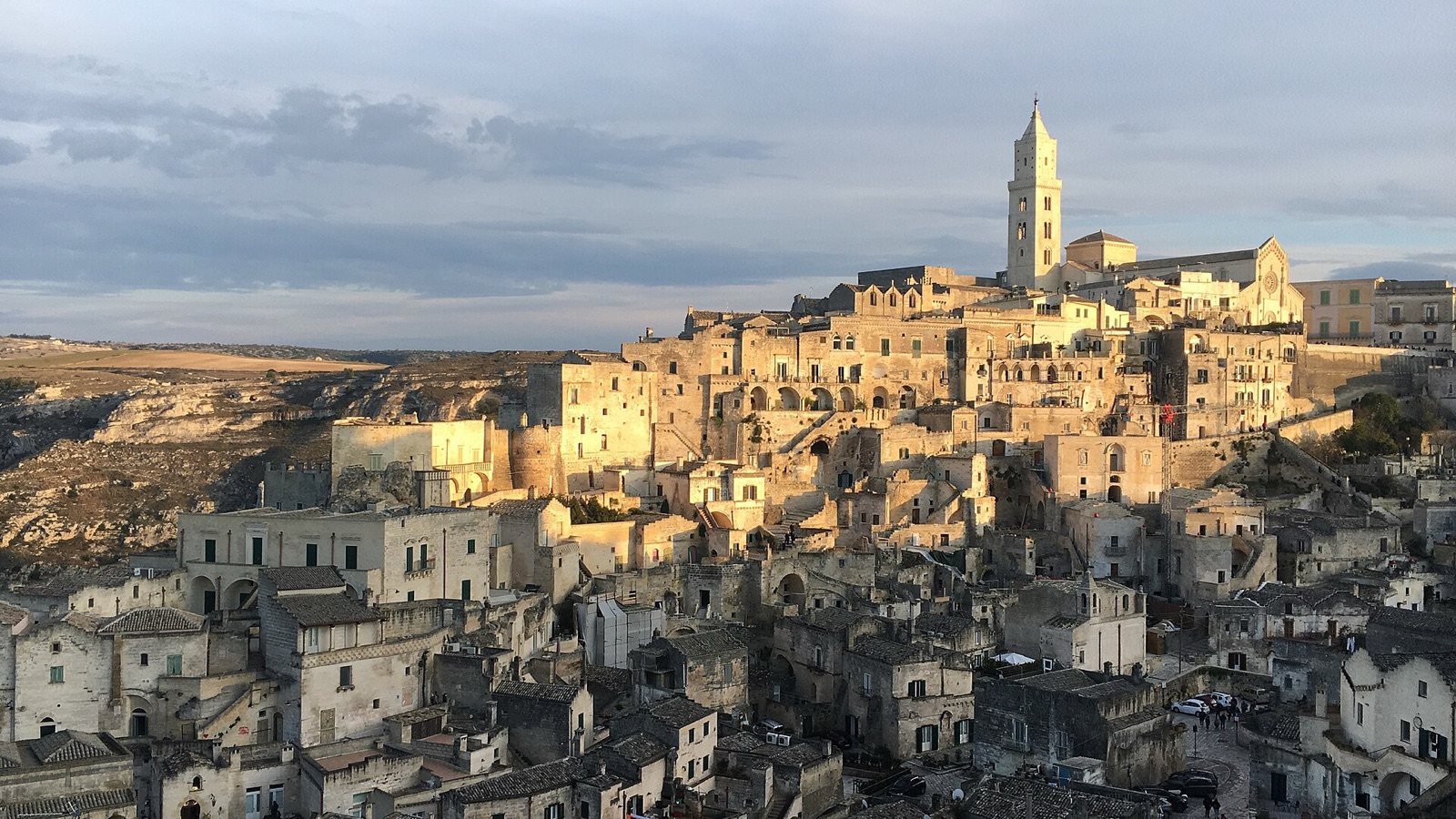
Matera is among the oldest continuously inhabited places on earth. For most of that long span its people lived in the soft tufa of the Sassi, the two ravine-side quarters cut straight into the rock, one cave opening onto the next down the slope. By the middle of the twentieth century the arrangement had curdled. Whole families shared a single grotto with their animals, without running water or daylight, and the poverty of it became a national scandal, named and shamed in Carlo Levi's writing after the war. In 1952 a special law ordered the Sassi emptied, and over the years that followed the fifteen thousand or so still living there were rehoused on the plateau above. The caves were locked and left. For four decades they stood as a monument the country preferred not to visit. Then in 1993 UNESCO put the Sassi on its list, and Matera began, slowly, to look at its own rock again.
The hotel sits in the Civita, the very oldest of the Sassi, on the edge where the town falls away into the Gravina, the ravine that divides Matera from the Murgia plateau opposite. Across that gap, scattered through the scrub, are the chiese rupestri, the rock churches that monks cut and painted into the cliff centuries ago. It is a strange, moving thing to wake to: the town on one side and its wild mirror on the other, and a good part of why anyone comes.
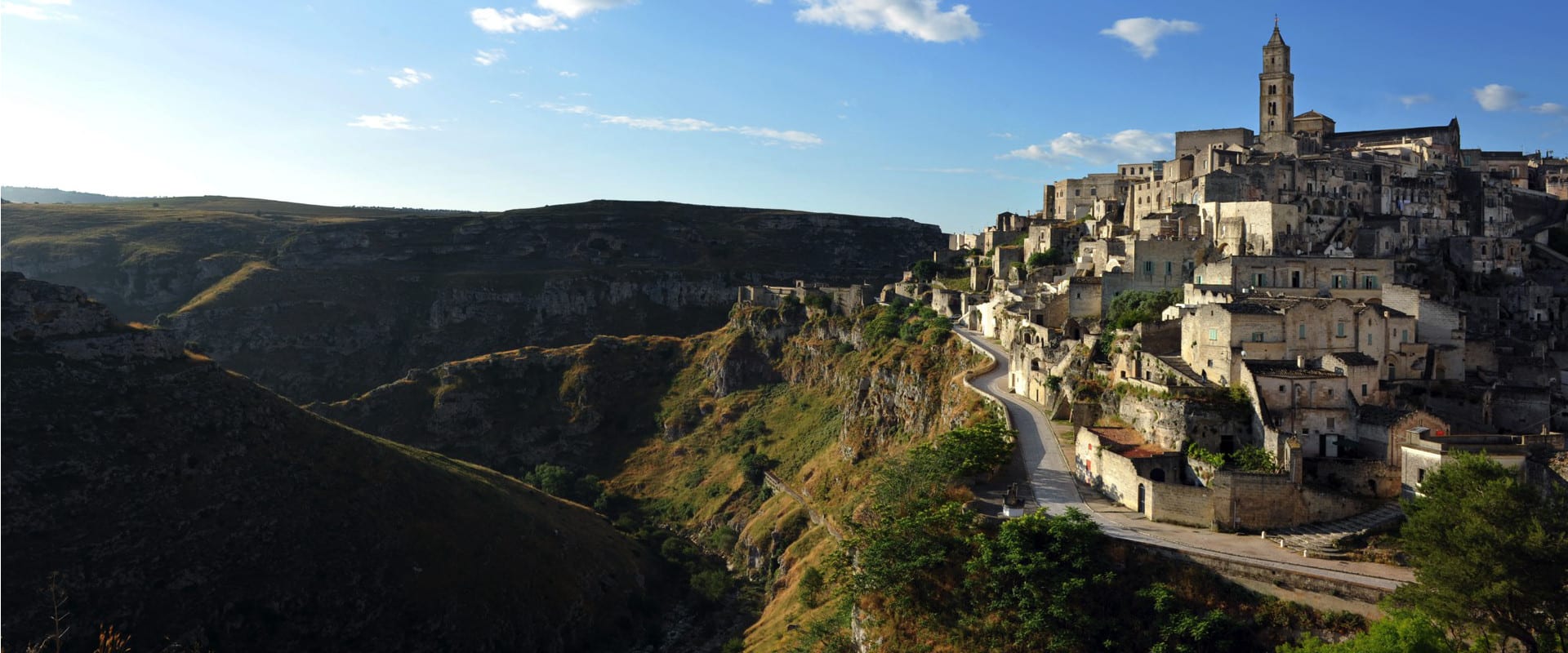
A shame the country locked away for forty years, now looked at again.
Eighteen caves, left as they were found
Daniele Kihlgren made his first hotel not on a coast but in a half-abandoned hill village, Santo Stefano di Sessanio up in the Abruzzo, and gave the idea a name, the albergo diffuso: a hotel scattered through the existing houses of a place rather than built beside it. Matera was the second act. With his partner Enrico Ducrot and the architect Margareta Berg he took eighteen of the Civita's caves and spent years bringing them back without tidying them up. That last part is the whole point of the exercise.
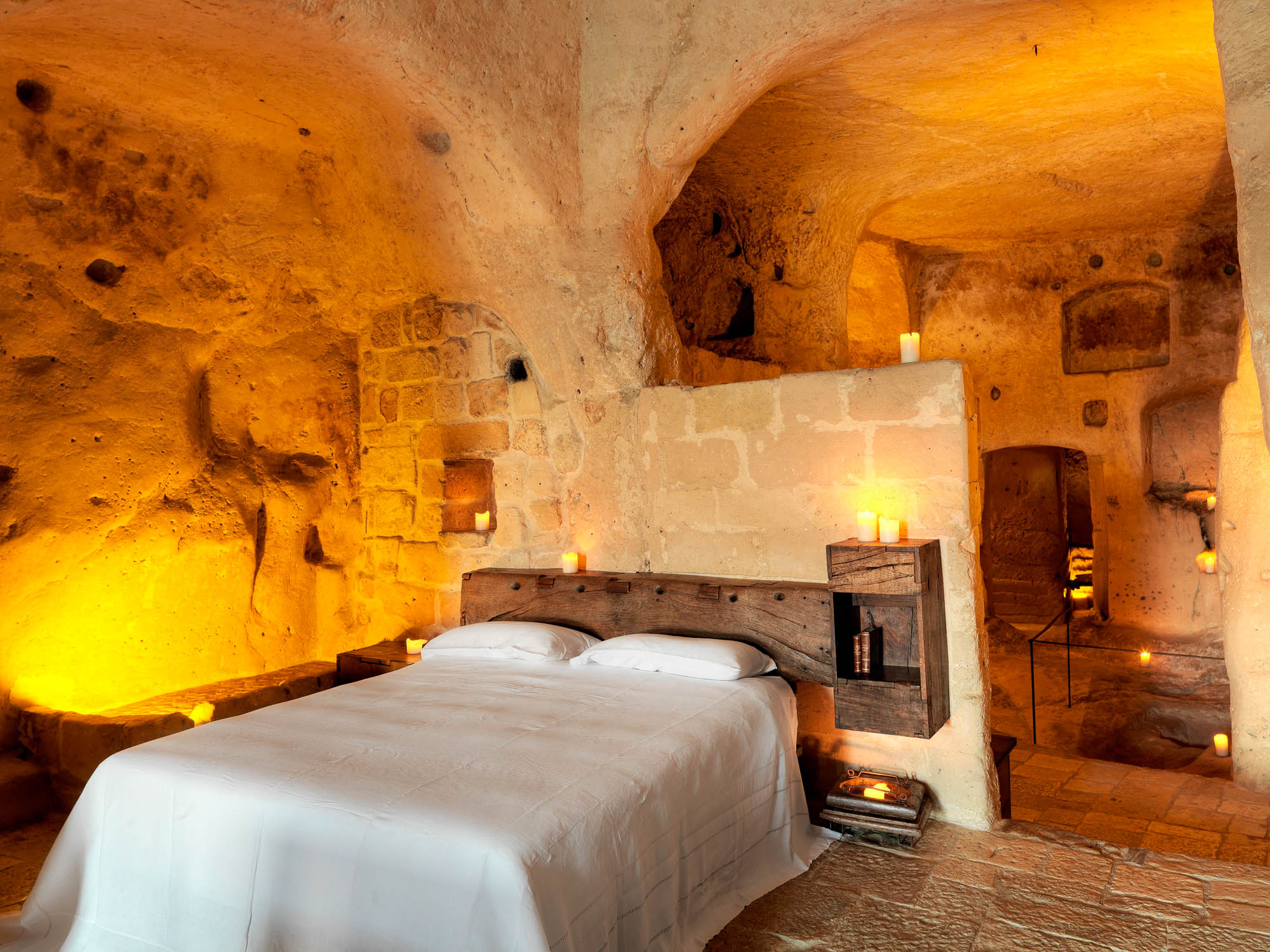
The walls are left as the rock and the old plaster made them. A bed sits under the vault, a deep tub is set into the stone floor, and beyond that there is very little. Some of the rooms run to more than a hundred and sixty square metres of bare, echoing cave. There are no televisions. When the daylight goes, the switches largely give way to candles, and the grotto returns to roughly the amount of light it has held for a thousand years. Comfort here is a quiet negotiation. You gain a stillness you will not find in a room with a minibar, and you give up, gladly, the things that would have broken it.
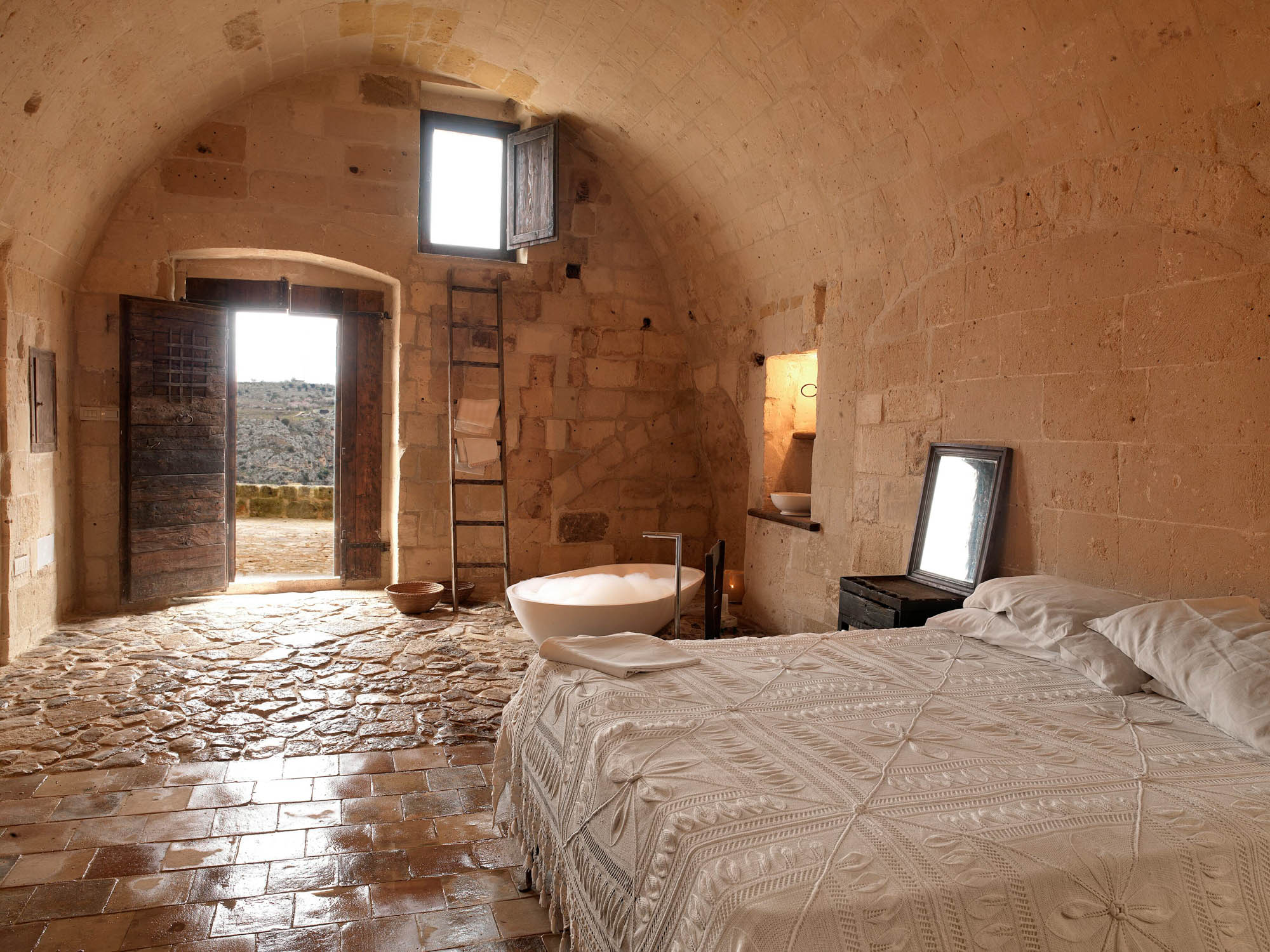
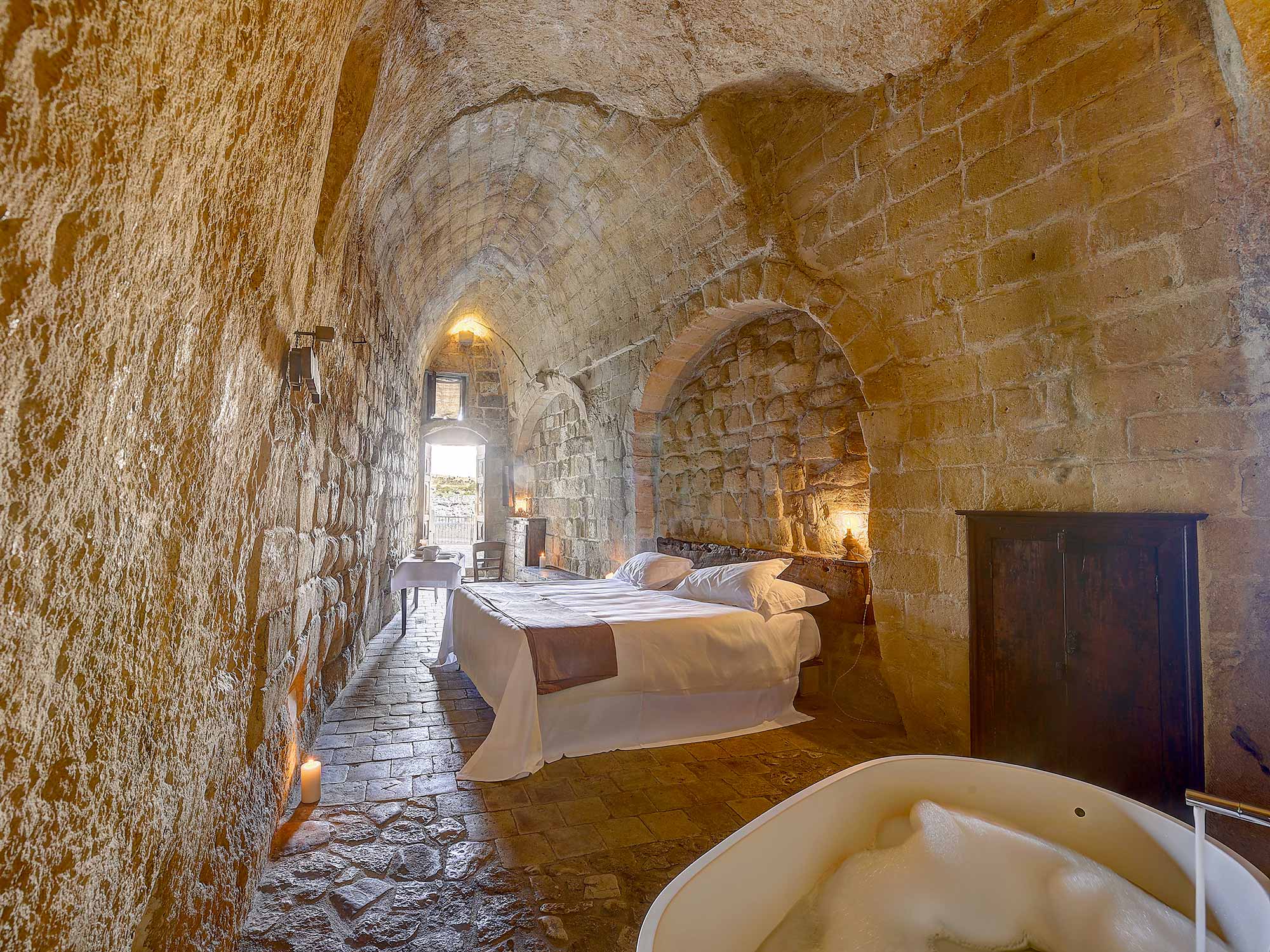
They brought eighteen caves back, and were careful not to tidy them up.
Breakfast in a thirteenth-century church
Breakfast is the set piece, and it is laid in the Cripta della Civita, a deconsecrated cave church from the thirteenth century that now works as the common room. You eat by candlelight under a low rock ceiling, a fire going in the grate, some quiet classical music, and in front of you the local spread: Lucanian cheeses and cured meats, warm bread, yoghurt, fruit and cakes. Dinner can be arranged in the same room on request. The cooking is plain and regional and does not try to be clever, which is the right call. Nothing on a plate is going to out-argue a thirteenth-century church lit only by flame.
There is not a great deal else laid on, and that is deliberate. You walk the stone lanes of the Sassi, which climb and drop without much logic and are worth getting lost in. You cross to the Murgia and its painted churches. You come back and read, or do nothing, in a cave that keeps the same cool whatever the month outside. Matera holds the Mediterranean Capital of Culture title this year, so the town is busier and better tended than it has been in a generation, but the hotel keeps out of the noise. It always has.
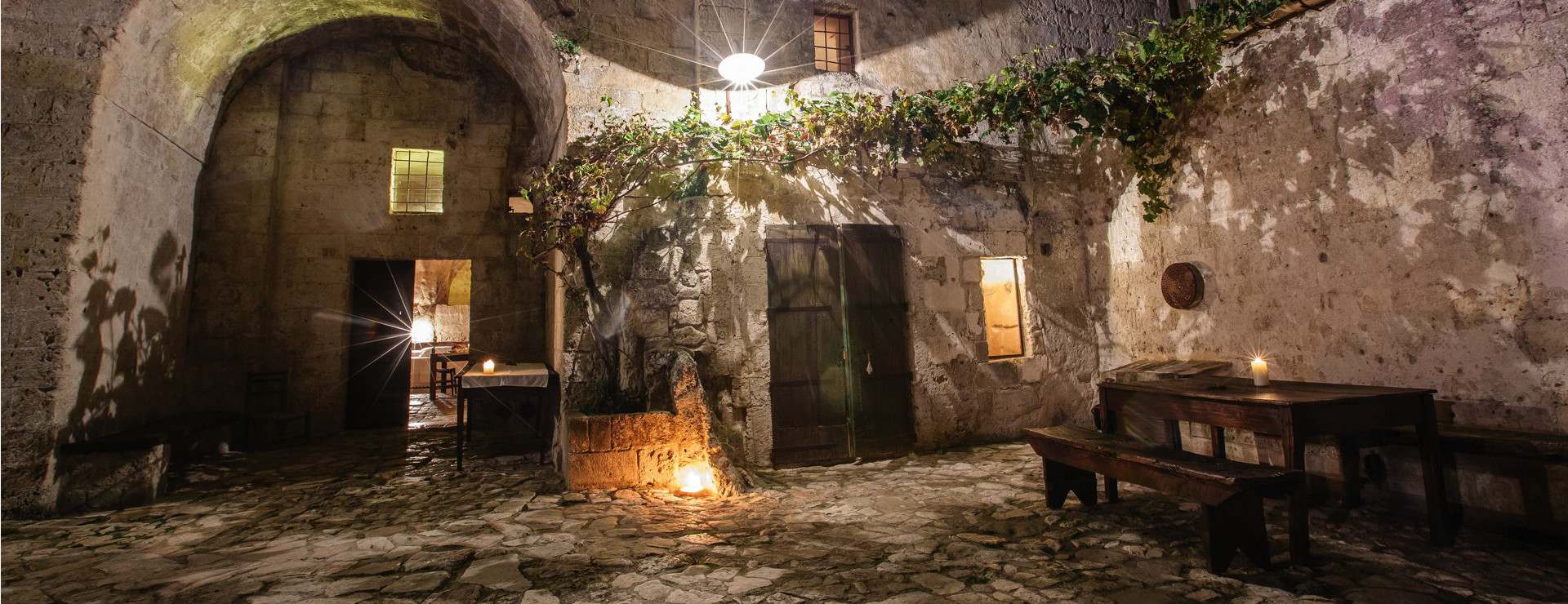
Nothing on a plate can out-argue a church lit only by flame.
Much of the Mediterranean has started to feel sanded down, the same pale linen and infinity pool from one coast to the next. Le Grotte della Civita is the other proposition. It is cool and dim, quiet to the point of silence, and it asks something of you rather than pampering it out of you. What you buy is not comfort in the resort sense. It is the rarer thing of sleeping inside a place, in a room that was a home for a thousand years and was very nearly lost for good. Bring a jumper, go in spring or autumn, and that is why it is in VANE.
Photos: Sextantio Le Grotte della Civita (official), self-hosted with credit.