Field Notes
The road south from Kalamata climbs into rock and does not really come down again. This is the Mani, the middle of the three peninsulas that hang from the Peloponnese, a spine of bare limestone called the Taygetus running out to sea. There are few trees. What there is, in village after village, is towers.
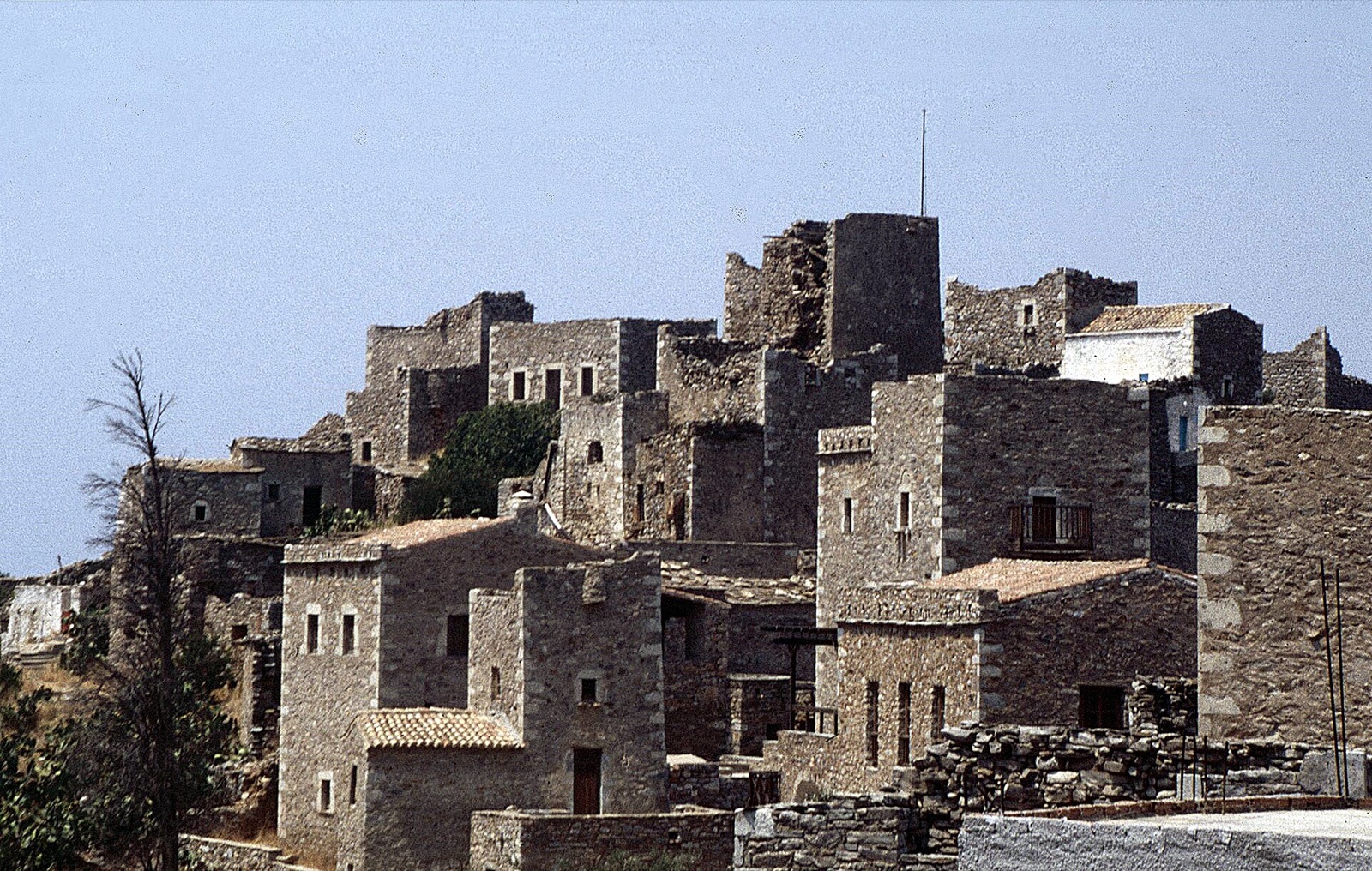
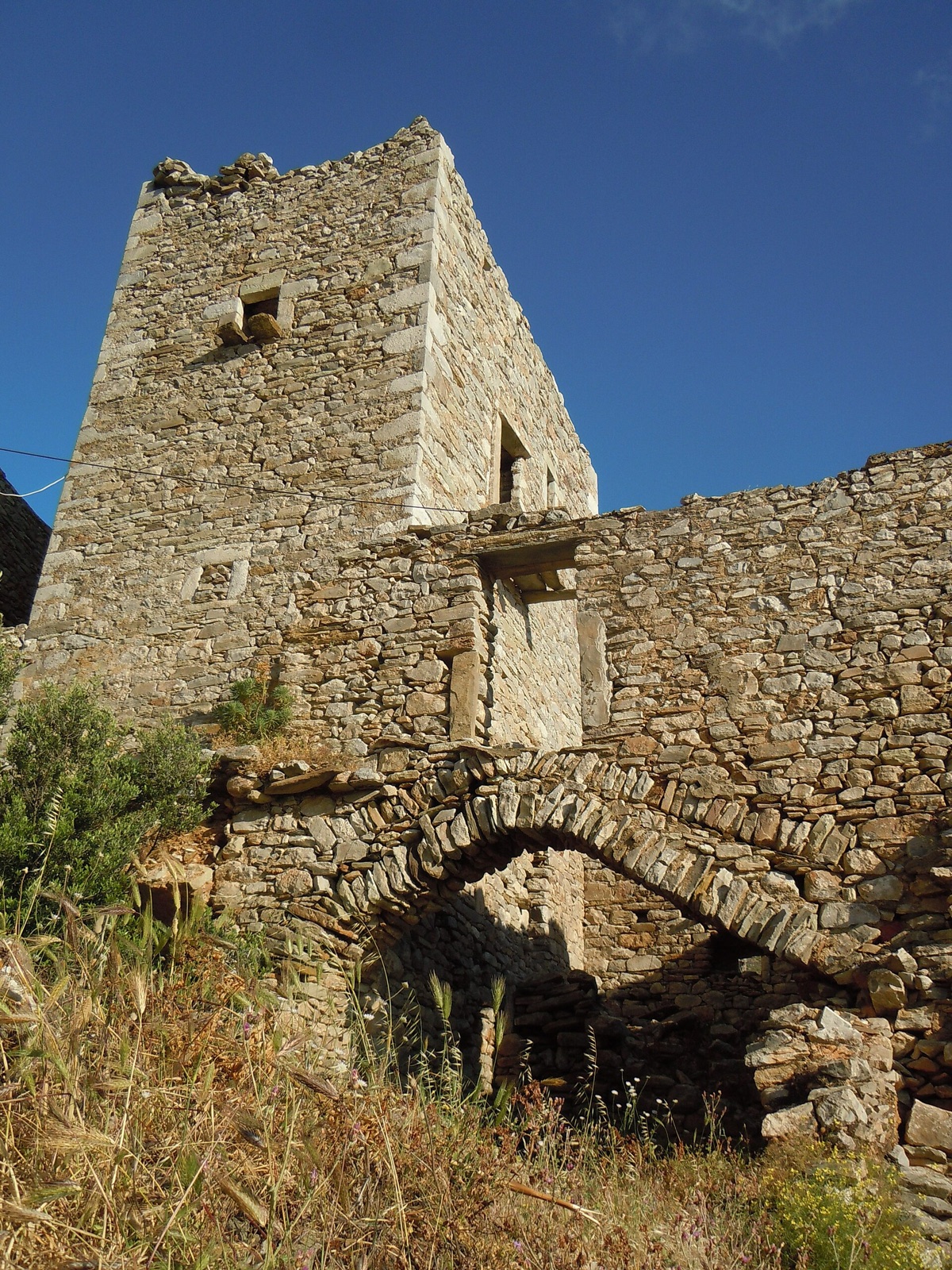
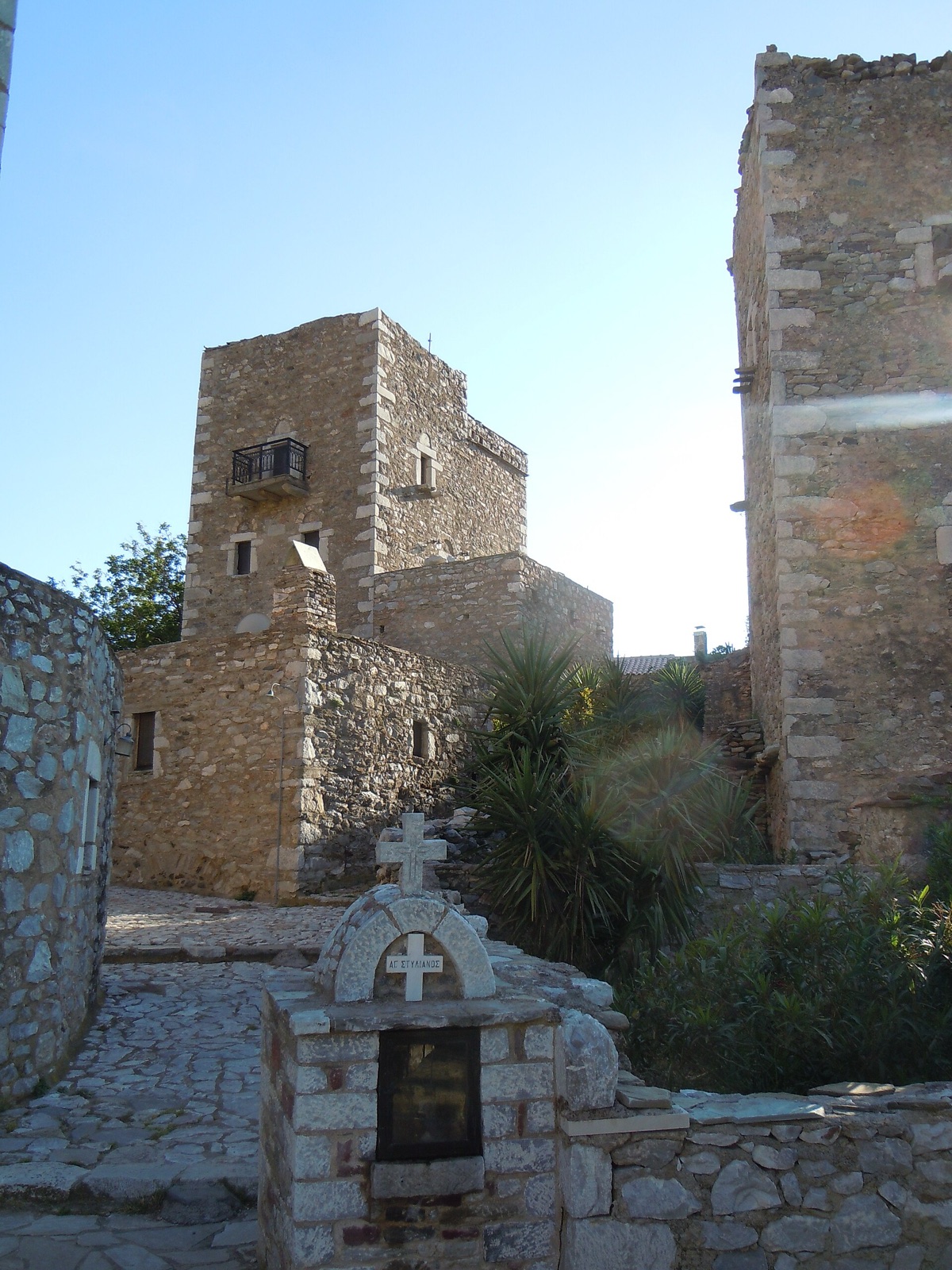
They are the pyrgospita, the tower houses, and they were built to be lived in and fought from at once. Most of what still stands went up between the seventeenth and nineteenth centuries, when no government reached this far and the law was whatever a family could enforce. A tower was a house, a fort and a statement of rank in one. The higher it rose, the more the clan behind it could claim.
The clans fought each other far more than they fought anyone from outside. Feuds ran for years, now and then for decades, conducted from the rooftops. Height was the whole game. A family under threat added a storey, and the rival answered with another. Patrick Leigh Fermor, who came here in the 1950s and never quite left, watched the building itself become the weapon.
You can read the pecking order of a village in its skyline, the way you would read a page. Whoever built highest spoke last.
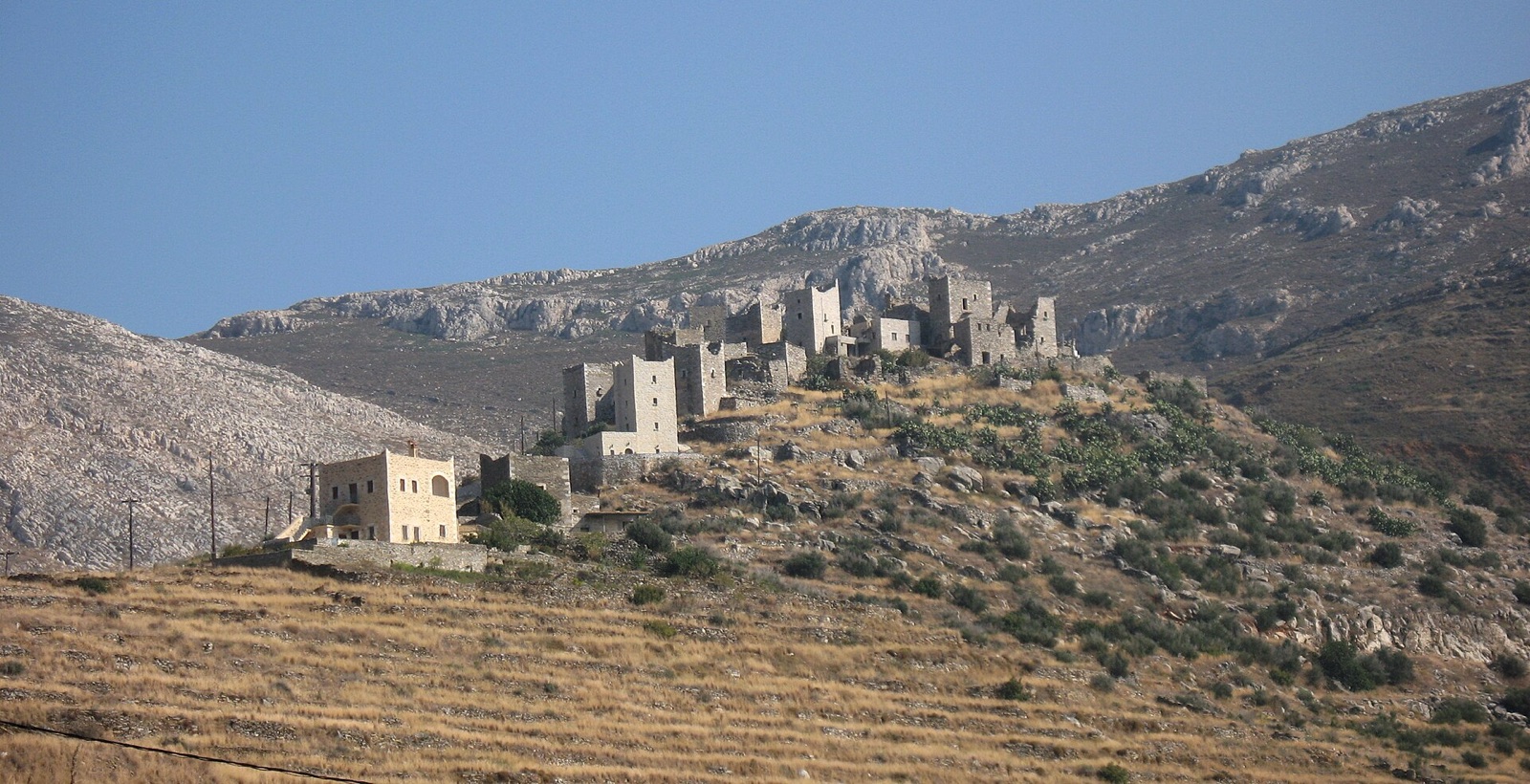
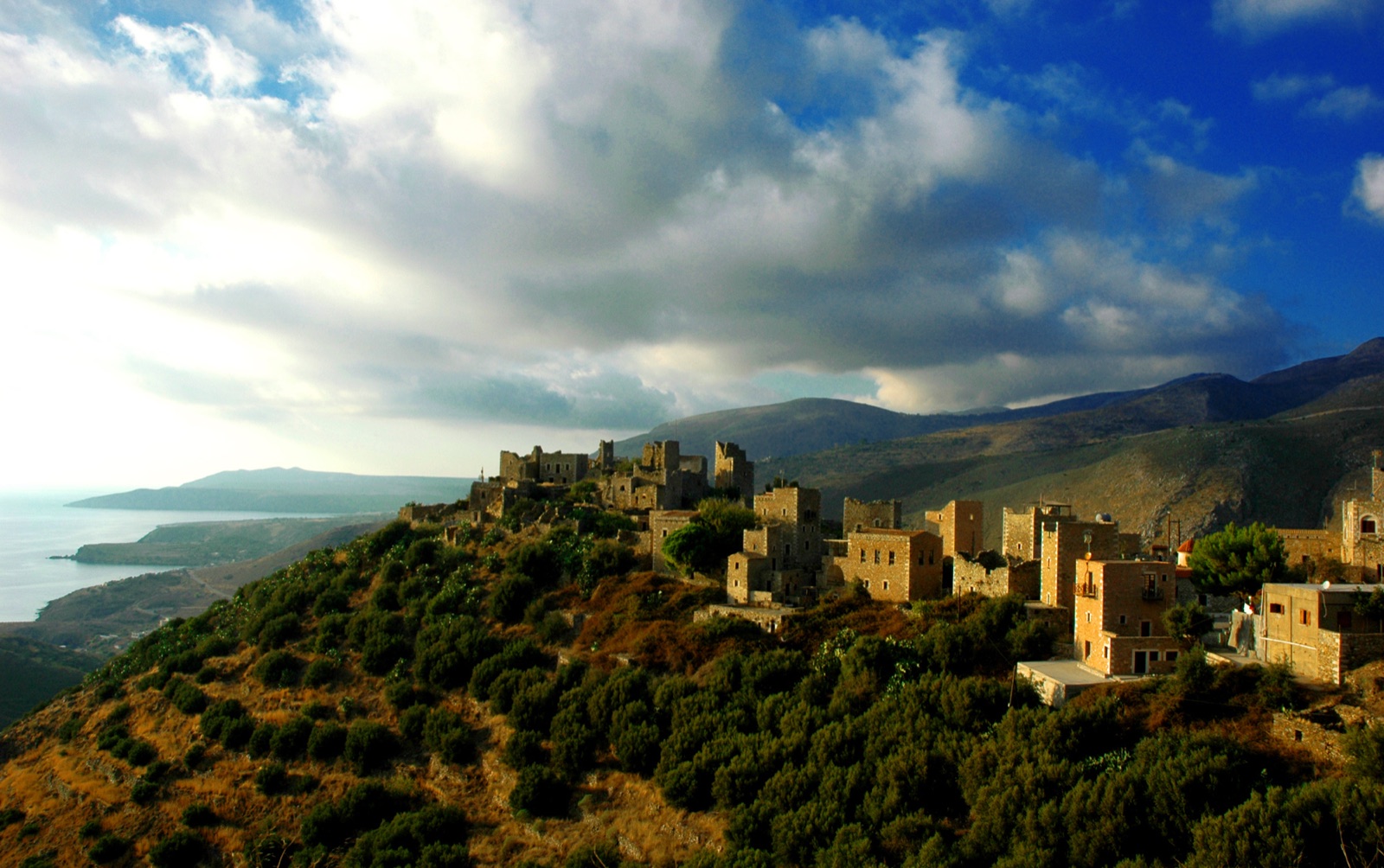
The most complete of them is Vathia, near the tip, a cluster of towers stacked on a bluff above the sea. It emptied over the last century as the feuds died out and the young went to Athens and abroad. A restoration in the 1980s saved the stone. Much of it stands empty even so, honey-coloured at six in the evening, roofless in places, patient.
The mood shifts a little further up the coast at Areopoli, the small capital named for Ares, the god of war. It was from here that the Maniots marched out to open the war of independence in 1821, and the town has kept the flinty confidence of people who were never fully brought to heel. The tavernas serve what the ground gives: cured pork, thick local sausage, wild greens, thyme honey.
At the very end the land stops at Cape Tainaron, the southernmost point of mainland Greece. The ancients put one of the gates of the underworld here, in a sea cave you can still walk down to. Two seas meet off the cape and the wind rarely drops. Behind you, all the way back up the ridge, the towers keep their line.
Entire towers were built under fire: the walls facing the zone beaten by the enemy were reared by night, the remainder during the day, with the defenders firing from one side while the masons laid one great limestone cube on another until they had overtopped the enemy.
Patrick Leigh Fermor, Mani: Travels in the Southern Peloponnese
One selection at a time, in your inbox. Subscribe →