Field Notes
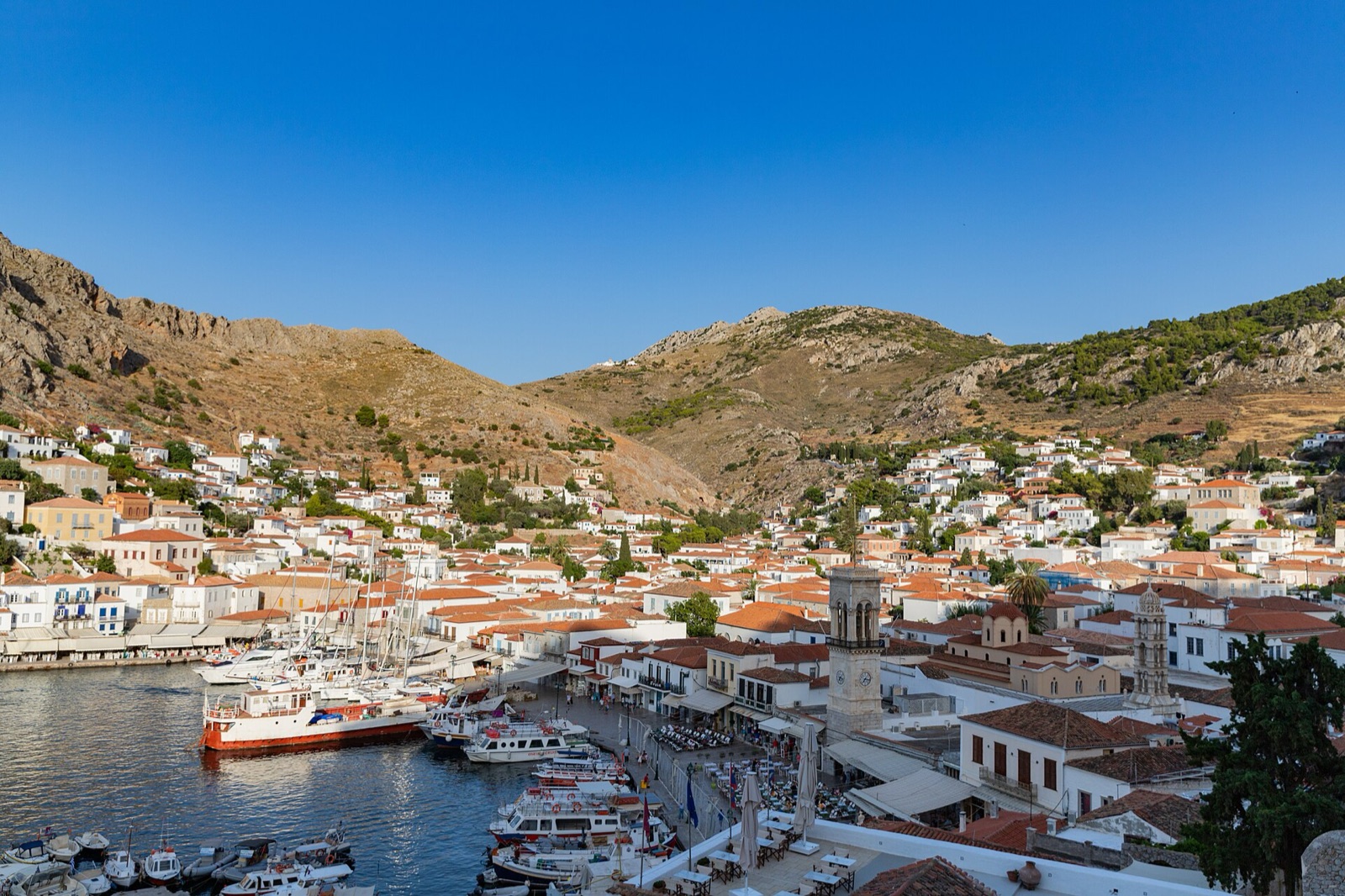
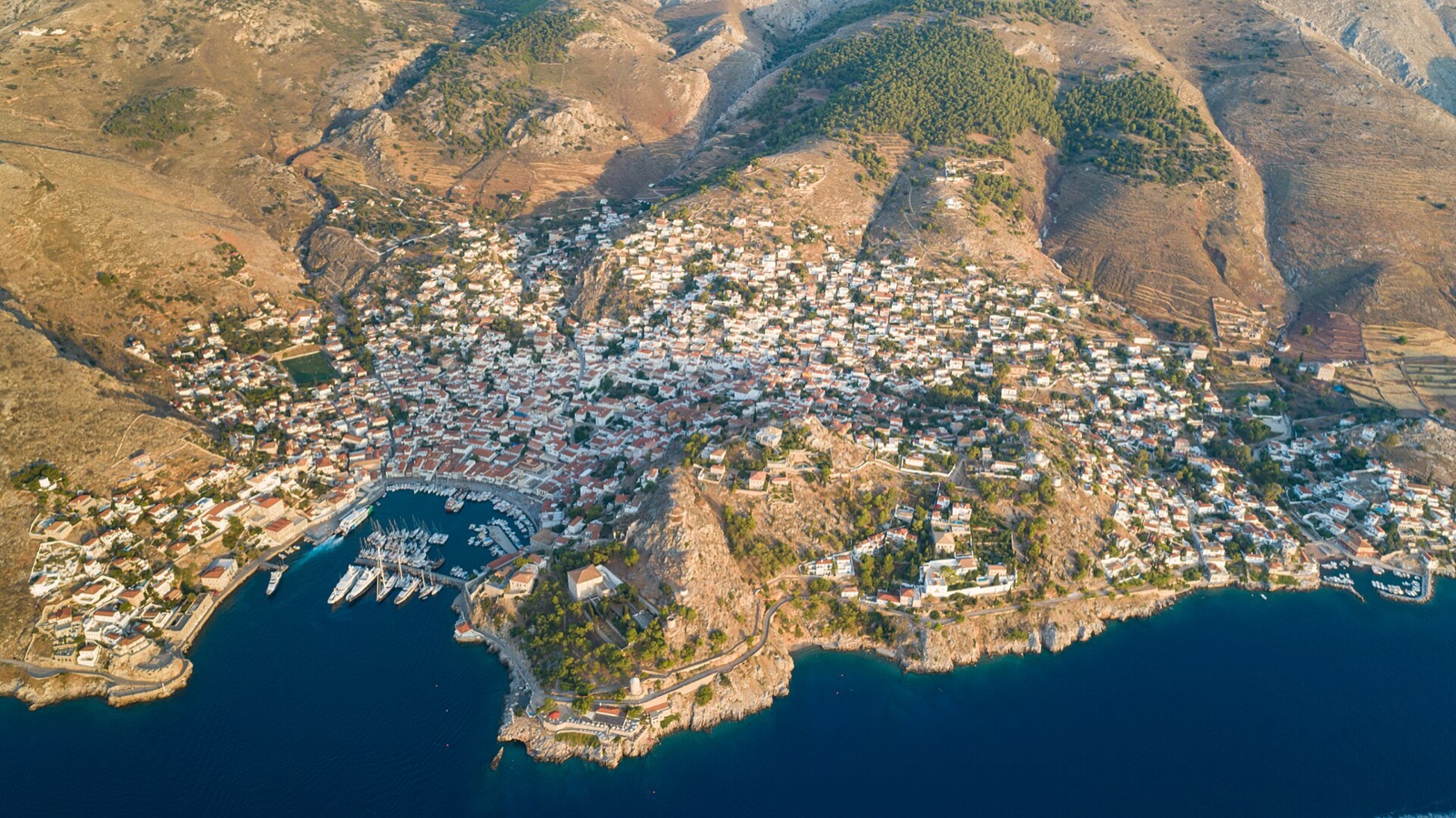
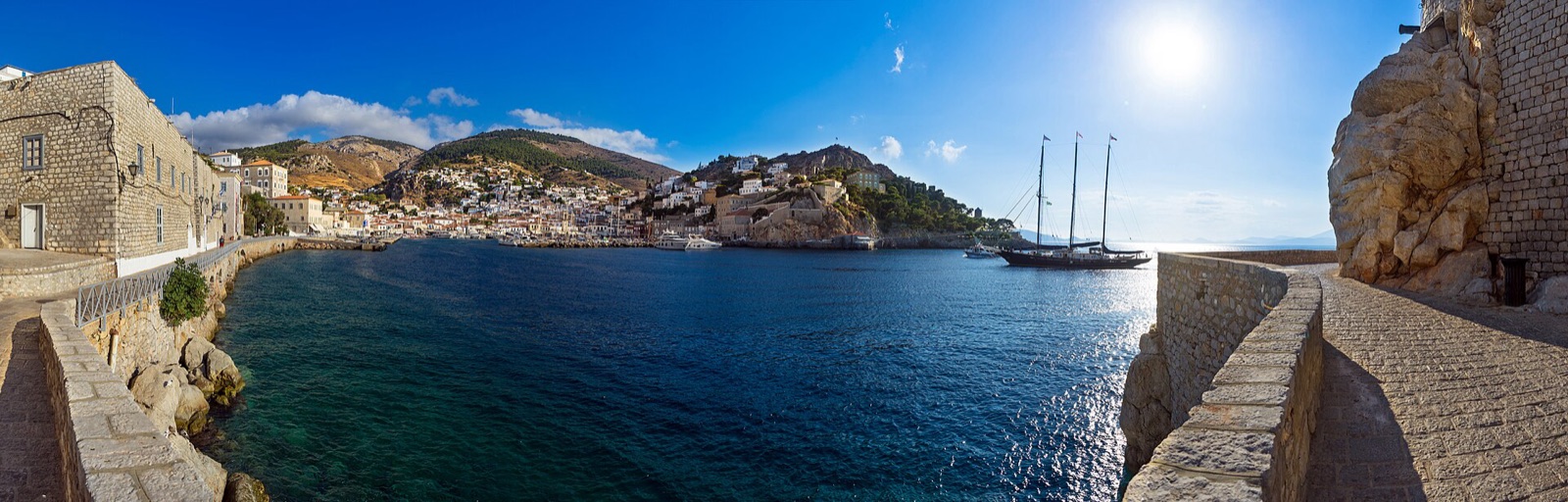
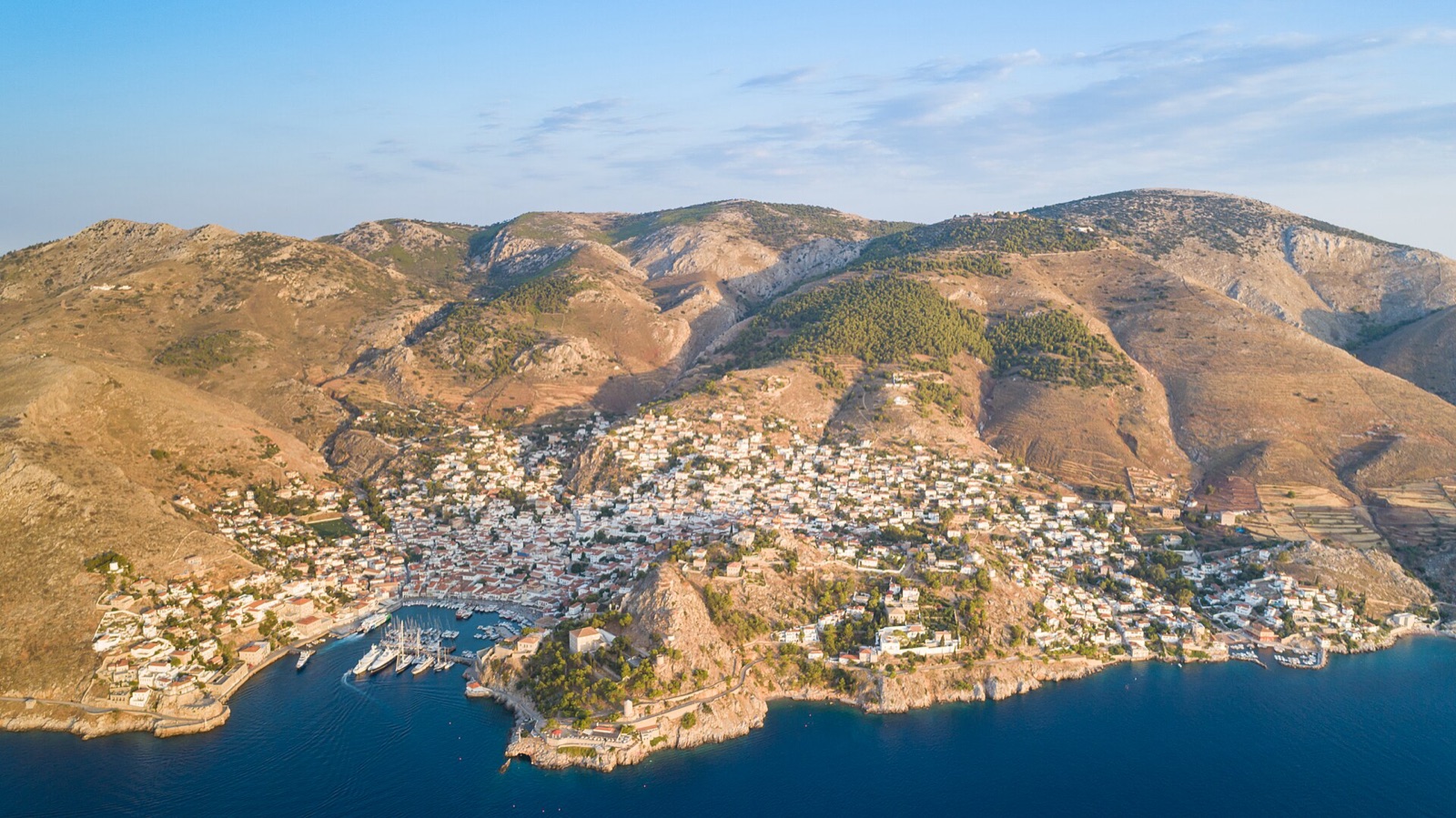
You arrive by boat or you do not arrive at all. Hydra has no airport, and the fast ferry from Piraeus sets you down at a stone harbour that curves like a small amphitheatre, grey mansions stacked up the slope behind it. The first thing you notice is a sound you cannot place. Then you understand that it is the absence of one. No engines.
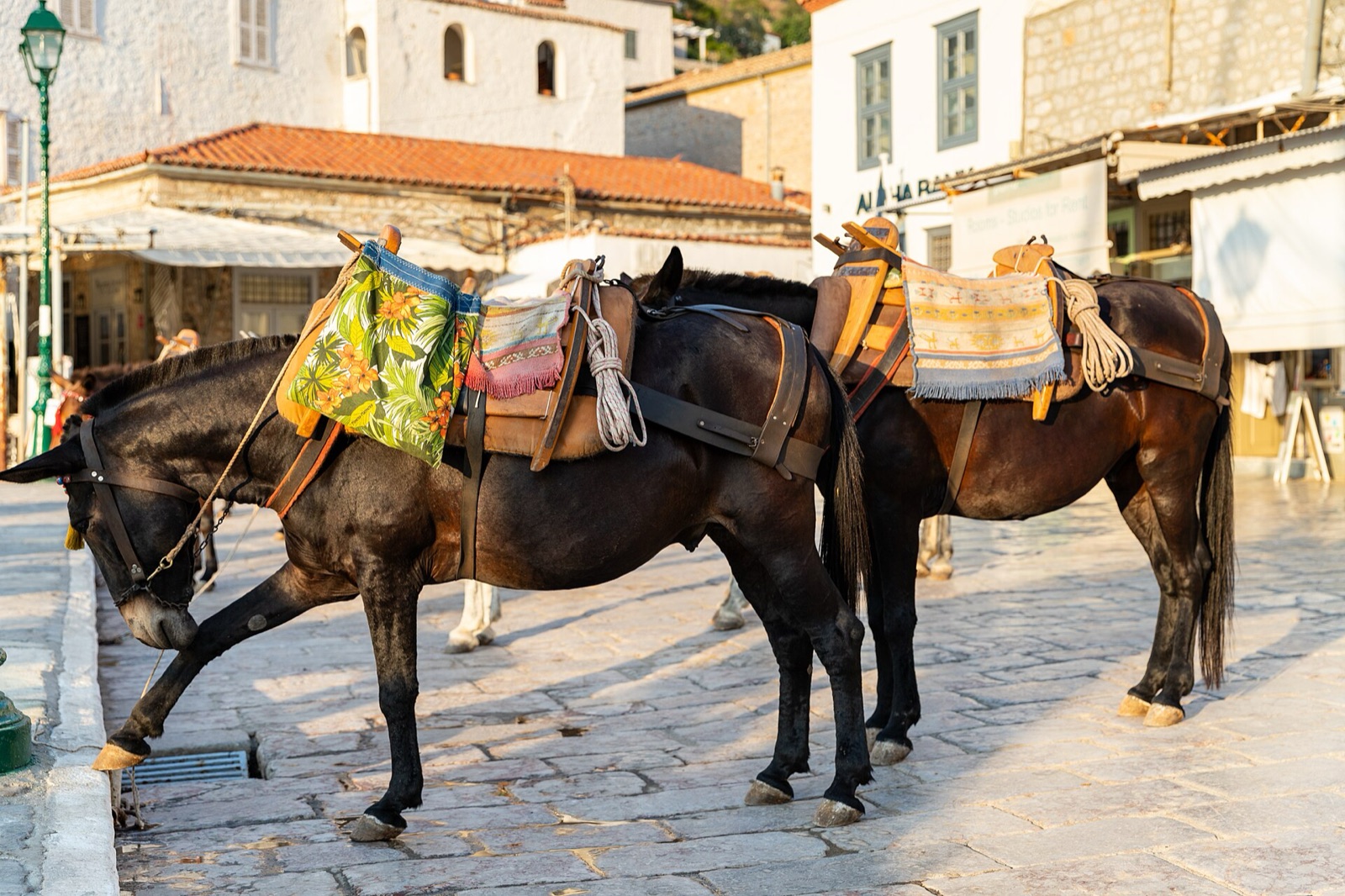
The island bans the wheel. Not only cars and scooters but bicycles too, by presidential decree, and the ban has held since the 1950s, when Hydra was declared a preserved national monument. Building here still has to follow the methods of around 1800. What moves the island instead is roughly a thousand donkeys and mules. They carry the crates off the ferry, haul cement up to a renovation, take a suitcase to a house that no car could ever reach.
Take the engine out of a place and you hear what was always there. Hooves on stone, a cat, the sea working at the sea wall.
The port is the whole theatre. In the morning the mule drivers wait by the water with their animals, and the town's deliveries and arrivals pass through them. The lanes climb fast behind the front, too steep and too narrow for anything with a motor, so you walk. Within ten minutes the crowd thins, the shops end, and you are on a path of worn stone with a wall on one side and a drop to the blue on the other.
The mansions were paid for by the sea. In the eighteenth and early nineteenth centuries Hydra's shipowning families grew rich on trade, then spent much of that money and many of those ships on the Greek revolution. The archontika they built are why the harbour looks the way it does, sober grey stone rather than whitewash, closer to a merchant's ledger than a postcard.
Later the island drew a different kind of settler. Painters found the light, and in the 1960s Leonard Cohen kept a house up in the lanes and wrote there. The appeal is easy to see. A place with no traffic hands you back your attention.
There is a discipline to it. No car means every heavy thing arrives on the back of an animal and every visitor walks. The island decided, a long time ago, that it would be harder to reach and slower to cross, and it has not changed its mind. You leave a little recalibrated, aware for a day or two of how much noise you had stopped hearing.
One selection at a time, in your inbox. Subscribe →