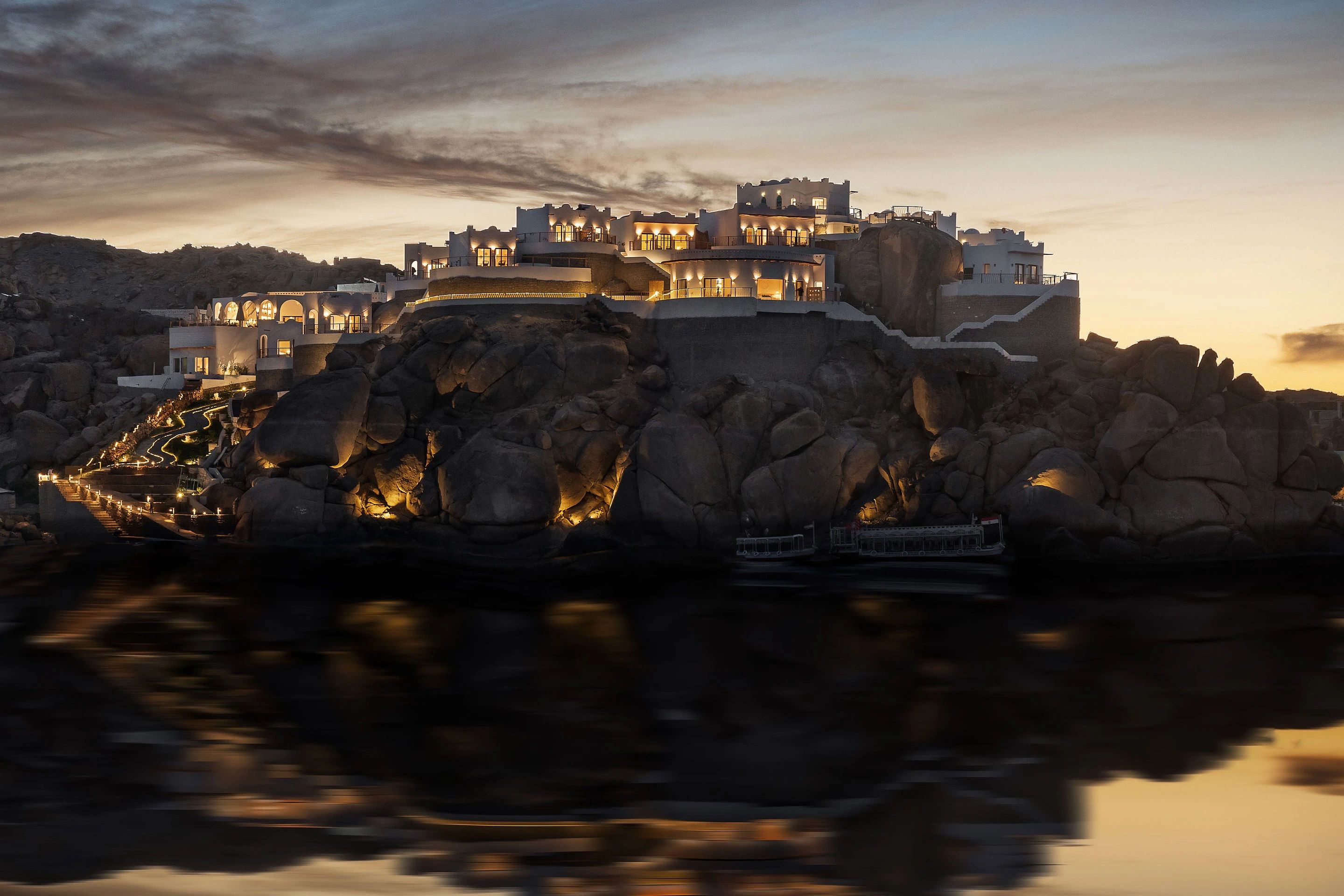
An island at the First Cataract
Aswan is where Egypt begins to turn into Nubia. It is the last proper town before the Nile heads south into the desert, warmer and slower than Luxor or Cairo, and the river here is at its most beautiful, split into channels around islands of dark granite that have broken the current since the time of the pharaohs. This is the First Cataract. The stone was quarried for obelisks a few miles upstream, and some of it was simply left where it stood. BenBen sits on one such island, Heissa, and was raised straight onto the boulders rather than cleared from them.
Across the water lies Philae, the island temple of Isis that engineers took apart block by block and rebuilt on higher ground when the dams rose and the old sanctuary began to drown. It is a strange and fitting neighbour for a hotel that thinks about water and rock the way this one does. The name helps. In the older cosmology the benben was the first mound of earth to surface from the waters at the beginning of things, the point from which creation started, and a house perched on granite above a slow river earns the reference more honestly than most.
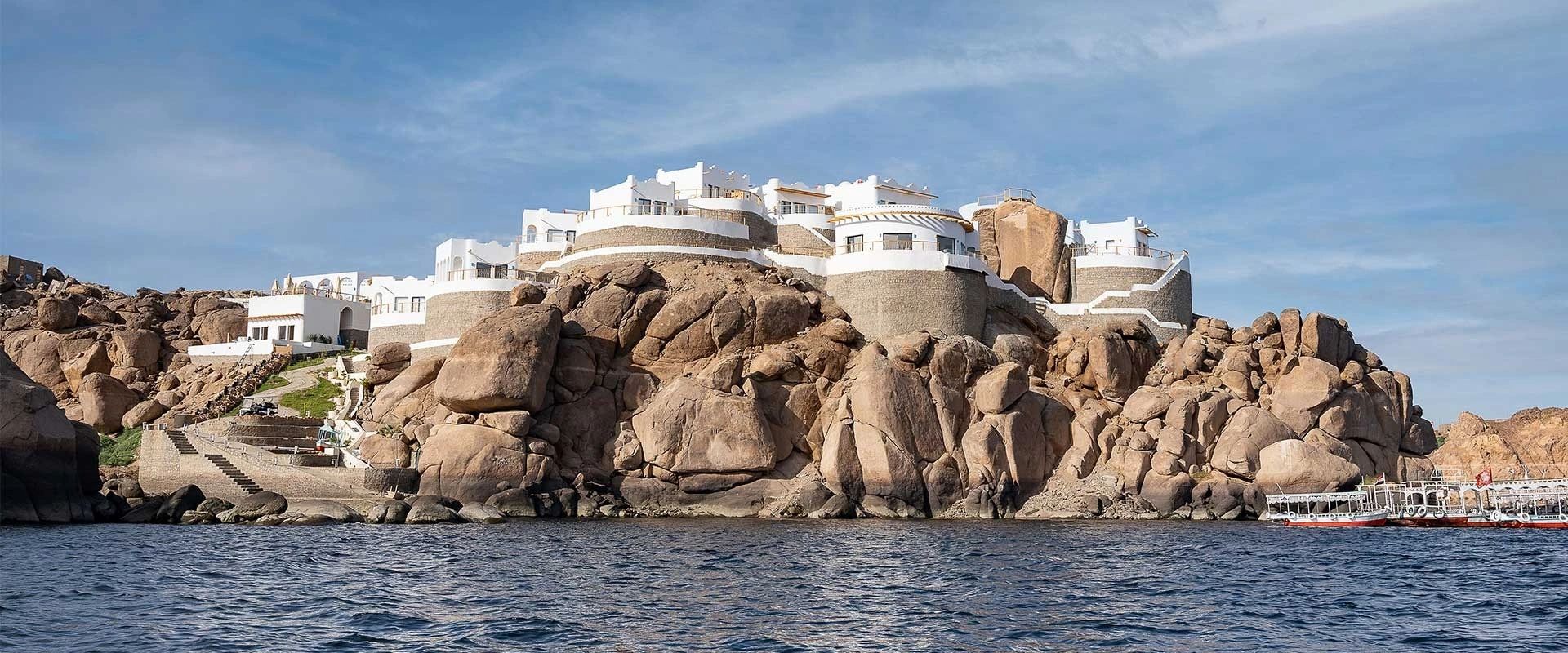
You come to it by boat, because there is no other way.
Built from the rock it stands on
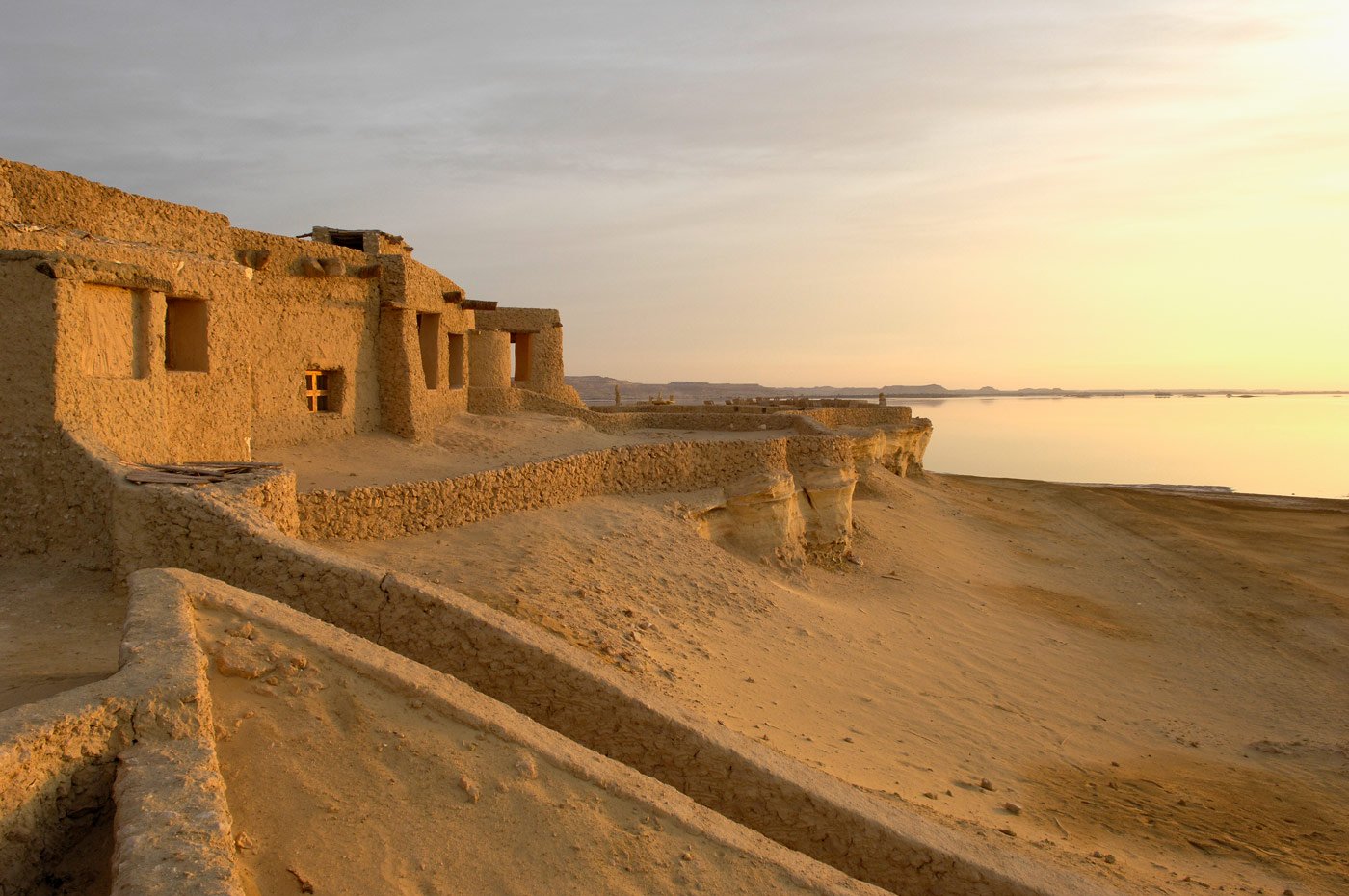
The place is the work of Mohamed Sarwat, who made television before he came to Heissa and then did not leave. By his own account the island did the designing. He built on the granite and out of it, in the Nubian manner, white plaster over domes and vaults, terraces following the fall of the rock so that from the river the house reads less as architecture than as something the stone grew. There is no front desk and no check-in. A guest is handed a small stone on a cord to wear for the length of the stay and taken straight to the room, the paperwork left for later or never.
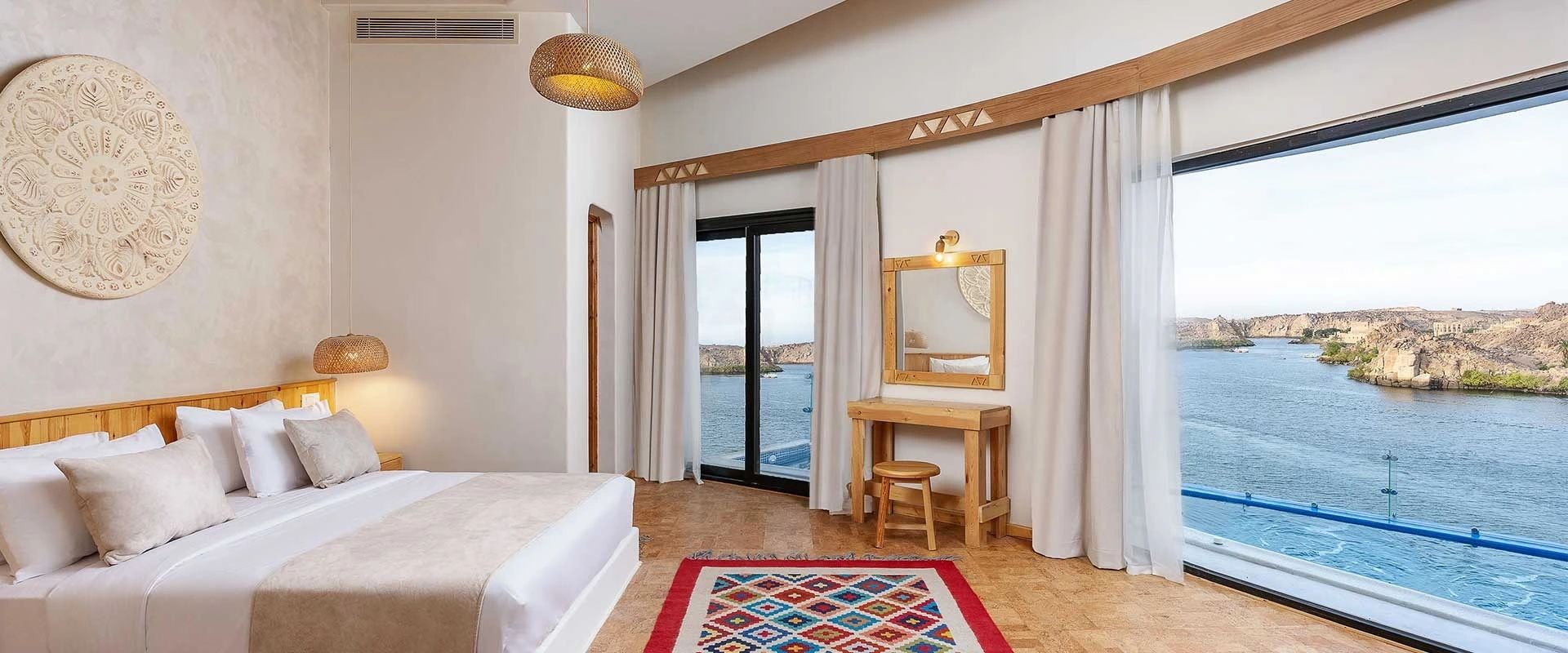
The rooms are plain in the right way. White walls, worked wood, a carved Nubian medallion over the bed, a kilim on a cool stone floor, and then the whole far wall given over to glass and the river beyond it. Most open onto a private terrace with a jacuzzi angled at the Nile, and a few suites keep a small pool of their own. Little here is grand, and that is the discipline of the thing. The view does the heavy lifting, and the building is sensible enough to stand back and let it.
He built on the granite and out of it, rather than against it.
The table over the water
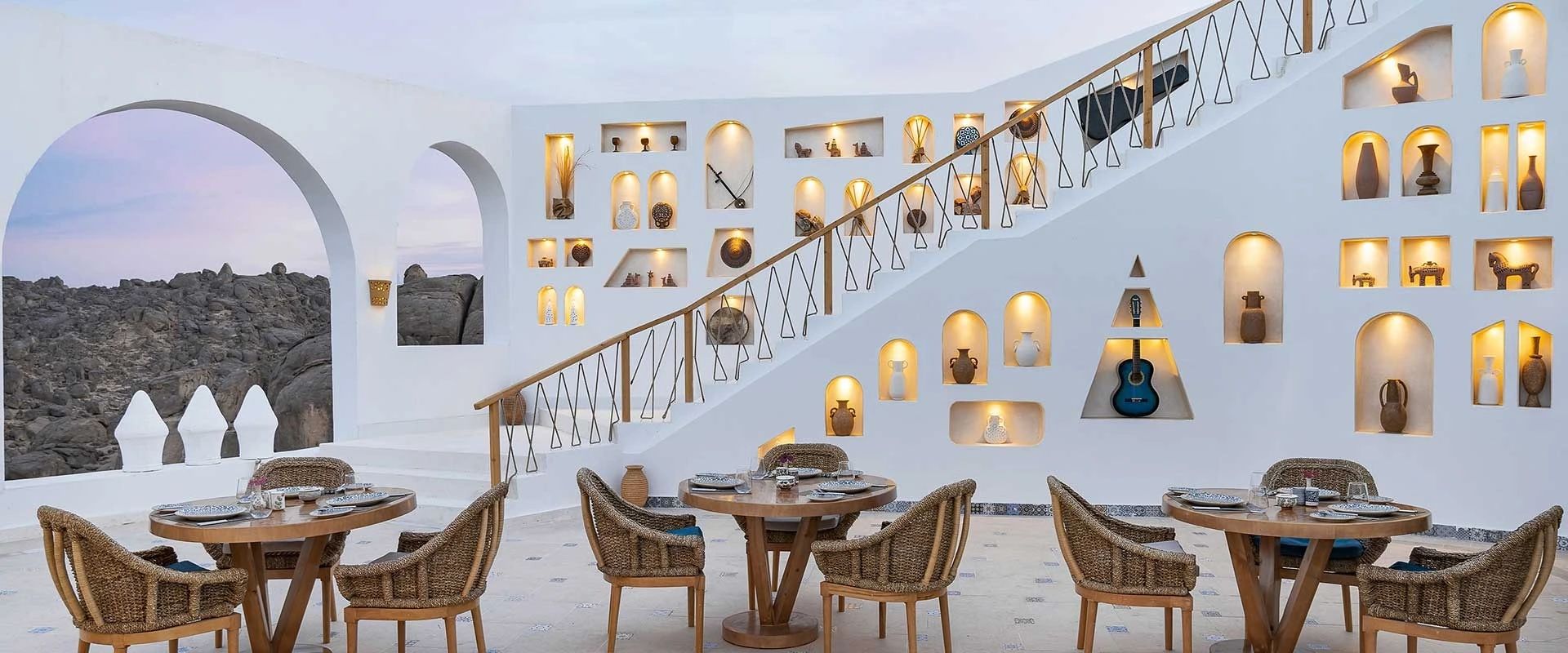
There is one kitchen and it keeps things close to home. The restaurant sits over the water, its walls set with lit niches holding Nubian pottery and a stray guitar, a staircase climbing through them, the river framed in the arches at one end. The cooking is Nubian and Egyptian, nearer a family table than a grand one, and the better for it. Breakfast keeps no hour, which is the correct policy on an island where the alternative to the table is watching the light cross the granite. In the evening a terrace bar takes over, the rock still warm from the day, the feluccas thinning out on the channel.
Beyond the table there is a spa, and yoga and meditation for those who want them, laid out on a deck above the water with Philae on the far side. Mostly, though, the island asks for very little beyond time. You read, you swim off the rock, you take a boat across to the temple at the quiet end of the afternoon. For a country whose luxury trade works the stretch between the pyramids and Luxor, this is a different and gentler register, and it suits the place it is in.
Egypt has larger hotels and more famous ones, and none of them can do this particular thing, which is to set you on a granite island in the middle of the Nile, within sight of a temple of Isis, and then leave you alone with the river. It is small, it is reached only by boat, and it does one idea completely. That is why it is in VANE.