Ground Truth
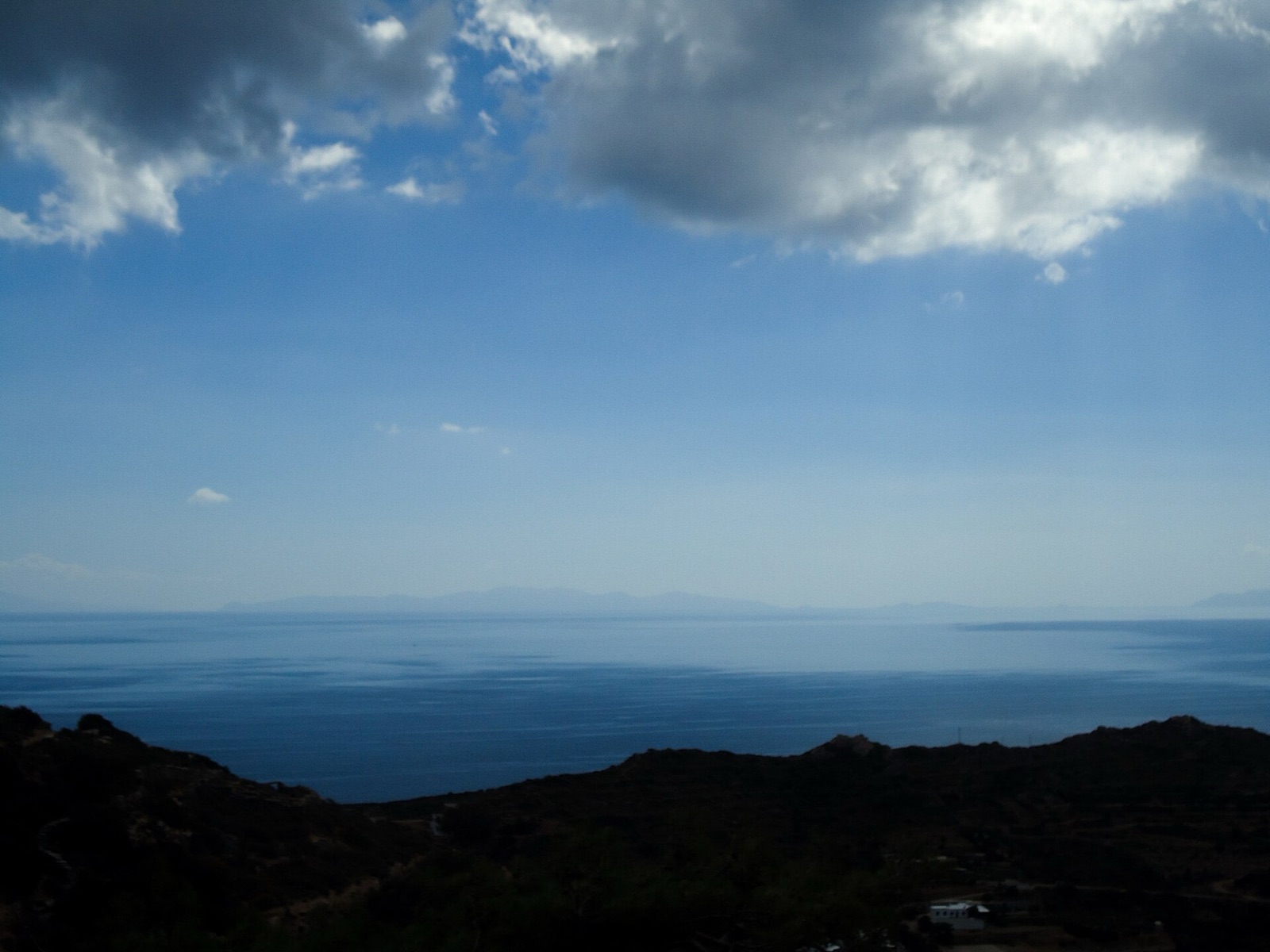
Stand above Apollonia on Sifnos in July and the island shows you its bones. Bare ridges, drystone terraces stacked like contour lines, a scatter of olives and figs near the houses and almost nothing above them. Most visitors read this as the natural face of the Aegean, the way these islands have always looked. It is not. It is closer to a scar.
The Cyclades were wooded once. Pollen studies and the plain botany of the region tell the same story: pine, juniper, holm oak and wild olive held the slopes before people did much to them. What stripped the hills was not the sea or the sun. It was us, working across a very long stretch of time.
Sifnos makes the argument better than most, because Sifnos had metal. The island was mined for silver, lead and iron from prehistoric times, and you cannot smelt ore without fuel. Furnaces run on charcoal, and charcoal comes from trees. Centuries of ships, houses, ovens and lime kilns took the rest. A forest cut for a good reason is still a forest that is gone.
Then came the animal that finished the job and keeps finishing it. The goat does not just graze a hillside, it edits it. It takes the seedling before the seedling becomes a tree, strips bark, and digs at roots when the surface is bare. Conservation groups working in the Cyclades now describe the same loop everywhere: cutting, then overgrazing, then fire, then a soil too thin to hold the next generation of green.
The wind and the ground do the accounting. The meltemi, the dry northerly that scours the Aegean through the summer, pulls moisture out of everything it touches and gives nothing back. The bedrock here is schist and marble, and the soil that sits on it is shallow and quick to leave. Take the trees away and the rain no longer soaks in, it runs off, carrying the good earth to the sea.
The terraces are not decoration. They are a wall built against forgetting, each course of stone an argument with gravity that the island has been losing slowly for three thousand years.
So the look we prize as pure, that clean line of rock and light with a white chapel on it, is really the look of scarcity. The Cyclades are beautiful in the way a swept table is beautiful. Read the terraces as what they are, the memory of a greener island, held up by hand.
One selection at a time, in your inbox. Subscribe →