Ground Truth
Most eclipses have the bad manners to happen over an ocean, or somewhere in a desert no one can reach. On 12 August 2026 the geometry of the solar system does us a favour. The shadow will not be lost at sea. It crosses Europe from one edge to the other, drawing a rare contrast: the absolute cold of Iceland at one end, the warm dusk of Spain at the other.
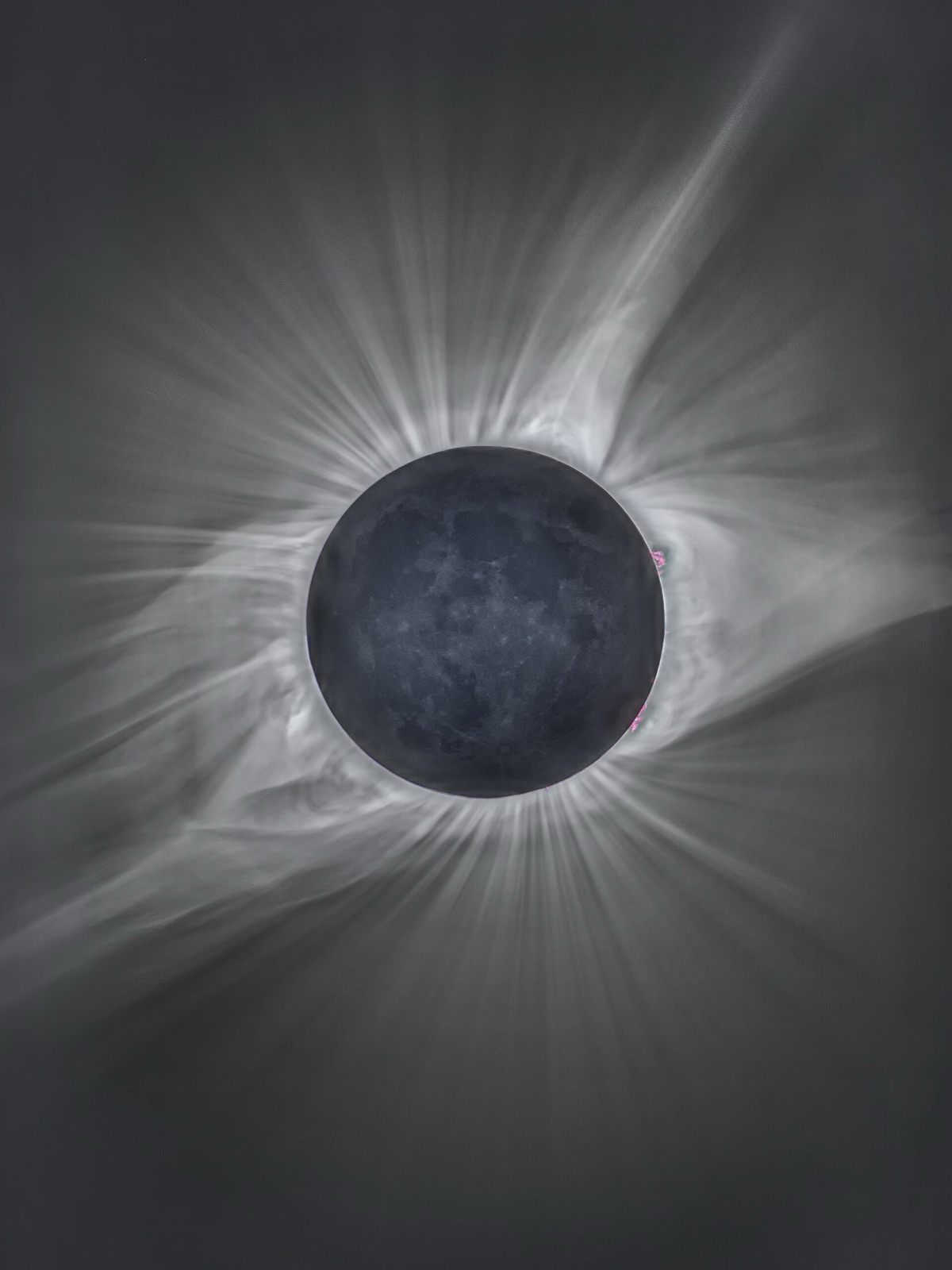
If you are expecting the quiet, faint ring of light we usually see in eclipse photographs, think again. 2026 falls on the maximum of the solar cycle. The sun is more active than it has been in years, and it shows. When the Moon covers it, the corona around it will look spiked, electric. With luck, we will make out red flames with the naked eye.
Scientists expect to watch giant solar prominences, plasma flung thousands of kilometres into space, appear as bright pink pearls on the rim of the black Moon. The last time we saw anything like it paired with a total eclipse was 2001, over sub-Saharan Africa.
Iceland, the cold dark. In the Westfjords the setting will not be romantic, it will be overwhelming. By August the puffins have already left Latrabjarg, so the silence over the four-hundred-metre cliffs will be heavy. The headland faces the Atlantic with nothing in front of it until Greenland, and that sense of the end of the world will deepen as the light withdraws. At the moment of totality the temperature will dive several degrees in minutes. The Atlantic air will turn suddenly cold, and the dark will arrive early in the afternoon.
A darkness that is not like night, but like something else, something without a name.
Those who have watched eclipses in many parts of the world say the high-latitude experience has a different texture: harder, less spectacular, more true.
Spain, the illusion of the horizon. A few thousand kilometres south, the experience changes completely. In Zaragoza and Burgos this is not a midday eclipse but a sunset one. The sun will sit barely above the horizon, and here the mind's trick takes over: just as the Moon looks enormous when it hangs low, the black sun will seem giant beside bell towers and rooftops.
Picture the castle of Penafiel, or the metal curves of the Marques de Riscal winery in Rioja, as the light drains away. The sky will not darken evenly. It will take on those strange metallic shades of deep purple and orange, a twilight frozen in time. In the Balearics, just before the sun slips into the sea, the very sharp-eyed may catch the famous Green Flash, the emerald light that lasts fractions of a second and that few have ever seen.
In the squares the usual clamour will give way to an eerie silence. The birds will stop singing. And then, in a few seconds, the world will start again.
Two ends of Europe, two entirely different images, the same awe.