On the Rise
Venice is two hours west, and this summer it asks day visitors for a five-euro ticket to walk through its own gates on the busy days, sixty of them between April and July. We went the other way, along the top of the Adriatic, until Italy ran out and Slovenia began. Trieste sits in that seam. It has spent a century unsure which country it belonged to, and the confusion turned out to be its best feature.
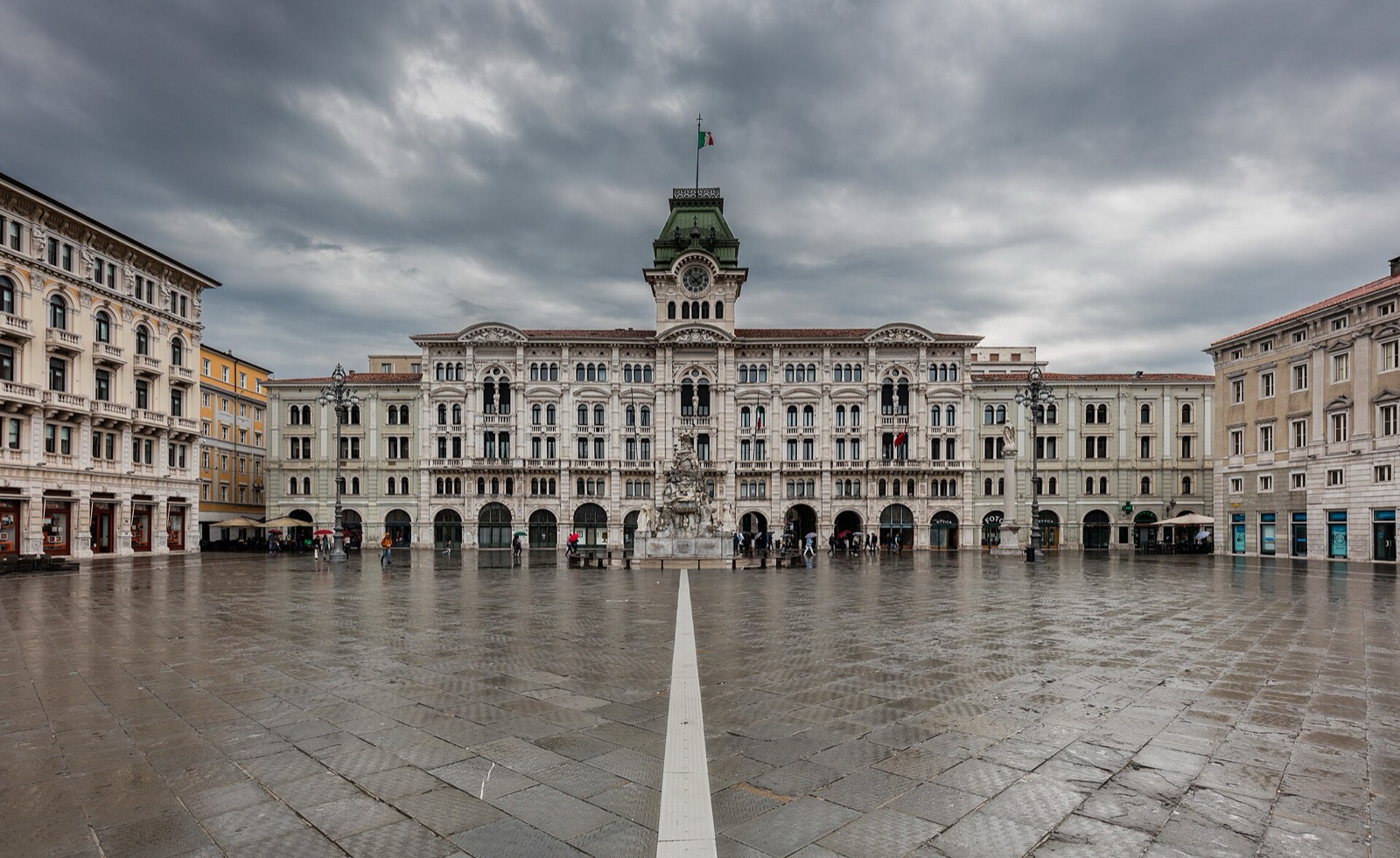
The centre opens onto the water at Piazza Unita d'Italia, a vast square that faces the sea instead of hiding a cathedral behind it. The buildings around it are pale, heavy, imperial. This was Vienna's port once, the Habsburgs' window on the Mediterranean, and the architecture never got the memo that the empire fell. You drink your coffee under facades built for a landlocked capital that needed the sea.
And you do drink coffee here, more of it than almost anywhere in Italy. Illy was founded in Trieste in 1933, and the city keeps its own ordering language to prove the point. Ask for a nero and you get an espresso. Ask for a capo and you get it with a drop of milk. Say in b and it arrives in a small glass rather than a cup. We spent a morning at Caffe San Marco, open since 1914, all Viennese Secession glass and dark wood, the room where Joyce and Italo Svevo once argued. Order slowly. Nobody is counting your minutes.
The city spent a hundred years unsure which country it belonged to, and the confusion turned out to be its finest inheritance.
Then there is the third world, the one above the town. Climb the ridge behind Trieste and you reach the Carso, a limestone plateau of scrub and vineyards that is already, in places, Slovenia. Up here the farmhouses open a few weeks a year as osmize, selling their own wine and cured pork from the front room under a branch hung by the gate. The grapes are local and stubborn, Vitovska and Terrano, nothing you will find on a supermarket shelf. The border runs through orchards. People cross it for lunch.
That is the trick of the place. Three cultures stacked on a narrow shelf of land, Italian on the quay, Austrian in the cafes, Slavic on the hill, none of them quite winning. The light is the same Adriatic light that Venice sells at a premium, and here it is still free. Come before the rest of the coast remembers the coffee capital is also, quietly, one of the good ones to arrive in.