Long before anyone thought to draw a Mediterranean, the Phoenicians sailed one. From the harbours of the Levant they ran a web of lanes west, carrying cedar and the murex purple that may have handed them their Greek name. The Council of Europe certified their wake as a cultural route in 2003, and the confederation that keeps it, La Rotta dei Fenici, now threads those old crossings through most of the countries that ring the basin. We went looking for the places where you can still stand on it.
This is not an itinerary you book in a block. It is a way of reading the coast, port by port, from the city that launched the ships to the colonies that outgrew her. Five anchors, each a morning's visit, each a different century of the same restless trade.
- Tyre, Lebanon. The island city that started it. Here were the dye works that stained a whole sea purple, and from here, by tradition, sailed the founders of Carthage. The Roman hippodrome and colonnaded avenue carry the UNESCO listing, while the Phoenician city itself lies mostly beneath them, a town you read through its successors.
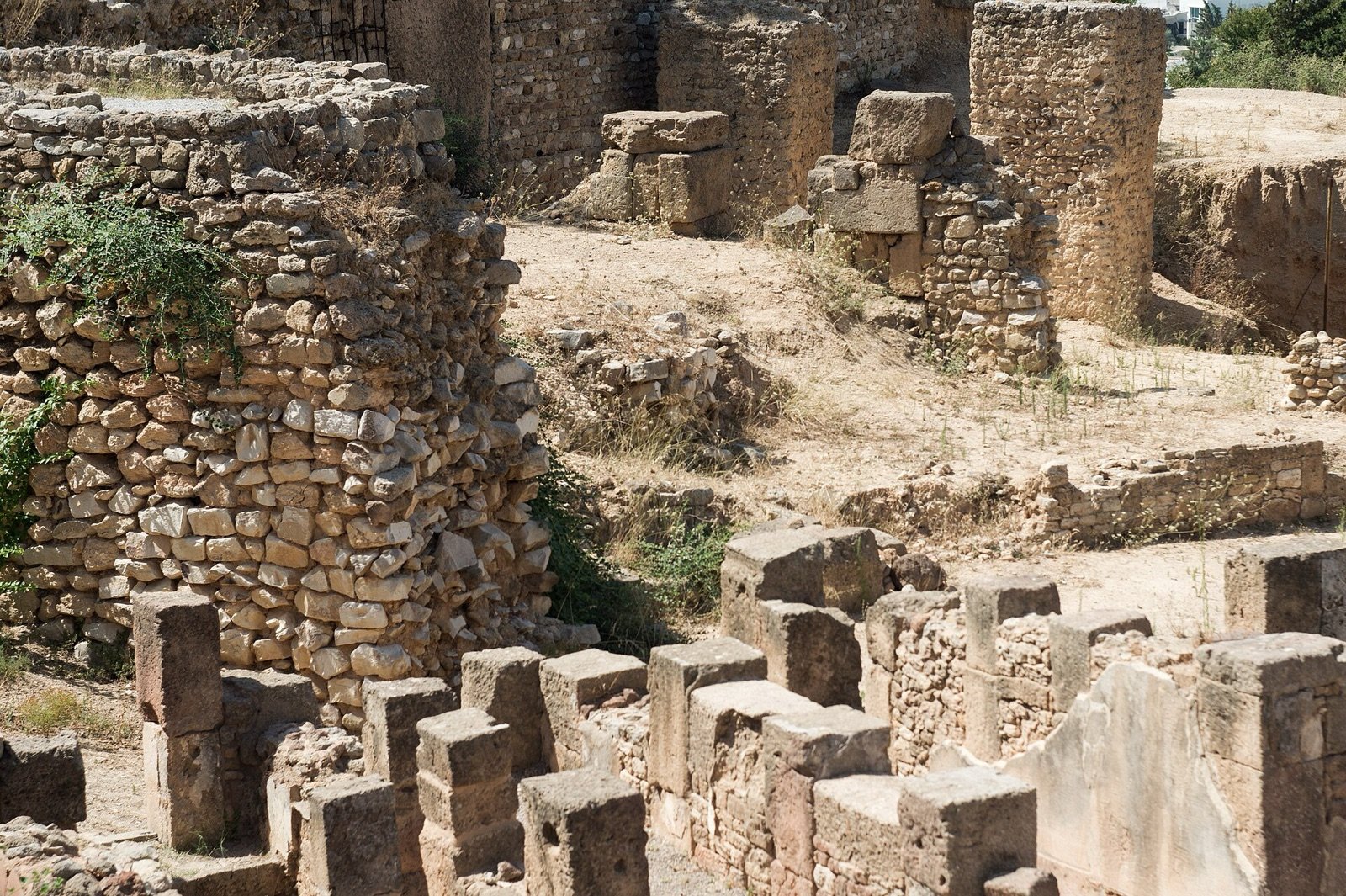
- Carthage, Tunisia. Tyre's greatest daughter, raised on the Gulf of Tunis until she became Rome's only serious rival. Stand on Byrsa hill among the Punic houses, then walk down to the circular military harbour, and the ambition of a city that nearly took the western sea is still legible in the plan.
- Motya, Sicily. A low island in the lagoon off Marsala, a Phoenician trading town that Dionysios of Syracuse stormed and ruined in 397 BC. The Whitaker museum there keeps the Youth of Motya, a fifth-century marble in a pleated robe so finely cut that scholars still cannot agree who carved him, or for whom.
- Tharros, Sardinia. On a windswept finger of the Sinis peninsula, a Phoenician then Punic port the Romans inherited and the Sardinians finally abandoned around 1070 for safer Oristano. Columns stand to the waterline. You walk the grid of streets straight down into the sea.
- Cadiz, Spain. Past the Strait of Gibraltar, on the Atlantic edge of the old world, the Phoenician Gadir that ancient writers counted among the oldest cities in the West. Modern Cadiz sits directly on top of it, and a Phoenician quarter uncovered below the old town now opens as a small site you visit beneath street level.
The Edit is a VANE Bearings column. We choose the way we choose hotels, on our own terms, with no placement bought. Photo: Варвара Каминская, Wikimedia Commons (CC BY-SA 4.0).
← More from Bearings