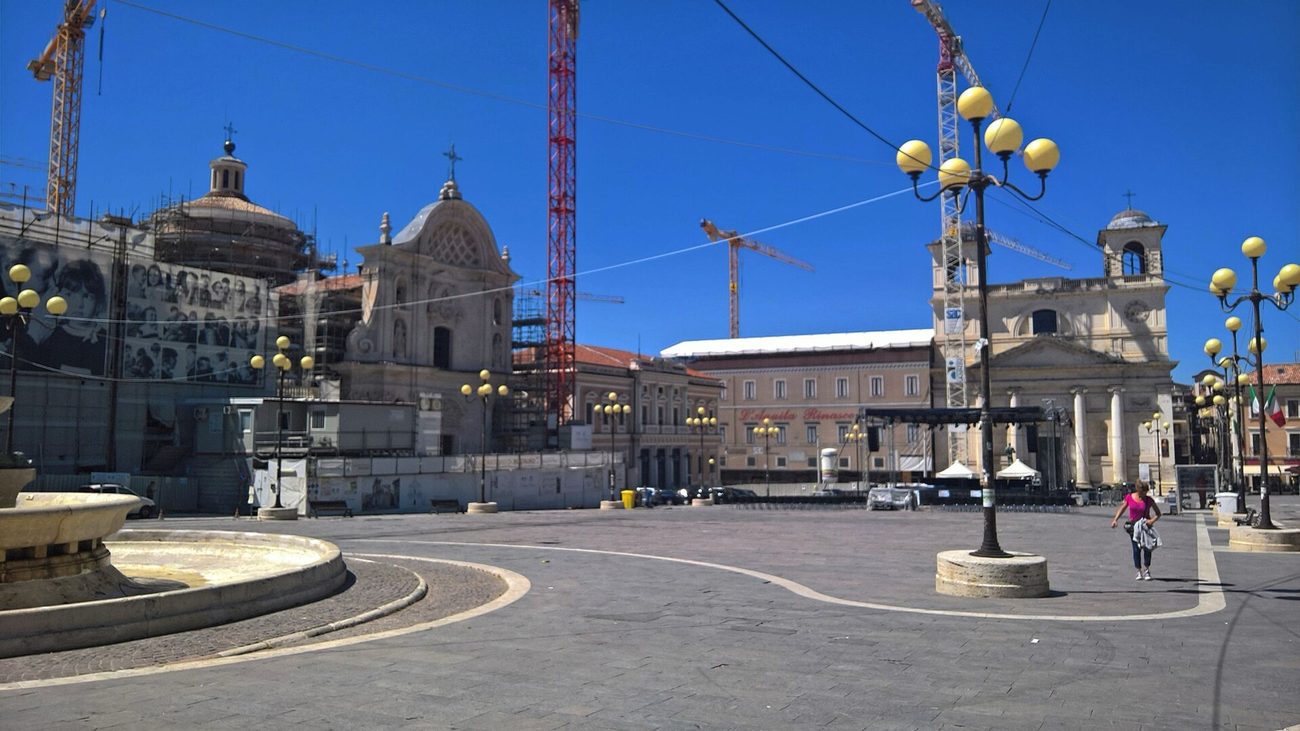
L'Aquila wears a sash this year that most Italian cities compete for and few earn the hard way. Seventeen years ago, on an April night in 2009, a magnitude 6.3 earthquake killed 308 people and emptied the medieval centre. Scaffolding has been a fixture ever since. Now, as Italian Capital of Culture 2026, the Abruzzo capital has made the long reconstruction the point itself. The official programme, presented in Rome last December, runs to more than 300 events across 300 days, under a slogan that reads one territory, a thousand capitals.
The year is built to spread outward, into the mid-sized towns and Apennine villages that share the mountains, rather than concentrate in a single piazza. We would not plan a trip around the headline numbers. We would plan it around the buildings that are coming back, because here a cultural programme and a building site are, for once, the same thing. Five dates to build a visit around.
- Palazzi Aperti, the last Sundays. One Sunday a month the city opens private palaces, oratories and courtyards that are otherwise shut. The dates left this year are 25 October, 29 November and 27 December. Go for the rooms still smelling of fresh plaster.
- Fabio Mauri at MAXXI L'Aquila. This autumn the museum stages a retrospective of the Roman artist, curated by Maurizio Cattelan and Marta Papini, built around the work he made between 1979 and 1999, the years he taught at the city's Academy of Fine Arts.
- Convergenze e continuita, Palazzo ONMI. An exhibition on how Abruzzo built itself between 1930 and 1960, architecture and townscape, running to December. Dry on paper, quietly moving in a city relearning how to build.
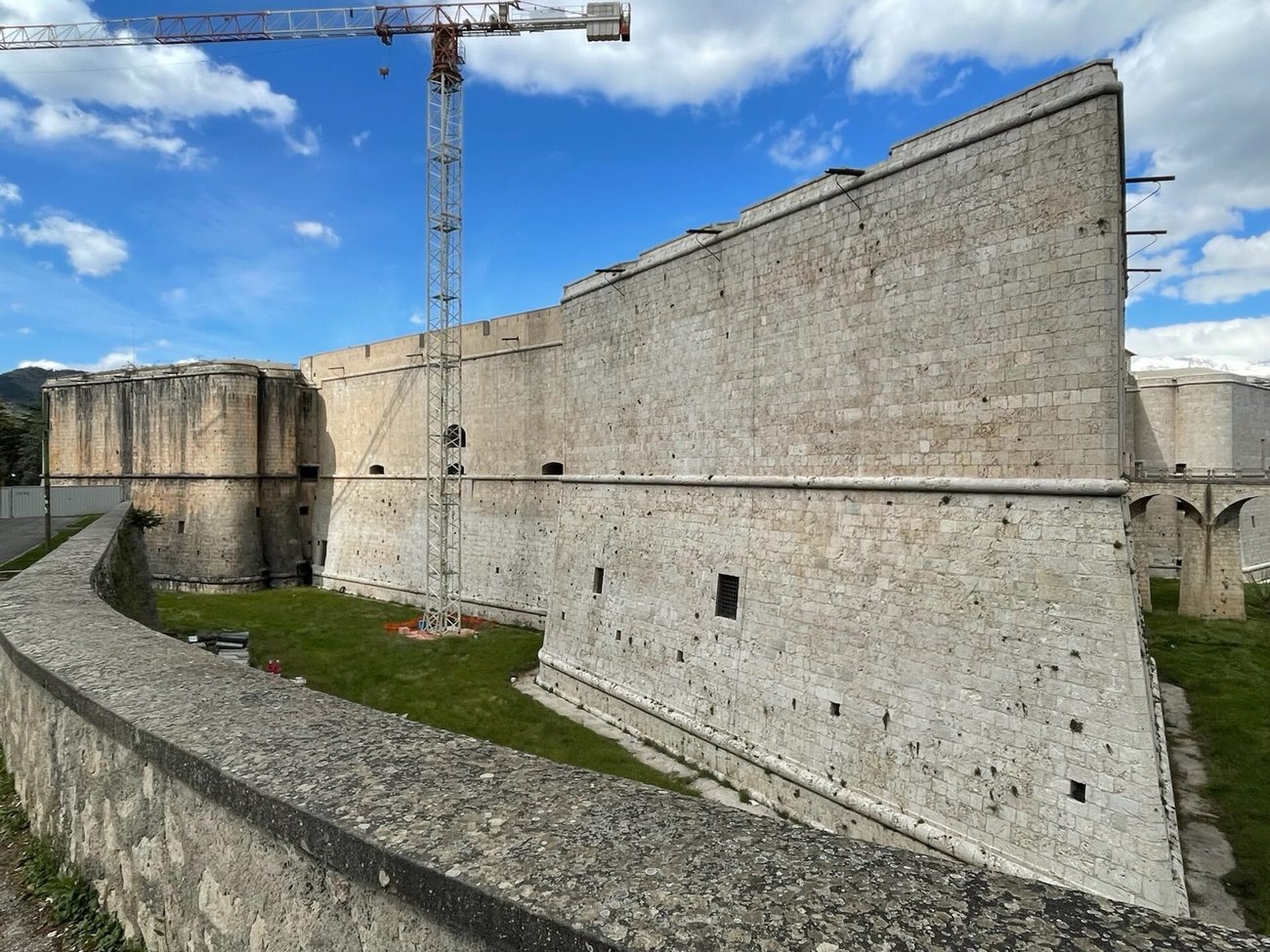
- The fort comes home. The Museo Nazionale d'Abruzzo returns this year to the Forte Spagnolo, the sixteenth-century Spanish fort that the 2009 quake closed and that has stood empty above the town since. The Teatro Comunale reopens alongside it.
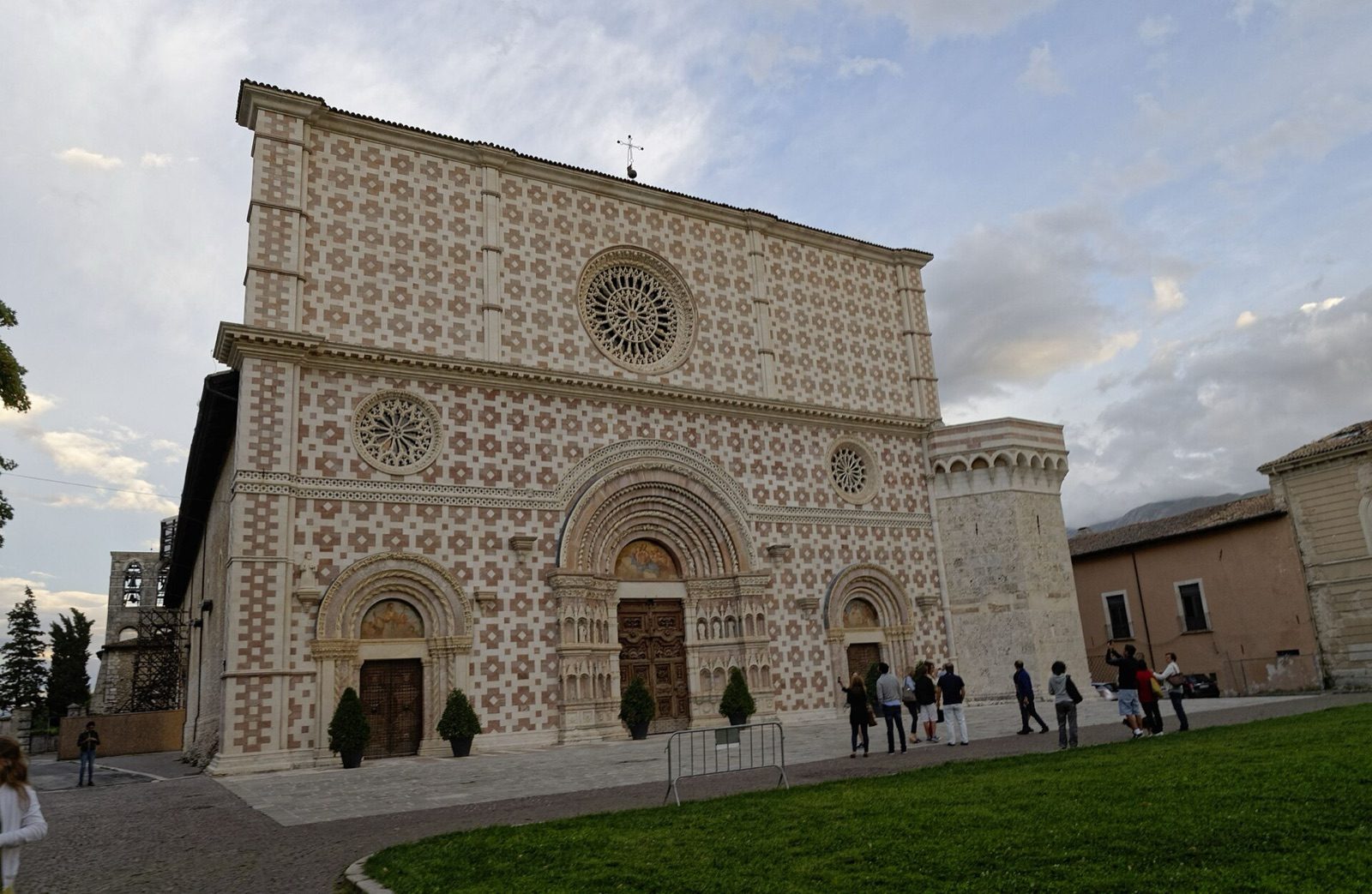
- Collemaggio, any morning. The fixed point. Santa Maria di Collemaggio, its pink and white chequered facade restored after the quake, holds the tomb of Celestine V and stages the Perdonanza each August, a forgiveness rite on the UNESCO list since 2019. Walk in when it is empty.
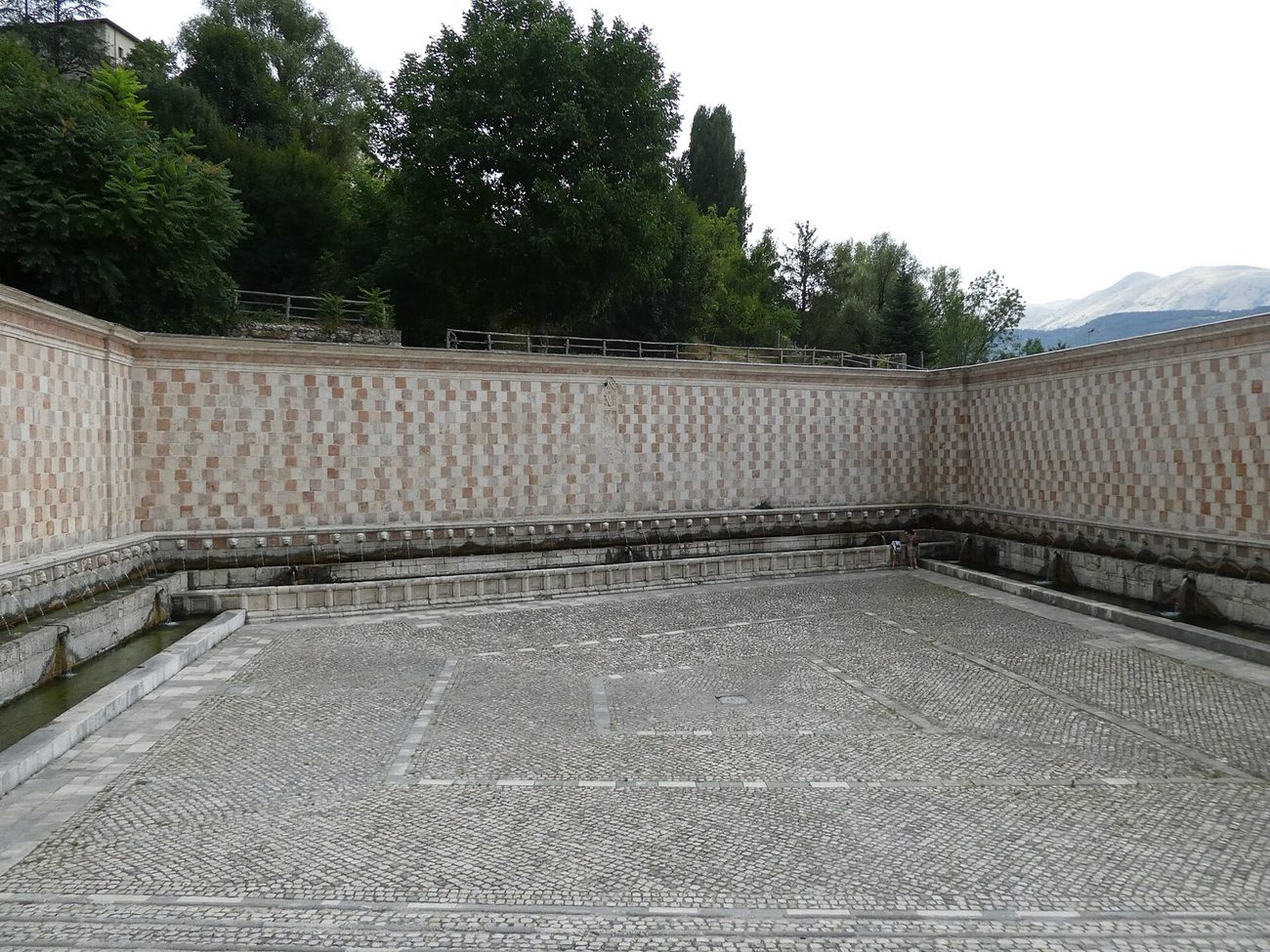
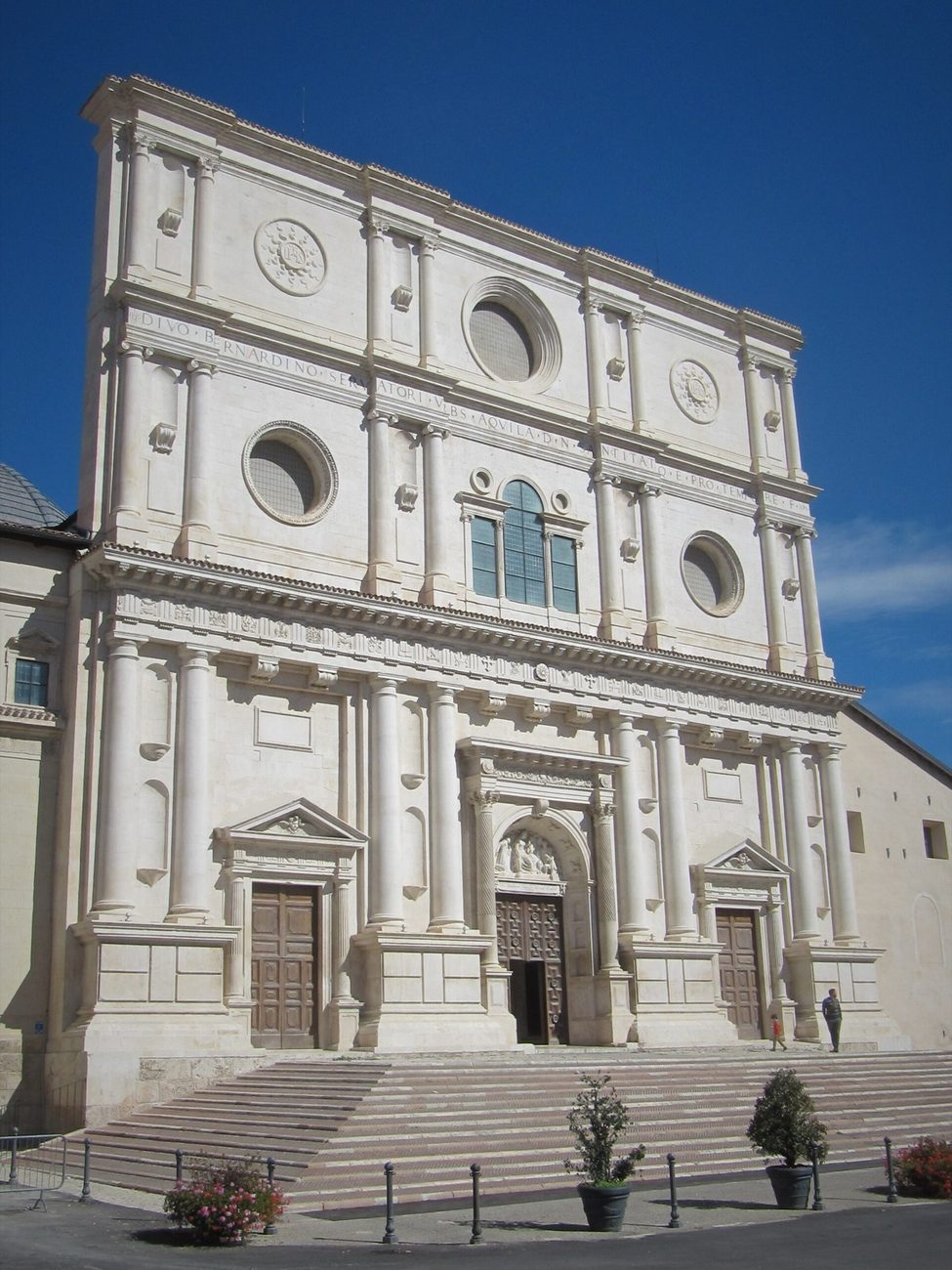
L'Aquila, reopening: the Fontana delle 99 Cannelle, the Forte Spagnolo, the Basilica di San Bernardino and Piazza del Duomo.
Photos: Syrio, Wikimedia Commons (CC BY-SA 4.0), Marcok, Wikimedia Commons (CC BY-SA 4.0), Lasacrasillaba, Wikimedia Commons (CC BY-SA 4.0), © Ra Boe / Wikipedia, Wikimedia Commons (CC BY-SA 3.0 de).
The Edit is a VANE Bearings column. We choose the way we choose hotels, on our own terms, with no placement bought. Photo: © Ra Boe / Wikipedia, Wikimedia Commons (CC BY-SA 3.0 de).
← More from Bearings