The Table
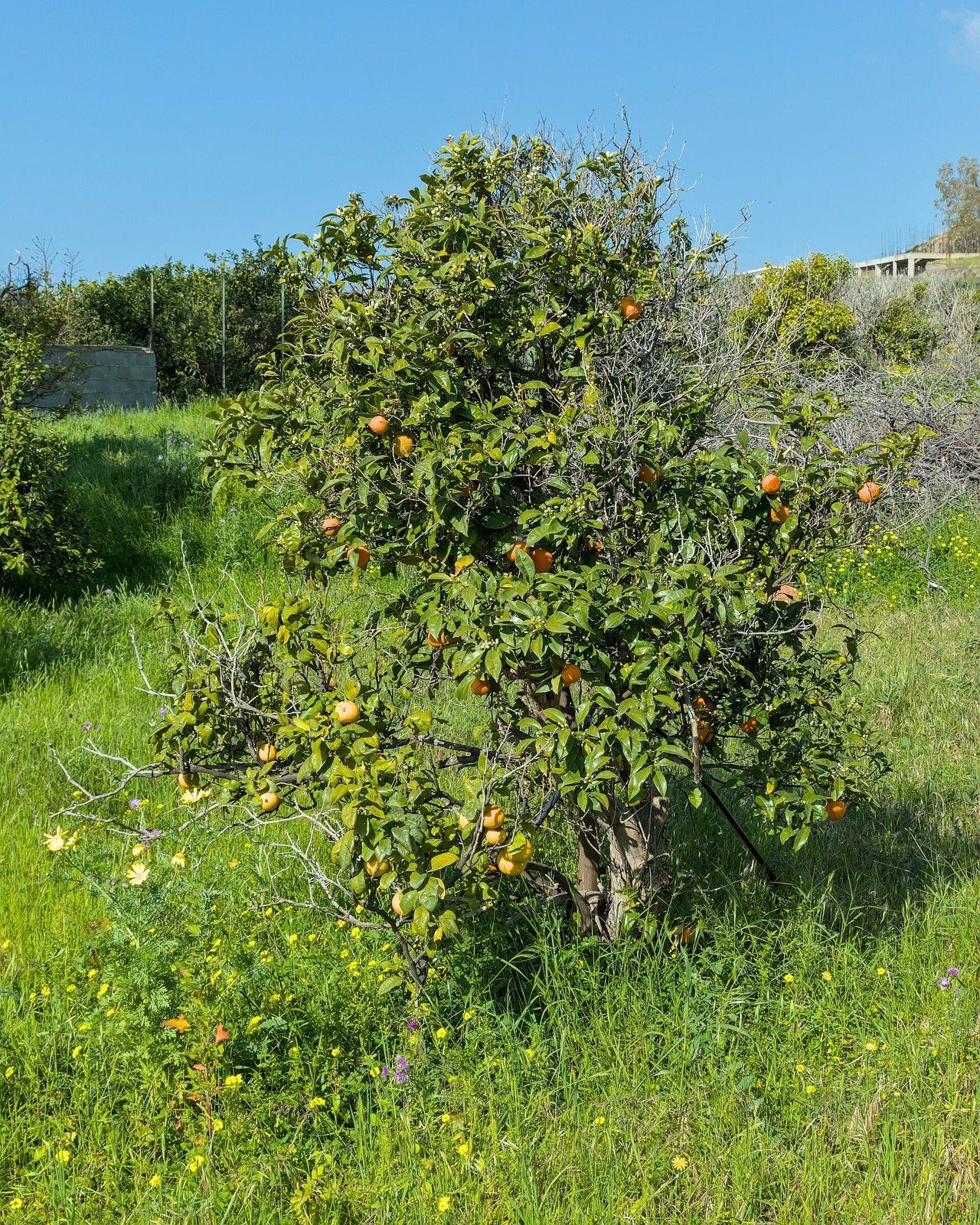
The road south of Reggio Calabria runs between the mountains and the sea, and by December the groves along it are heavy with a fruit almost nobody eats. Bergamot. Green turning to gold, thin-skinned, sour to the point of uselessness at the table. We split one with a thumbnail at the roadside. The scent came up before the juice did, and it stayed on our hands for the rest of the day.
Almost all of the world's bergamot grows here, on a strip of Ionian coast between Villa San Giovanni and Monasterace that you could drive in a morning. Something close to nine tenths of the essential oil used in perfume and tea comes off these few kilometres. Growers have tried the tree elsewhere, in Sicily, in Africa, in South America. It sulks. The oil turns coarse. The meeting of the Aspromonte mountains and this particular sea is the whole secret, and no one has managed to copy it.
The value is in the peel, not the flesh. Between late November and February the fruit is picked by hand and pressed cold, the rind rolled and scraped so the tiny glands burst and give up their oil without heat. That oil is the top note in more perfumes than anyone could count, the first bright thing you smell before a fragrance settles, and it is the single ingredient that makes Earl Grey taste of anything at all.
A fruit too sour to eat, grown on a coast too narrow to map, and half the perfume counters in the world lean on it.
Three cultivars carry the crop: Femminello, Castagnaro, Fantastico. Local growers speak of them the way others speak of vines. The essential oil was granted a protected designation of origin in 2001, a document that only confirms what the growers have always known, that this is a thing of one place and cannot honestly be made anywhere else.
Lately the fruit has begun to slip past the perfume houses and reach the kitchen. You find it now as a marmalade, a few drops in a dressing, a sorbet, a cordial cut hard with sugar because on its own it puckers the whole face. We drank a bergamot spremuta on a cold morning in Reggio, ferociously bitter, and understood why a city has built its identity around a fruit it mostly sends away in bottles.
It is a strange kind of wealth, to grow the smell of somewhere else and ship it out by the litre. What the town keeps is smaller and better. A museum to the fruit, a few groves you can walk, and the road that still carries the scent in December.