The Table
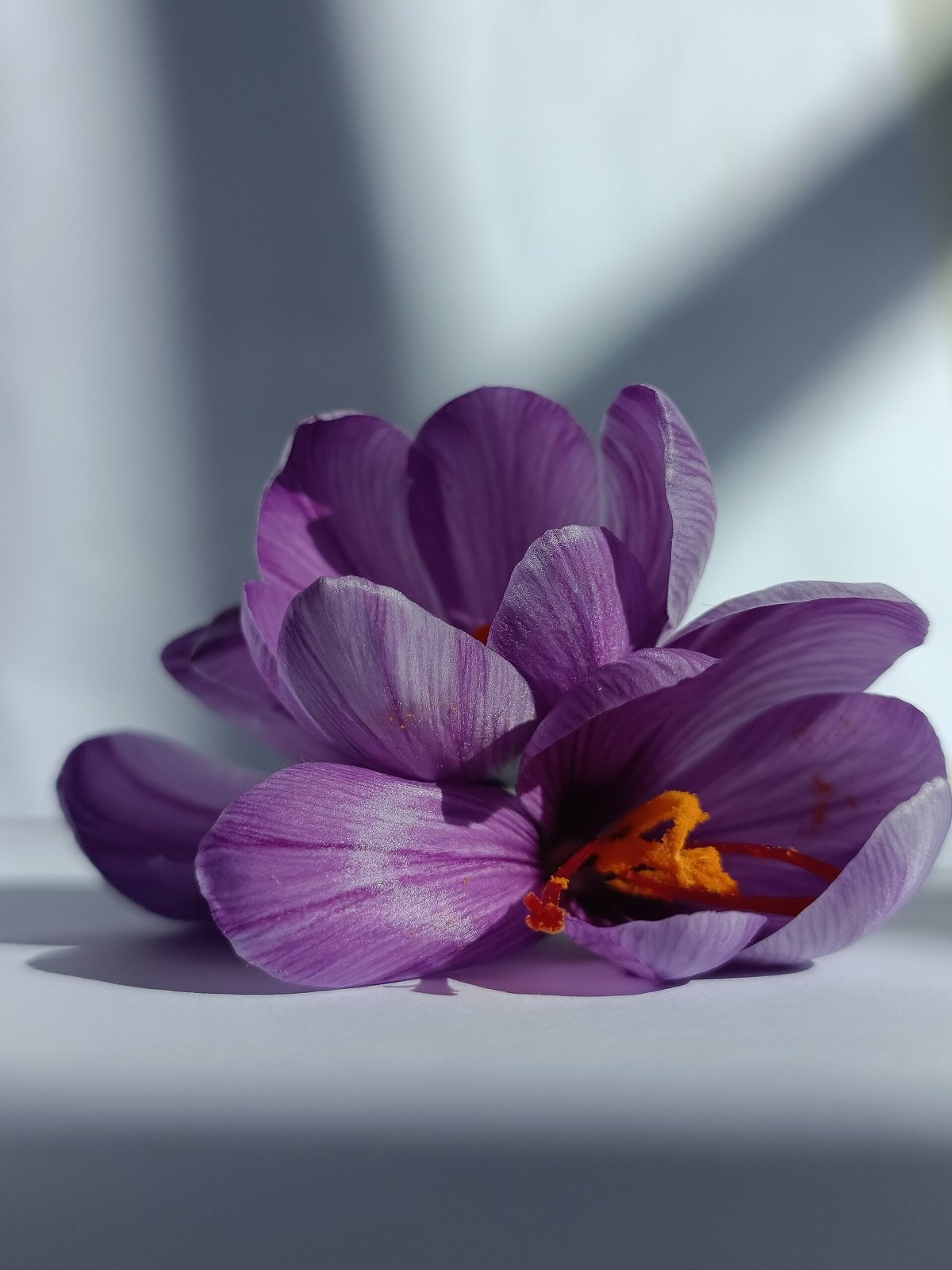
We came for the colour. On the Kozani plateau in western Macedonia, in the last days of October, whole fields turn the pale violet of Crocus sativus, and by late morning they have been stripped bare again. Each flower opens for a single day. Inside sit three red threads, the stigmas, and those threads are the entire harvest.
This is Krokos Kozanis, the only saffron Greece grows in any real quantity and the first it chose to protect. Cultivation on the plateau around the village of Krokos runs back generations. In 1999 the European Union gave it protected designation of origin status, which means every stage, the growing, the picking, the drying, the packing, has to happen on this ground or the name cannot be used.
The work is almost all done by hand, because it has to be. Pickers are out at first light, when the cool keeps the petals folded and the threads intact, and they carry the flowers in whole before the red stigmas are pulled from the petals and laid out to dry. It takes something close to 150,000 flowers to make a single kilo of dried saffron, which is why the spice has been priced like metal for as long as anyone has traded it.
The reward is in the strength. Kozani saffron carries an unusually high concentration of crocin, the compound behind both the deep red and the staining, faintly bitter aroma a good pinch throws off the moment it meets warm liquid. A very little goes a long way.
Three red threads a flower, lifted one at a time before the sun is properly up. There is no shortcut, and there never has been.
The growers have worked as one body since 1971, when a cooperative was formed and given the sole right to collect, pack and sell the crop. Membership has roughly doubled to about a thousand since then, and in the lean years after the financial crisis it was saffron that drew a wave of younger people back to the fields of their villages. A luxury ingredient that stayed in the hands of the people who grow it, rather than drifting off to a trading house, is a rare thing.
In the kitchen, restraint is everything. We steep a few threads in a little warm water or stock and let them bleed before they go anywhere near the pot, into a risotto, a pilaf, a fish broth, the saffron breads of the north. Buy the threads, never the powder, where the cheap imitations hide. And look for the name. On this plateau it is earned.
I didn't imagine I'd return. But it was a decision I don't regret.
Zisis Kyrou, saffron grower, Krokos