Field Notes
Naxos has been shaping marble for six thousand years, and the island still wears the evidence. Its quarries hold colossal unfinished kouroi, abandoned where the stone cracked under the chisel. Above the harbour, the giant lintels of the Portara stand on their islet, the doorframe of a temple that was never finished. Into that long lineage walked a German student in the spring of 1984, and he never really walked out.
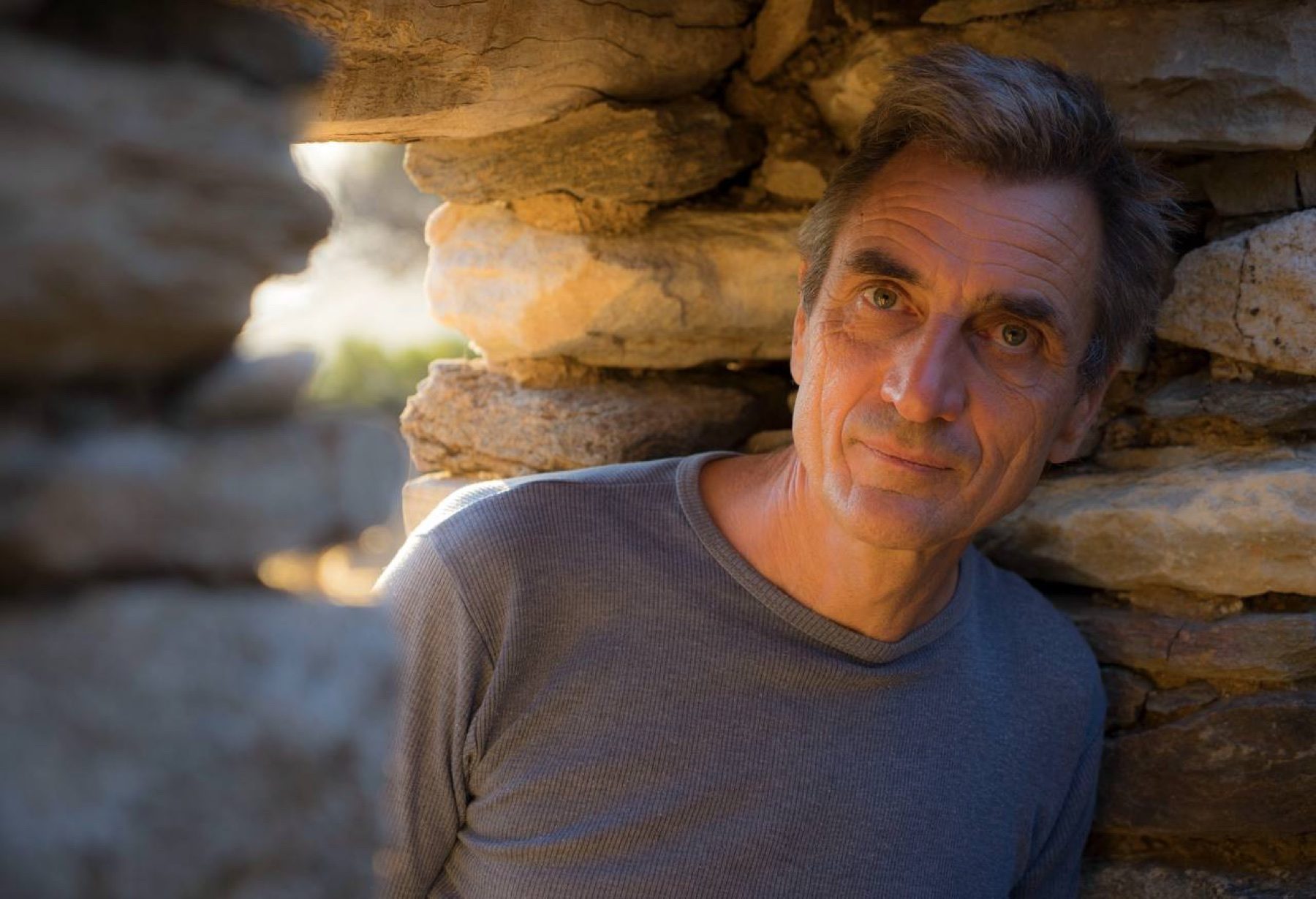
Ingbert Brunk was born in 1960 in the Rhine wine country and took his first lessons in stone before he was eighteen, near the sculptor couple Kubach-Wilmsen, then trained properly in Berlin. He came to Naxos on a student trip and was caught by two things at once: the Cycladic light, and the local marble, white, crystalline and so translucent it seems lit from within. He stayed, and has worked the island's stone for forty years.
His first studio was inside the Kastro, the Venetian fortress raised on the ruins of an ancient acropolis above the old town, which tells you something about how far back this work reaches. Since 2009 he has carved at Azalas, near Moutsouna on the quiet east coast, where the marble still comes down from the mountains around Kinidaros much as it always has.
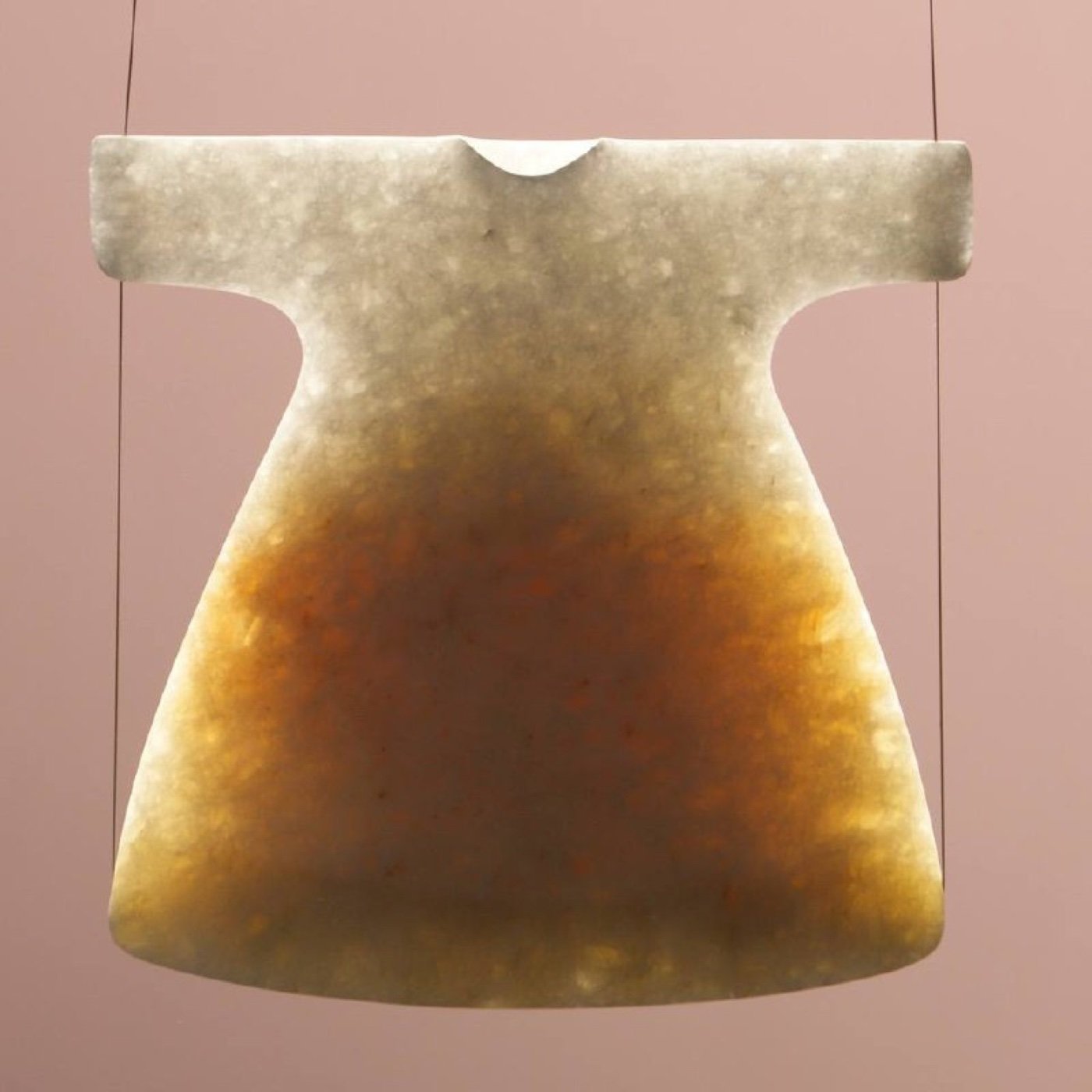
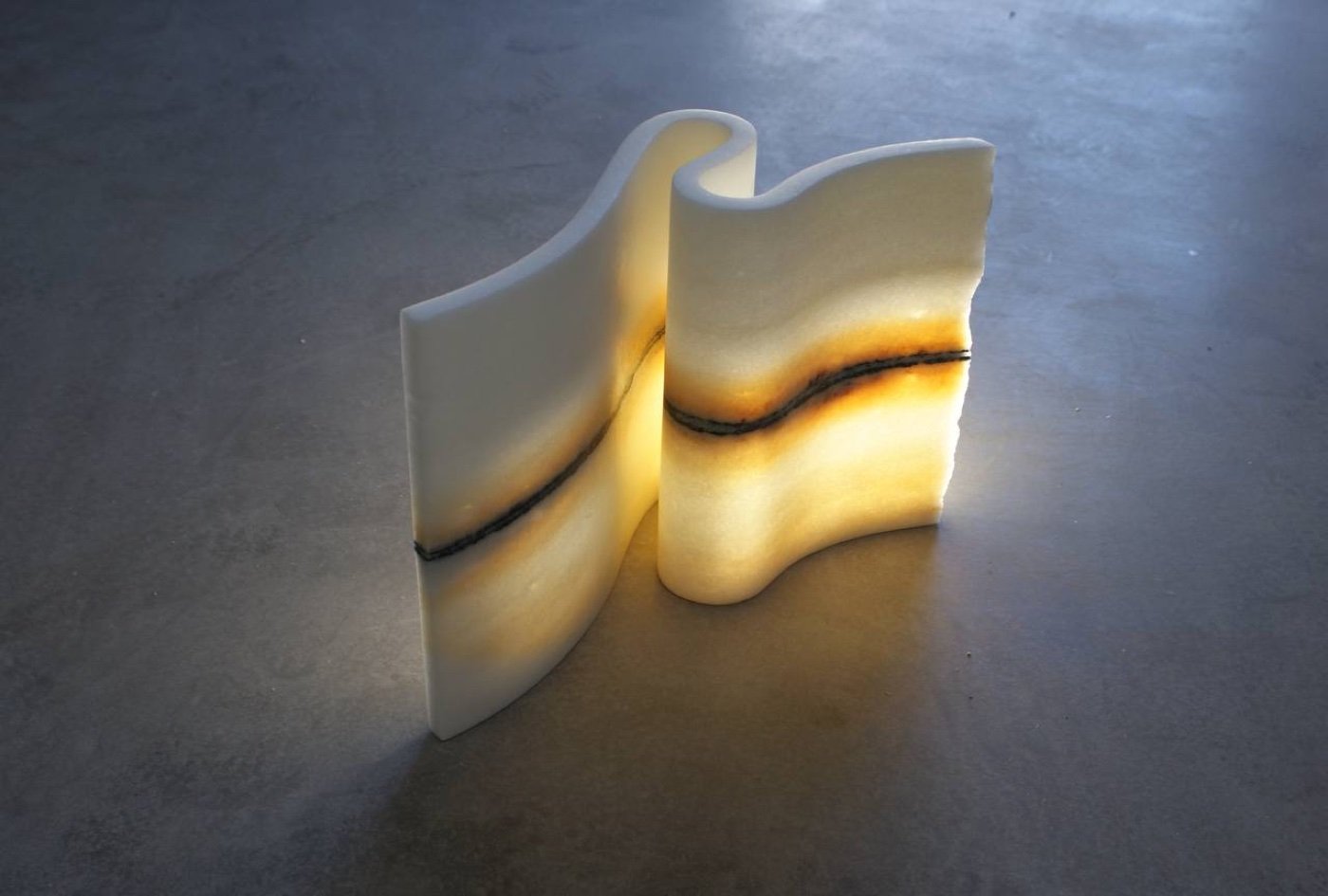
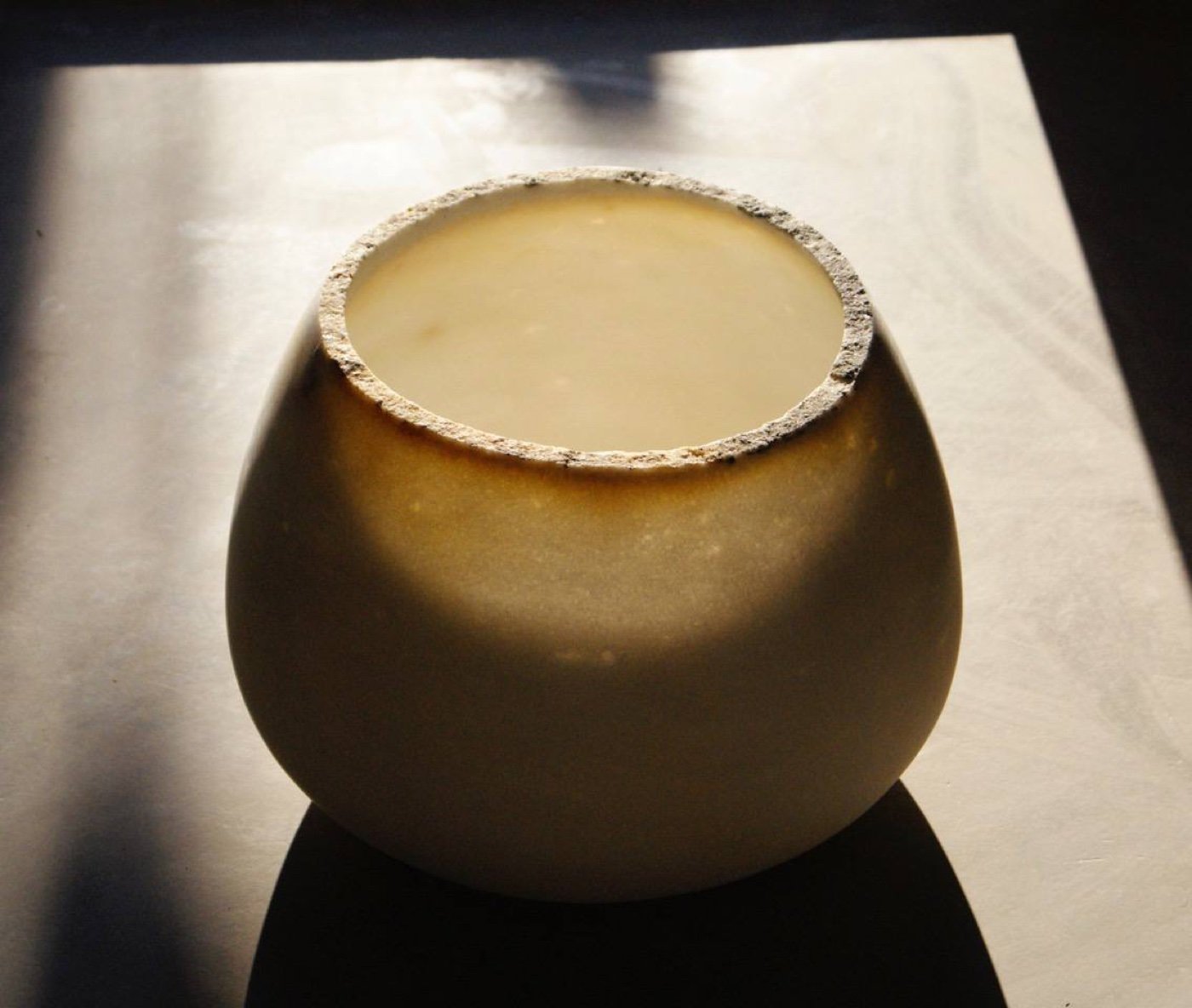
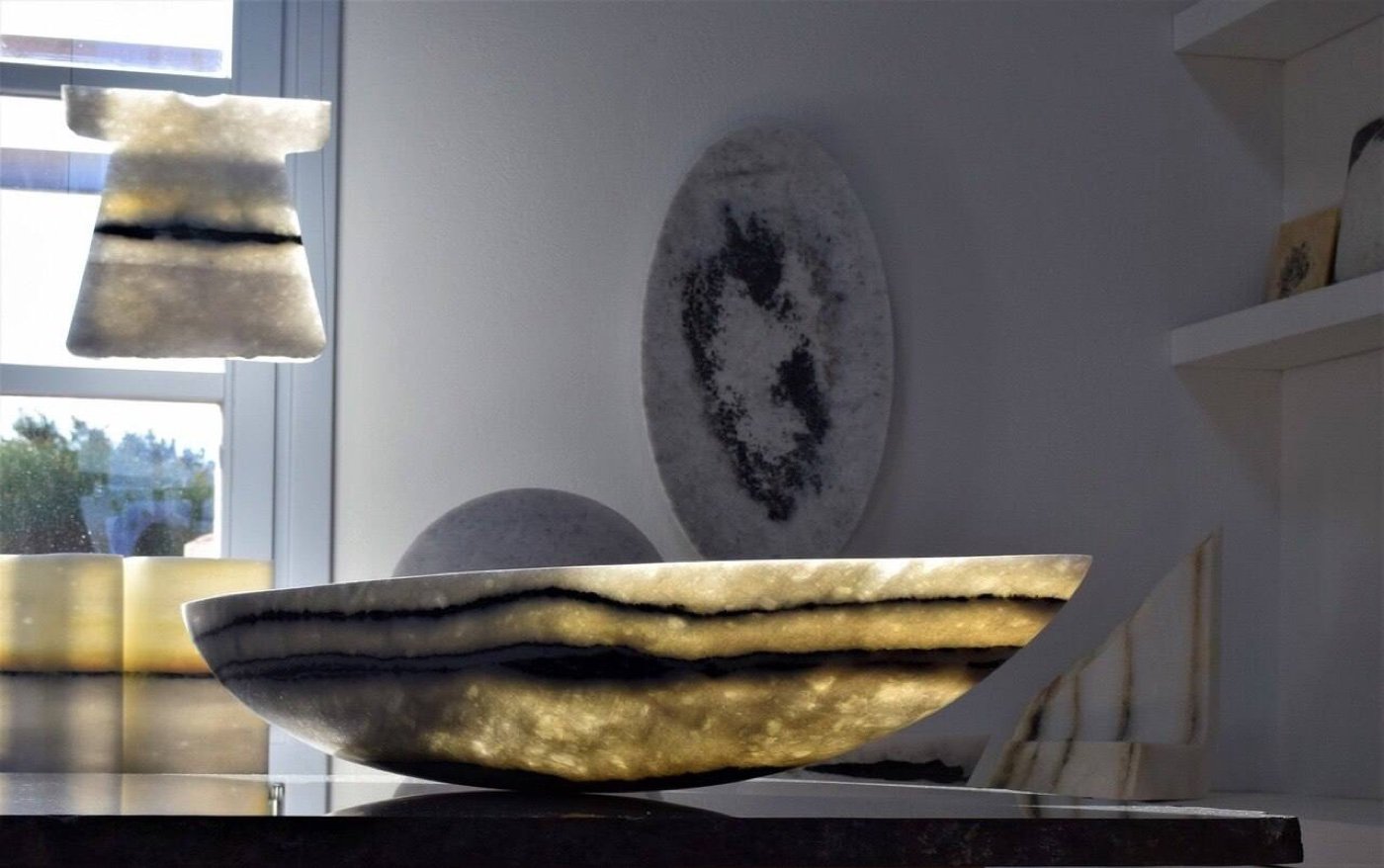
He began with the pure white stone, the kind the ancients chose for the kouroi, and over the years let the lesser varieties in, the tinted blocks veined with grey and shot through with inclusions that a purist would throw away. That is the tell of a sculptor who stopped fighting the material and started listening to it. His real subject, in the end, is less the figure than the light that moves through the stone. You see it in the thin-walled bowls and the hanging marble robes, carved so fine they seem lit from within.
He did not come to Naxos to find marble. The marble found him, and kept him.
There is no shortage of foreigners who buy a house on a Greek island and call it a love affair. Brunk's is the rarer kind, the sort you measure in four decades of dust and the slow argument between a chisel and a block. He shows internationally and a documentary has been made about him, fittingly titled a homeland of marble, but the proof is on the island itself, in the work and in the plain fact that he is still here.
Naxos will go on making sculptors of the people who come for the light. Brunk is simply the one who stayed long enough to become part of the stone's own long story.
One selection at a time, in your inbox. Subscribe →