Field Notes
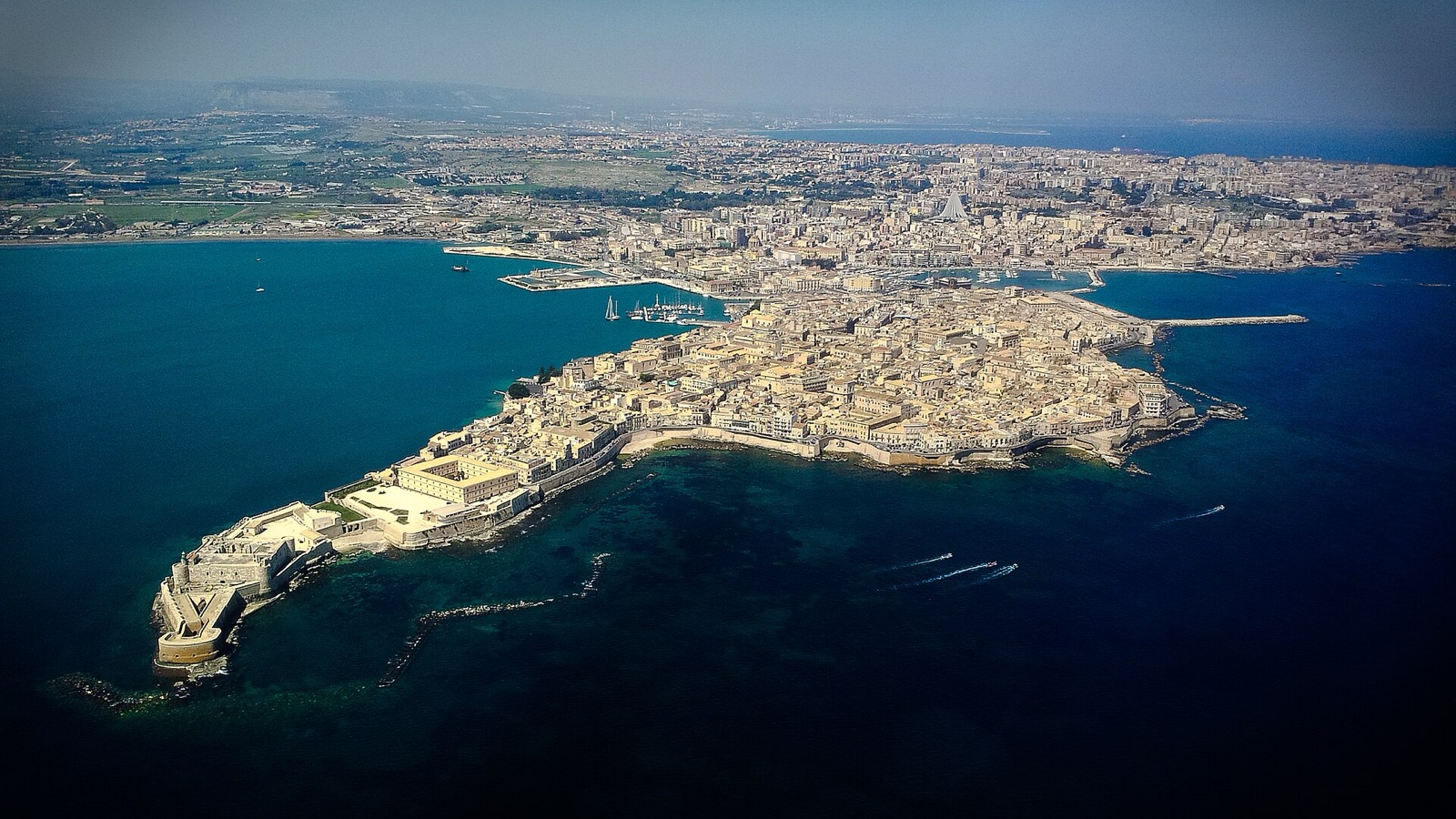
We reach Ortigia before six, when the two bridges from the mainland carry no traffic and the market stalls are still folded flat against the walls. The island is small. You can walk its outline in half an hour, and at this hour that walk is the whole point. The light comes in low off the Ionian and the pale limestone gives it straight back.
Syracuse began here. Corinthian settlers took the island first, in the eighth century BC, and the city that would humble an Athenian fleet spread onto the mainland only later. Ortygia kept the old core. Its name is the Greek word for quail. Almost everything that has mattered to this place washed up on the rock at one time or another, and a surprising amount of it is still standing.
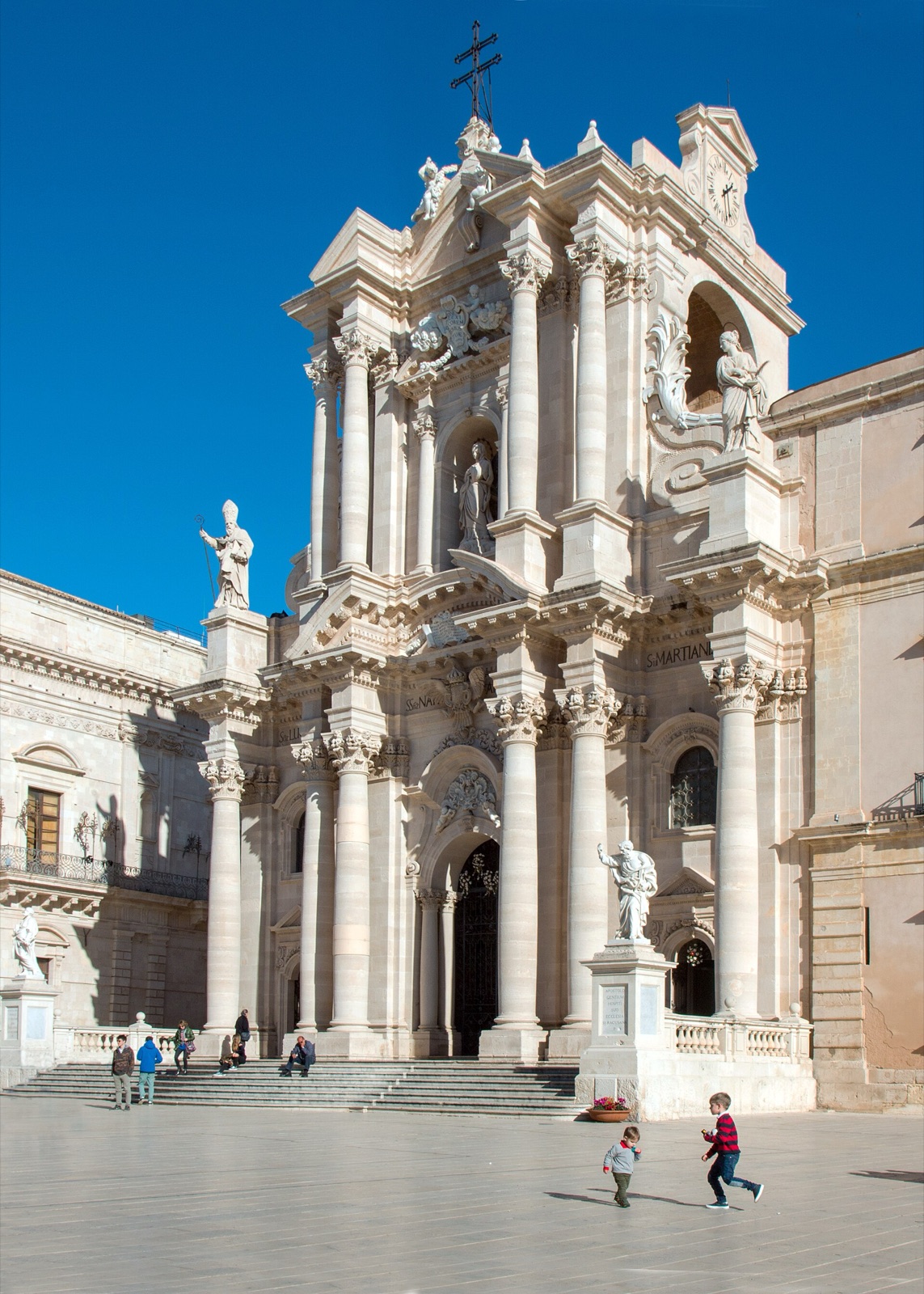
Piazza Duomo is empty when we get there, a long oval of bleached stone that seems built for early morning. The cathedral on its eastern flank is the whole city in one building. Behind the baroque front, raised after the 1693 earthquake flattened much of south-eastern Sicily, stands a Greek temple. Doric columns from the fifth-century BC Temple of Athena are still set into the walls, load-bearing, worn round at the foot. A temple, then a church, then a mosque under Arab rule, then a cathedral again. Same stone, same floor, more than two and a half thousand years of continuous use.
We have stood in older buildings. We have not often stood in one that never once stopped being used.
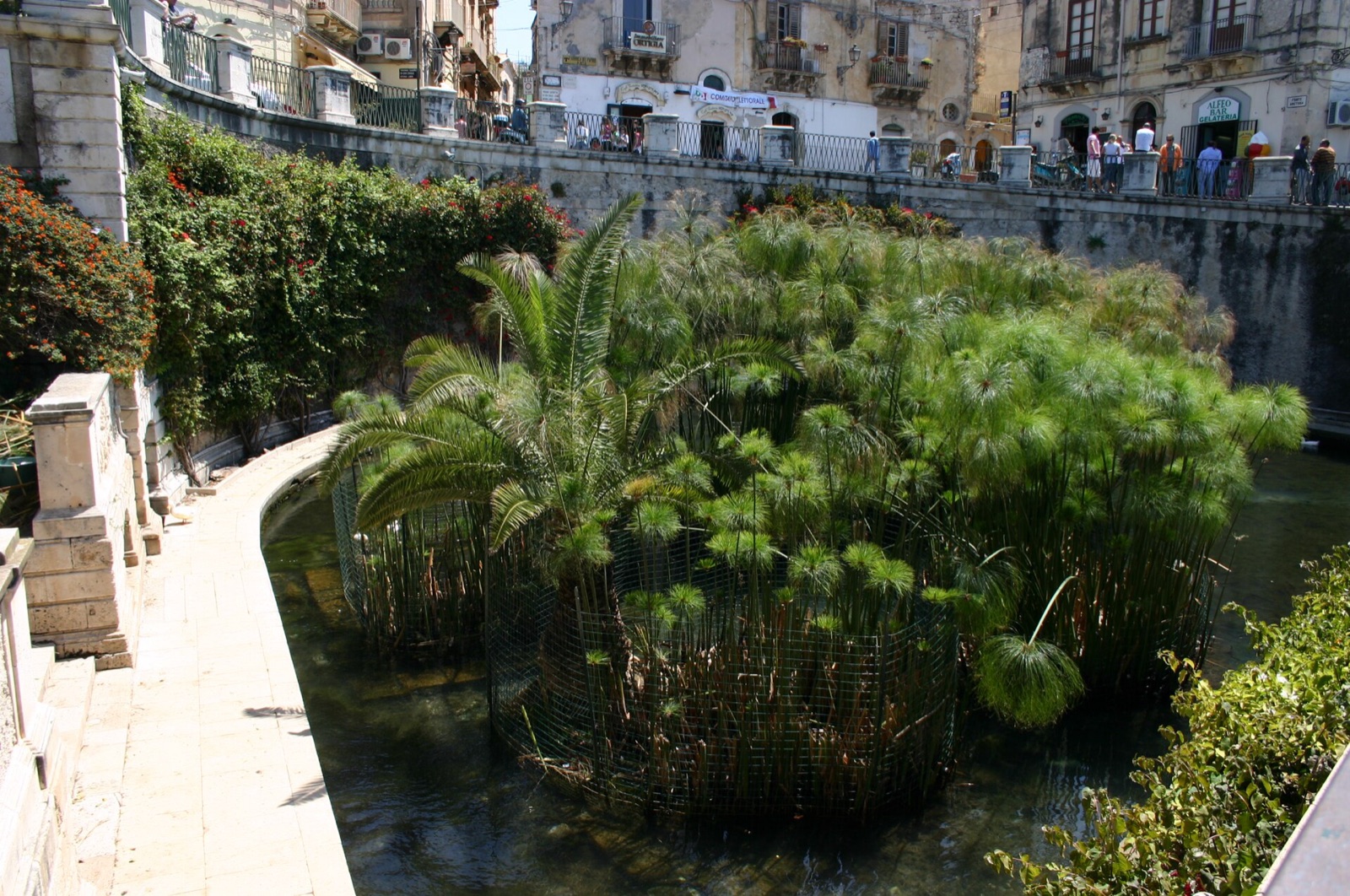
Down at the water the Fonte Aretusa is already awake. It is a freshwater spring a few steps from a salt sea, ringed with papyrus that grows here in the open, one of the very few places in Europe it still does. The Greeks handed it a nymph and a river that ran beneath the sea to find her. The botany is stranger than the myth, and harder to believe when you are standing over it.
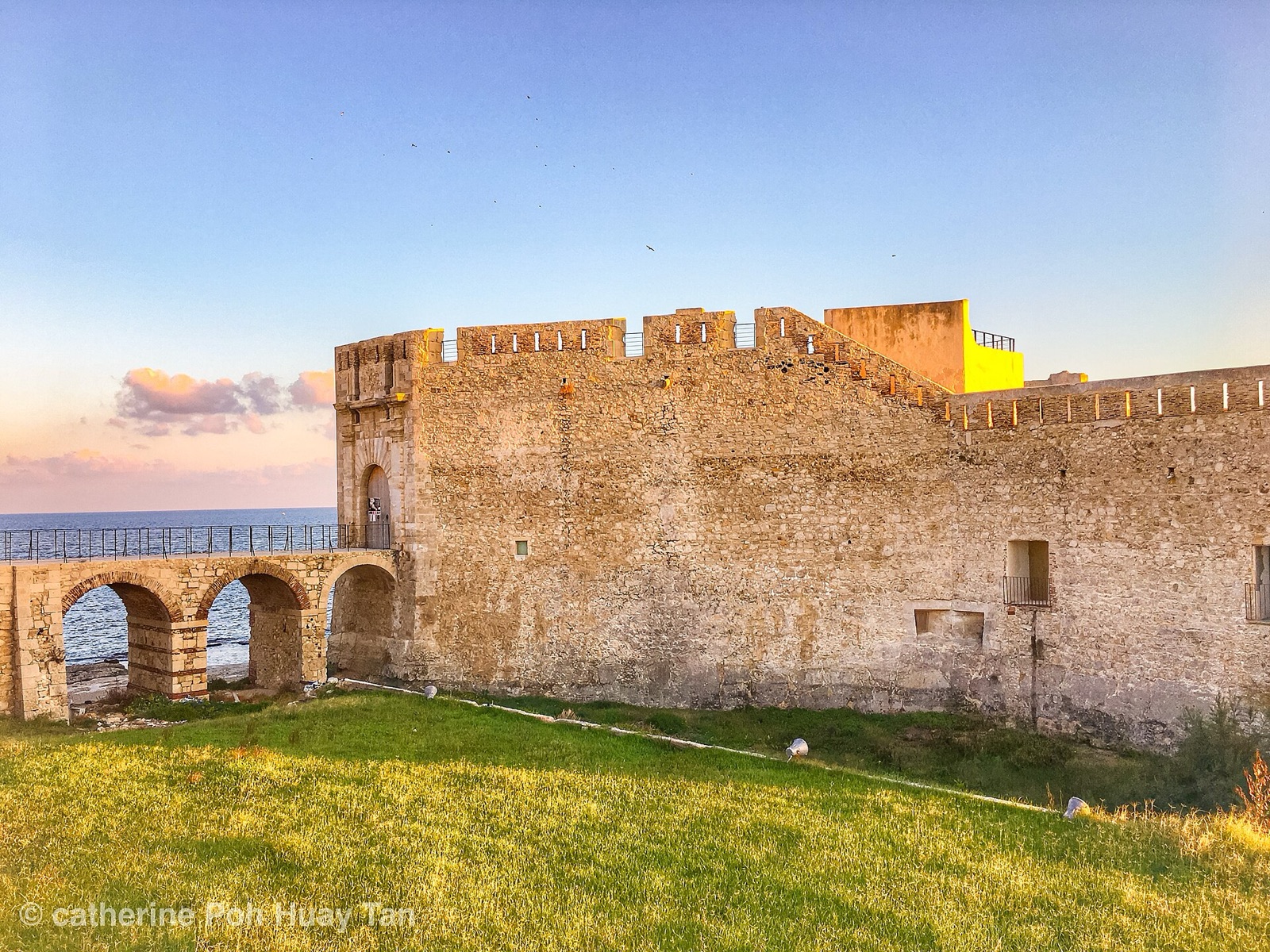
Then the southern tip, and Castello Maniace, square and shut against the water, thirteenth century, the full stop at the end of the island. From its walls you understand how thin Ortygia is, sea on both sides, the mainland a short hop north across the harbour that made the city rich.
By eight the first shutters go up and the espresso machines start to hiss. The fishmongers lay their catch on ice, and later that market is its own reason to come. But the hour before is the one we return for, when Ortygia is stone and salt and the particular quiet of a place that has been lived in without a break for close to twenty-eight centuries.
O child of Syracuse world-renowned, Ortygia, couch of the Huntress-queen of the wild, O sister of Delos.
Pindar, Nemean Ode 1 (trans. Arthur S. Way)
One selection at a time, in your inbox. Subscribe →