On the Rise
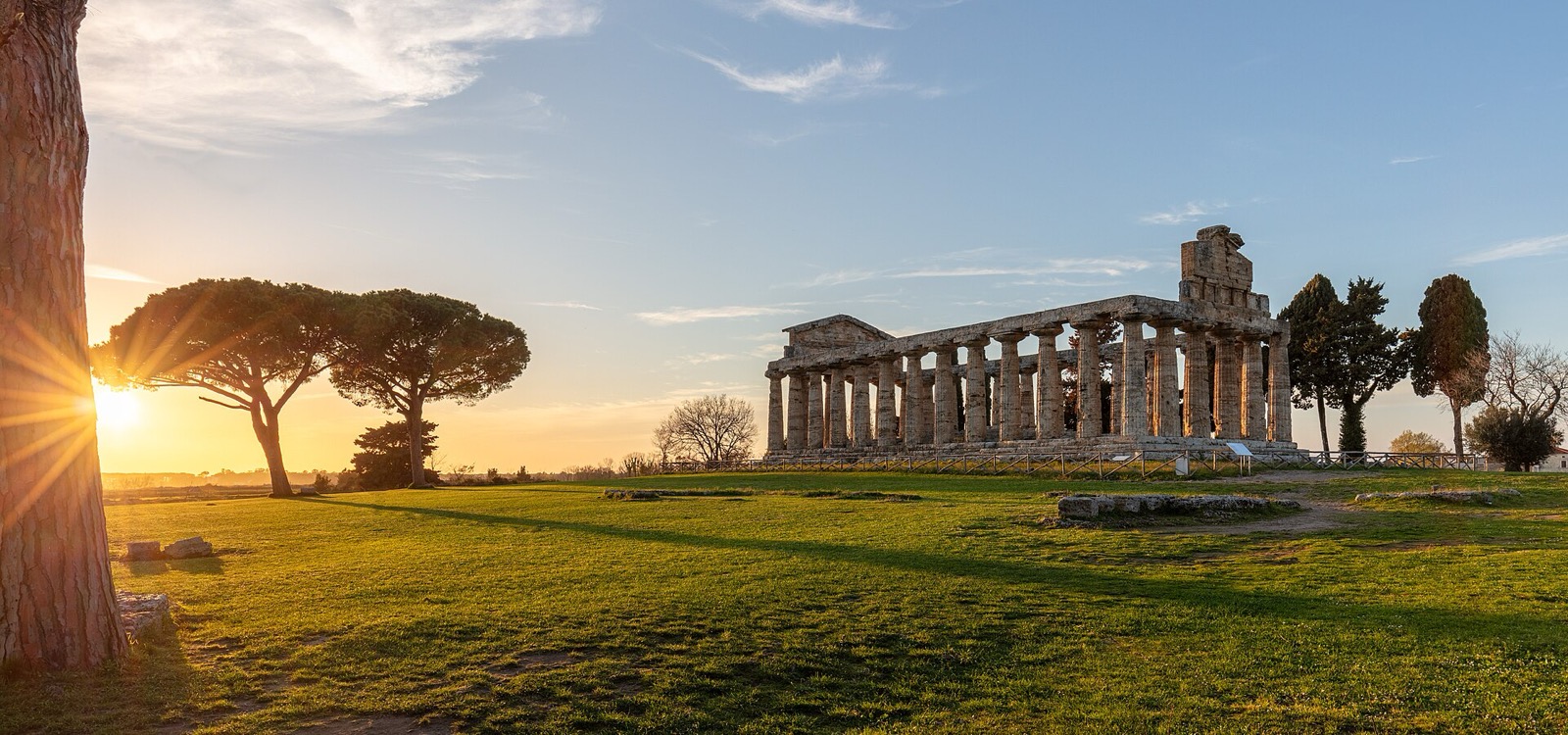
You feel the change before you can name it. The traffic that clots the Amalfi corniche in August thins out somewhere past Salerno, the coaches turn back, and the road drops onto a wide plain where three Doric temples stand in a field as if the sea had left them there. This is Paestum, the northern gate of Cilento, and the oldest of its temples went up in the sixth century BC. You can walk right to the base of the columns. No barrier, no queue for a timed slot, just honey-coloured stone and the sound of crickets.
Cilento is the long, mountainous shoulder of Campania that runs south from Paestum to the Gulf of Policastro. Most people who fight their way to the Amalfi Coast never learn it is there. The whole of it, mountains and coast together, is a national park, and UNESCO listed it in 1998 for a reason that becomes obvious over a few days: the layers here are unusually intact. Greek colonists, medieval charterhouses and fishing villages that still fish, none of it varnished for arrival.
The Amalfi Coast performs for you. Cilento simply lets you in.
Drive south and the second Greek city appears above the sea at Velia, the ancient Elea, founded around 540 BC. This was the home of the Eleatic school, of Parmenides and Zeno, the men who argued that motion was an illusion. You climb the same cobbles they did, past a Greek arch and a ruined tower, with the Tyrrhenian flat and blue below. It is a strange thing, to stand in the birthplace of a paradox and hear nothing but wind.
The coast itself does the quiet work. Beaches at Marina di Camerota and Palinuro sit under limestone cliffs pocked with sea caves, the water clear enough to read the bottom at five metres. Inland, white villages hang off the ridges, and the cooking stays close to the ground: figs, anchovies cured in salt, the soft white mozzarella di bufala from the plain around Paestum, eaten the morning it is made.
There is a deeper claim to the place. In the village of Pioppi, in the district of Pollica, the American physiologist Ancel Keys spent decades studying how the locals ate and why they lived so long. The phrase that came out of that work was the Mediterranean diet, recognised by UNESCO as intangible heritage in 2010, with Pollica named its emblematic Italian community. A small museum to the diet sits in the village now. Keys himself lived here to a hundred.
Go before the word gets fully out. The infrastructure is thin, which is the whole point, and the season is short. What you trade in polish you get back in space: a temple to yourself at eight in the morning, a cove you can park beside, a plate of buffalo mozzarella that tastes of the field you can see from the table.