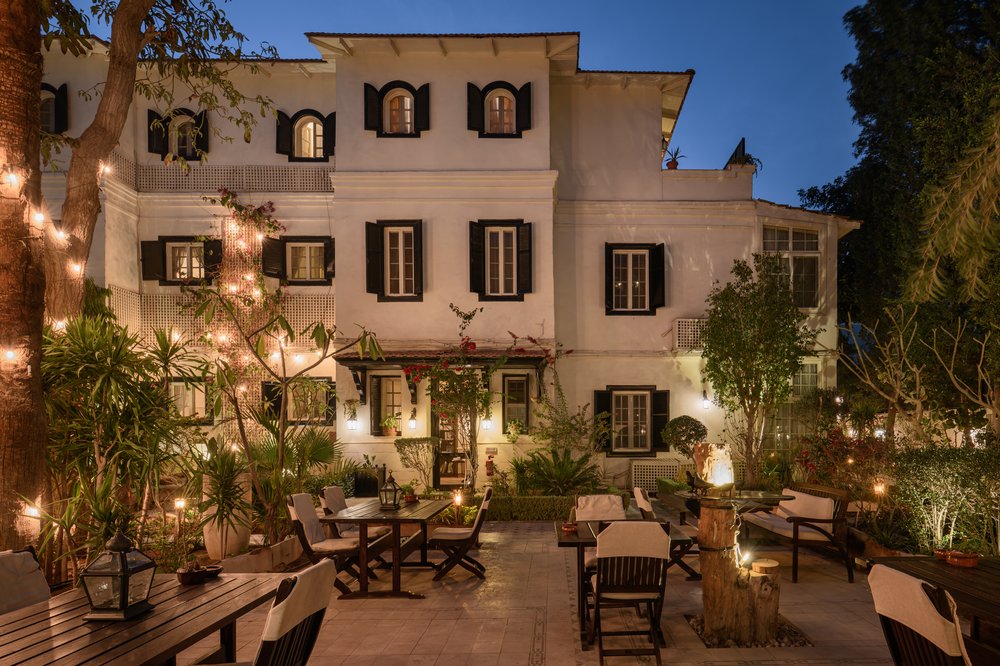
A quarter built for shade
Maadi was planned the way few parts of Cairo ever were. Laid out in the early 1900s a few miles south of the centre, it was given wide streets, deep plots and a rule that the villas sit back behind walls and gardens. Jacaranda and flame trees were planted the length of it. More than a century on, the shade has held, even as the city around it rose and thickened and forgot the idea entirely. You feel the drop in temperature before you understand the reason for it.
Villa Belle Époque is one of the houses that survived. From the street it gives little away, a whitewashed wall with black shutters on one side and, around the corner, an ochre-red elevation screened with mashrabiya, the turned wooden latticework that lets the air through and keeps the glare out. The towers came for most of Maadi's old villas in the end. This one was kept, which is a decision somebody had to make and then keep making.
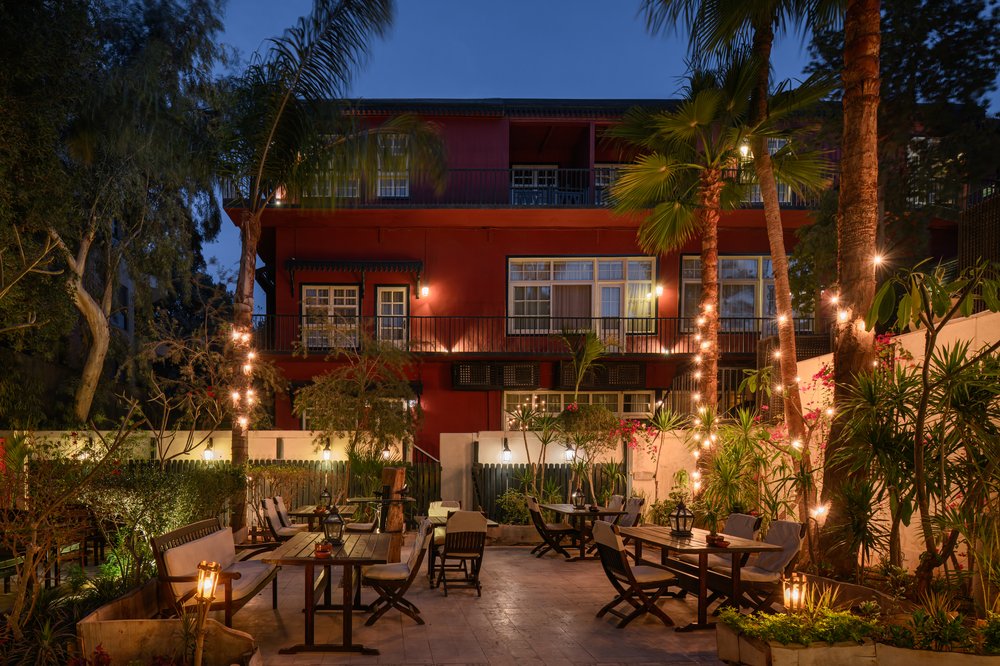
You feel the drop in temperature before you understand the reason for it.
Furnished one room at a time
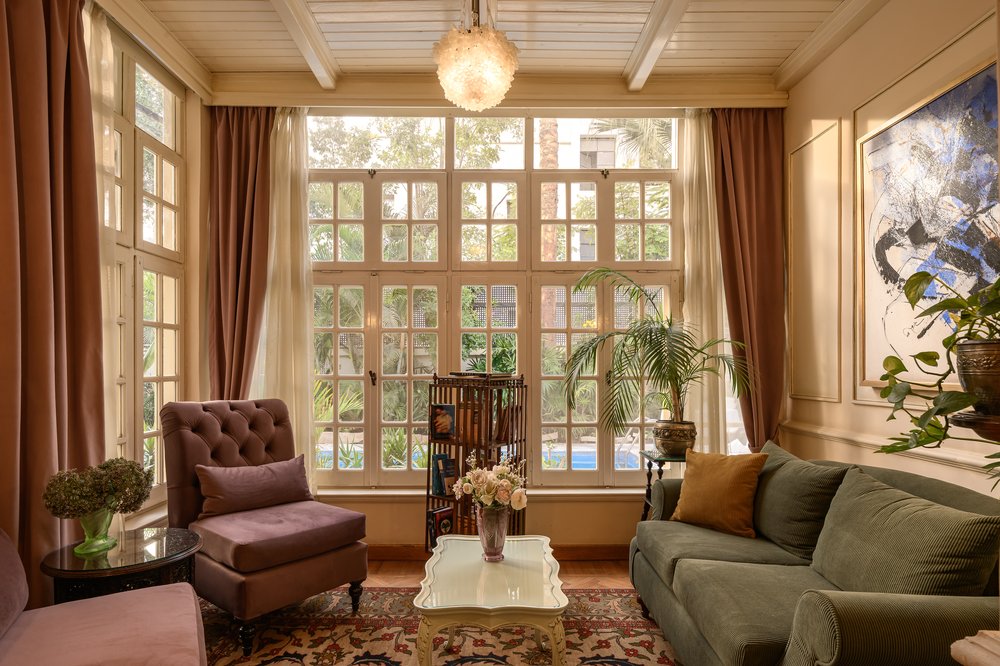
The hotel opened in 2009 with thirteen rooms, each named for an Egyptian city, and it has grown since without losing the scale of a private house. No two rooms are alike, which is what happens when a place is furnished one at a time rather than ordered by the floor. There are four-posters hung with muslin, patterned cement-tile underfoot, brass desk lamps, walls of fine geometric paper. The art is half the pleasure of the place. Orientalist portraits and small Nile scenes hang beside contemporary Egyptian canvases, and you find yourself reading the rooms before breakfast the way you would read a collector's drawing room.
That is the register the house keeps throughout. Antiques that were clearly chosen rather than sourced, rugs with some wear in them, a library you are expected to use. The claim to be Egypt's first boutique hotel is the sort of line guidebooks repeat and nobody can quite settle, and it matters less than the thing the claim is reaching for, which is that this feels like a house someone lives in rather than a product someone built.
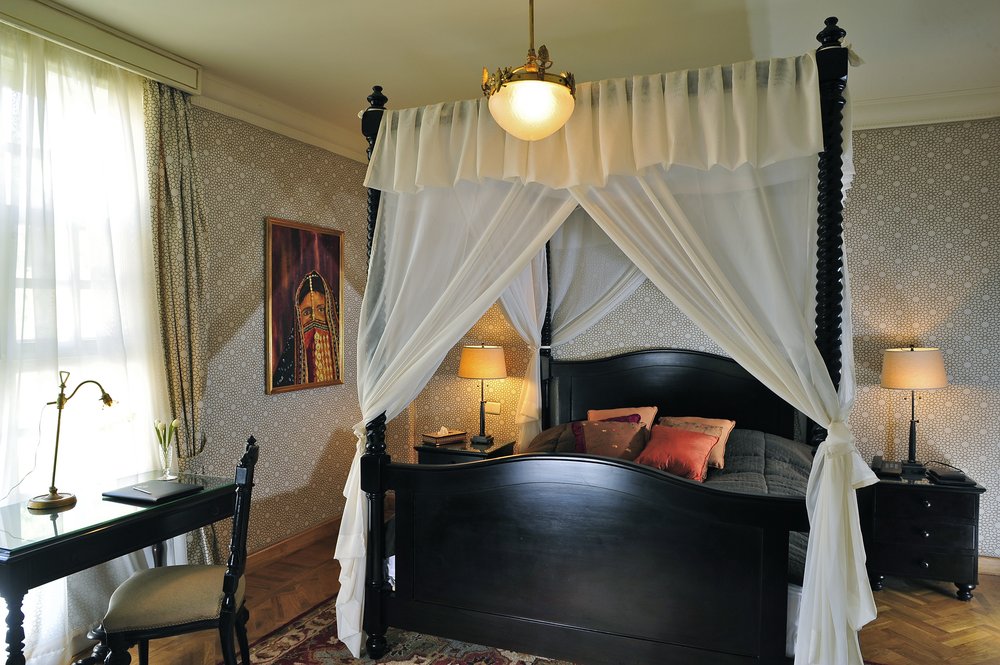
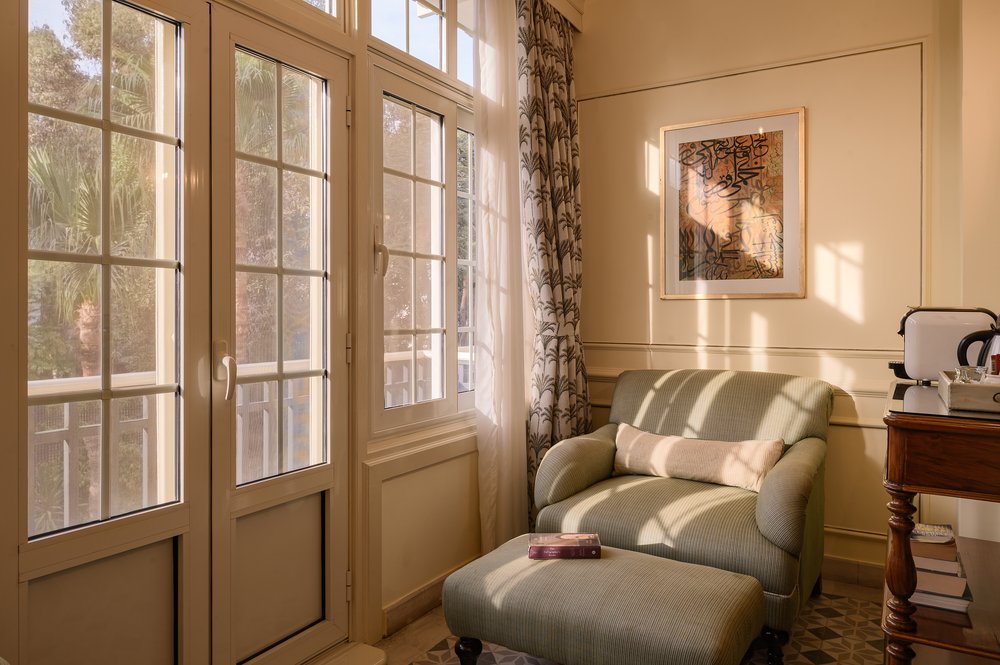
A house someone lives in, not a product someone built.
Where the morning is best kept
The garden is the argument. It runs to something like 1,300 square metres, planted with lemon, olive, mango and guava, and shaded by palms that stood here long before any guest checked in. A pool sits in the middle of it, marble-edged, the water holding the trees upside down. Tables are set out along the edge of it for dinner, lanterns come on as the light goes, and the noise of Cairo, which never actually stops, is held at the wall.
The kitchen has a name of its own, Acacia, and it lays tables in three places depending on the hour: indoors among the panelling, out under the trees, and beside the pool once the evening cools. It cooks Egyptian and European in roughly equal measure, the sort of unhurried hotel dining you return to rather than review. Breakfast under the trees is the meal to keep the morning clear for. Downtown and the Egyptian Museum are a drive to the north, the pyramids a drive to the west across the river, and the garden is the thing you come back to after all of it.
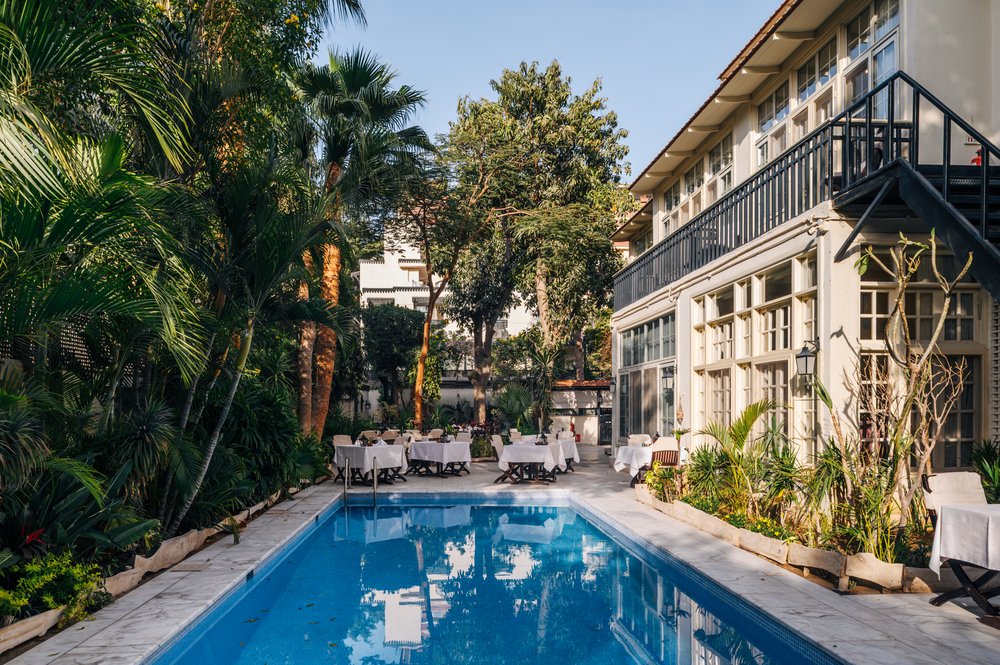
The noise of Cairo never stops. It is simply held at the wall.
Villa Belle Époque runs against the Cairo postcard, and that is the point of it. There is no pyramid framed from the balcony and no lobby the size of a terminal. What has survived instead is a family-scaled house that held its character through the decades when most of Maadi's villas fell to towers. Go in knowing what it is not: a residential villa in a leafy suburb, not a grand hotel, which means you trade a Nile view and a marble lobby for shade, a garden and quiet. Spend the day out among the museums and the pyramids, then come back to the trees and the pool, which is the best argument the place makes.
Photos: Villa Belle Époque (official), with credit.