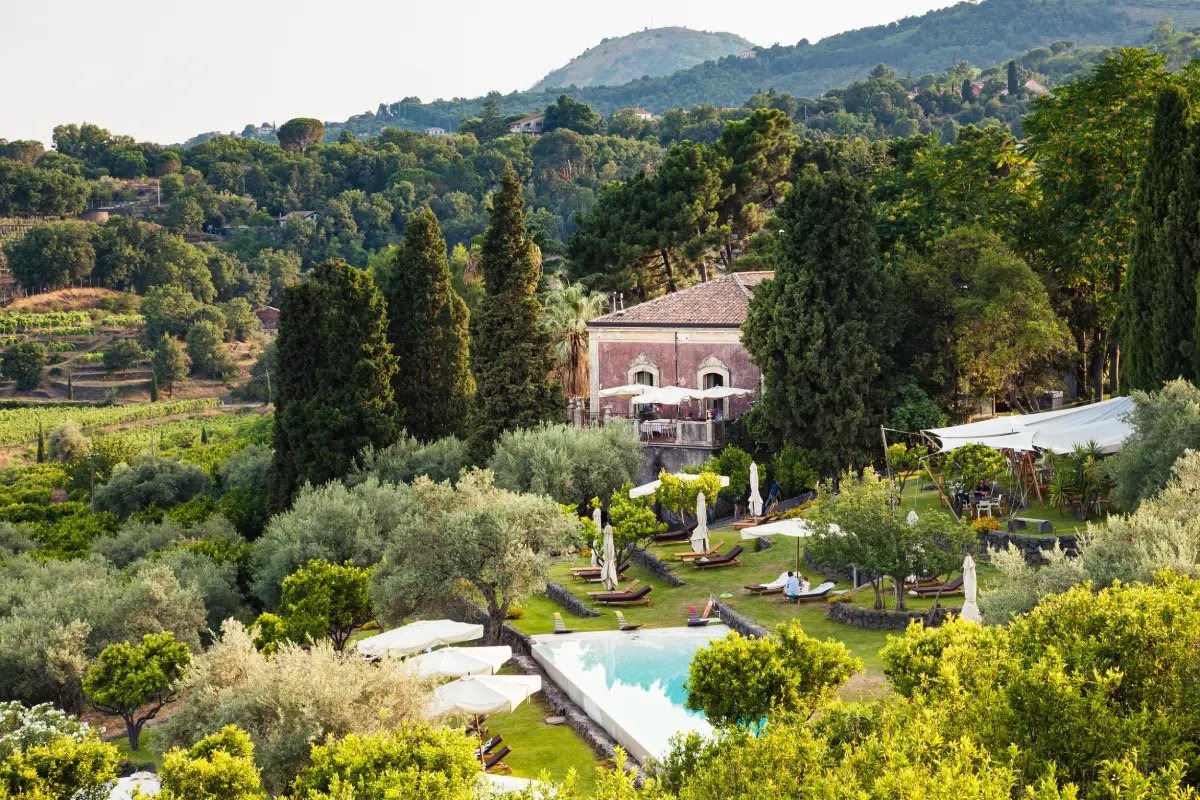
The black earths
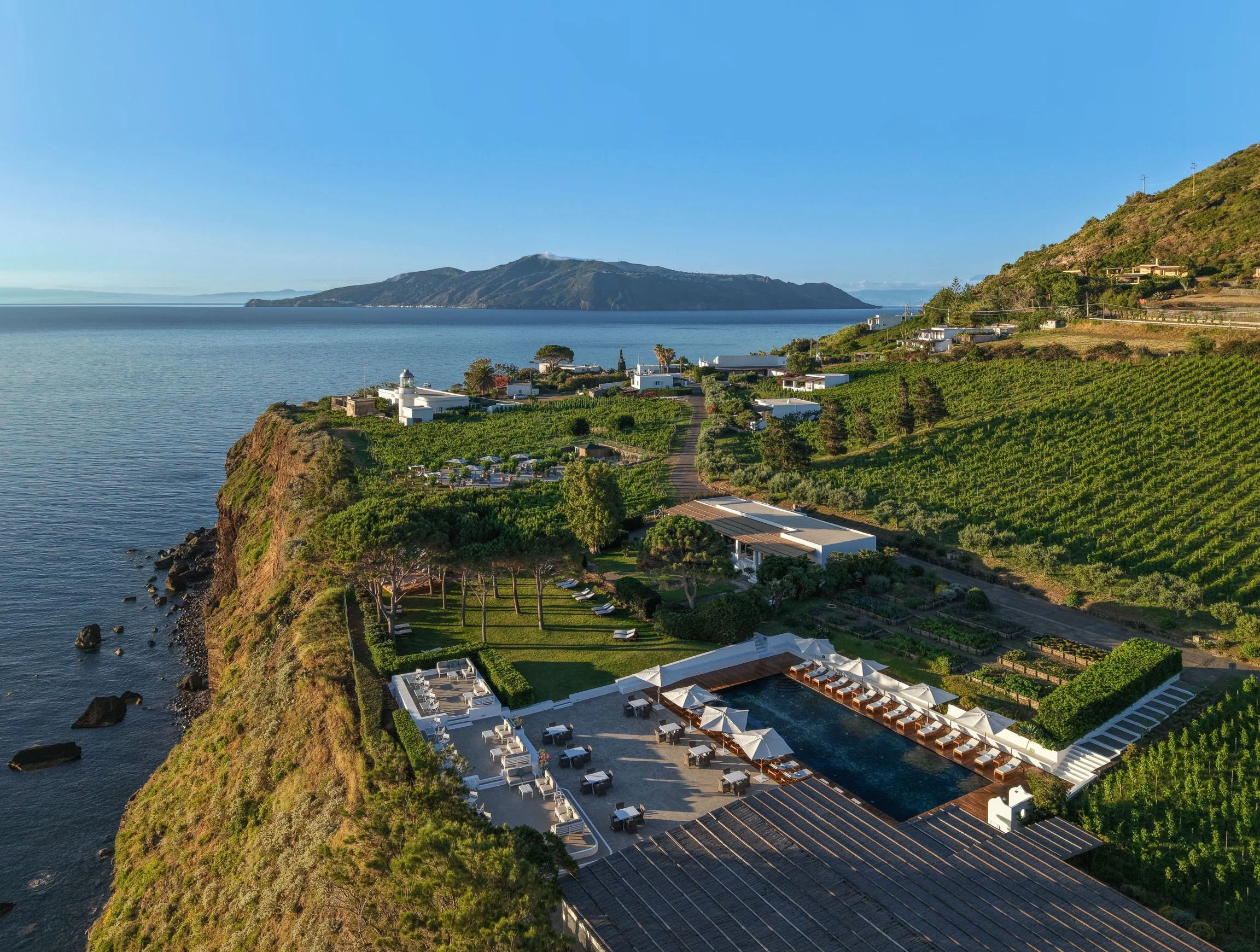
Terre nere means the black earths, and the name does the explaining. The estate climbs the south-eastern flank of Etna at around six hundred metres, its terraces held up by dry walls of lava stone, the volcano working away above and the plain running down to the Ionian below. Twenty-five hectares go to vineyards, olives, citrus and vegetable beds. The farming is organic, the vines kept to the biodynamic calendar, so the soil you look at from the terrace is the same soil that ends up in the glass.
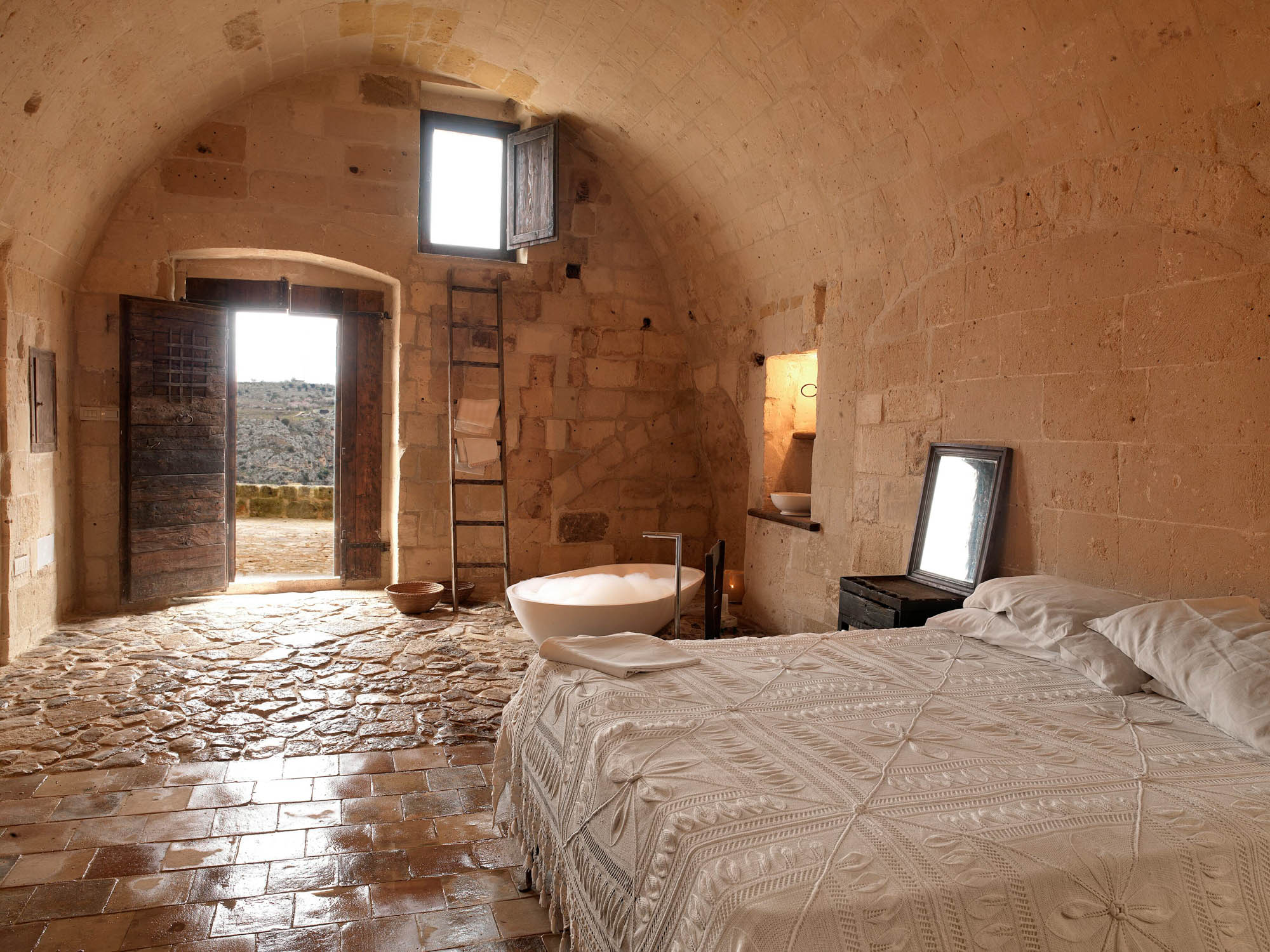
The manor at the heart of it dates to the eighteenth century and makes no secret of its age. Rough plaster the colour of dried rose, chestnut beams, thick stone that holds the cool of the night into the morning. Monks farmed this ground once, which is where the monaci in the name comes from, and the place still keeps something of that plainness. Nothing here strains to be grand. It sits on the mountain as though it grew there rather than being set down on it.
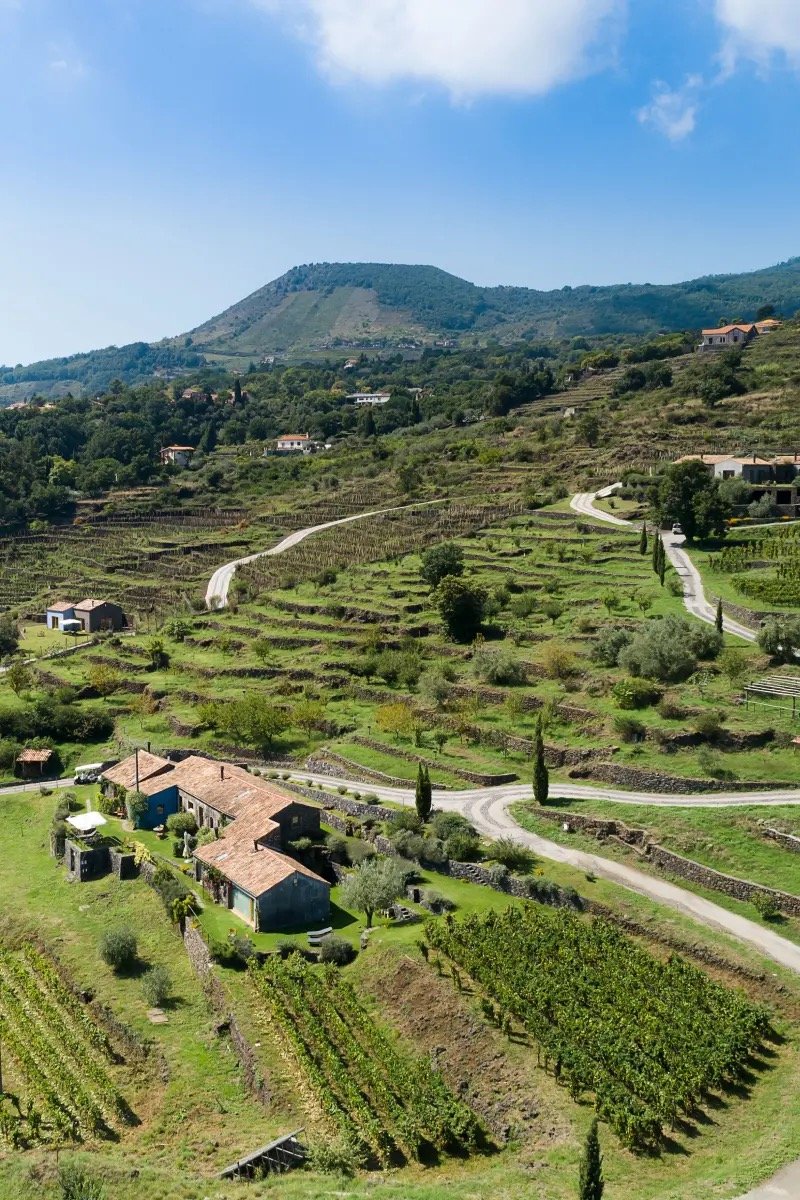
The volcano is not the view here. It is the ground the whole place stands on.
The manor and the water
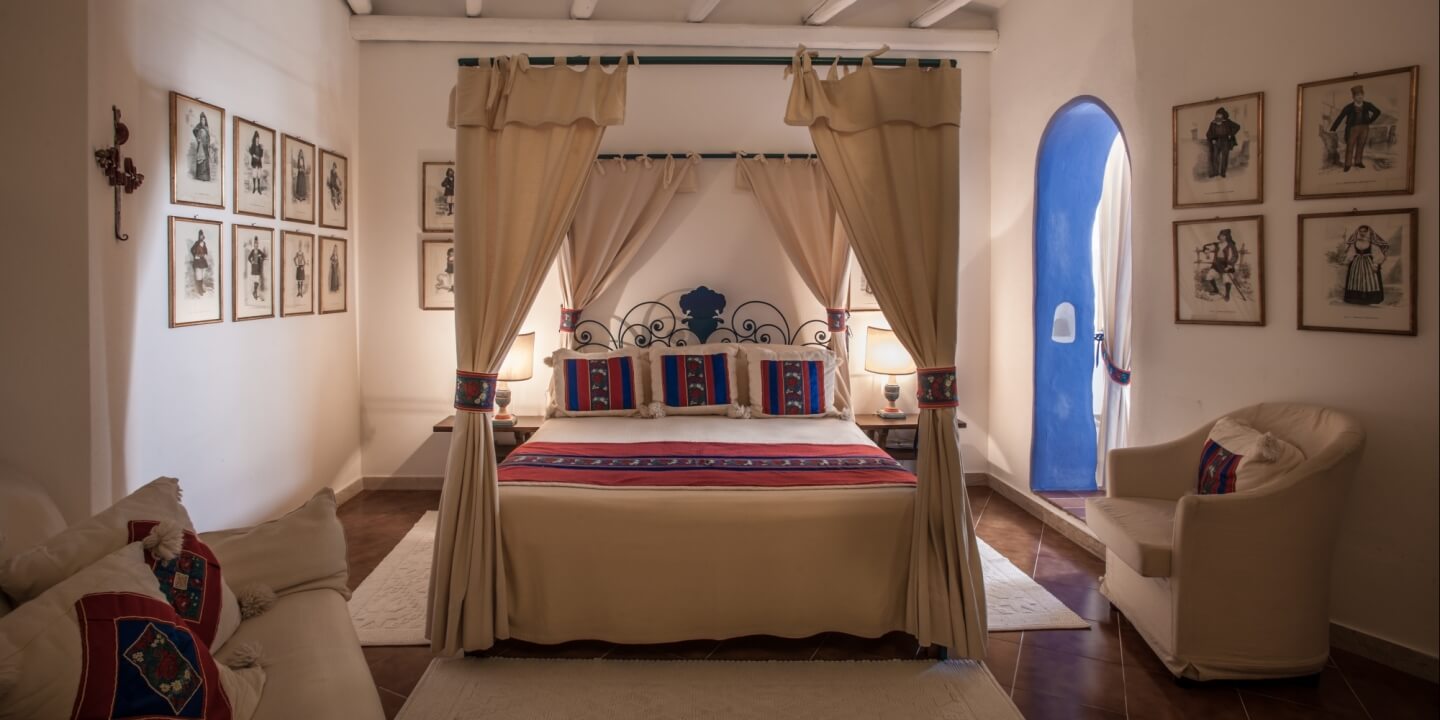
Rooms run from doubles in the old house to villas with a private pool cut into the hillside, each kept to the same restraint, old stone left where it is and little added that raises its voice. Two infinity pools, warmed by the sun rather than a boiler, hang over the vines and take the long look down to the sea. Relais & Châteaux brought the estate into its fold in 2019, which tells you the standard it is held to without changing the temperature of the place.
You wake to the mountain and go to sleep to it. Breakfast is laid in the garden among the fruit trees, and the day tends to arrange itself slowly after that: a swim, a walk down the rows, an hour with a glass of the estate's white before the light goes. Taormina and Catania both sit inside the hour when you want them, and the pull of neither is strong once you have turned up the track.
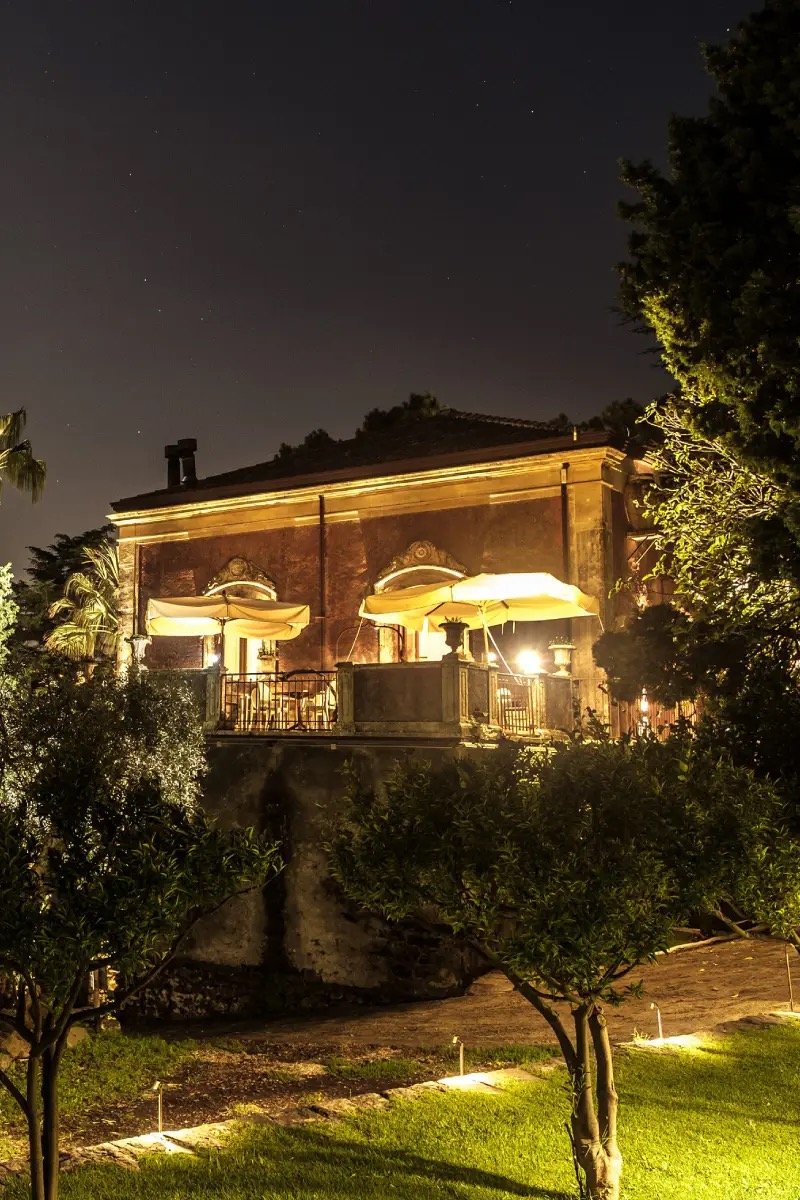
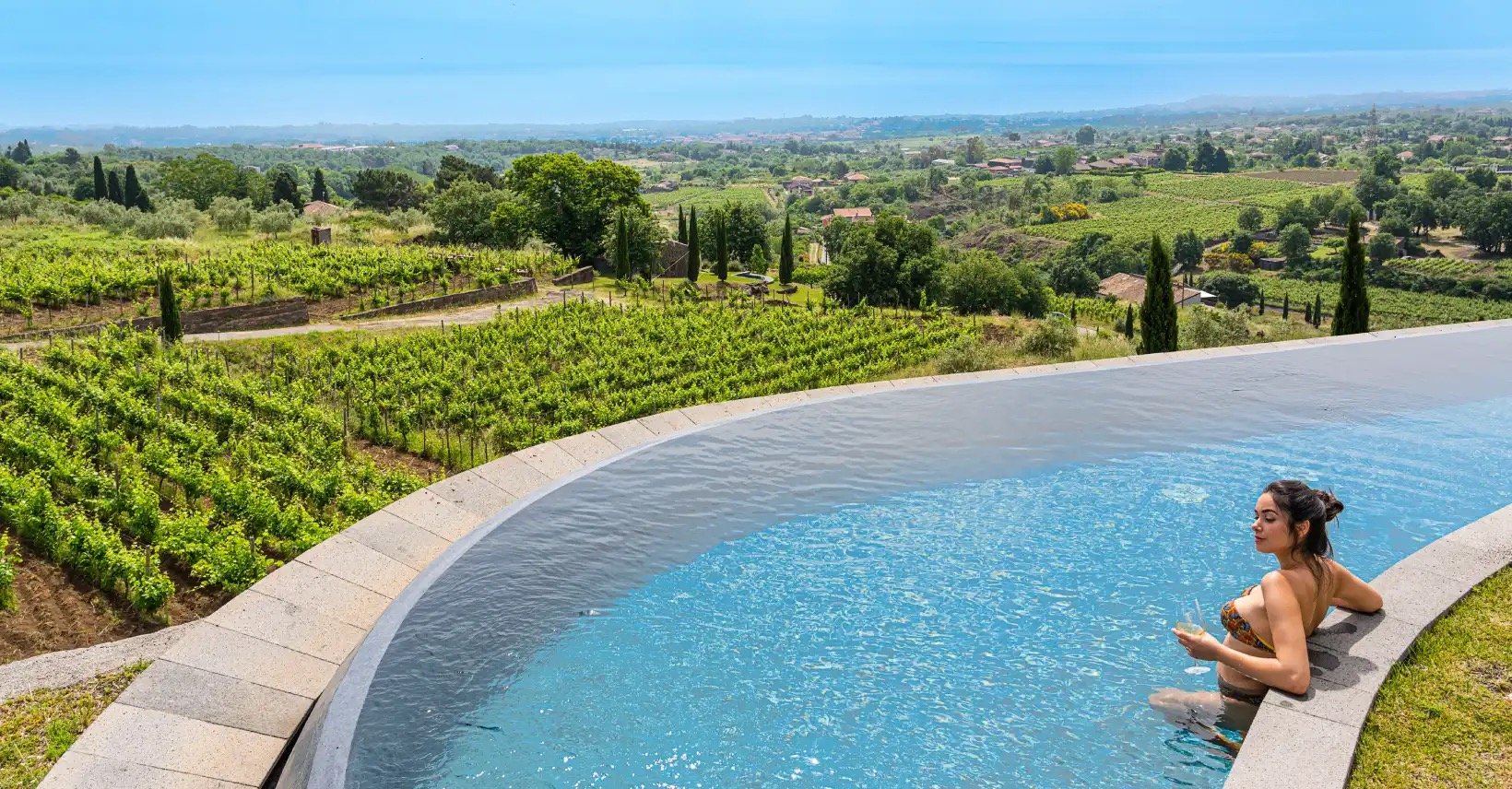
A farm that happens to be very comfortable, run at the pace the vines set.
What the hill pours
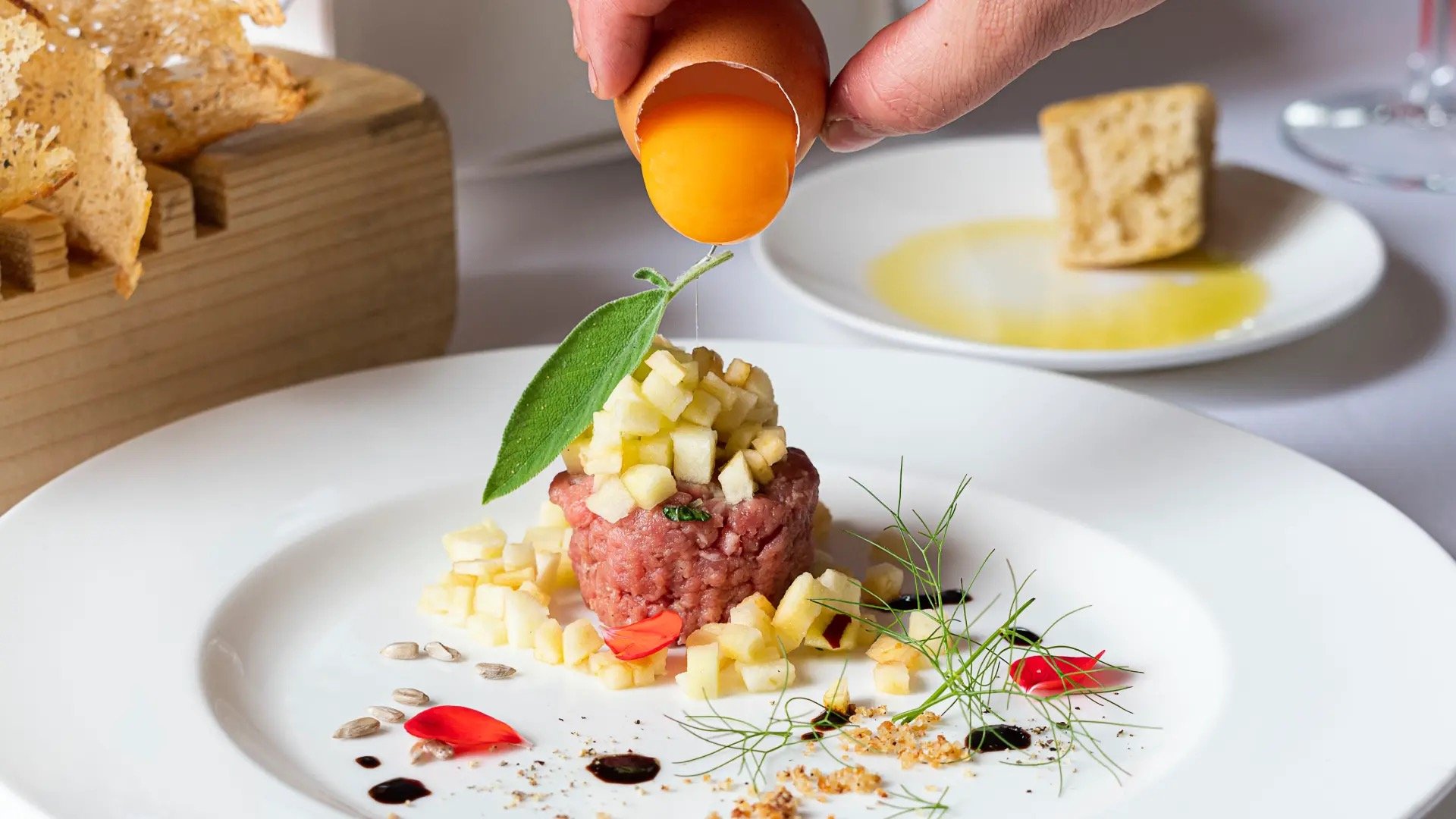
This is a farm first, so the table starts in the ground. Much of what reaches the plate is grown on the estate or bought from close by, and the cooking is Sicilian without theatre, tied to the day's harvest and the turn of the season. Locanda Nerello is the heart of it, named for the Etna grape, and in the evening the kitchen takes things up a register at Luce. Nobody here is chasing a star, and the food reads better for it.
The wine is the estate's own, grown on these lava soils and made on site, Etna reds off the nerello and whites to set beside them, all of it tasting of exactly where it stands. You can walk the vineyard before you drink it, which closes a loop most cellar doors only gesture at. Breakfast comes among the fruit trees, dinner as the peaks finish going pink, and you could stay a week up here and never once feel the want of the coast.
Plenty of hotels borrow the word sustainable. Few are an actual working farm you can walk through, on soil this particular, with a cellar and a kitchen that both answer to it. Monaci delle Terre Nere is the rare estate where what you pour and what you eat come off the hillside in front of you. It sits an easy drive from Taormina and Catania, and the noise of both falls away the moment you turn up the track. We would go for the volcano and the vines, and we would book the evening table before we unpacked.