Built from nothing, made to belong
You come up a dirt track through the olives and the house shows itself slowly, a low white mass on a ridge with Ostuni piled on its own hill a few kilometres off and the Adriatic a thin line behind. The first surprise is that none of it is old. Andrew Trotter, who had no formal training as an architect, drew Masseria Moroseta from scratch and finished it in 2016, then made it behave like a farmhouse that had stood on that ground for two centuries. Thick walls that hold the cool. Vaulted ceilings. Local tufo left to carry the rooms, lime wash over everything, shade placed exactly where the afternoon needs it.
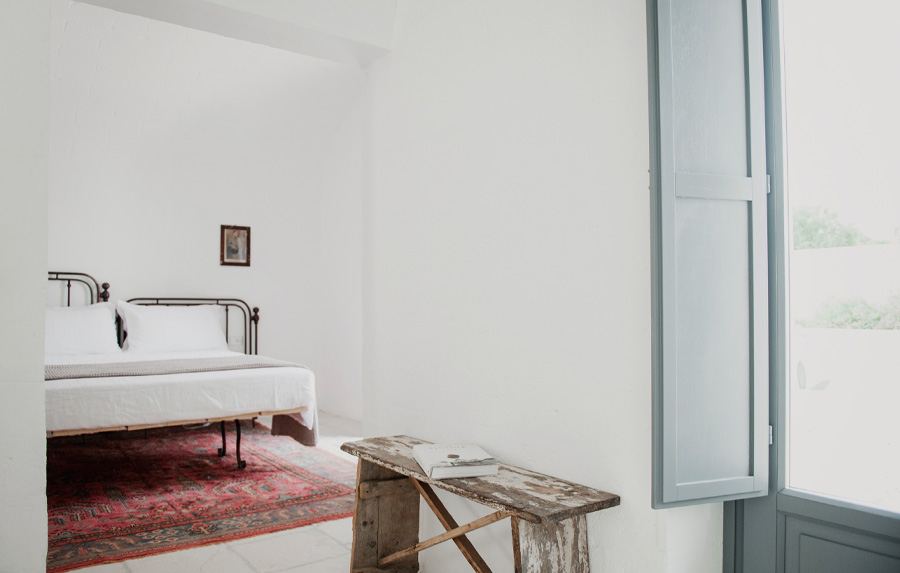
There are six rooms and no more. Each opens onto its own terrace or a walled scrap of garden, and inside there is an iron bed, a kilim worn soft, a pair of pale shutters and very little else. The restraint is the point. Nothing has been added that the building would not recognise, and the quiet that follows is the first thing a guest notices and the last thing they forget.
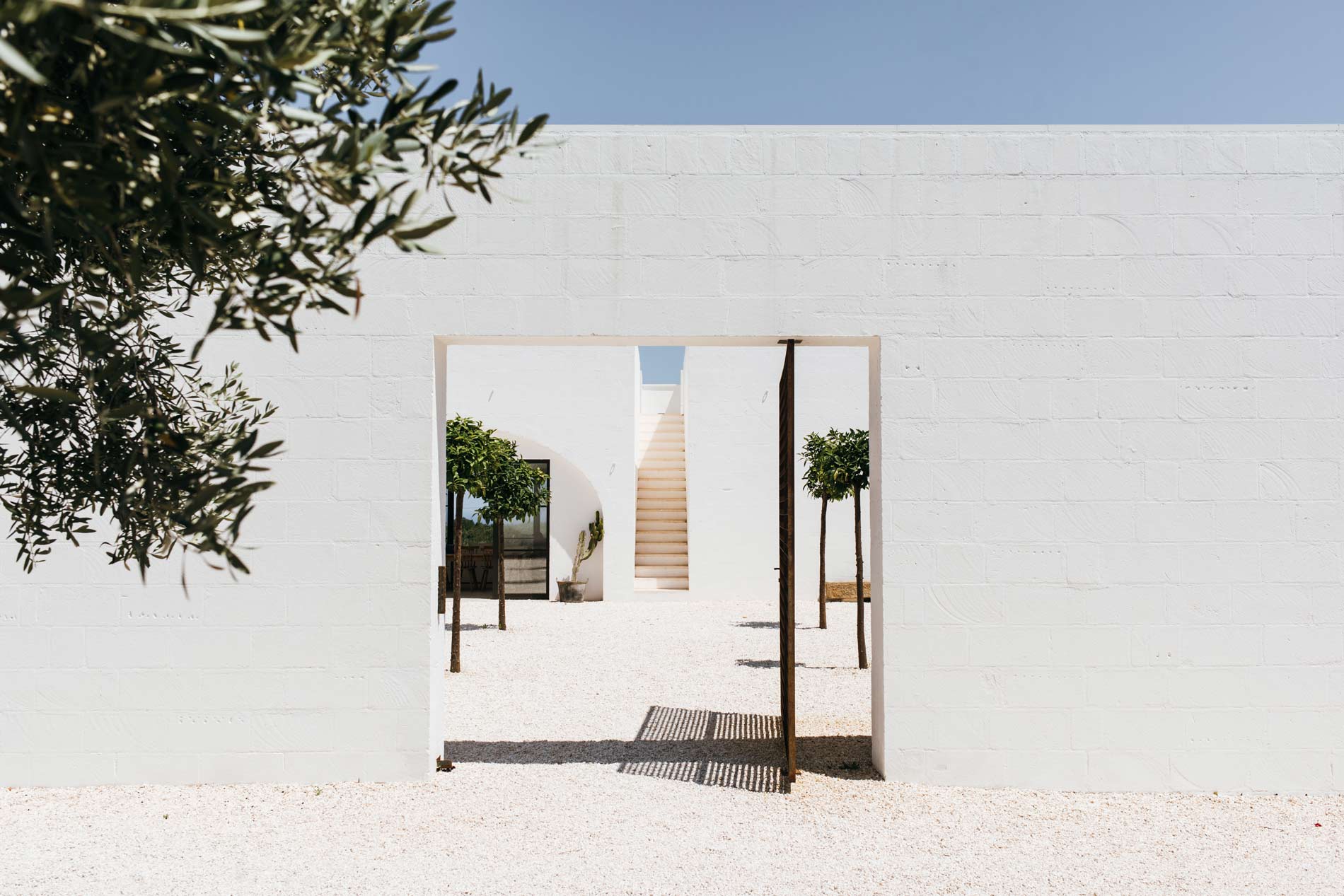
The trick was never the age of the stone. It was knowing what to leave out.
A kitchen with no menu
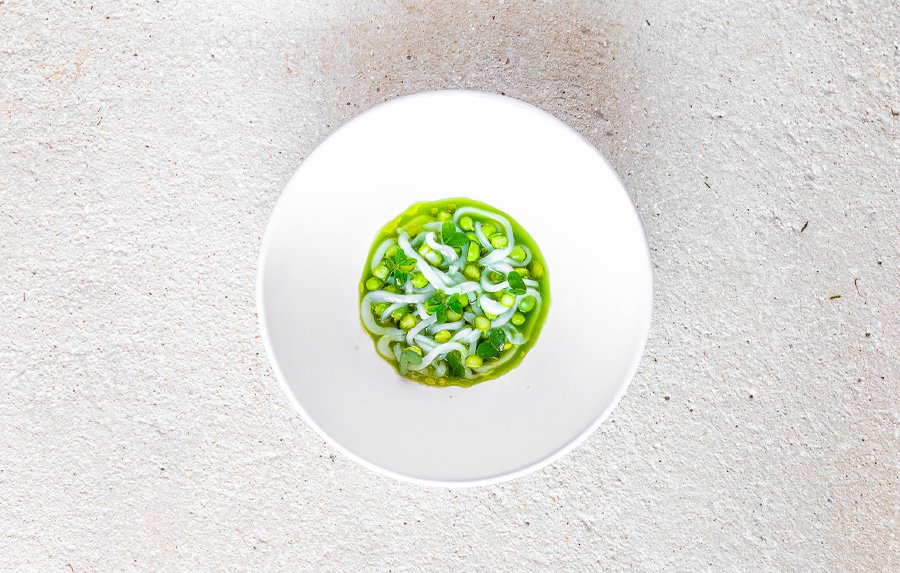
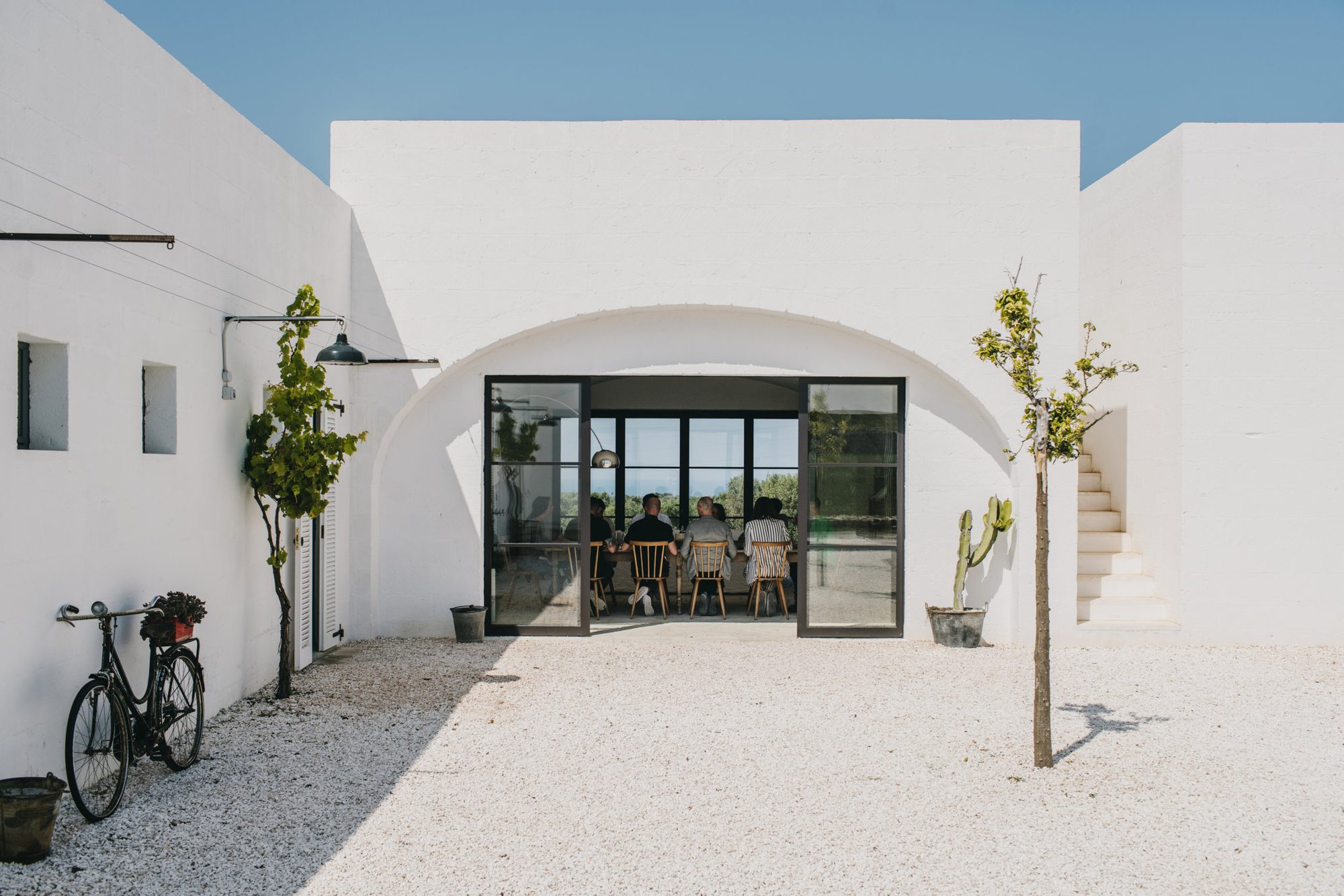
Dinner is the reason a good many people book and then barely leave the gate. There is no menu. You sit at the long table under the vault, or out in the court when the evening allows, and you eat what Giorgia Eugenia Goggi has decided to cook that day: a set run of small plates drawn from the garden, the orchard and the coop, Mediterranean at the root and lightly travelled at the edges. A bowl of tomatoes turned into something you have not met before, green and cold and precise. The cooking is careful without being fussy, which is harder than it sounds and rarer than it should be.
The kitchen takes bookings from people who are not staying, so you need not have a room to eat here, though you do need to reserve. It is the engine of the place. Take it away and Moroseta would still be a beautiful house; with it, the house has a reason to keep you past the long middle of the day.
Six rooms, held to six rooms
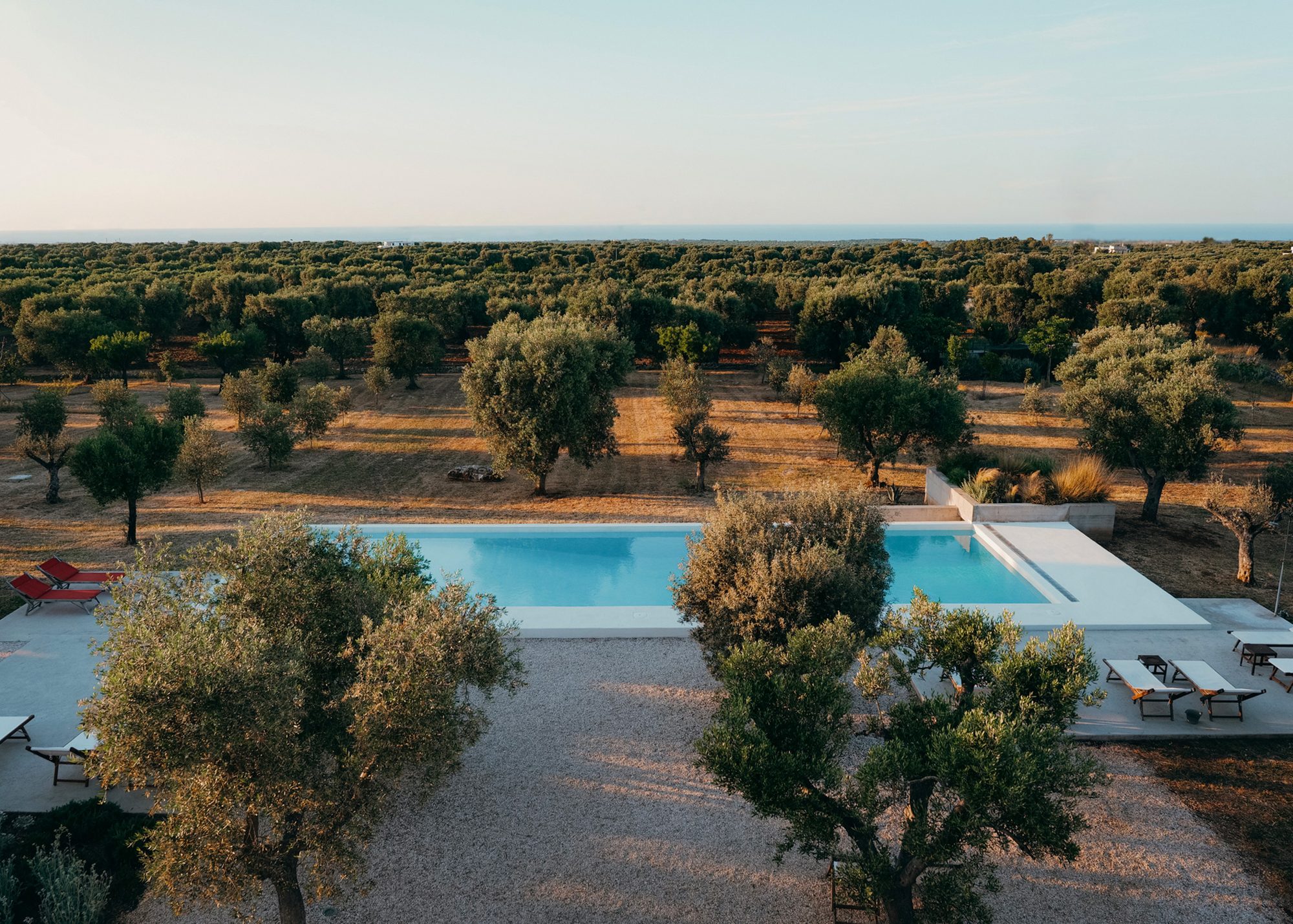
Puglia has filled, in the years since, with masserie selling the same whitewashed daydream. Most of them read like a mood board. Moroseta is the one that got the architecture honest and the kitchen serious and then, crucially, refused to grow. The groves around it are worked organically and the oil on your bread comes off them. There is a pool below the house on its gravel terrace, a small gym, and otherwise no spa, no programme, no roster of things to do. That absence is deliberate, and after a day it stops feeling like a lack.
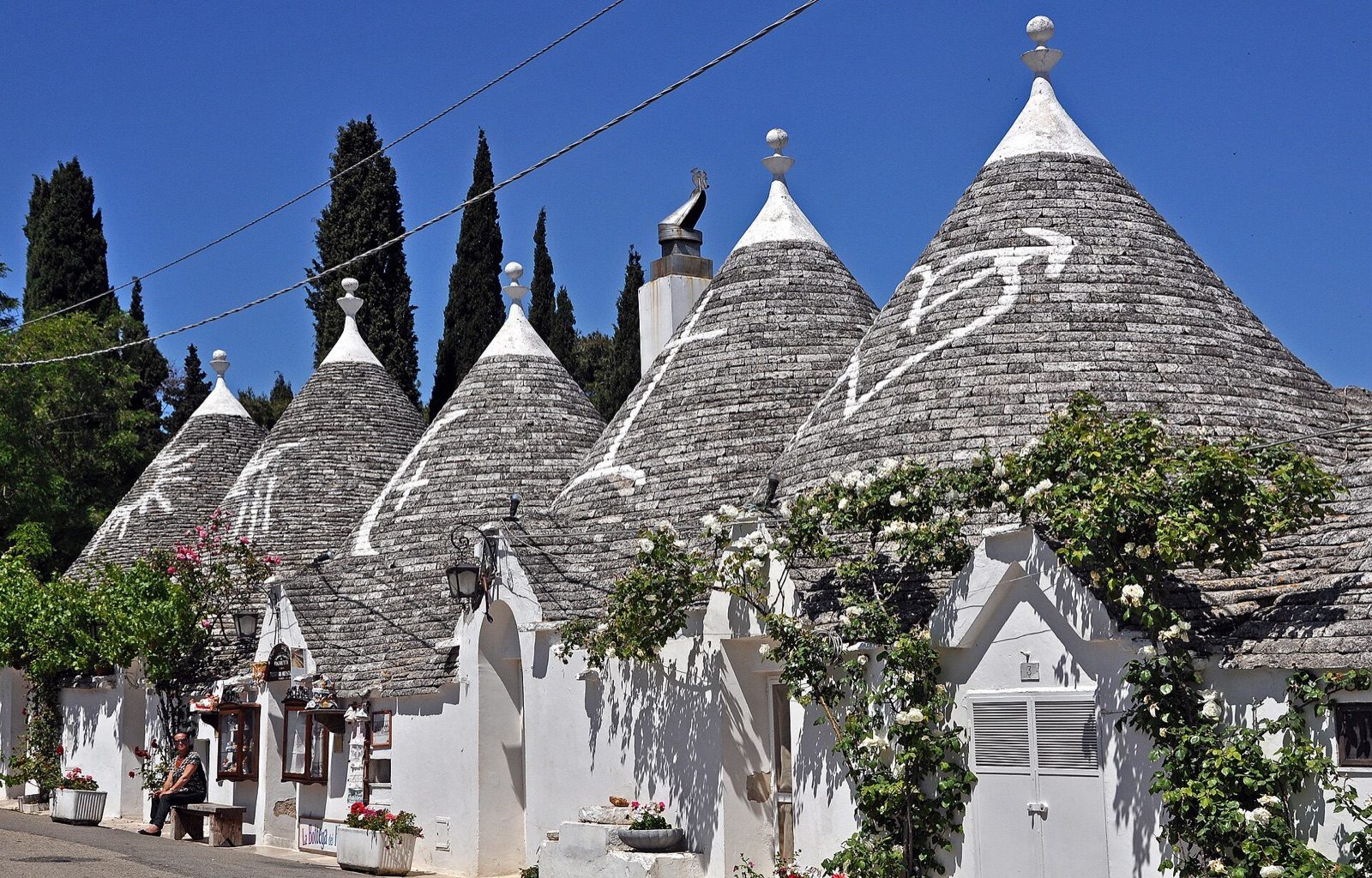
Ten years on it would have been easy to add a wing, double the rooms, chase the numbers everyone else was chasing. They did not. Ostuni is a short drive for the evening, and the Itria Valley, Cisternino and Locorotondo and the trulli, sits close enough to fill a week. But the house asks very little of you, and that is the whole of its argument.
Moroseta was never the grandest house in Puglia and never tried to be. It is the one that set the grammar everyone else now borrows: new stone made to sit like old, a kitchen worth the drive on its own, six rooms held at six. A decade in, the copies have multiplied and the original still reads clearer than any of them. Come for the architecture, the table and the long, undemanding middle of the day.
VANE note. This is a researched profile, drawn from the property's own record and public sources, not yet a first-hand VANE stay. A full review carries a stay date, an independence disclosure and the writer's own account. Photographs by Masseria Moroseta (official), with credit.