Eight generations, and a light hand
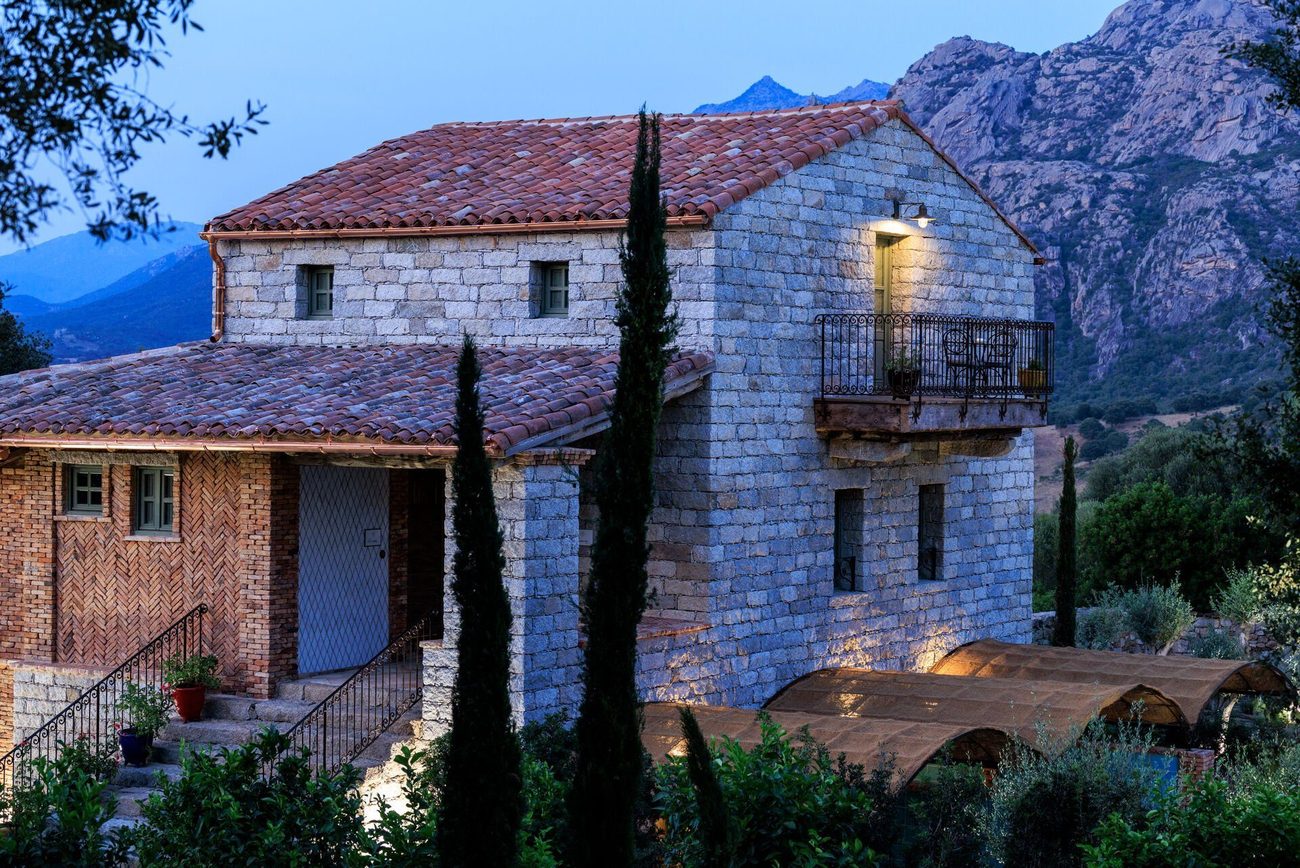
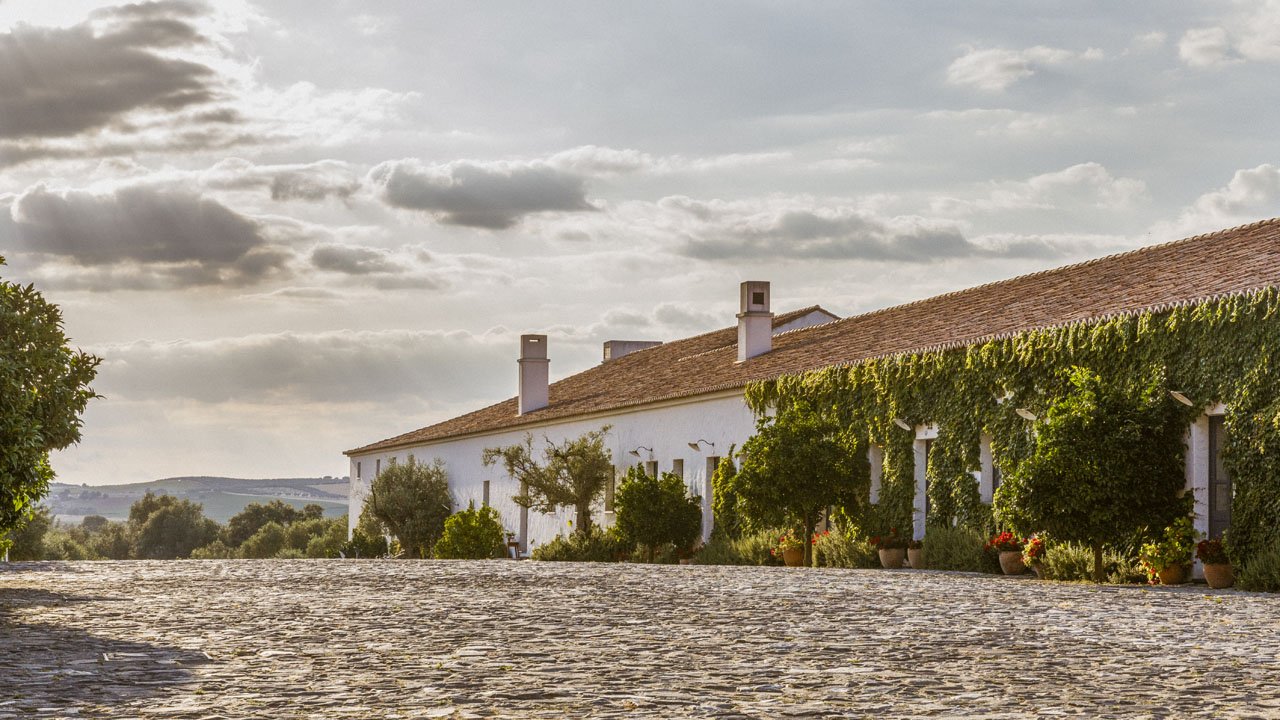
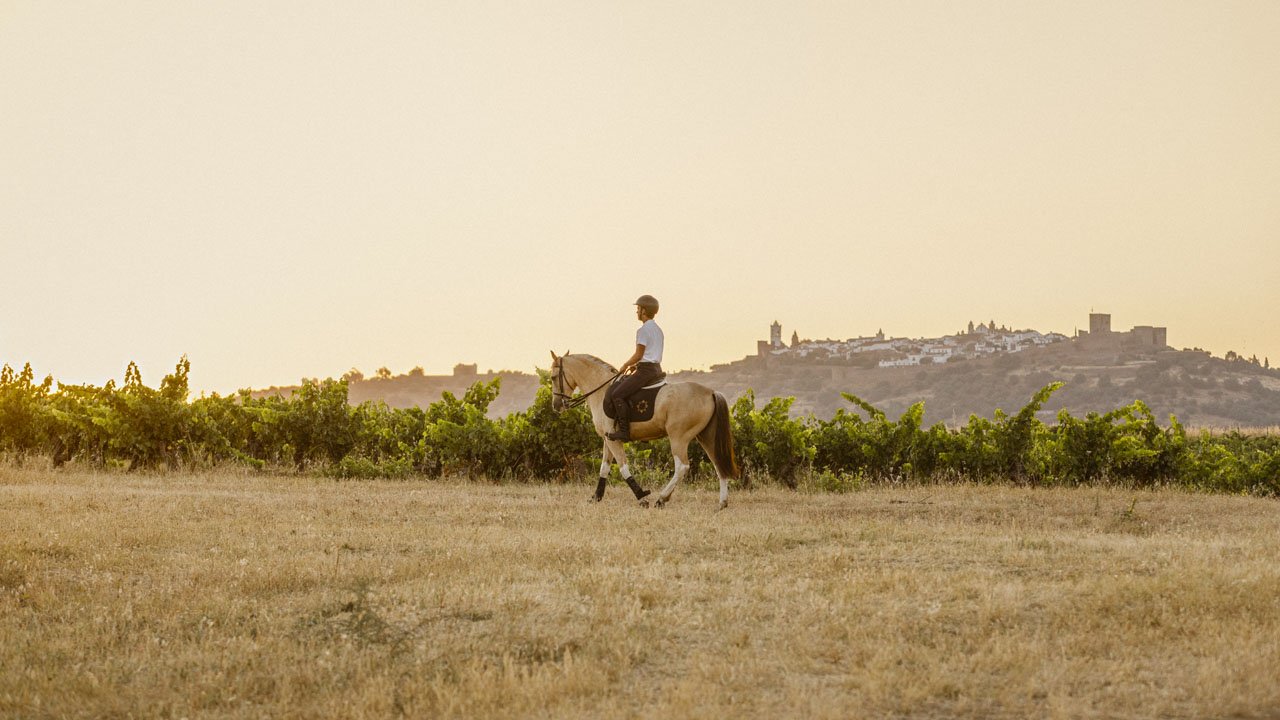
The monte sits low on the plain, and Monsaraz rides the hill on the skyline, white houses and a castle against a great deal of sky. José António Uva is the eighth of his family to live here, and he spent years putting the farming village back together, the long whitewashed ranges under terracotta, the workshops, the single cobbled street. He did not hand it to a decorator. He handed it to Eduardo Souto de Moura, who took the Pritzker in 2011, with a brief that asked him to turn agricultural buildings into rooms without making a show of it.
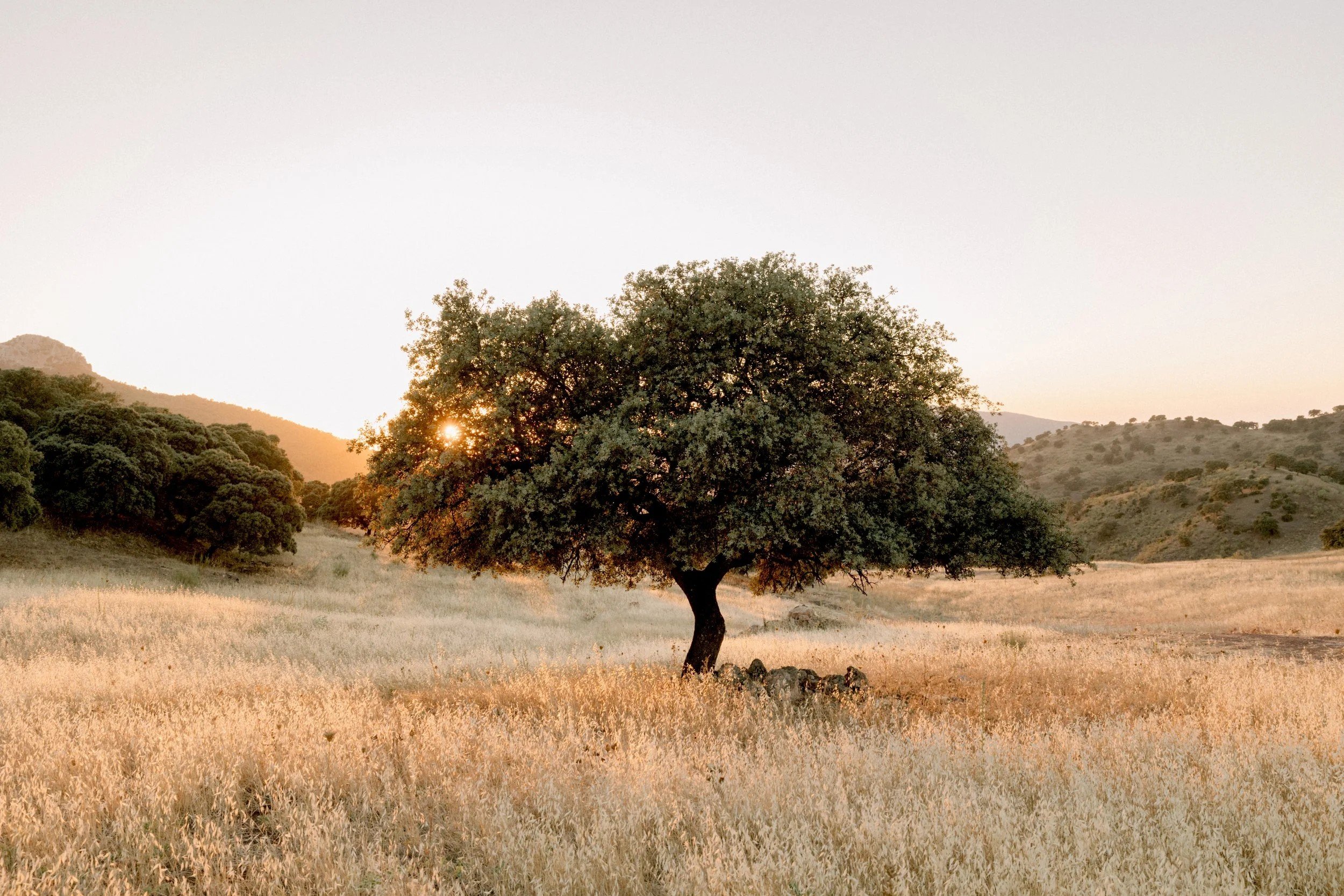
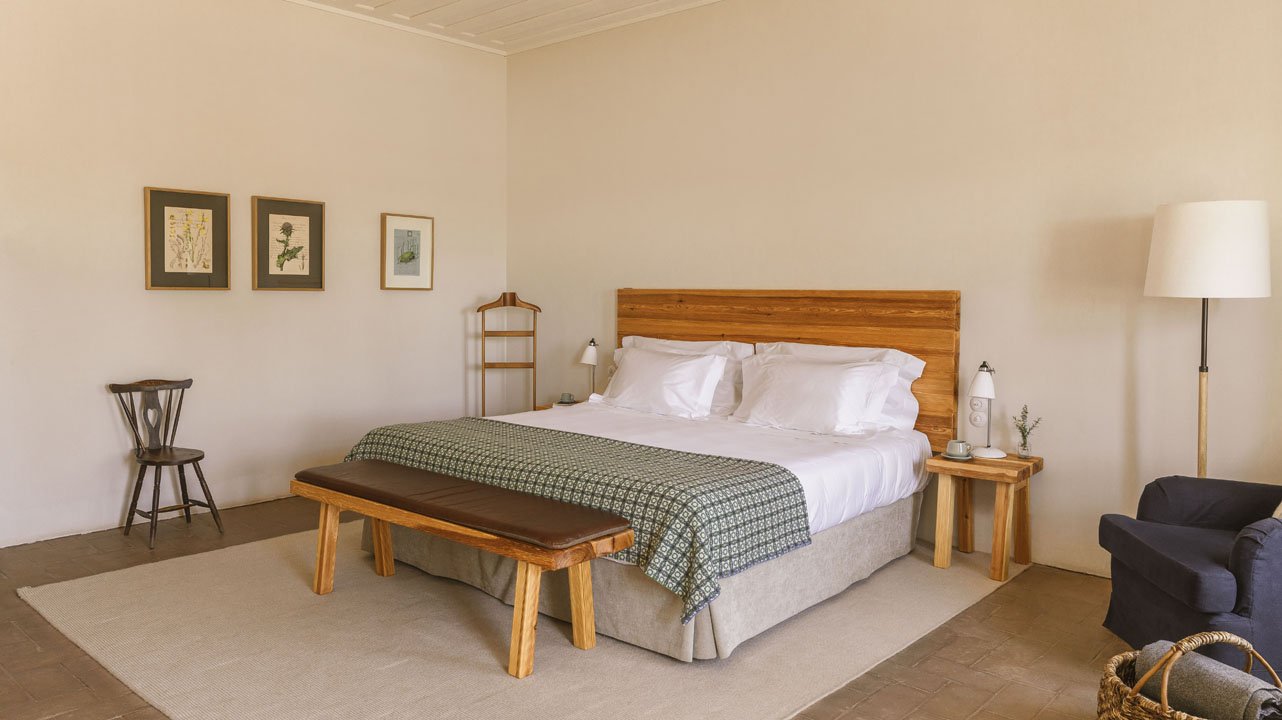
What Souto de Moura did is mostly invisible, which is the compliment. The village reopened in 2016 looking as though it had always been ready to receive you. Lime walls, oak, the odd botanical print, a window set to hold Monsaraz at first light. Around it run some 780 hectares of holm oak, olive grove and vine, and the restraint of the architecture lets all of that do the talking.
Twenty-two rooms, and seven thousand years
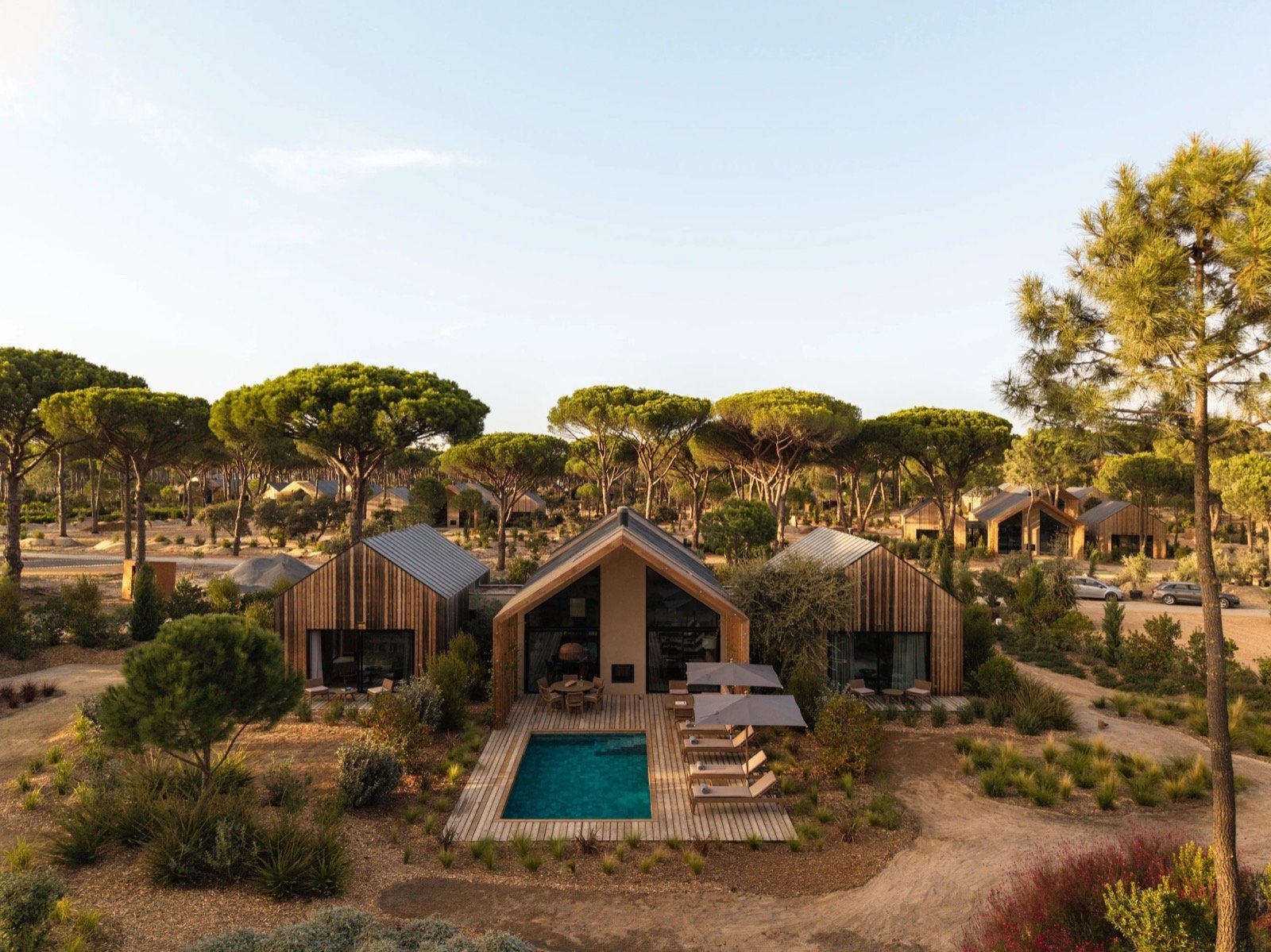
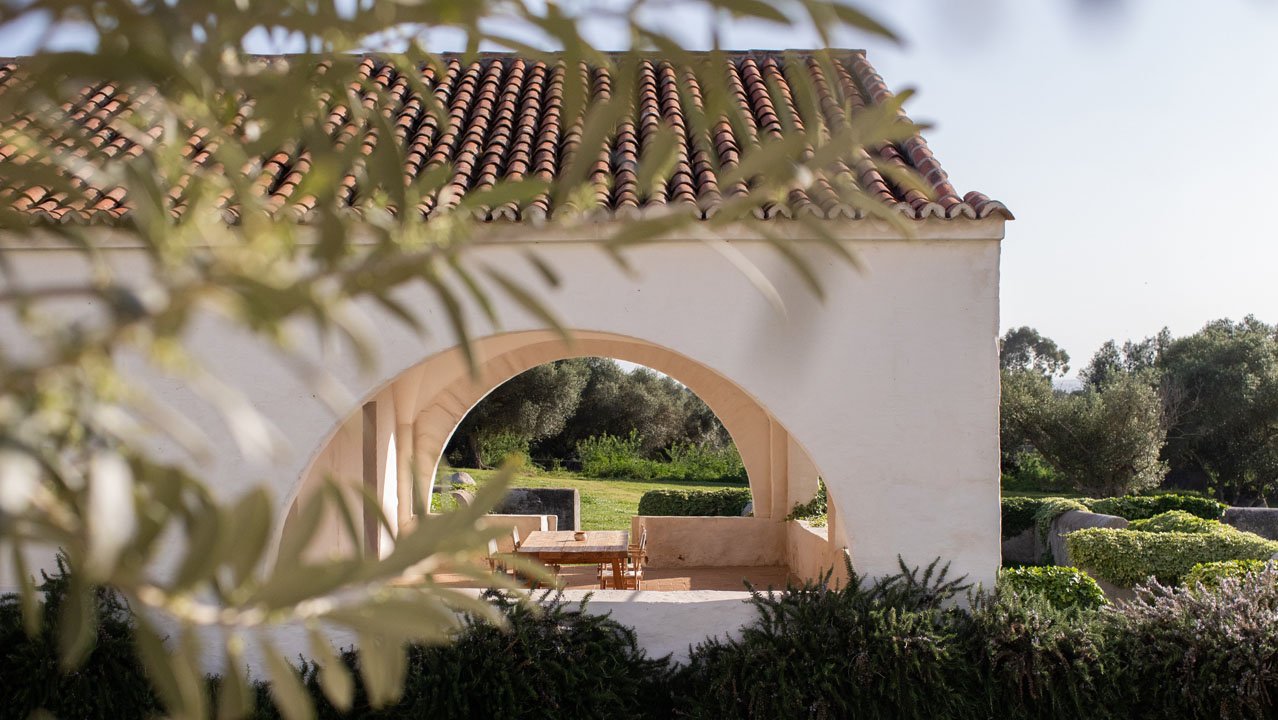
The accommodation is folded into the village rather than built beside it: twenty-two rooms, a pair of suites, sixteen cottages for families who want a door of their own. They are plain in the right way, cool in the Alentejo heat, quiet at night. Nothing in them competes with the window.
Then there is what was here long before the Uvas. Walk the estate and you pass Neolithic dolmens, sixteen of them, and one of the largest menhirs on the Iberian peninsula, standing stones that have kept this ground for some seven thousand years. Few hotels can offer a morning that runs from your coffee to the deep prehistory of Europe on the same short path.
A morning that runs from your coffee to the deep prehistory of Europe, on the same short path.
The estate cooks itself
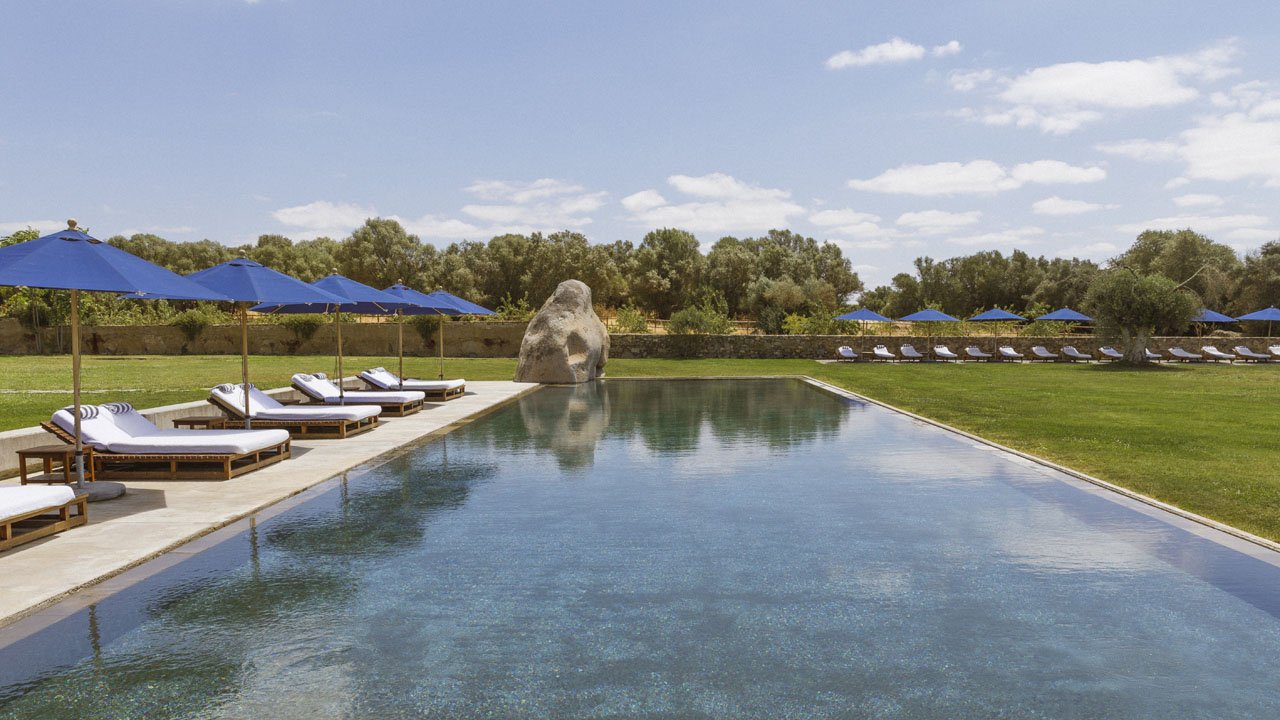
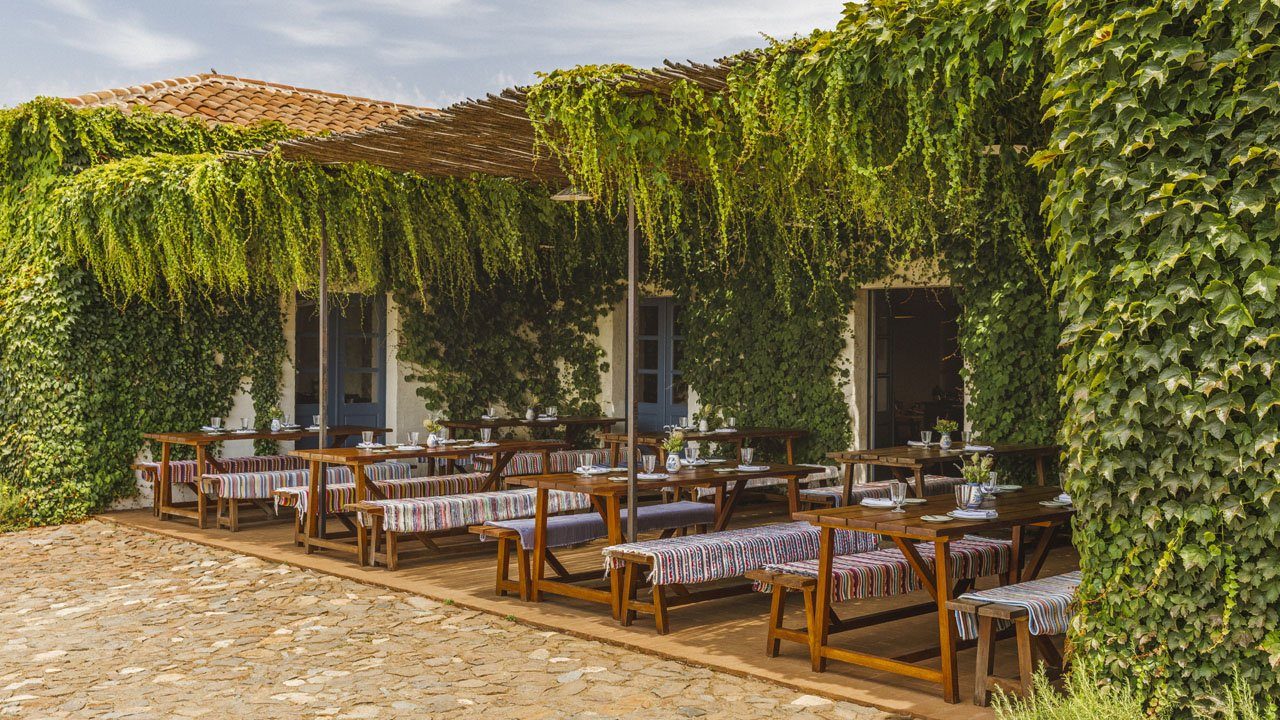
The kitchen works the land it stands on. Vegetables from the garden, oil from the groves, cattle and grapes off the estate feed a menu rooted in Alentejo cooking, with the odd modern turn and nothing shouting for attention. A second table opens by the pool through the warm months. The cellar pours the estate's own wine, and among the bottles is talha, the amphora wine this corner of Portugal has made since Roman times, fermented in great clay jars with almost no hand laid on it.
The spa carries the Susanne Kaufmann name and sits in a single vaulted aisle some forty metres long, cool and almost monastic. You can ride out across the vines toward the castle, or do very little, which the place quietly rewards. It is a fair way from anywhere, close to two hours from Lisbon by road, and that distance is not an inconvenience so much as the whole idea.
Restored estates slide easily into theme park. This one holds its line, because it is still a working farm and still a family's, and because Souto de Moura refused the easy gesture. Come for the land, the standing stones and the quiet, and let the table and the talha do the rest.