Blue, white and full by noon
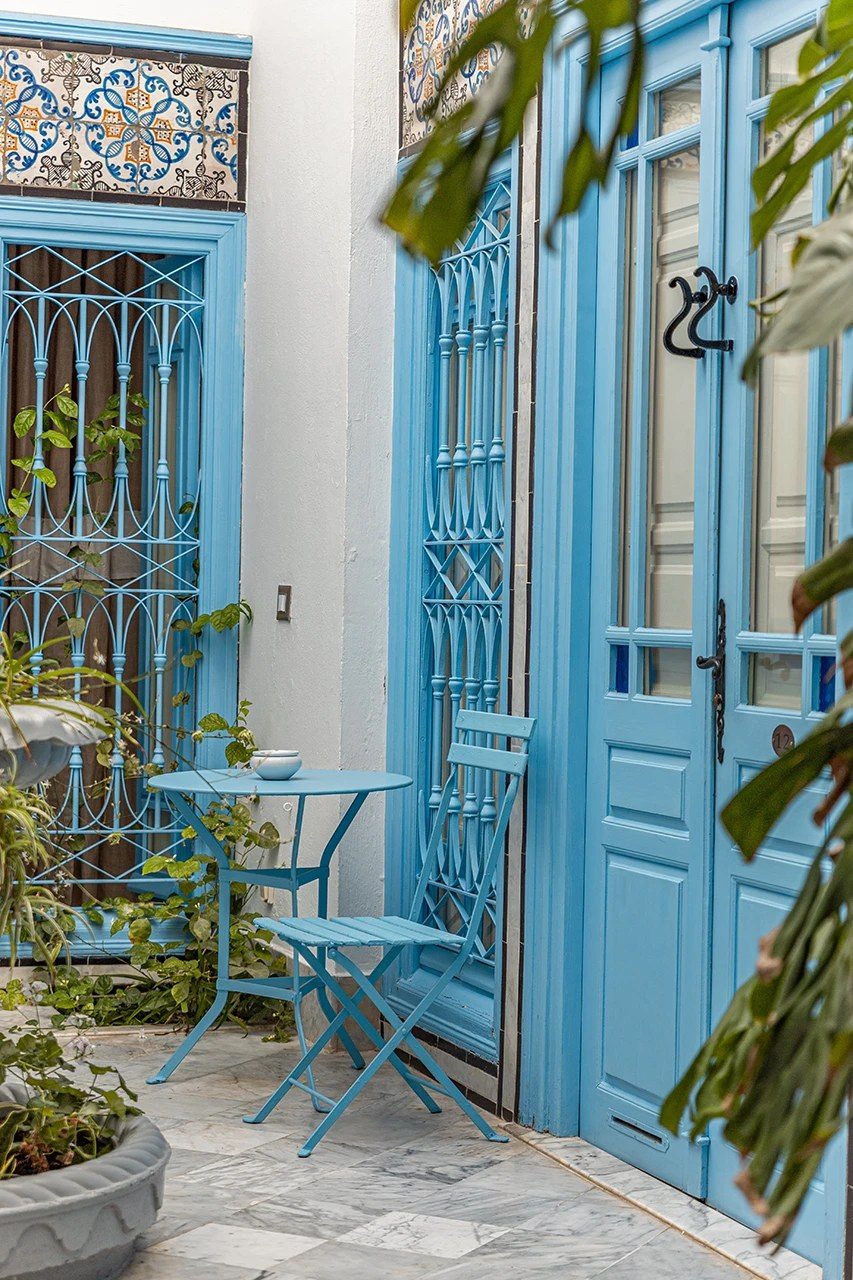
Everyone photographs Sidi Bou Saïd, and they are right to. The village sits on a headland above the Gulf of Tunis, its houses lime-washed to a hard white, its doors and shutters and window grilles painted the particular blue that the whole place agreed on a century ago. The lanes run steep and narrow, the bougainvillaea spills over the walls, and the Café des Nattes at the top has been serving mint tea to painters and writers for longer than anyone can quite remember. Paul Klee came, and August Macke, and the light they chased is still here.
The trouble with a place this photogenic is that it fills. By late morning the coaches have parked below and the main street is a slow river of visitors climbing to the viewpoint, buying a fridge magnet, taking the same shot of the same blue door. Dar Saïd sits in the middle of all this, behind a plain entrance in a quiet lane, and the whole point of it is that you can close the door on the crowd and let the village settle back into itself once the light goes long.
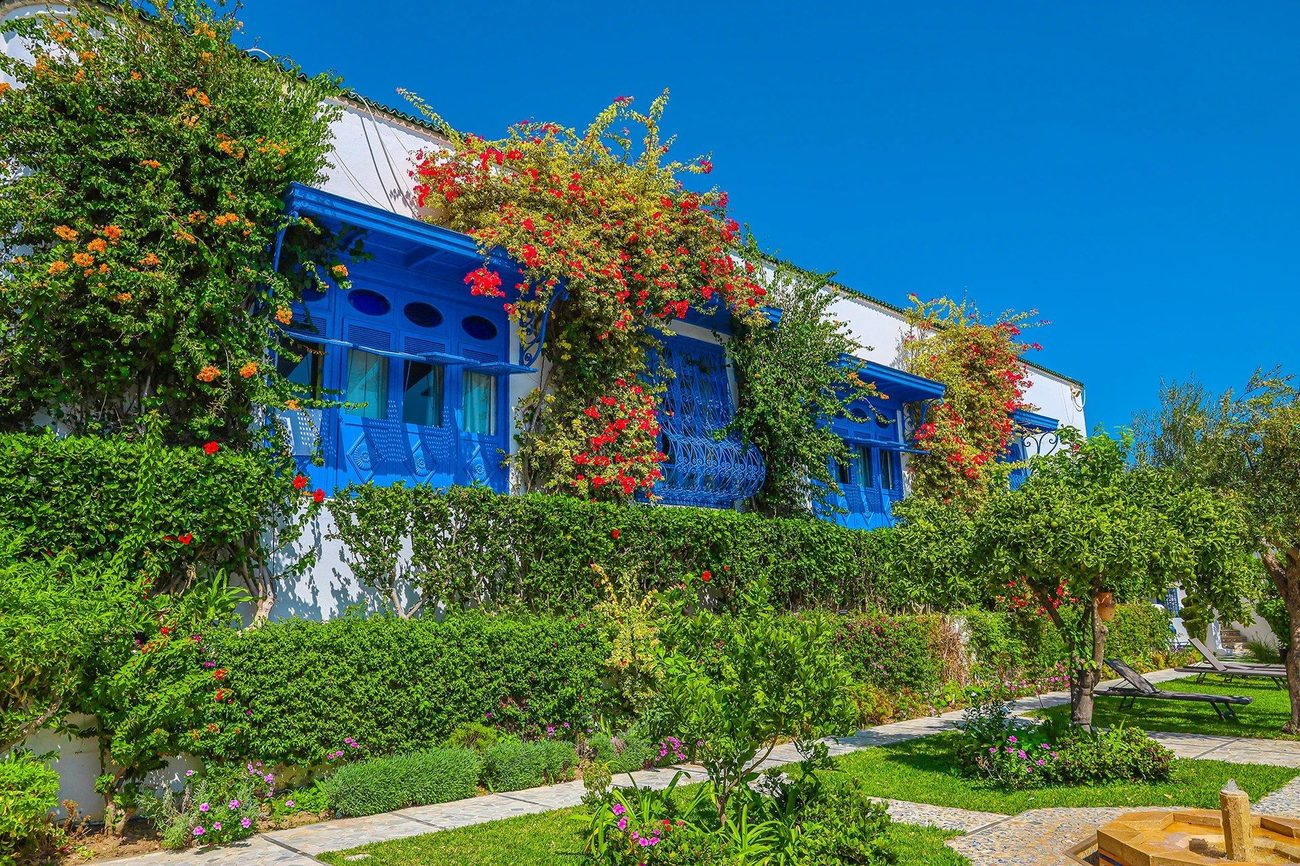
By day the village belongs to the coaches. By evening it belongs to whoever stayed.
A dar turned inward
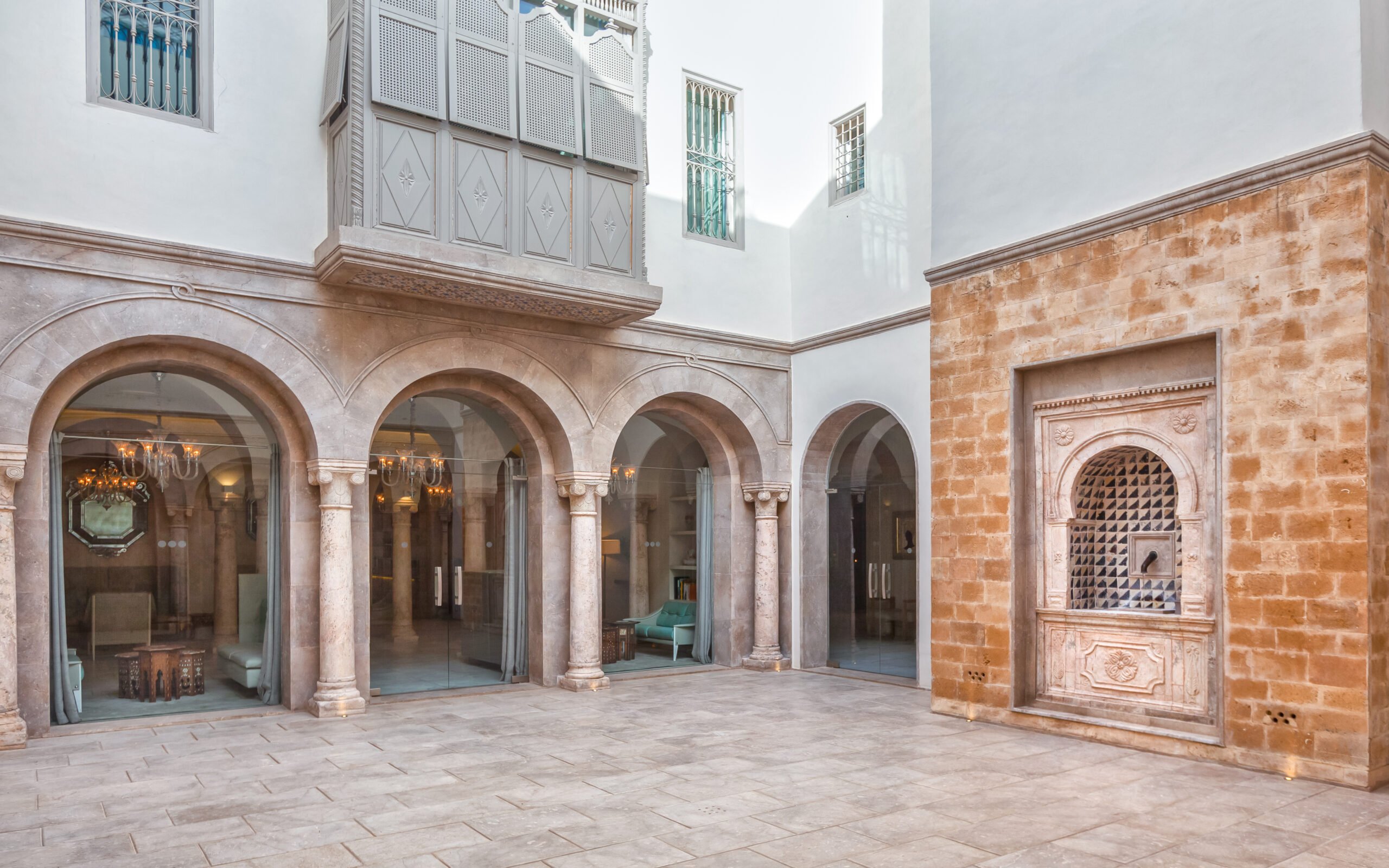
Behind the plain door is a dar, the courtyard house that Tunis built for shade and privacy, its rooms turned away from the street and towards the light wells at its heart. This one dates to the nineteenth century and was restored and opened as a hotel in 2001, among the first of the country's boutique conversions. Twenty-three rooms and suites gather around four courtyards. The plan is the old one: thick walls, cool floors, and every window looking in rather than out, so the heat and the noise of the lanes stay where they belong.
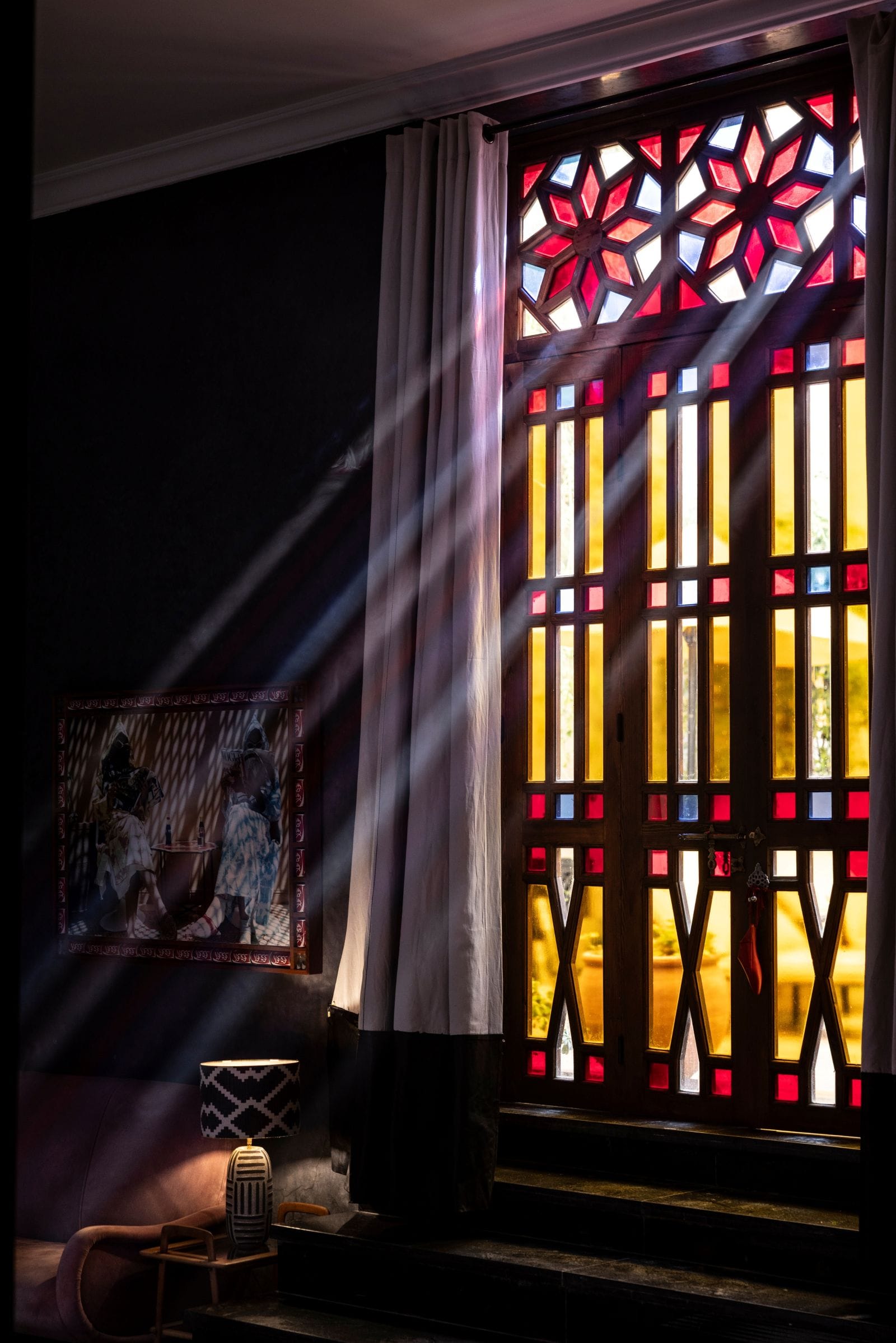
The rooms are furnished the way an old Tunisois family might have furnished them, which is to say not to a scheme. Nineteenth-century European pieces stand against Tunisian tilework and carved plaster, a gilt mirror here, a four-poster there, painted ceilings above. Nothing matches and nothing needs to. It is the kind of decoration that reads as inheritance rather than design, and it holds up because the bones of the house are real. In the worst of the afternoon the courtyards keep their cool, and the crowd twenty metres away in the lane never reaches in.
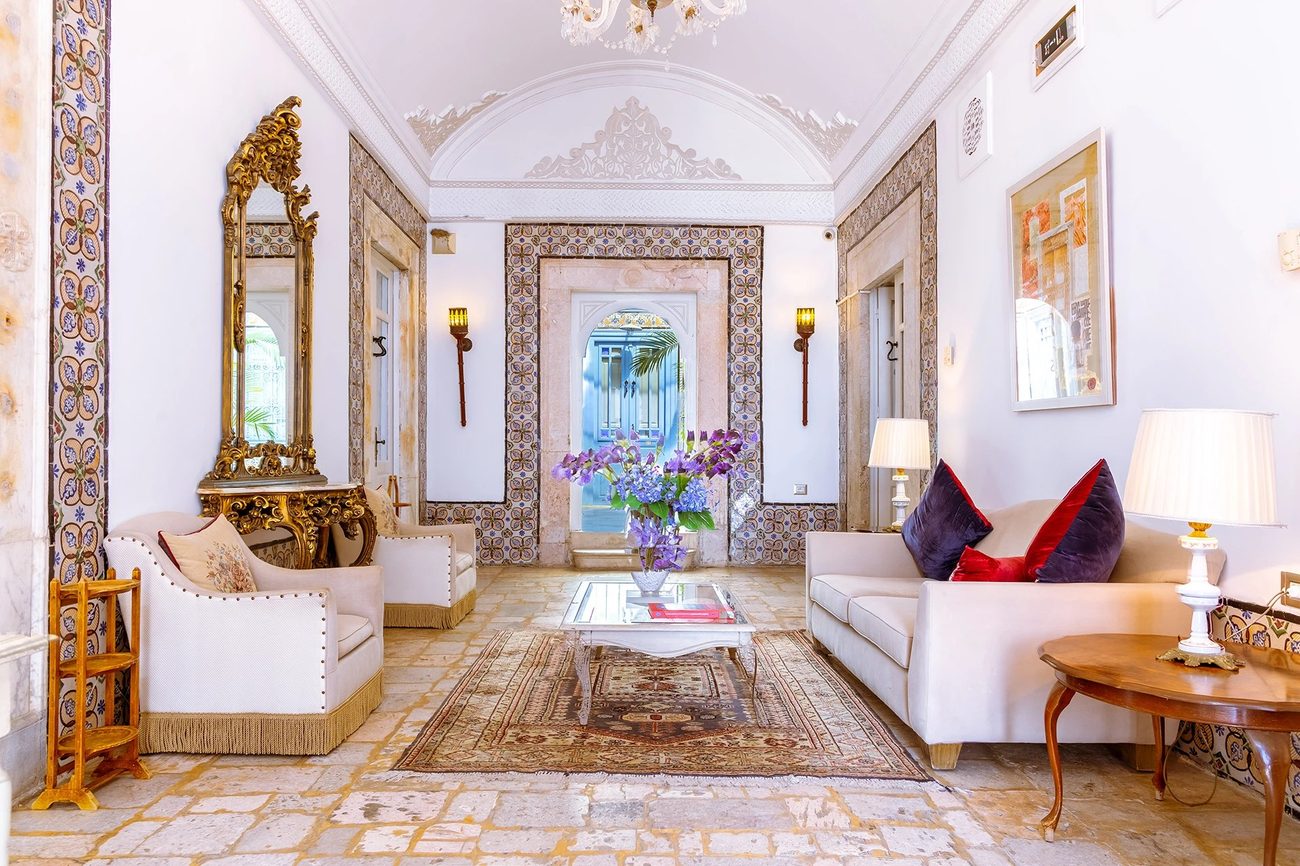
Nothing matches, and nothing needs to. The house reads as inheritance, not a scheme.
Where the hours go
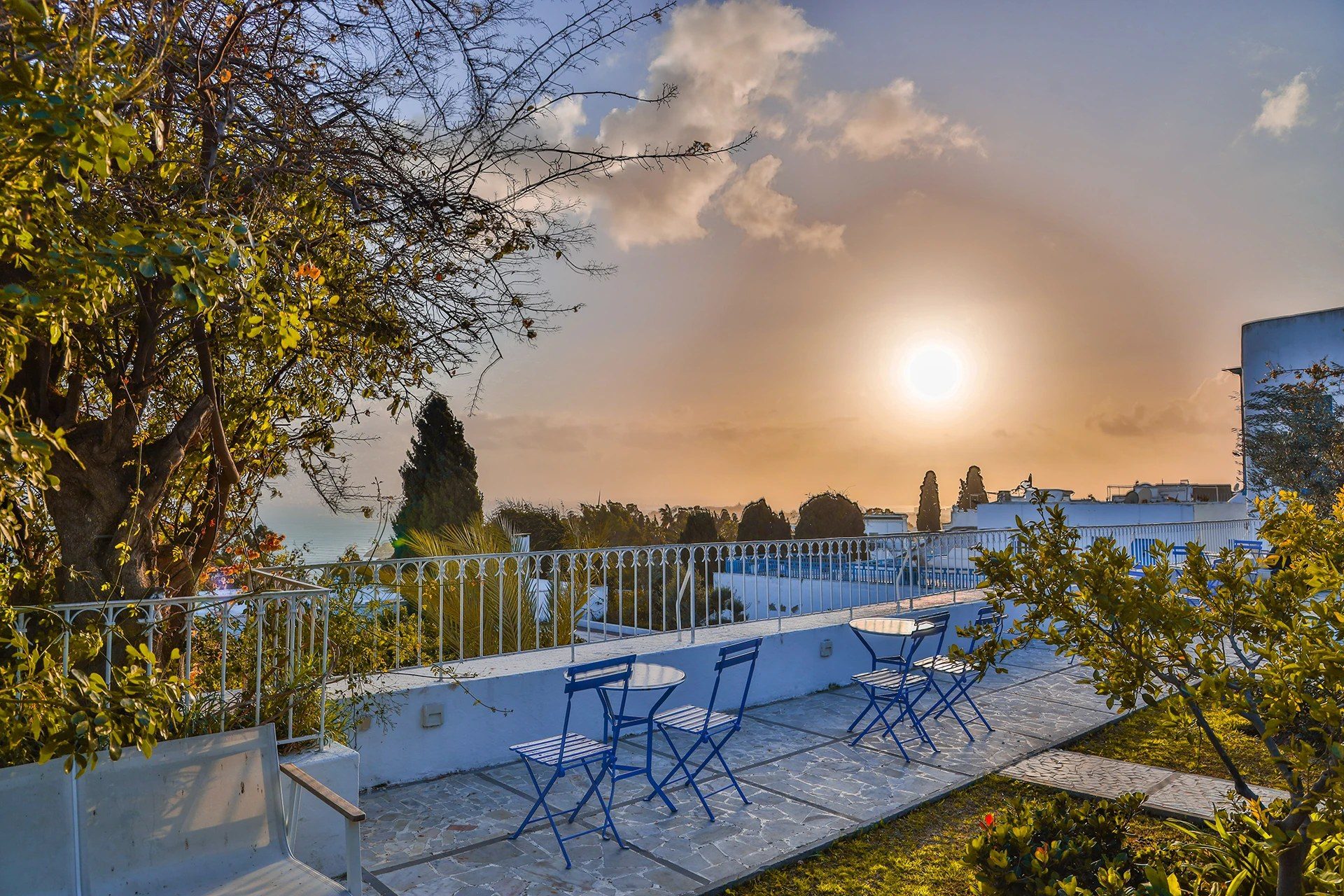
Breakfast is the meal the house makes its own. It comes from the market that morning and is carried to wherever you want it, the garden, the arcade, a table by the small pool that looks north over the gulf. Dinner is a short walk across the lane at Dar Zarrouk, the hotel's restaurant, whose terrace opens straight over the water and whose kitchen has cooked for Sidi Bou Saïd for years; the cooking is Tunisian and Mediterranean and seasonal, and you can charge it back to the room. There is a hammam in the Ottoman manner for the end of a day spent on foot.
The rhythm sorts itself out. You go down to Carthage in the cool of the morning, ten minutes away, and walk the ruins before the sun turns hard. You come back through the middle of the day to the pool and the shade and the long lunch. Then the coaches leave, the lanes empty, and the village you came to see finally appears: the call to prayer over the rooftops, the lights of La Marsa tracing the bay, a table on the terrace and nowhere you have to be. The pool is small and the house sits above the sea rather than on it. Neither is the reason you are here.
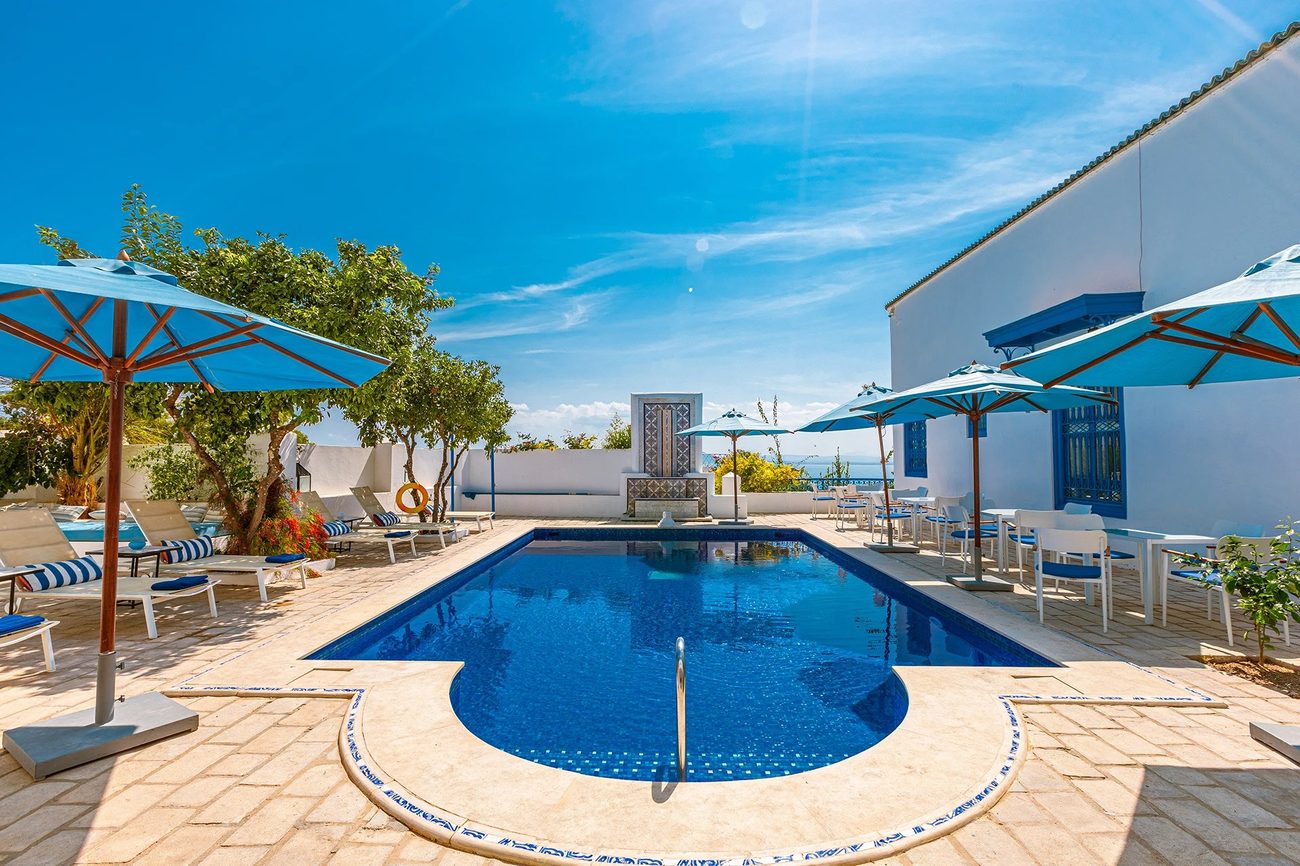
You come down for Carthage and the blue doors. You stay for the evenings.
There are larger hotels near Tunis, and a few smarter ones, but none is planted quite so deeply in the village everyone comes to see. Dar Saïd trades on that address without leaning on it. Stay a night or two and the exchange tilts your way: the day trippers go, the lanes go quiet, and a restored old dar with four cool courtyards and a table over the water becomes the best seat in Sidi Bou Saïd. Come for Carthage and the medina, then let the village slow down around you after dark.
Photos: Dar Saïd (official), self-hosted with credit.