Cast from the shore it stands on
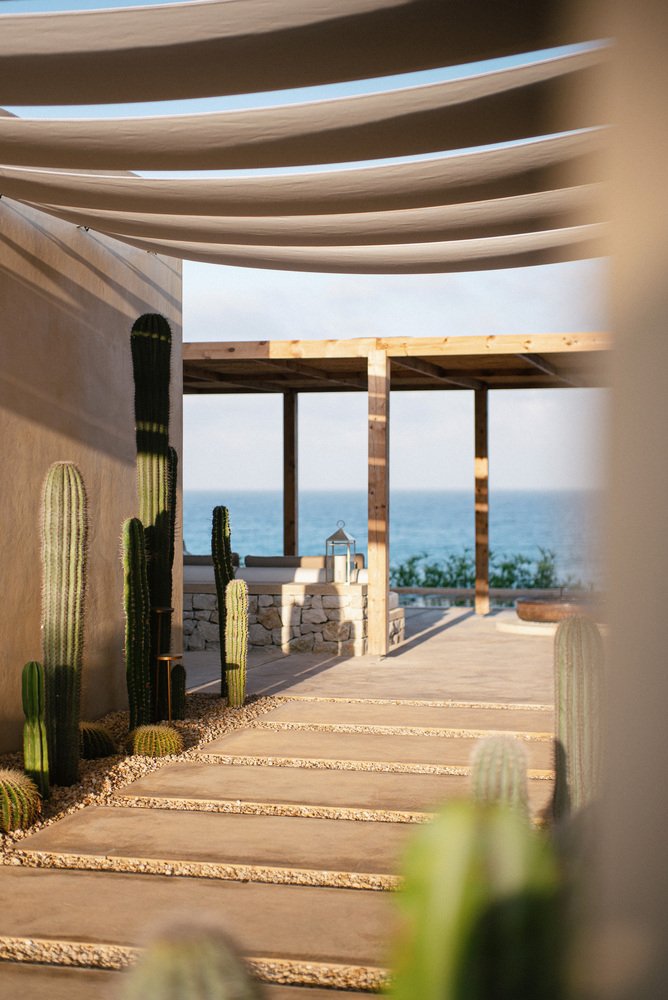
Gerges came to architecture from the drum kit. He kept time in Mashrou' Leila, the Beirut band, before he built things, and Capo, finished in 2022, is his first hotel. The material is the tell. He took beach sand from the site and worked it into the cement, so the resort came out warm and grainy, the exact tone of the coast, and it seems to have set out of the shore rather than landed on it. The plan is laid in classical symmetry, terraces stepping down like a small amphitheatre turned to face the water, long horizontals and plain columns that borrow from the Roman coast this stretch of Lebanon was built on.
There are eight suites and no more. Each keeps its own lap pool, a private terrace and full-height sliding doors that pull back and hand you the blue. The interiors stay close to monochrome, sand and stone and shade, with nothing put in to argue with the view. That is the discipline of the place: it gives you the sea and then gets out of the way.
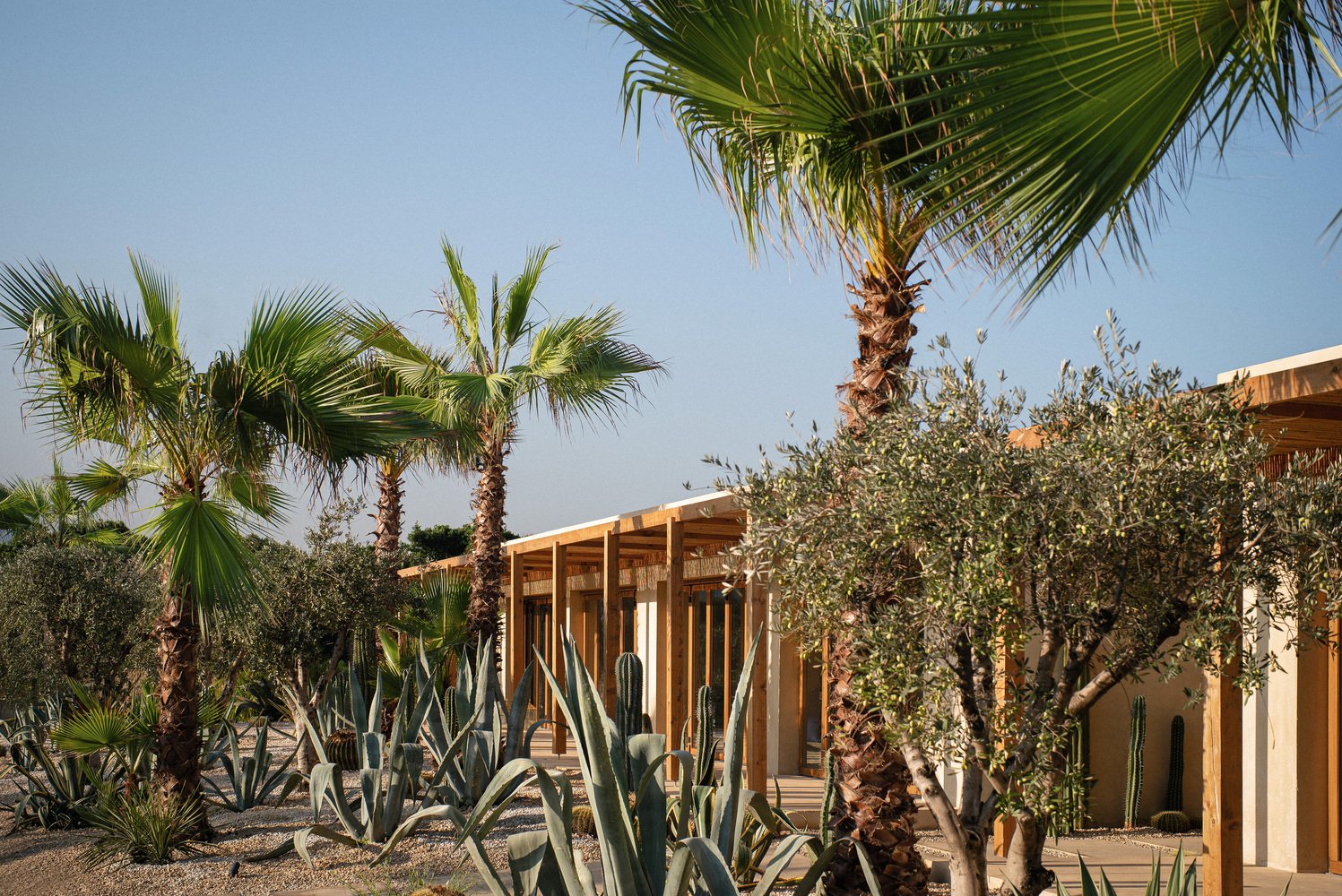
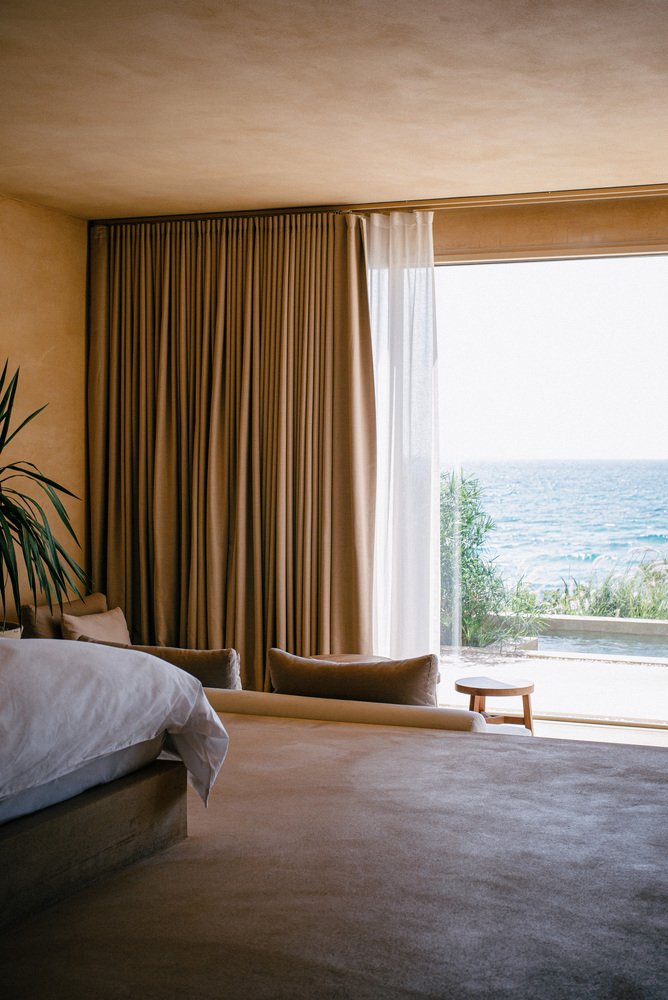
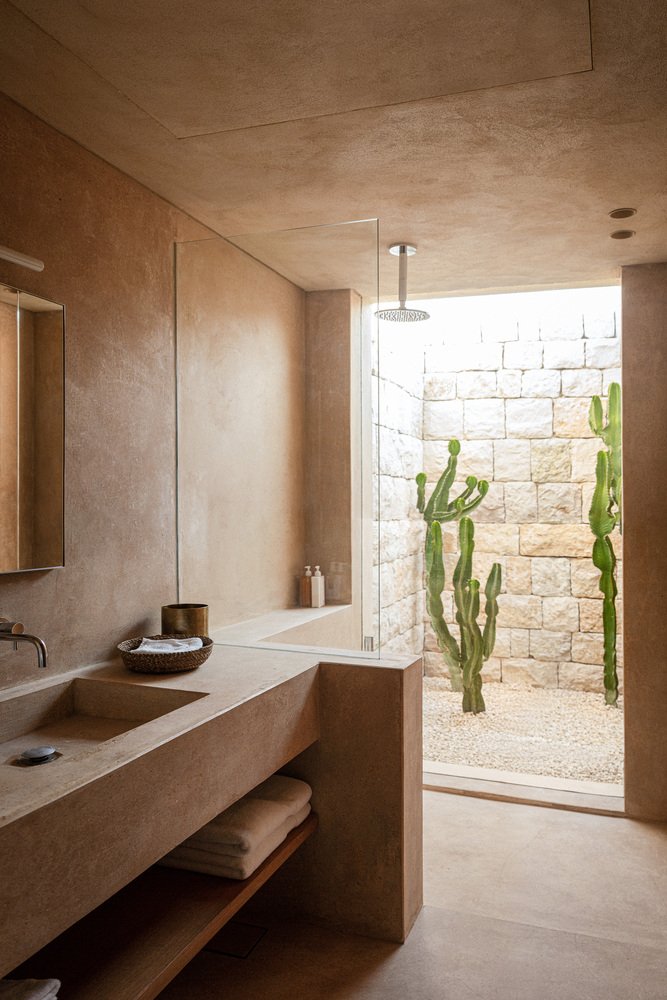
It seems to have set out of the shore, rather than landed on it.
Water down the levels, and a yellow bar
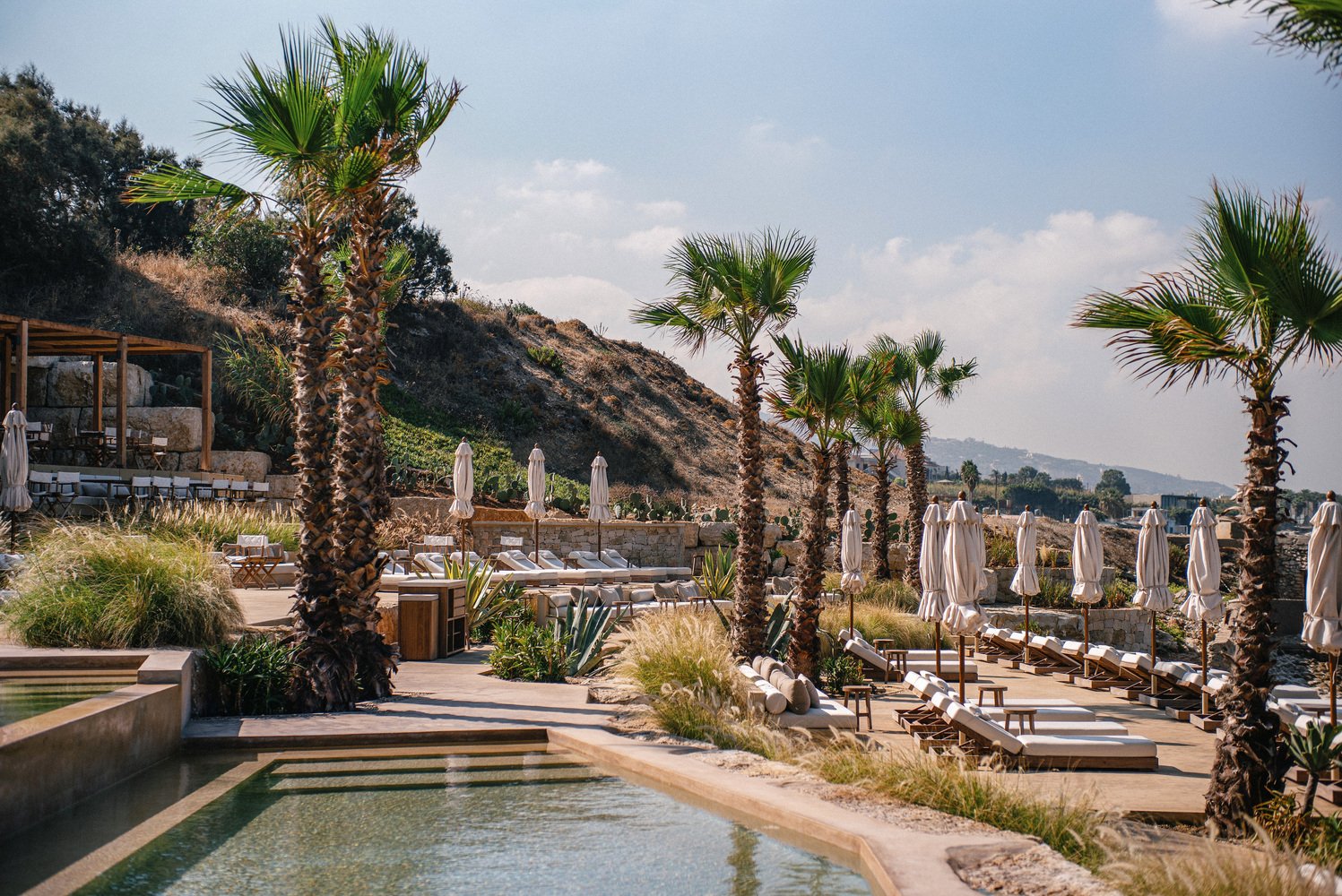
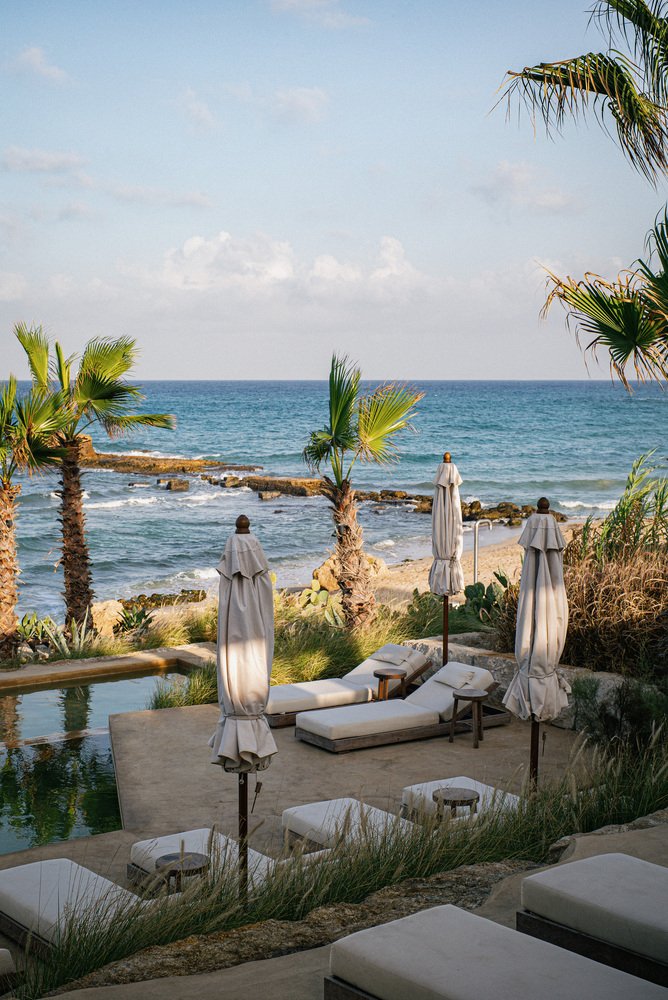
The pools do most of the day's work. Gerges ran them across the descending levels and finished them in a sandy, textured coat that takes the colour of the sea as the light moves over it, a deliberate nod to the Lebanese pool culture of the 1970s, when the coast north of Beirut was one long ribbon of lidos. The lowest of them runs toward a stretch of still water planted with lilies. You move down through the resort the way the light does, level by level, until there is nothing left below you but the Mediterranean.
The table is Butler's Table, a room Gerges panelled floor to ceiling in Moroccan wood and dressed with white cloths, a brasserie idea spread across some five hundred square metres by the water. Its centre is a yellow bar the Lebanese artist Nelsy Massoud built from sand and epoxy, its fractal pattern set to read the golden hour off the sea. Chef Youssef Akiki cooks Levantine, and the cocktails come down from Butler's Bar in Beirut. The cooking on this coast leans to the sea and to the mezze table, and the room carries it without much fuss.
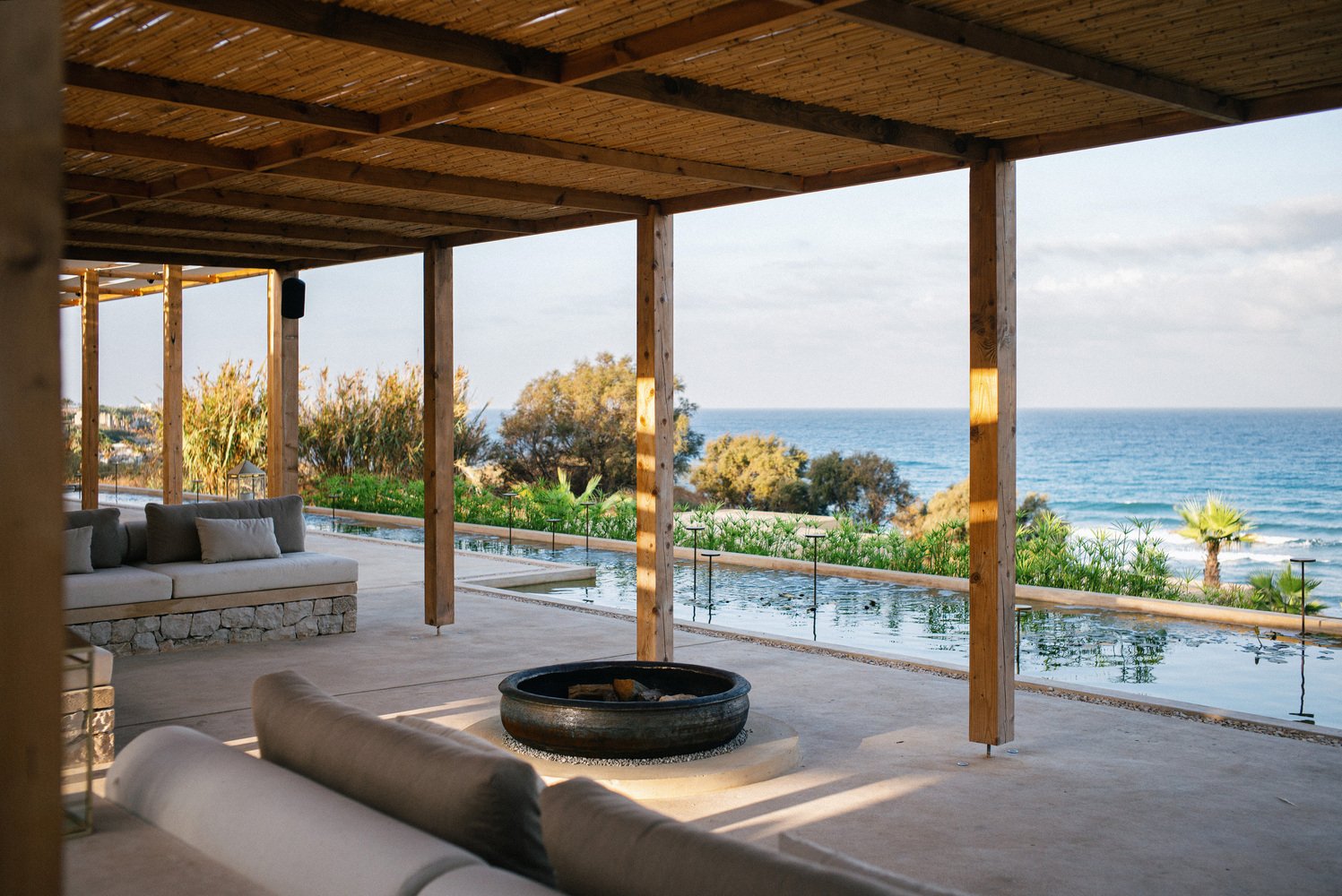
The pools take the colour of the sea as the light moves over them.
What it is, and where it sits
There is a spa given over to Balinese treatments, a sunset bar that brings international DJs down through the summer, and a beach club at the foot of it all. That tells you plainly enough what Capo is in season: social, dressed up, busy, a resort that fully means to be one. We should be straight about it. This is not a retreat for silence, and it does not pretend to be.
But it is small, it is serious about its own idea, and it sets you down in Batroun, one of the oldest ports on the Mediterranean, a town that has been putting to sea since Phoenician times. The old harbour and its Phoenician sea wall are a short drive off, the souk and the lemonade stalls with them, and Beirut is under an hour south. Come in the shoulder weeks, take a suite with its own pool, and the crowds thin to something you would happily send a friend to.
It means to be a resort, and it is honest about that.
Capo is the most convincing piece of new coastal design Lebanon has built in years, an architect's building rather than a developer's, tied to a shore with a very long past. You come for the material and the geometry, for eight rooms that each keep their own pool and their own square of sea, and for a restaurant that treats the sunset as a design brief. Go in knowing what it is. In August it is a scene, DJs and all. In the quiet months it is something better to our eye: a building the colour of the sand, five levels of water, and Batroun going about its old business just up the coast.
Photos: Carl Gerges Architects, with credit.