Up from the coast road
The turn comes just short of the town. You leave the tarmac, climb a few minutes through pine and scrub towards Rachana, the village where the Basbous brothers left their sculptures standing out in the fields, and the house shows itself on its terrace with the Mediterranean laid flat and blue below. It is about forty minutes from Beirut, which on paper is nothing and in practice is a different country. The traffic drops away. The last of it is a gravel track and a gate.
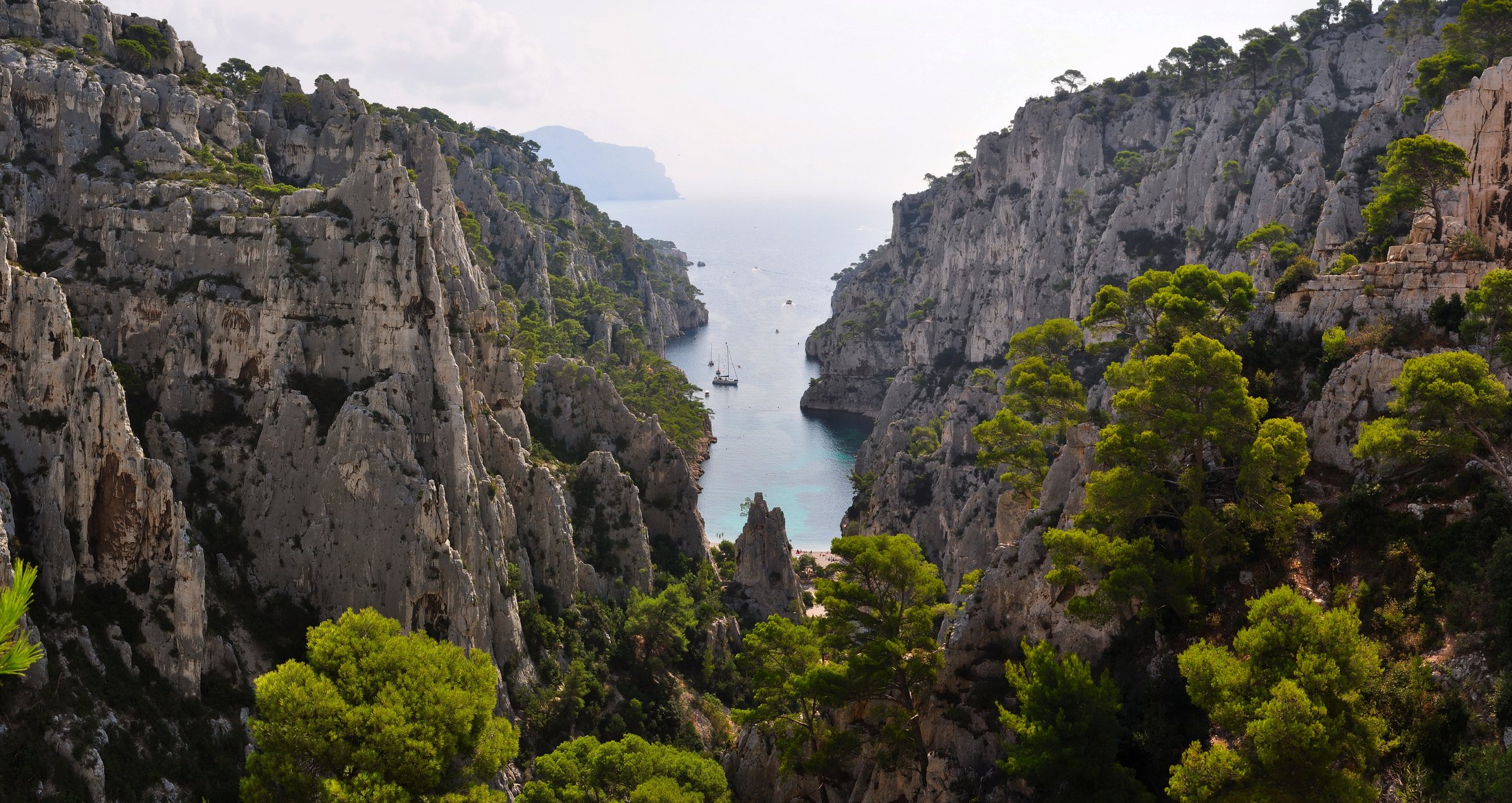
What you arrive into is a wooded valley at Thoum, the garden running down to a tree line and the sea beyond the pines. There is no sign to speak of, no car park, no arrival ritual. The house sits where the land levels off, pale against the green, and the first thing it does is hand you the view and a chair to take it from.
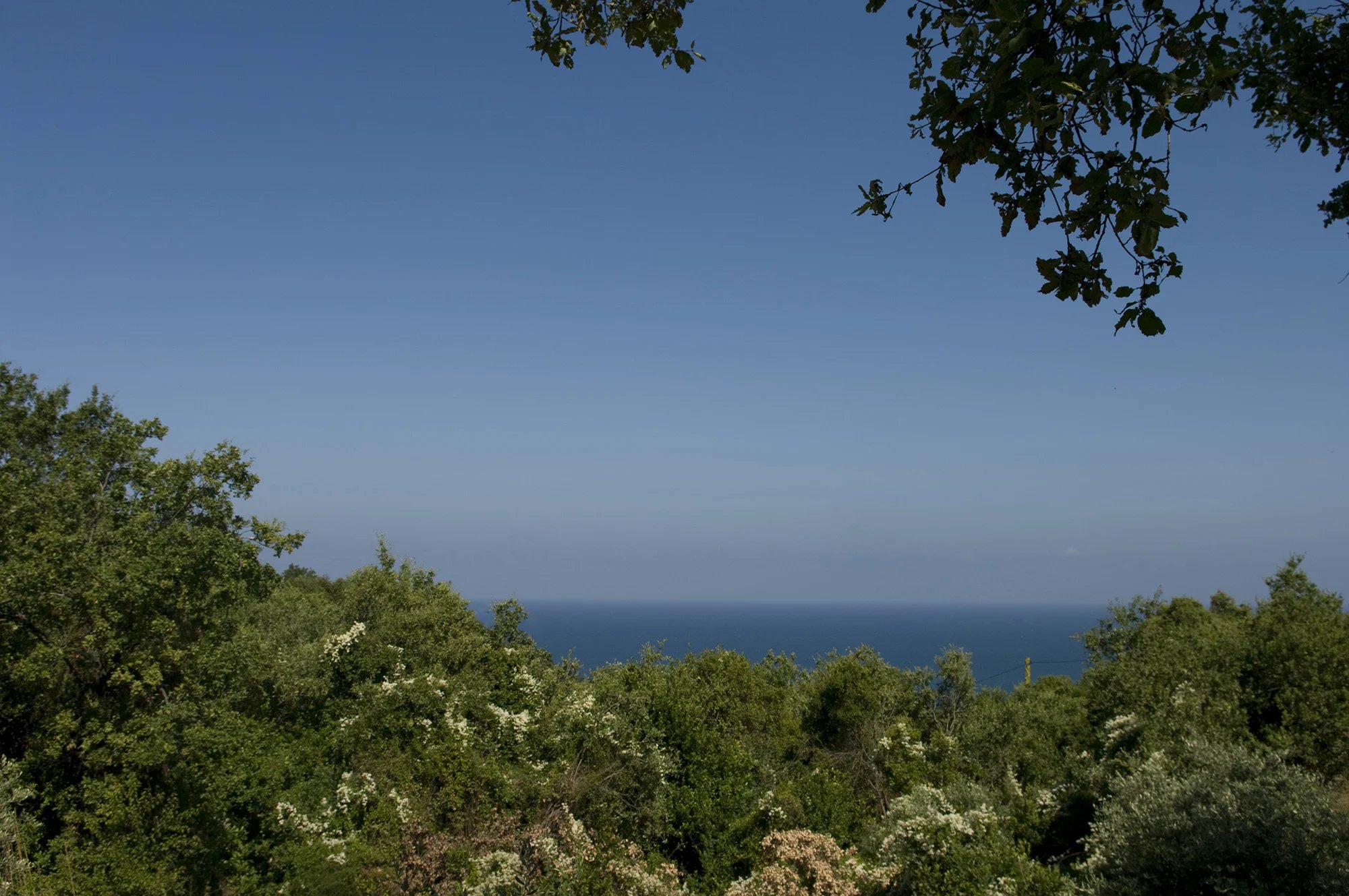
Forty minutes from Beirut, and the traffic just stops.
The house one woman gathered
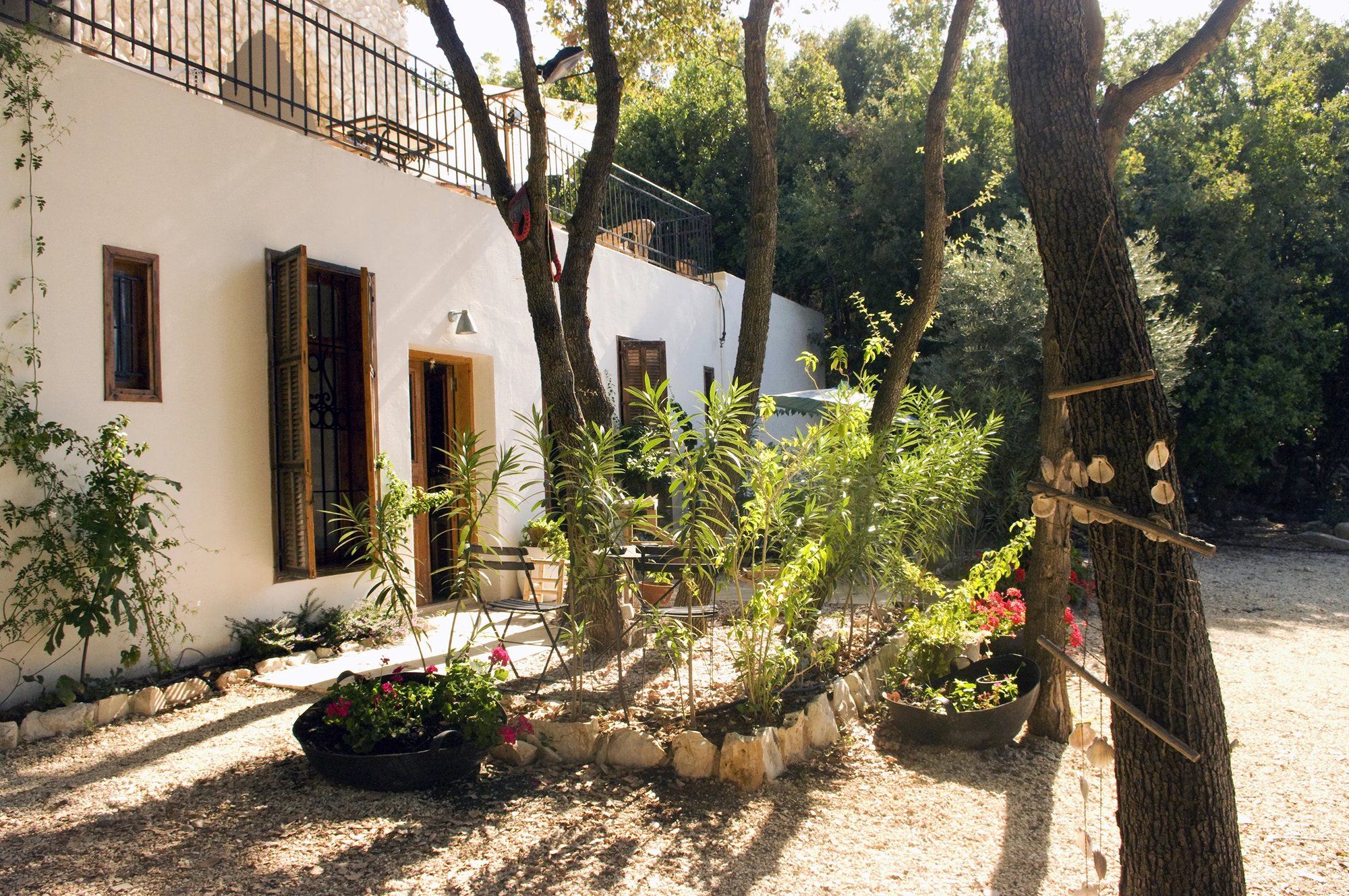
Colette Kahil spent the better part of ten years making it, working with an architect friend to a plan she drew from the old rural houses of the country. The bones are traditional Lebanese: pale stone, green shutters, rooms gathered around a tall central liwan under a pointed arch that frames the garden. What fills it she collected herself, year on year, and none of it was bought as a set. Old doors and beams, wrought-iron grilles, cement tiles in faded patterns, a chest, a mirror, a swing hung on ropes from the beams of the sitting room, where a French bulldog now has the run of the place.
Kahil is a mosaicist by training, and the eye shows in how the salvage is set. Nothing matches and yet nothing jars. There are five rooms, each named for a tree in the garden, lemon and almond and olive and quince, and each is different from the last: a cement-tiled floor here, a carved headboard there, a mirror she found and could not leave behind. It reads as a private home that someone with a long memory happens to lend you, rather than a hotel that was signed off in one go.
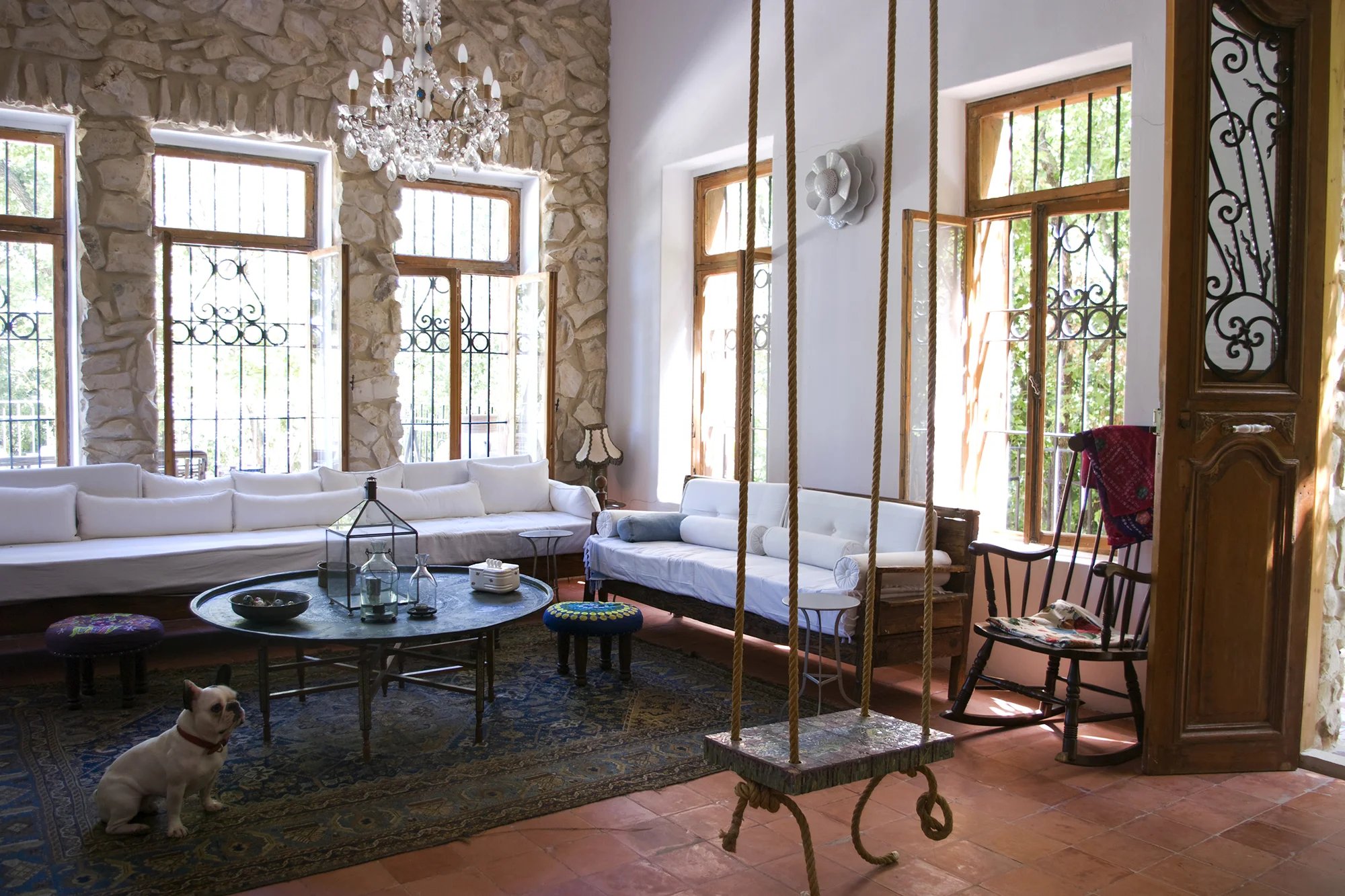
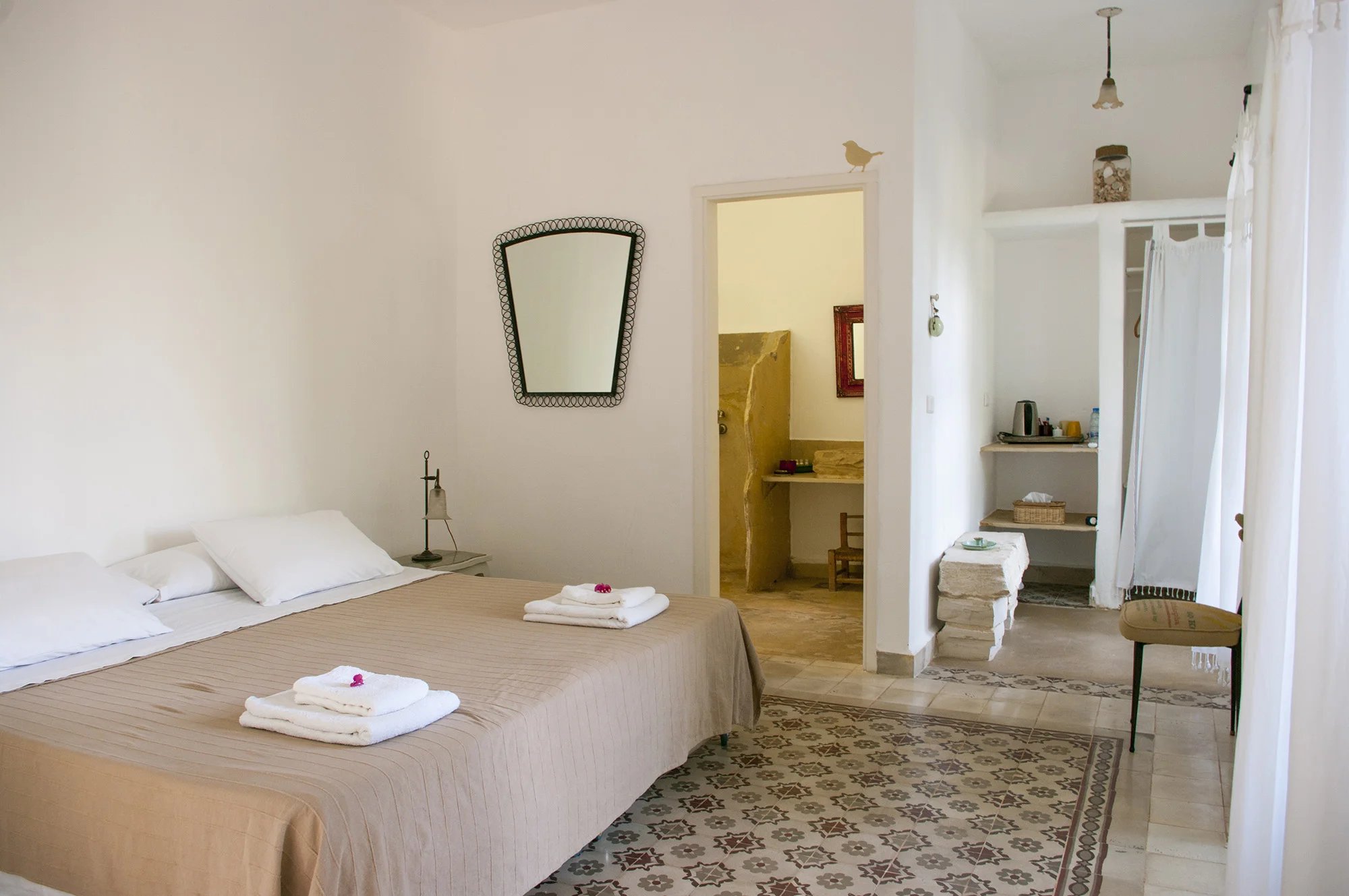
Nothing in it matches, and nothing in it jars.
The long table and the morning
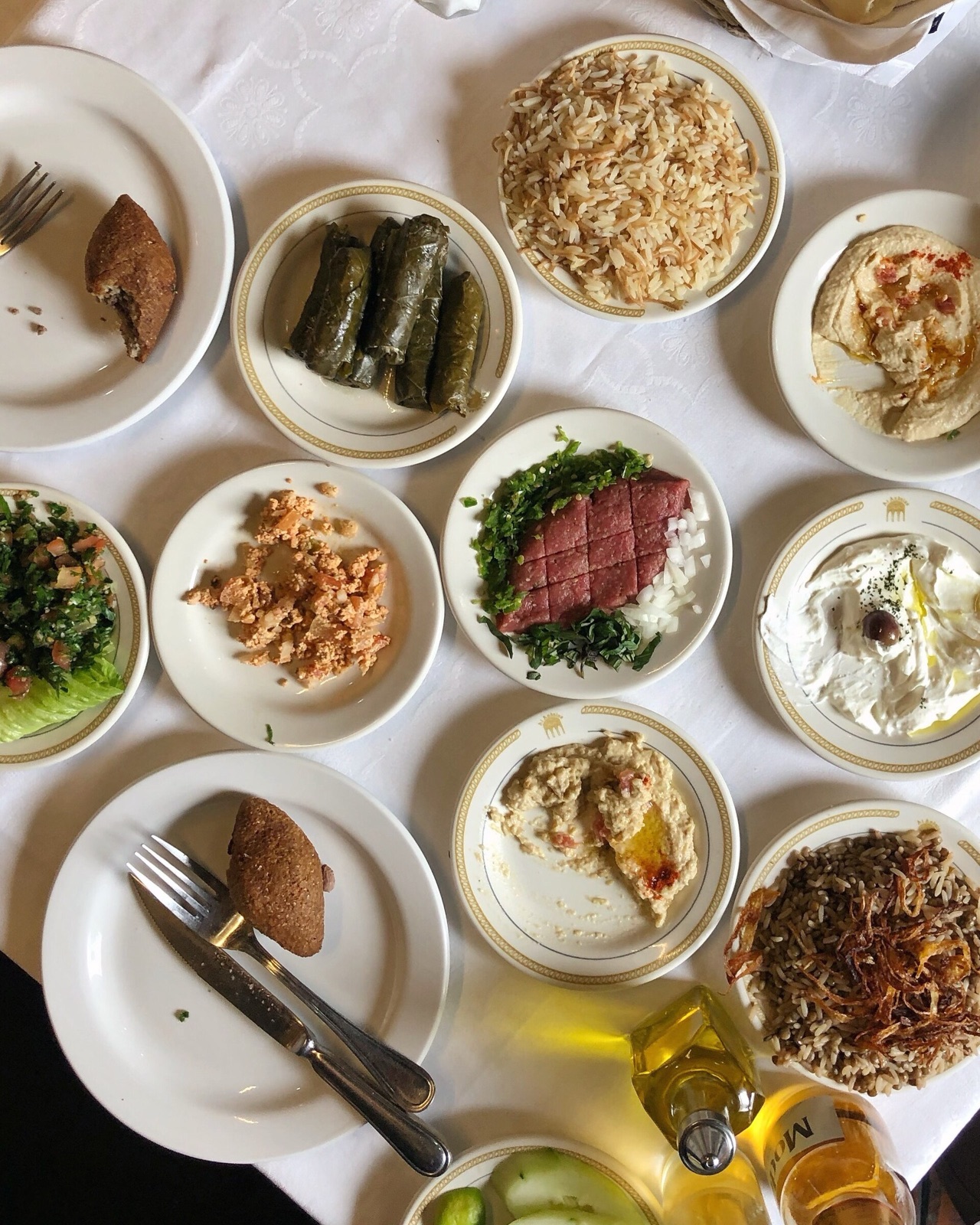
Breakfast is the meal the house is known for. It is laid on the terrace, a long Lebanese spread that goes on longer than you mean it to: labneh and warm bread, za'atar, olives, fruit and jam made from the garden's own trees. Dinner is on when you ask for it the day before, cooked in the kitchen and eaten together at the long table under the liwan rather than sent out course by course. It is a better arrangement than most dining rooms manage, and it suits a house of five rooms, where the other guests are a handful of people rather than a crowd.
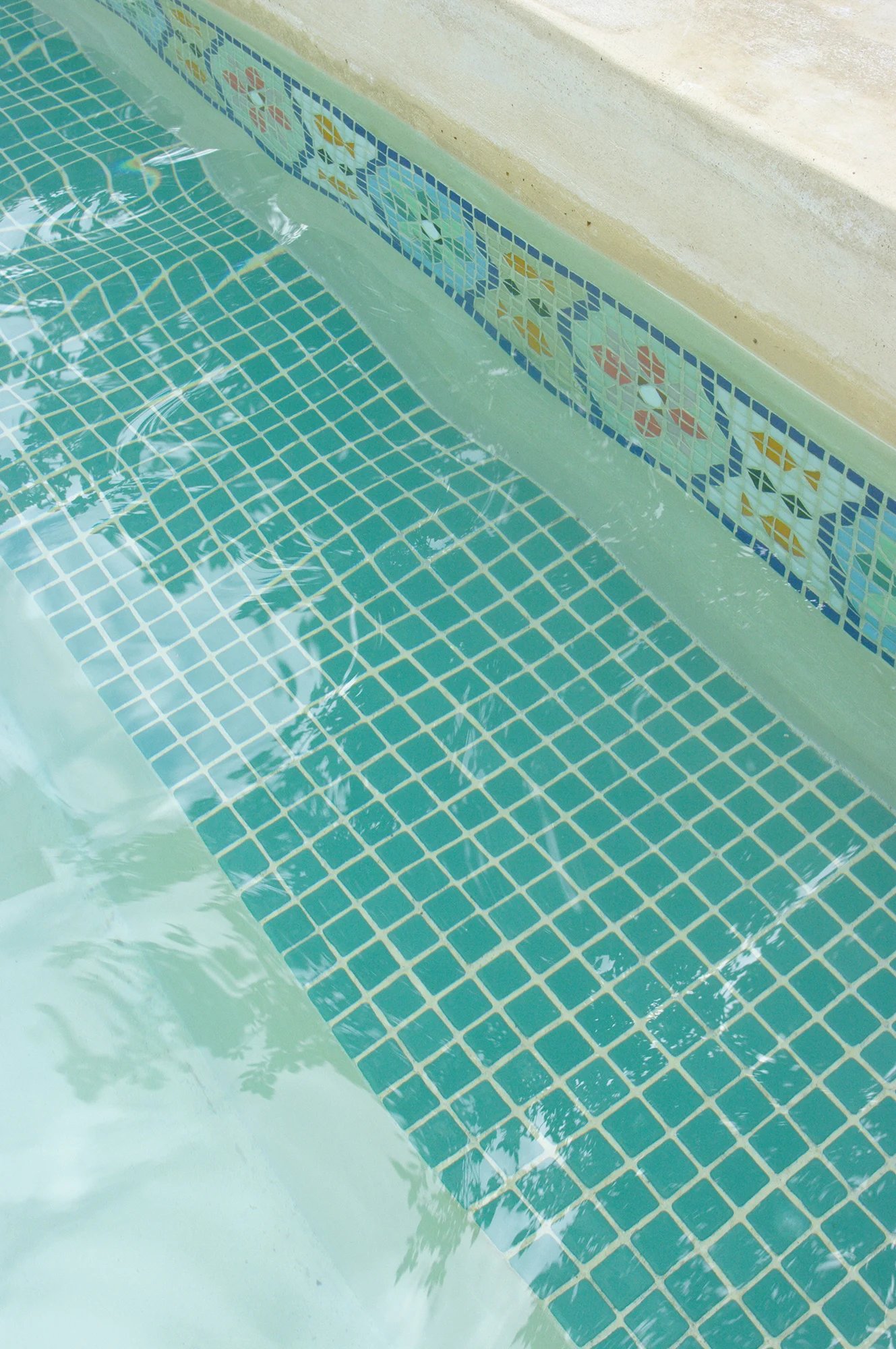
Beyond that the day is yours to fill. You go back down the hill to Batroun for lunch, for the fish and the old Phoenician sea wall and the famous lemonade, or along to Rachana to walk among the sculptures. There is a plunge pool cut into one corner of the terrace for the hot part of the afternoon. None of it is programmed. The house gives you a garden, a view and a good table, and leaves the rest to you.
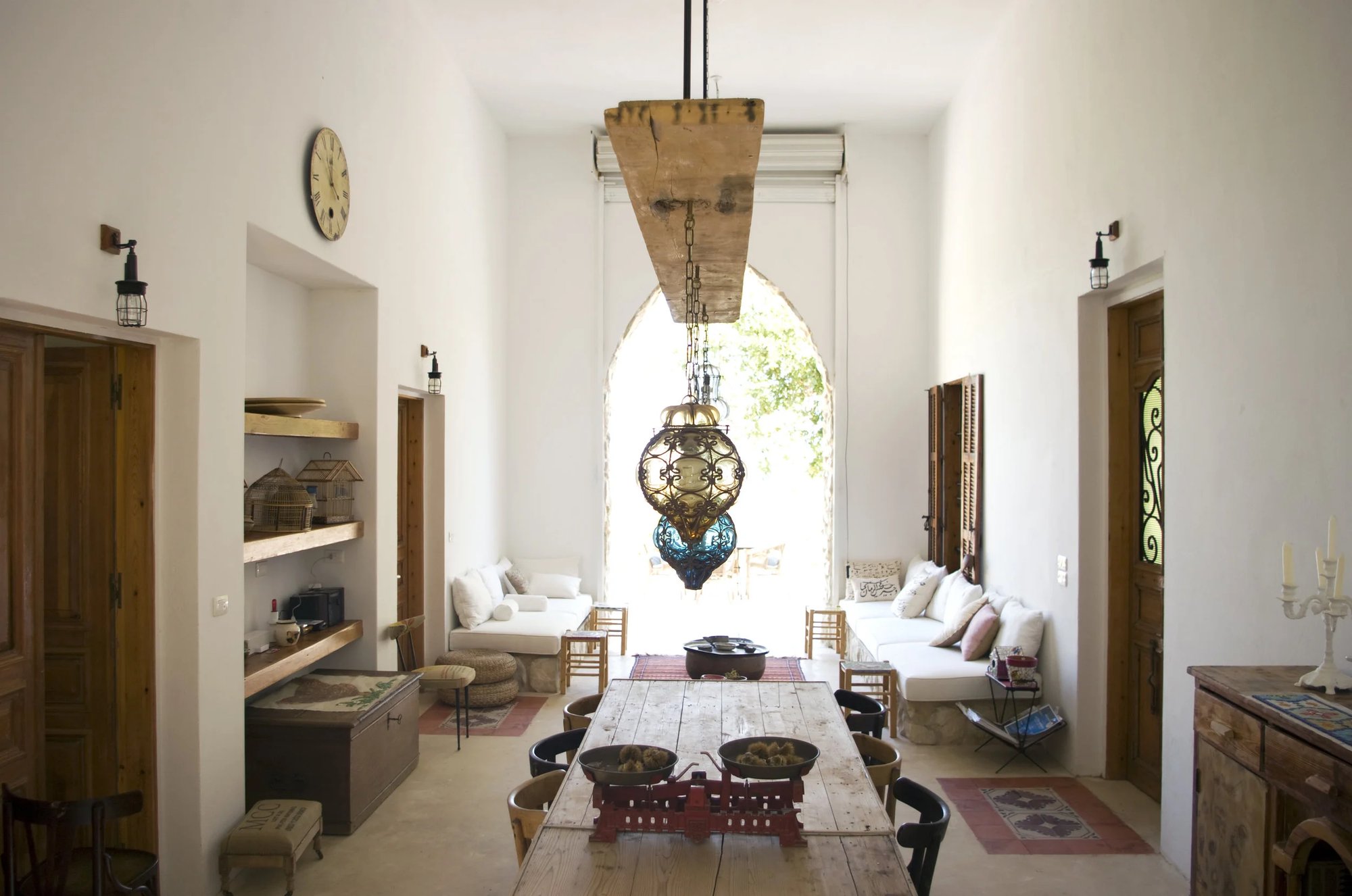
Everyone eats together, at the same table, because the house was built for a few.
A five-room house is a small thing to make a fuss of, and Beit al Batroun would rather you did not. There is no lobby, no spa, no front desk, only a plunge pool set into the terrace, a garden that runs to the tree line and the sea beyond the pines. Five rooms means it books out, dinner needs asking for a day ahead, and lunch is a drive down the hill. We would not change any of it. On a coast that has spent twenty years building beach clubs, it is one of the few places that still feels like a house someone actually lives in, opened to a handful of guests at a time, with the care showing in every salvaged handle and mended tile.
Photos: Beit al Batroun (official), with credit.