A hospital, a convent, and what was kept
The address is old Jaffa, a block back from the sea, where one of the oldest ports on the Mediterranean runs down into the bottom of Tel Aviv. The heritage wing was a nineteenth-century French hospital, neo-Renaissance in the way of that era's charitable building, put up next to a convent of the Sisters of St Joseph. For years the money went to the glass towers up the coast and the old town was left to itself. Then the hotel opened here, in November 2018, in a building worth the trouble.
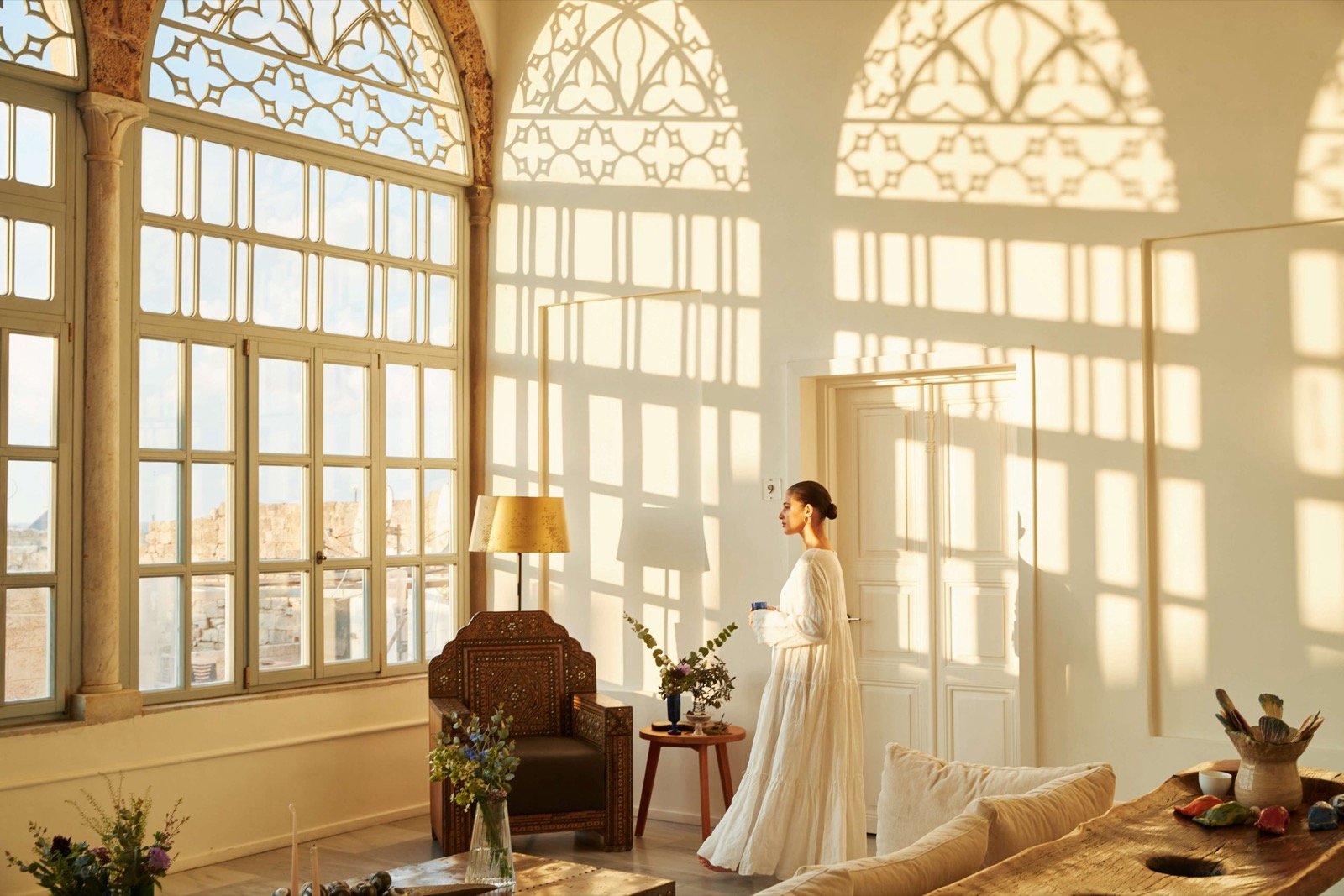
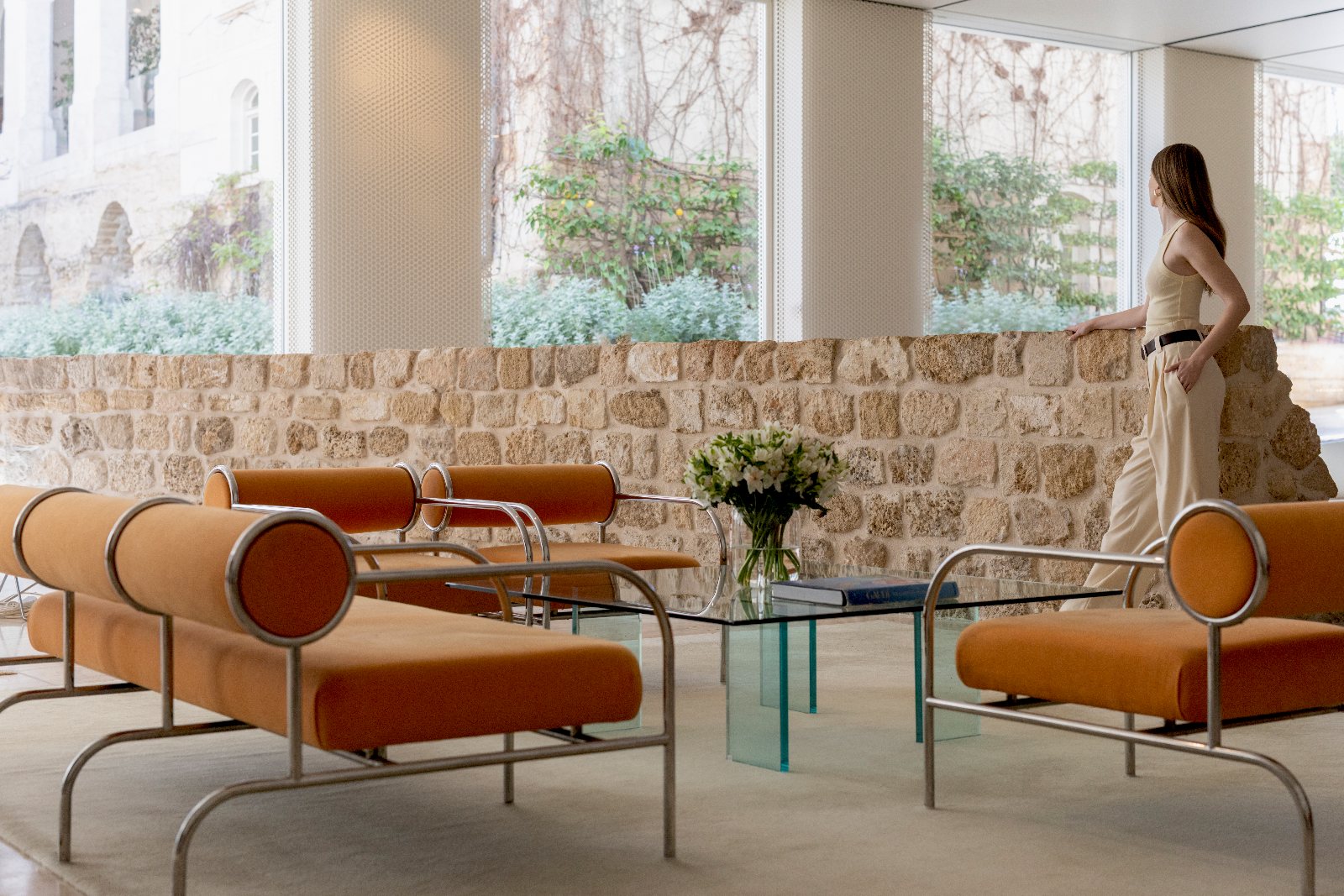
The restoration was John Pawson's, working with the Israeli conservation architect Ramy Gil. Pawson is the most disciplined of the minimalists, and the discipline is the point: the cloister stayed, the chapel stayed, the painted ceilings and the stained glass were cleaned rather than cleared. What he added is quiet and low, so that the arches and the old masonry keep doing the talking. It is restoration as an act of restraint, not of erasure.
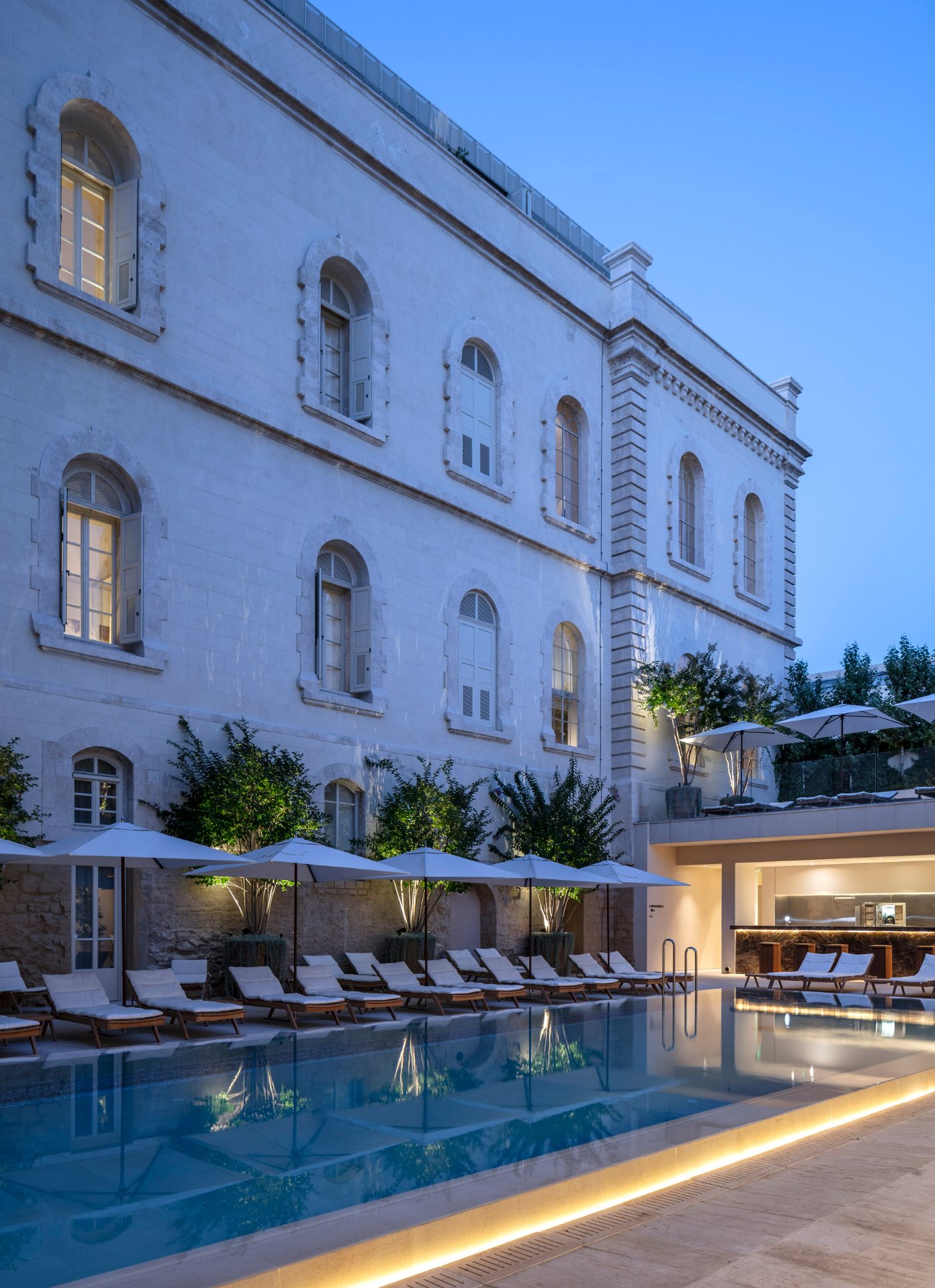
He cleaned the walls rather than cleared them.
Two ages under one roof
The hundred and twenty rooms and suites sit across two ages. In the heritage wing they follow the old hospital's plan: high ceilings, deep window reveals, tall arched openings that Pawson framed in pale surfaces and left mostly to themselves. A newer block, in the manner of a slim residential tower behind, holds the contemporary suites, a few of them opening onto planted terraces with the old town below. The register barely shifts between the two. That is the trick of the place, and it is a hard one.
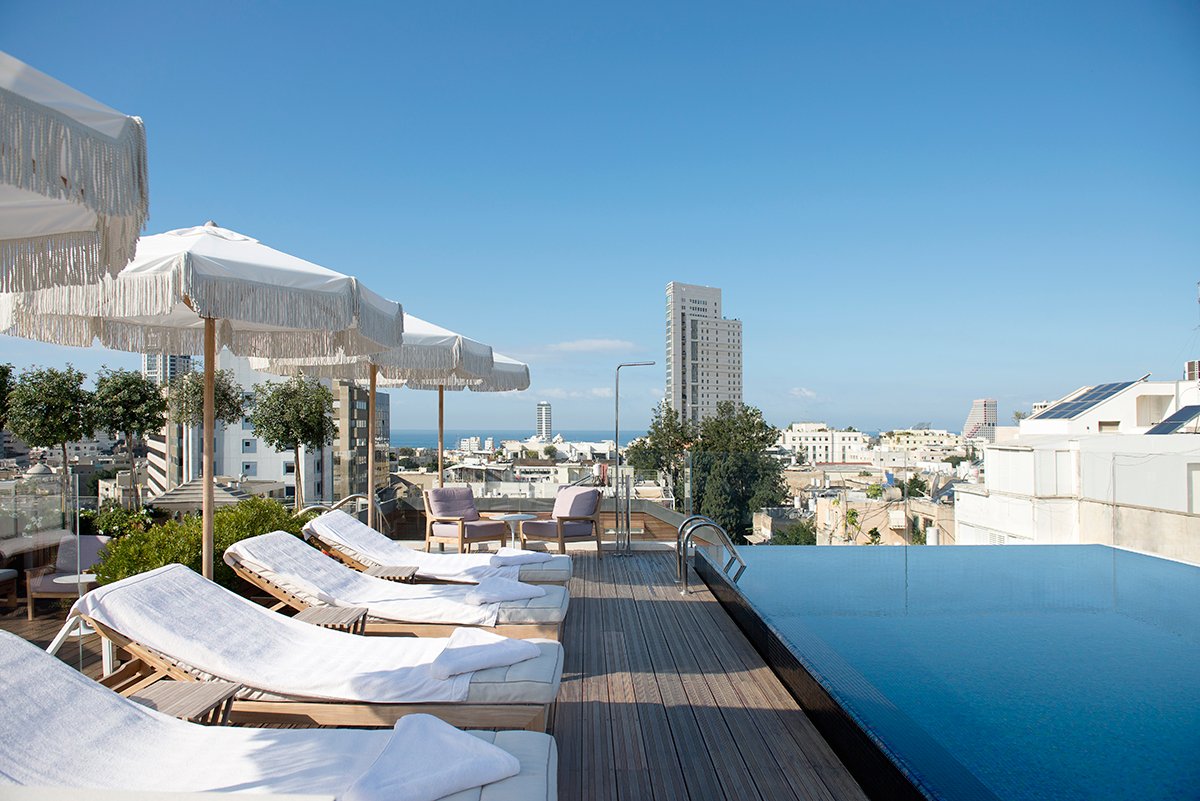
Around the courtyard there is a pool, and the noise of Jaffa drops to a hush at the water's edge. There is a spa, in pale stone and warm wood, and the chapel is still here, kept whole rather than gutted, which tells you how the building thinks about its own past. You can walk from a suite to a nineteenth-century altar in a few minutes, and neither feels out of place.
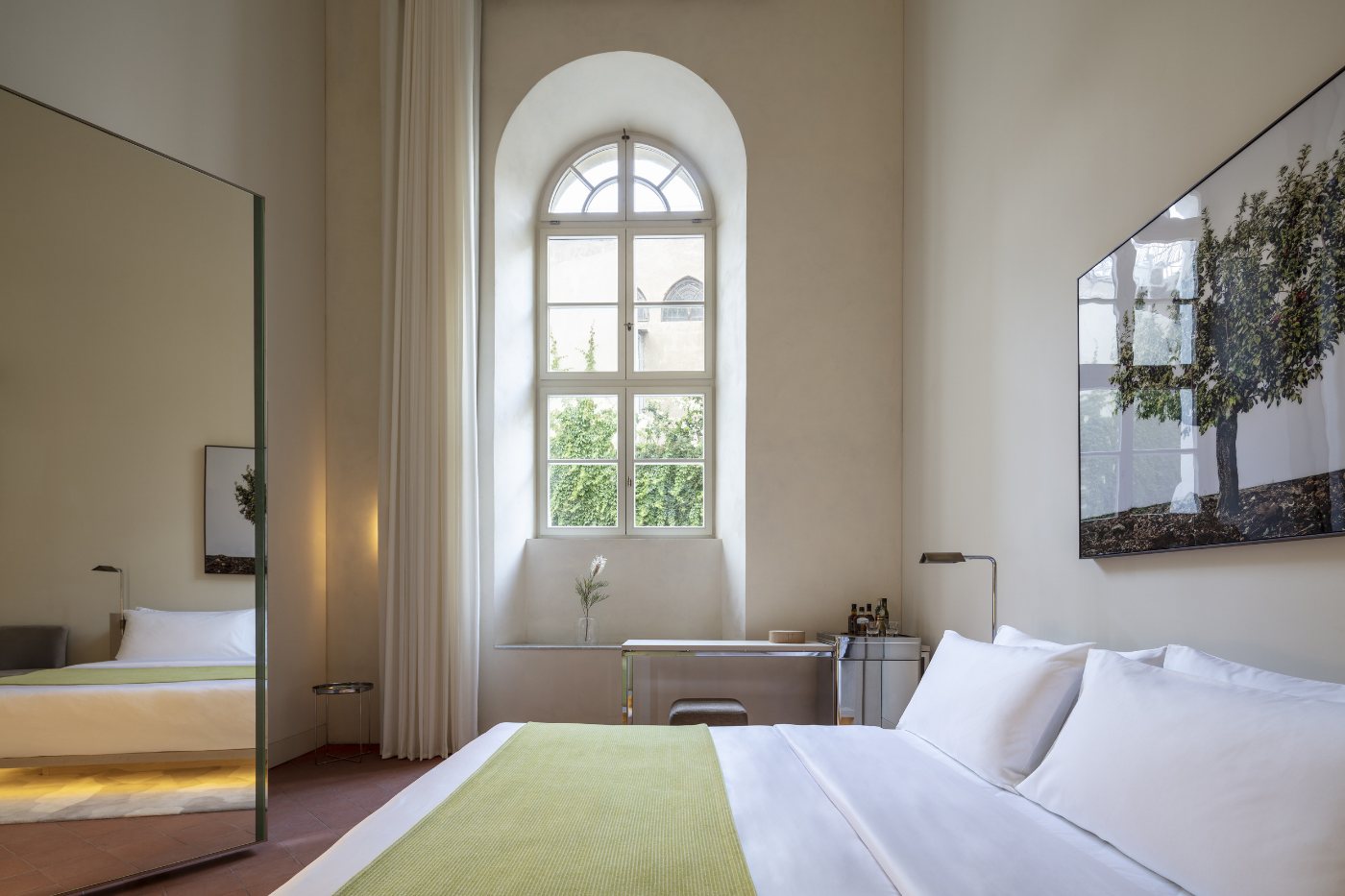
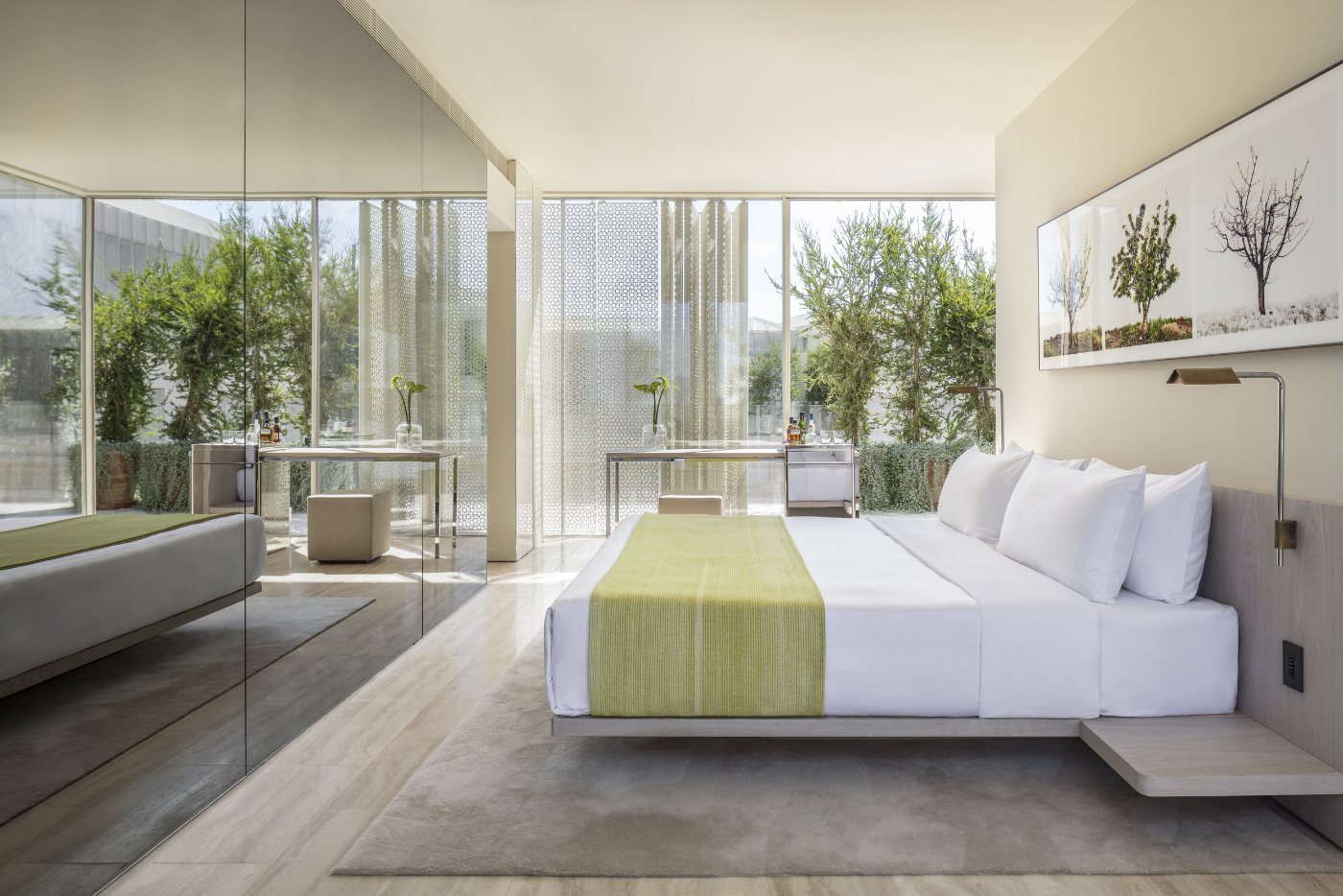
A few minutes from a suite to a nineteenth-century altar, and neither out of place.
Dinner under the vaults
The eating happens downstairs, in the uncovered basement of the old hospital, where the original vaults were dug back out and left bare. Two rooms share the stone. Don Camillo is the Italian one, Mediterranean at the edges, and Golda's is a New York style deli set against the same arches; both opened with the local chef Roi Antebi. It is a slightly unlikely pairing that reads, in the end, like Jaffa itself: an old port that has always taken its cooking from wherever the boats and the people came from.
Breakfast is worth getting up for, and the coffee is taken seriously. Neither room strains for effect, which under vaults this old would be a mistake anyway.
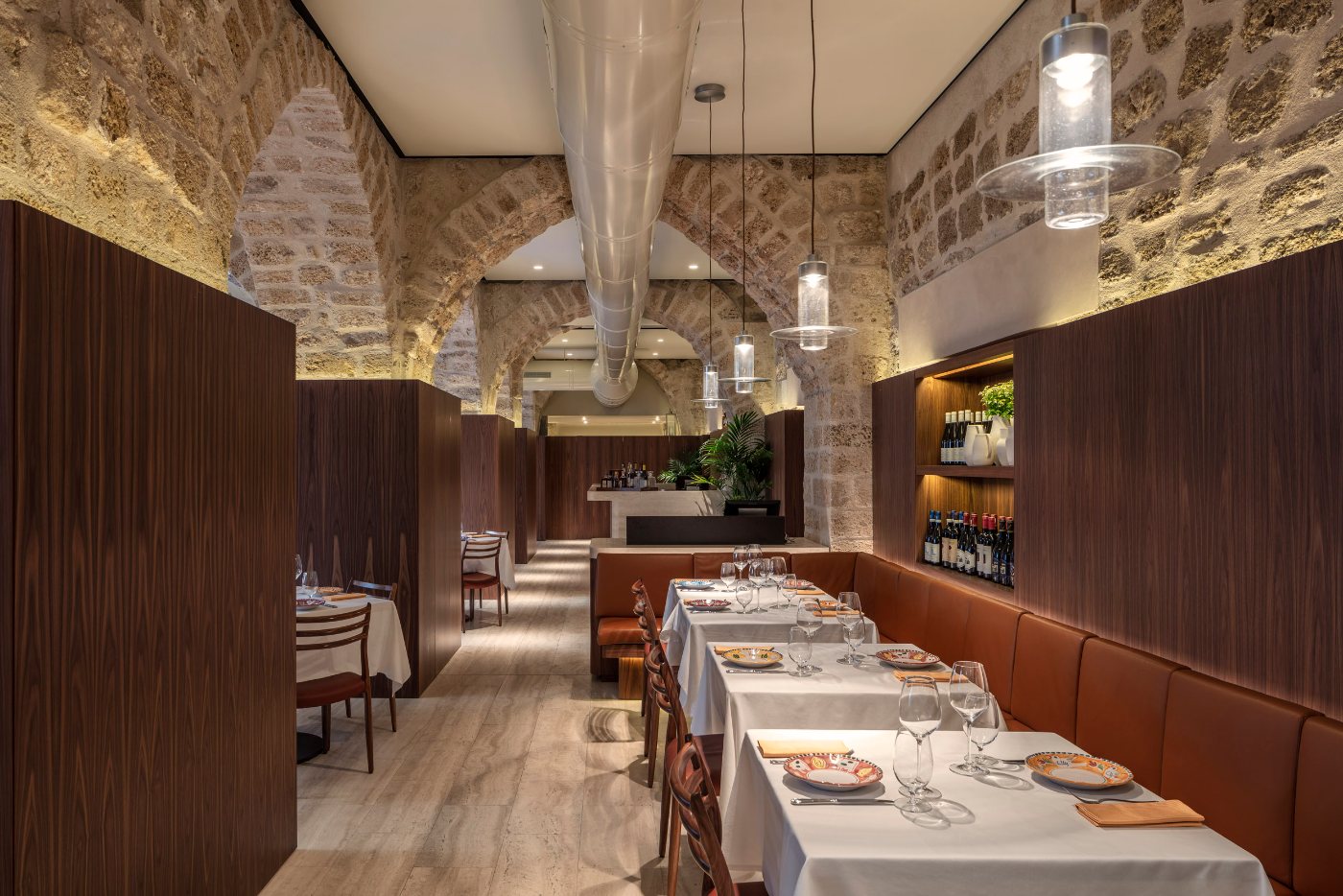
An old port has always taken its cooking from wherever the boats came from.
Jaffa is one of the oldest ports on the Mediterranean, and for a long time its luxury lived somewhere else, up the coast in the towers. The Jaffa put it back in the old town, in a building worth the effort, with a designer strict enough to leave the walls standing. We have not yet stayed, so this is a researched profile rather than a first-hand verdict. Two things are plain even so. It is a city hotel, not a beach one, and it reads better for knowing the difference. And the restraint is real: the history was kept, not decorated. On the evidence, it earns the closer look.
VANE note. This is a researched profile, not yet a first-hand VANE verdict. A full review carries a stay date, an independence disclosure and the writer's own account. Facts here are drawn from the property and reputable reporting, verified where we can. Photos: The Jaffa (official), with credit.