Two houses, brought back stone by stone
The buildings stand a short walk from the lighthouse and the sea wall, in the tangle of lanes the Ottomans laid over the Crusader town. There were two of them, side by side and both late-Ottoman, both left to fall. One had belonged to a Muslim family and one to a Christian family, and they were near twins because, as the story goes, the same craftsmen built them, brought down from Lebanon by the merchants who paid for the work. A bridge now ties the pair together.
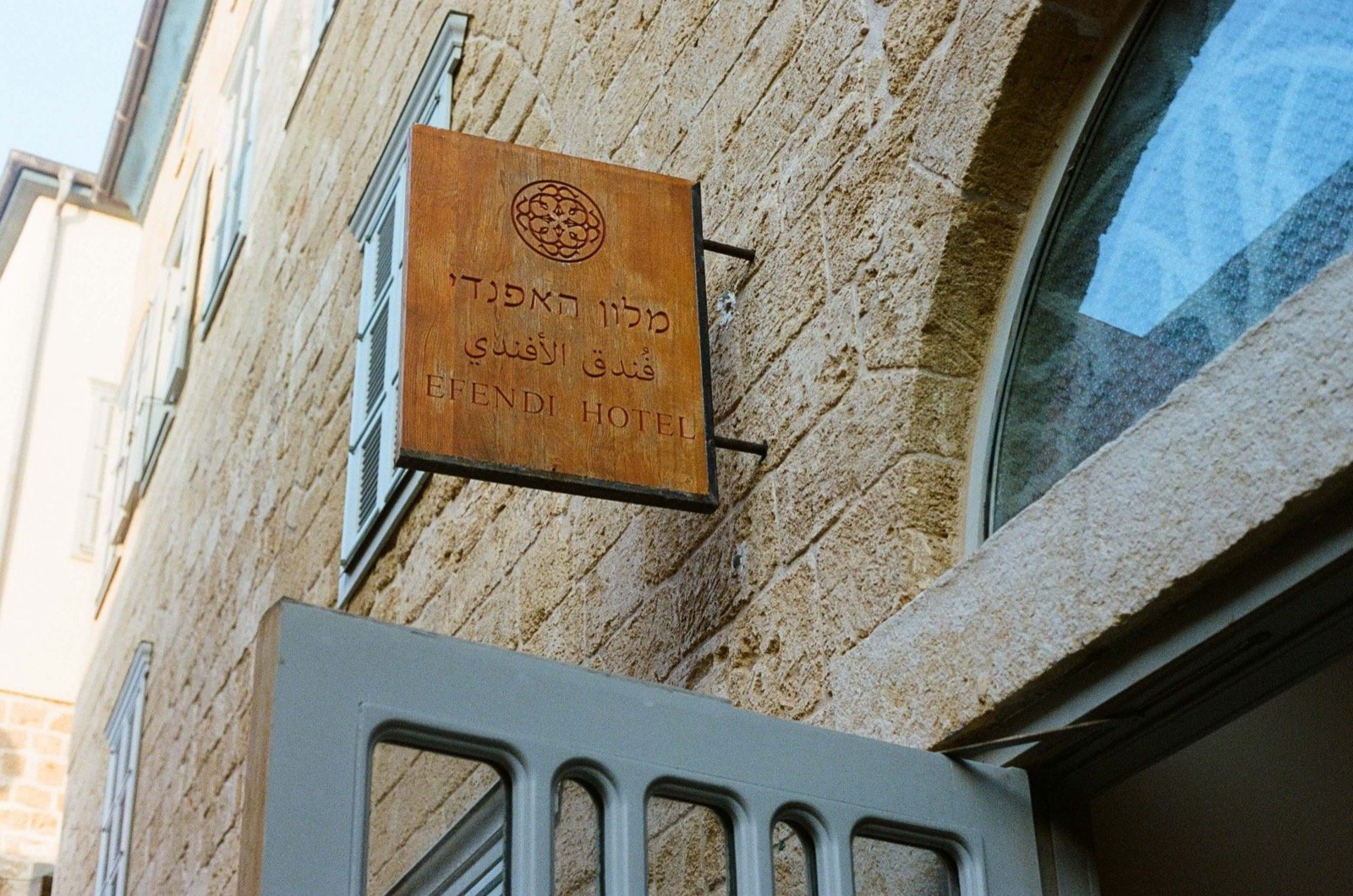
Uri Jeremias took them on. He is the chef behind Uri Buri, the fish restaurant a few steps away that had already drawn people north to Acre for its own sake, and he spent the better part of a decade putting the houses back, lintel by lintel, under the eye of the antiquities service. The place opened in 2012. The restraint is the striking thing. There is no attempt to make the houses grander than they were. The render is plain, the doorways stay where the old plans put them, and from the alley you would walk past it if the sign on the wall did not stop you.
A chef who spent eight years putting two houses back, stone by stone.
Painted ceilings, and a roof over the bay
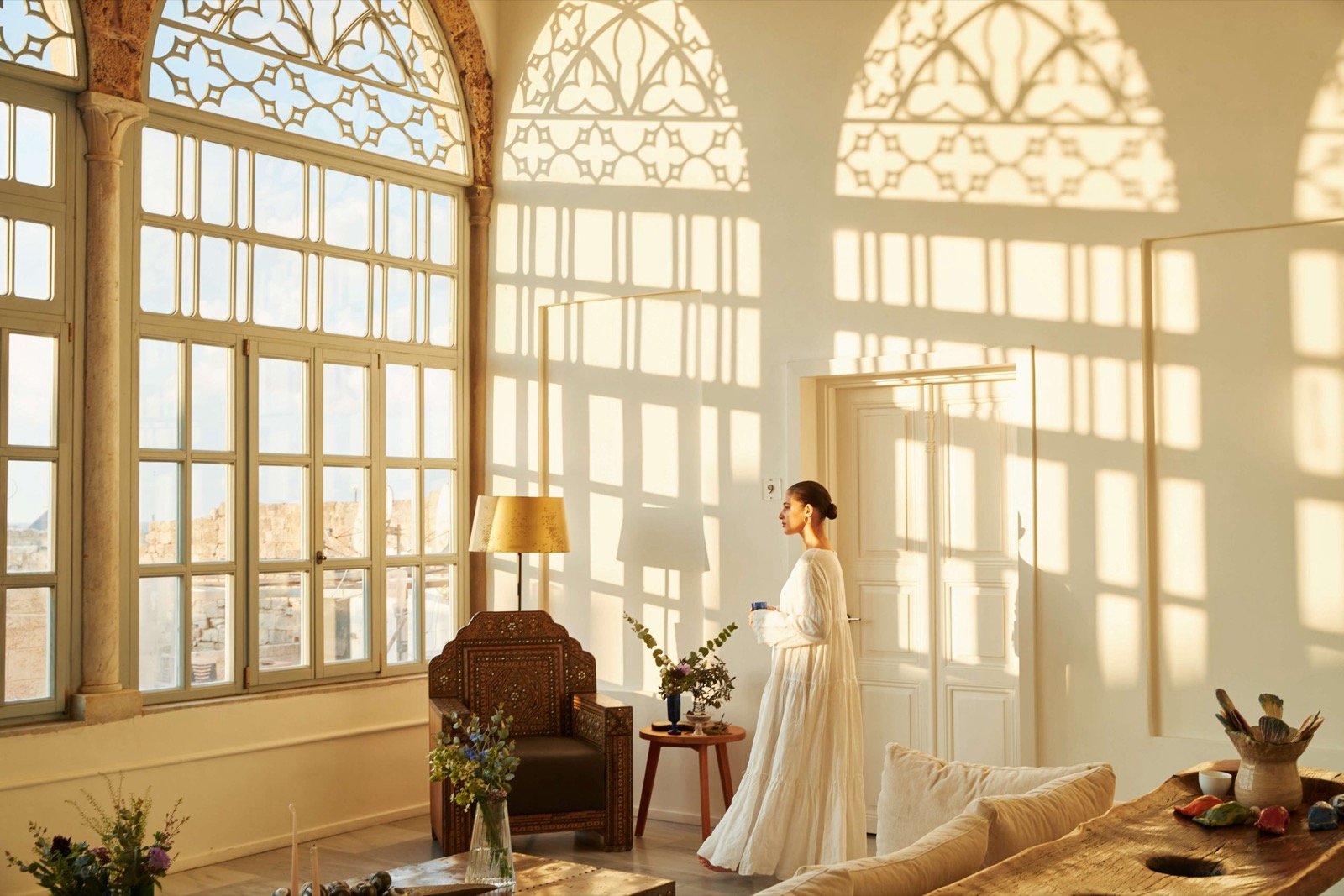
Twelve rooms, four to a floor around a shared sitting room, and no two the same. The ones to ask for face the sea. Several keep their Ottoman ceilings, the painted borders and medallions brought back by the conservators who worked the restoration, so you sleep under flowers and scrollwork that a merchant family once chose. The windows are the other inheritance, tall arches filled with carved stone lattice that throws its pattern across the walls as the sun moves, changing the room through the day without anyone touching a thing.
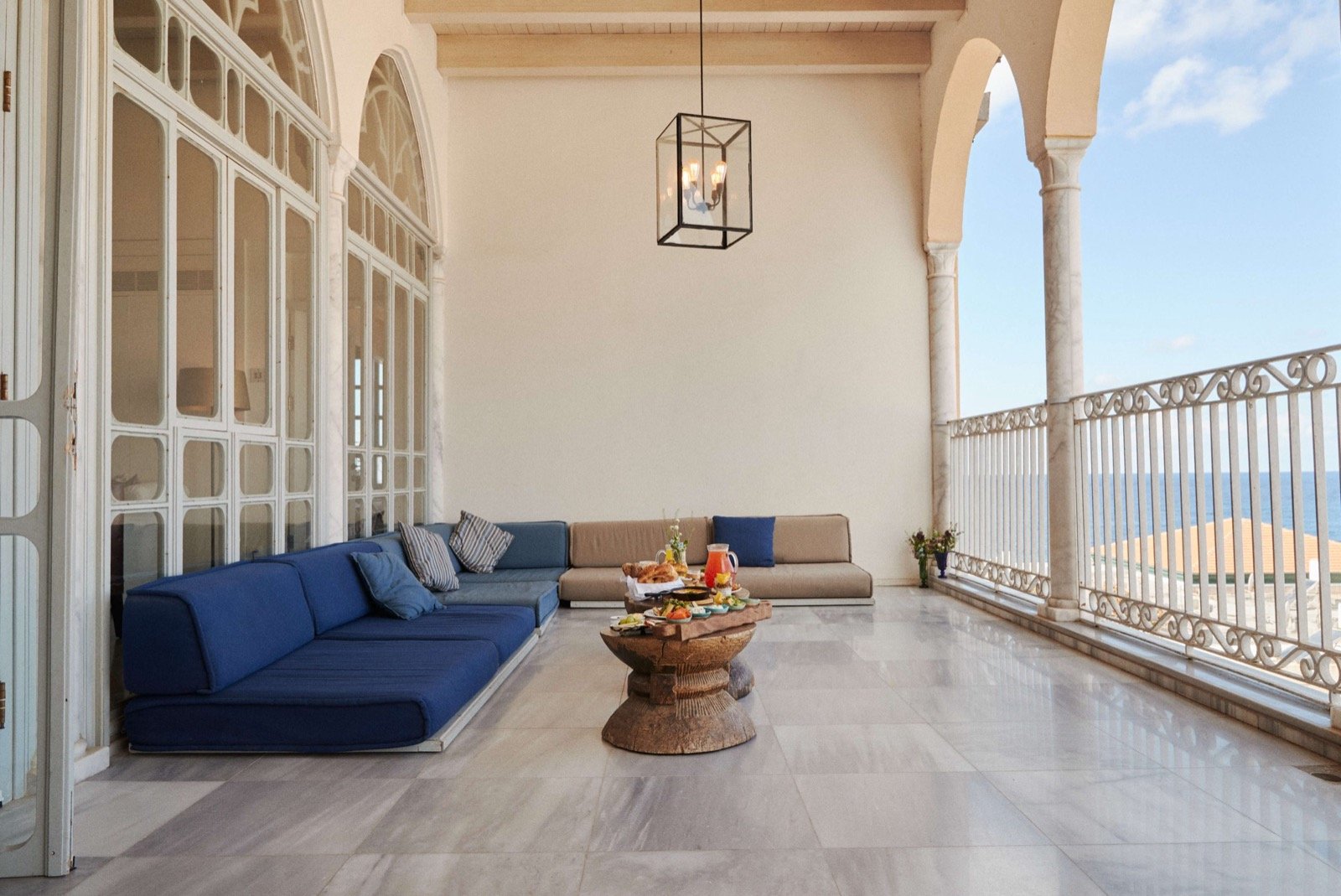
Downstairs there is an old Turkish bath kept for the steam, and a small spa off it. The roof is where the hotel opens right up. It runs along an arcade of marble columns, with a long banquette set under the arches and the whole bay laid out beyond the rail, from the headland in the north down to the grey shoulder of Carmel. It is a place to take the first coffee and the last drink, not somewhere to spend the whole day, and at that scale it is judged exactly right.
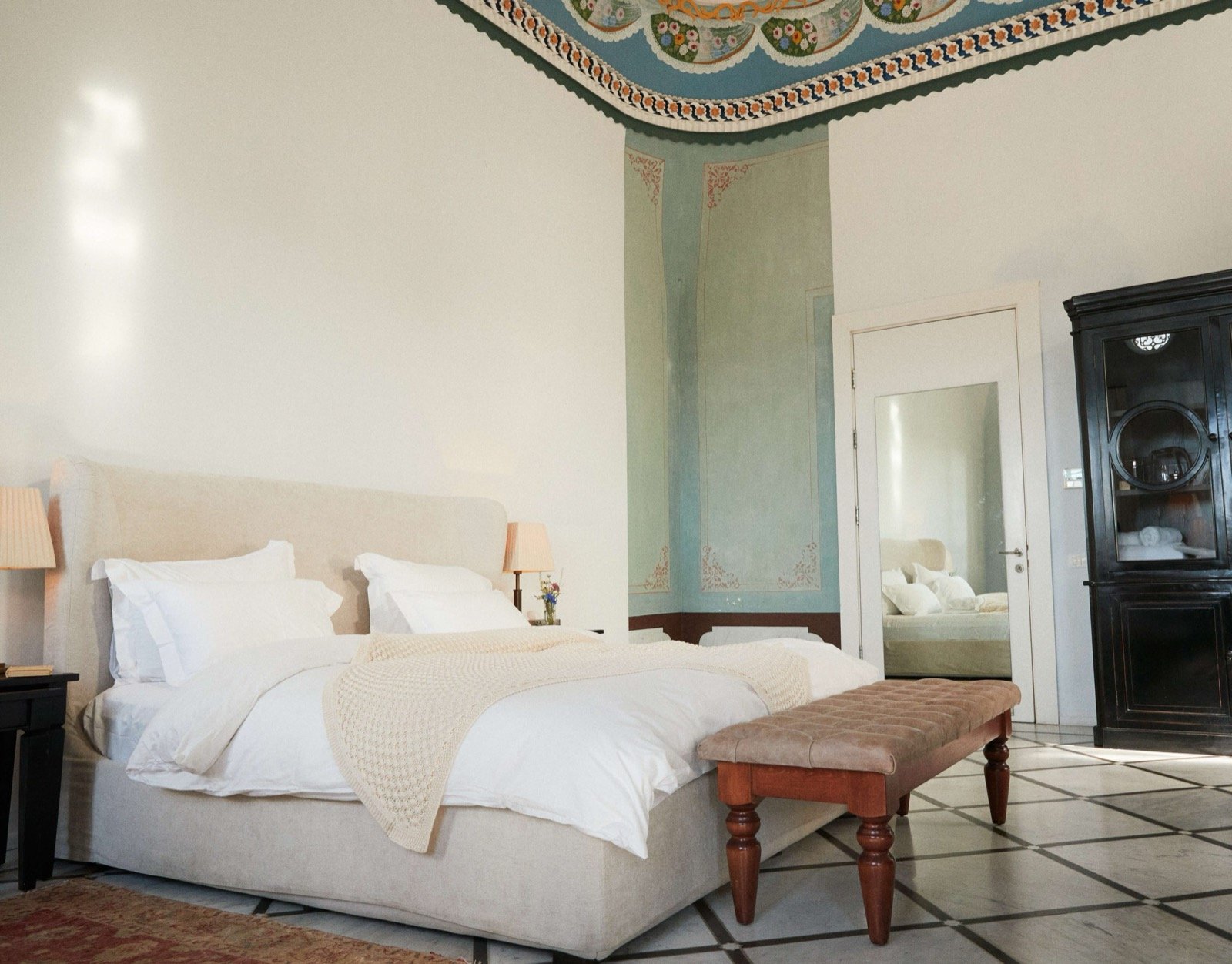
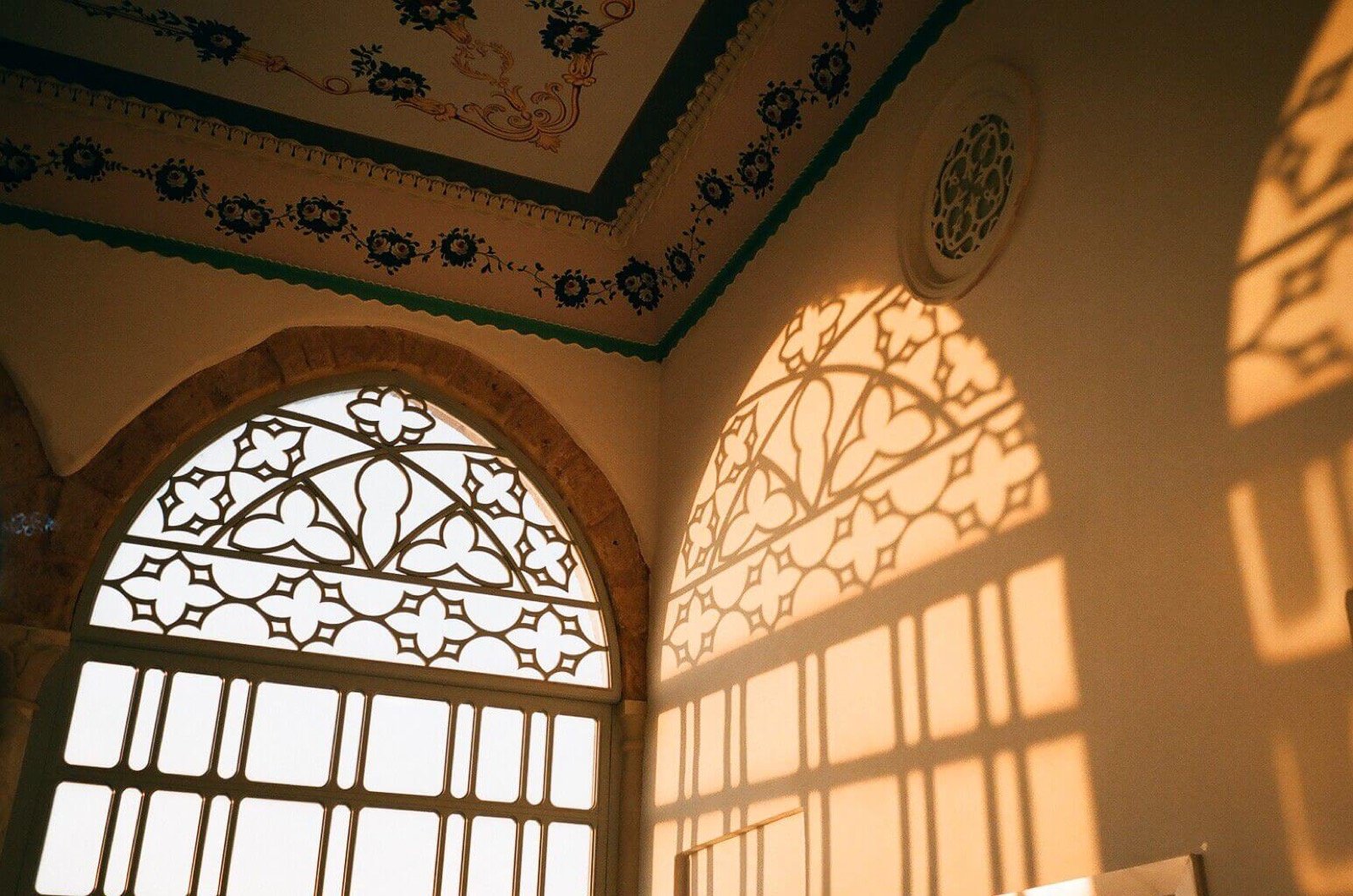
You sleep under flowers and scrollwork a merchant family once chose.
Uri Buri, and a cellar for the wine
The kitchen that matters here is not in the hotel at all. Uri Buri, a few steps down the lane, is the seafood restaurant that made Jeremias's name, fish off the boats cooked plainly and well, a long list of Israeli wines to follow. It is the reason a good part of the country makes the drive to Acre, and it is why a hotel grew up beside it. Back at the Efendi the eating is quieter by design. There is a generous breakfast, laid in the old rooms, and the meal most guests seem to talk about afterwards.
The other table is underground. When the work went down beneath the houses it reached the Crusader and Byzantine vaults, restored under the antiquities service, and one of them now holds the wine bar, cool and dark and stone, where the pours come slowly and the noise of the day does not reach. Between the roof and the cellar the hotel gives you the two ends of Acre in one building, the light off the sea and the deep old stone under it.
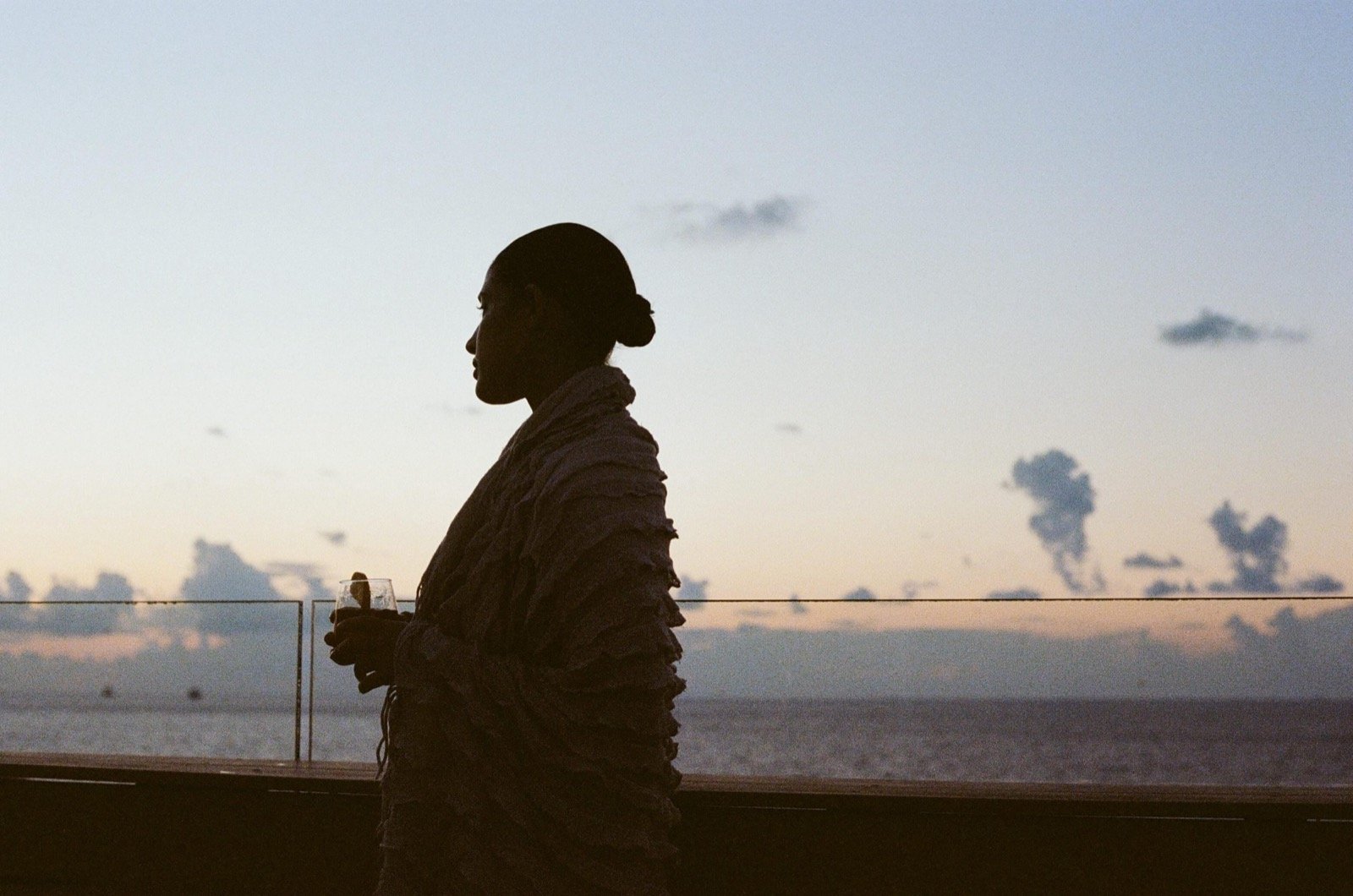
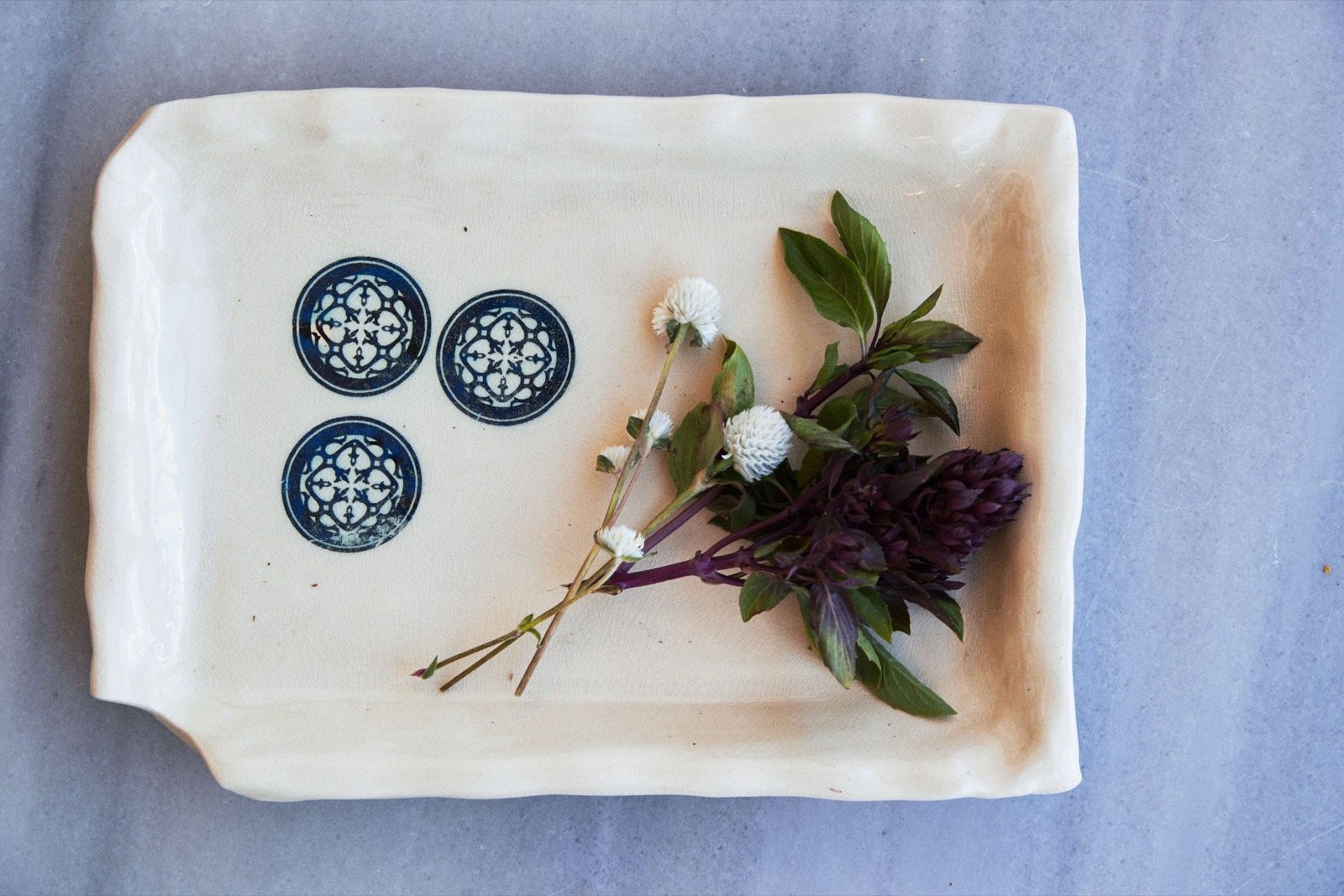
The roof and the cellar, the two ends of Acre in one building.
Most of what calls itself a boutique hotel is a look laid over a plain building. Efendi is the other thing, a piece of a very old city saved rather than dressed up, with twelve rooms carved out of two merchant houses and a chef's obsession running through all of it. Take it for what it is. It is small, it is deep inside a working walled town rather than on a beach, and the point of coming is the place and the table, not a resort's list of things to do. Ask for a sea-facing room, eat at Uri Buri, take the coffee up to the roof, and let the old stone do the rest.
Photos: Efendi Hotel (official), self-hosted with credit.