The Table
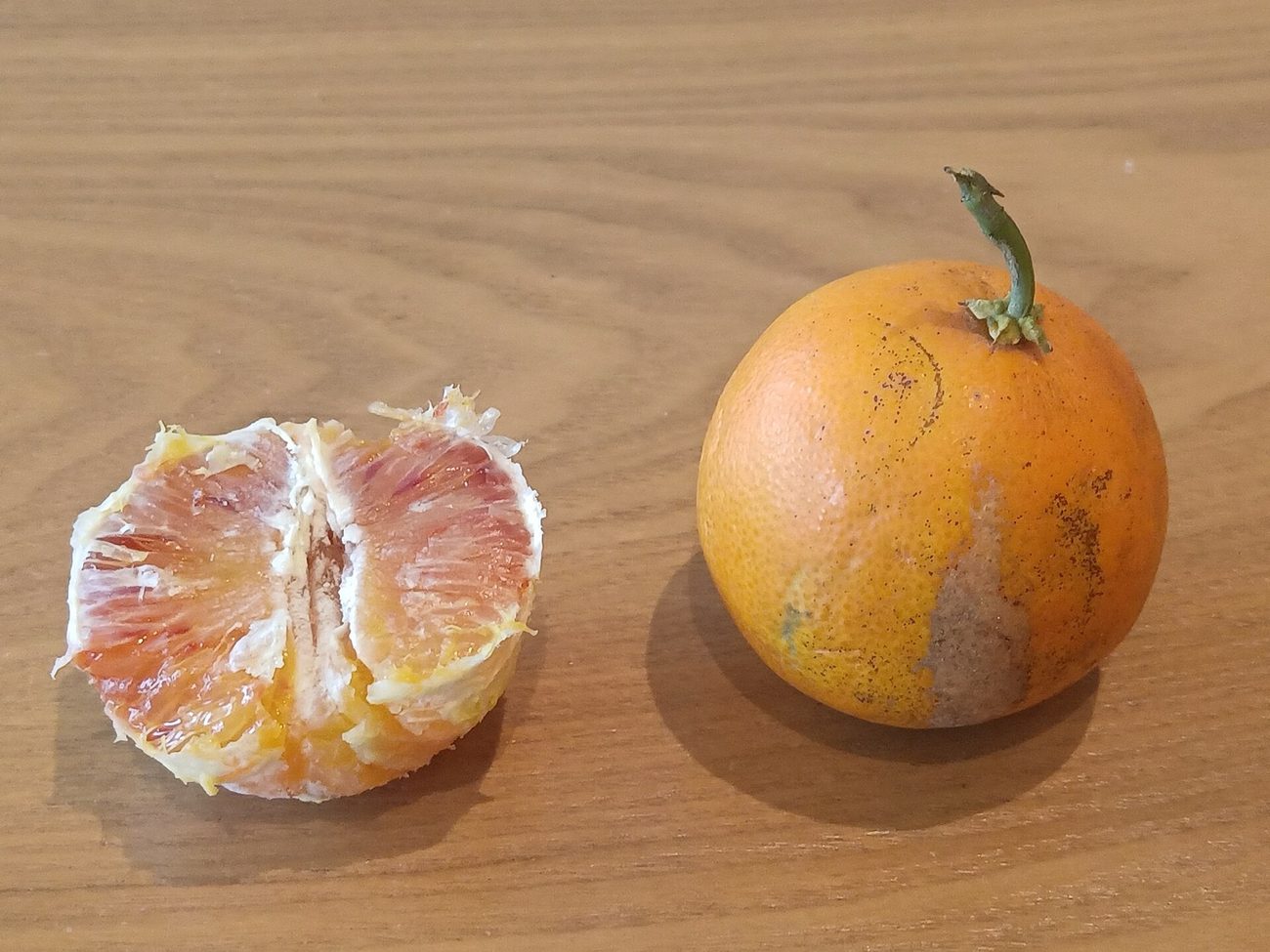
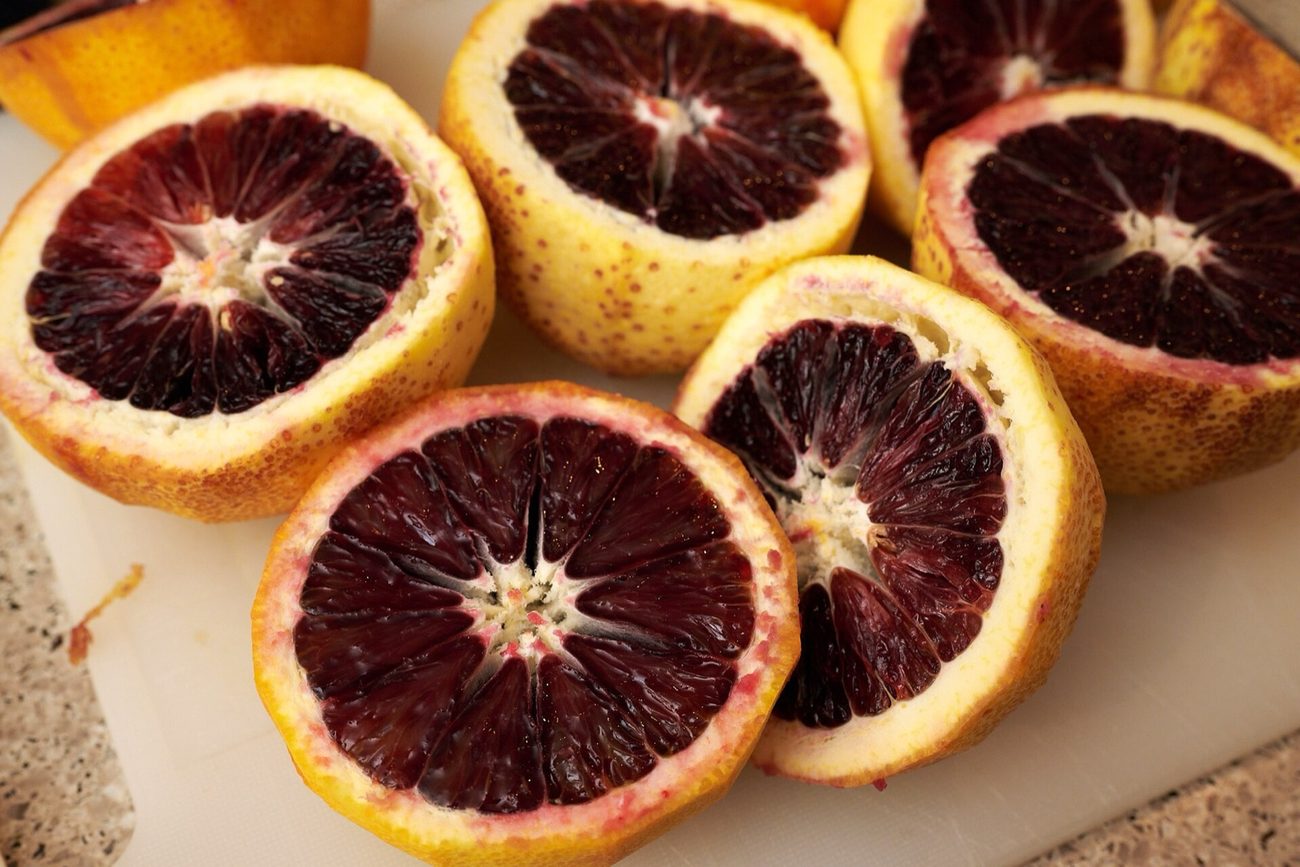
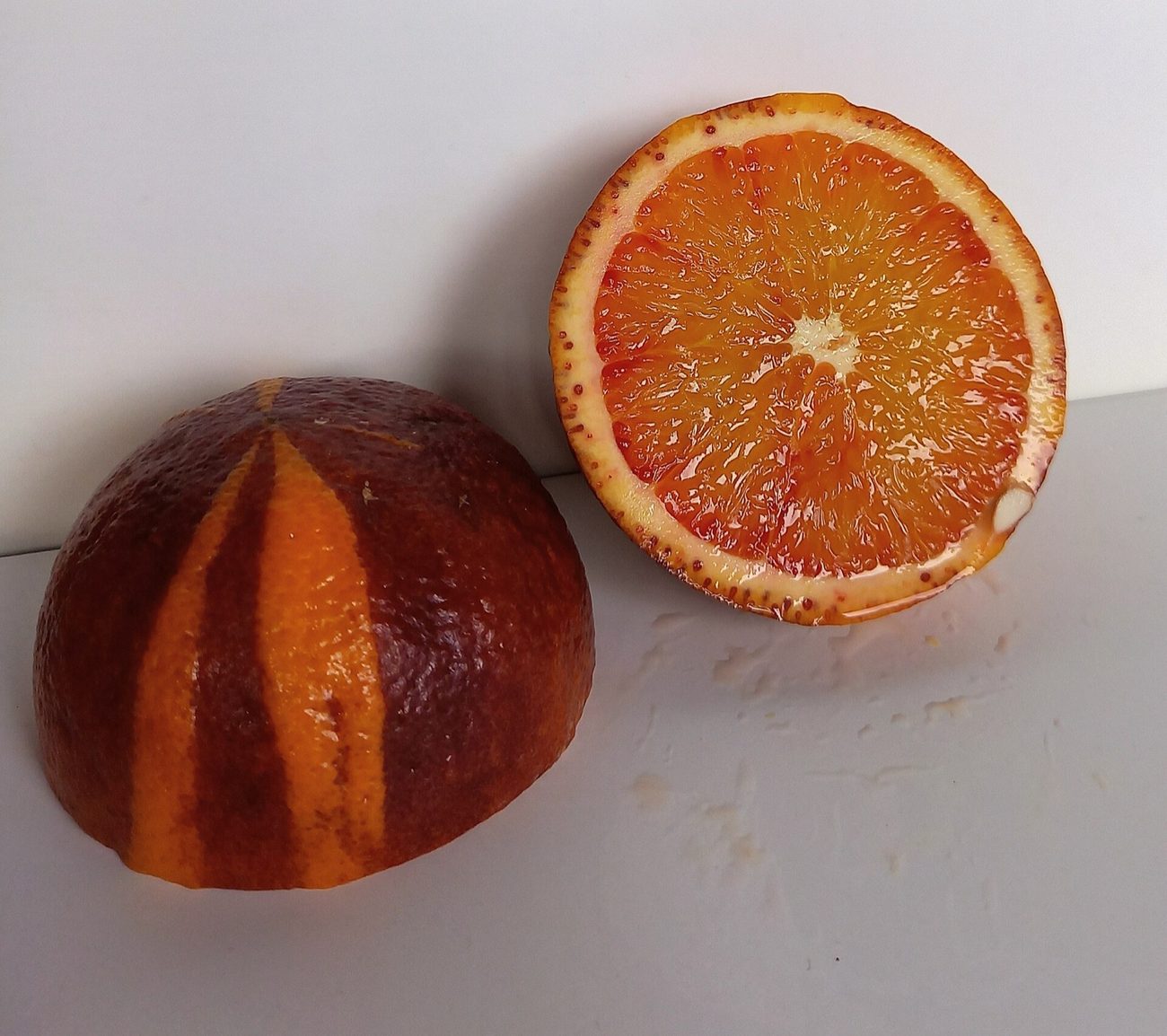
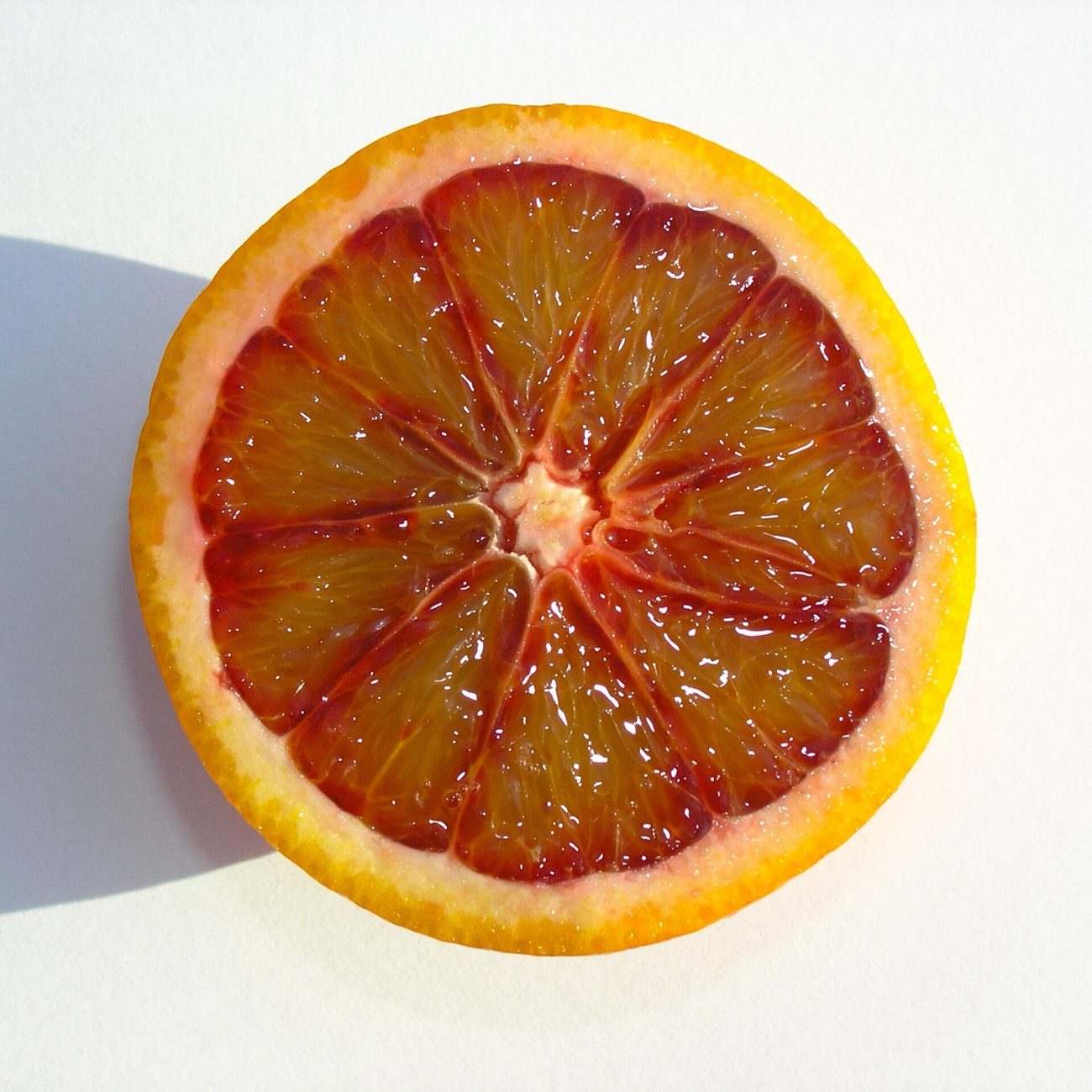
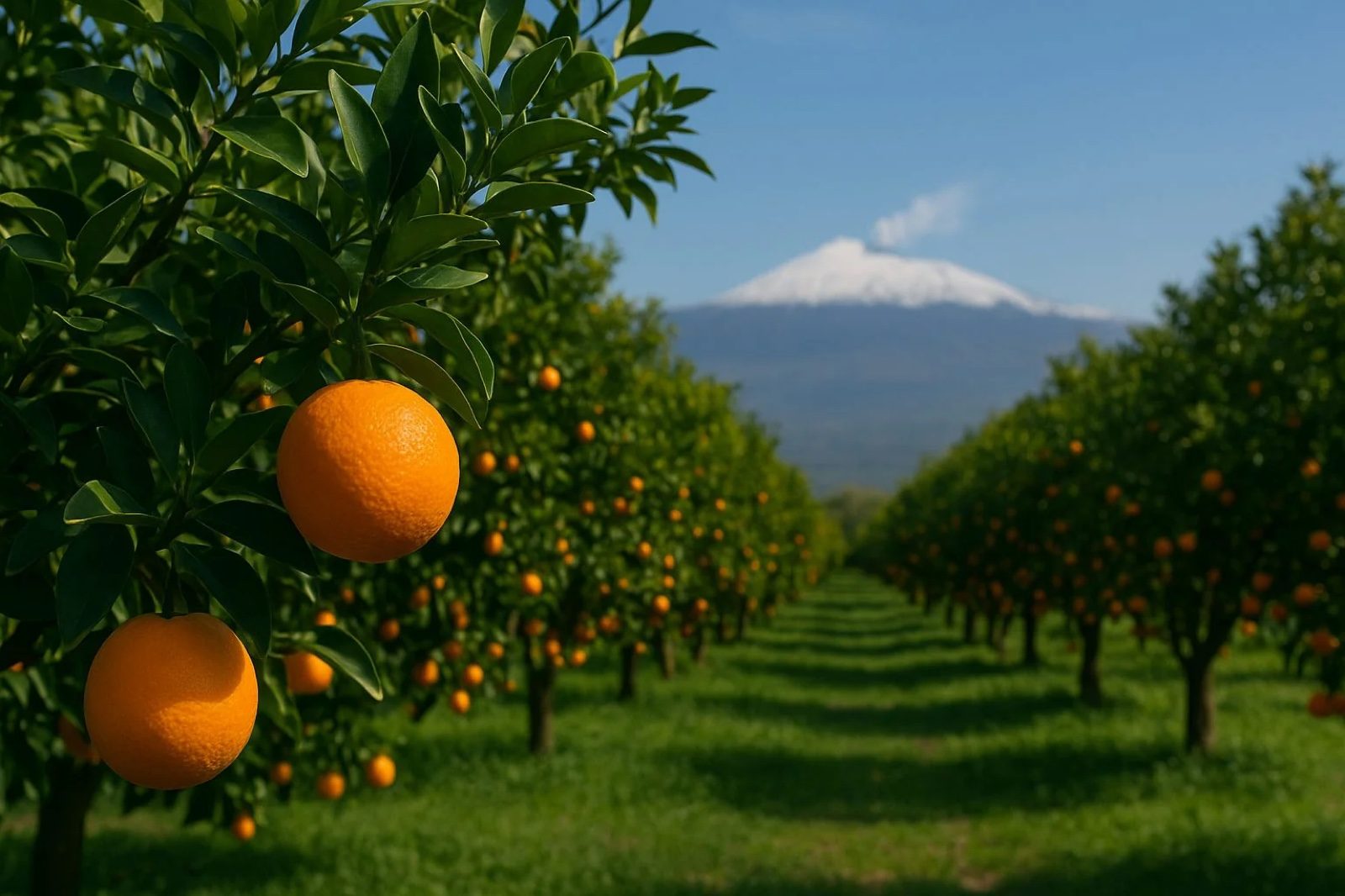
On the plain that runs from Catania down toward Syracuse, the oranges do something no supermarket import can fake. You cut one open in late winter and the flesh is the colour of garnet, sometimes almost black at the core. The skin can stay orange, or blush, or go the same deep red as the inside. From the outside you rarely know which you will get.
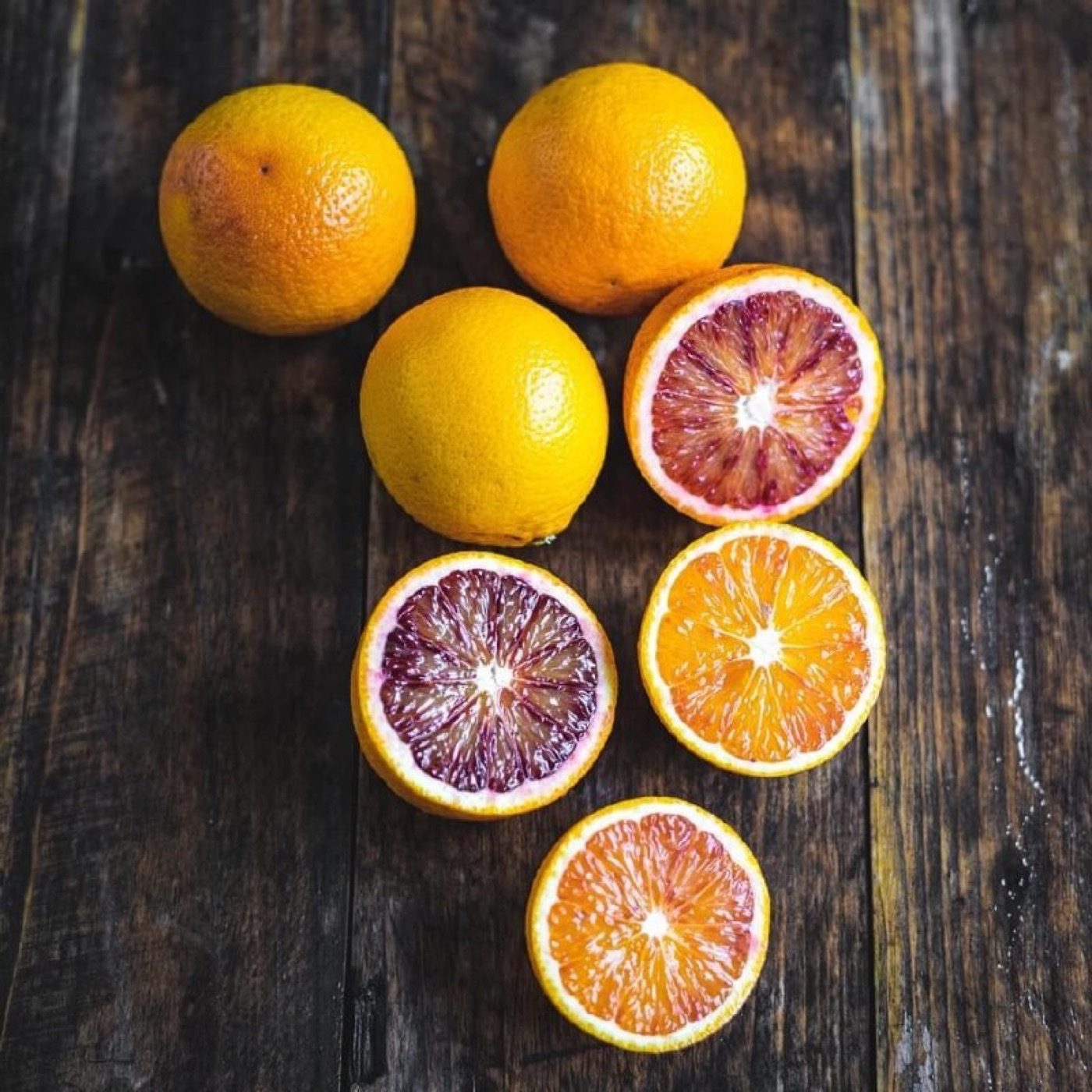
The colour is anthocyanin, the pigment family that reddens an autumn leaf and darkens a glass of Barolo. In an orange it is rare. The tree only lays it down when the nights turn cold while the days stay warm, and that swing is exactly what Etna hands this corner of Sicily. Warm volcanic ground through the day, cold air sliding off the mountain after dark. Plant the same variety in Florida or in the warm south of Spain and you get a pale, ordinary orange. The pigment needs the shock of the cold to appear.
Three varieties carry the name. Tarocco is the sweet one, only lightly streaked, the orange Sicilians eat by the kilo and squeeze at the bar. Moro is the darkest, violet inside, with a note that leans toward raspberry. Sanguinello comes later and keeps firmer, the one that holds into spring. All three are protected together as Arancia Rossa di Sicilia IGP, grown on the volcanic plains of Catania, Enna and Siracusa and almost nowhere else on the island.
The volcano does not only feed the tree. It paints the fruit, one cold night at a time.
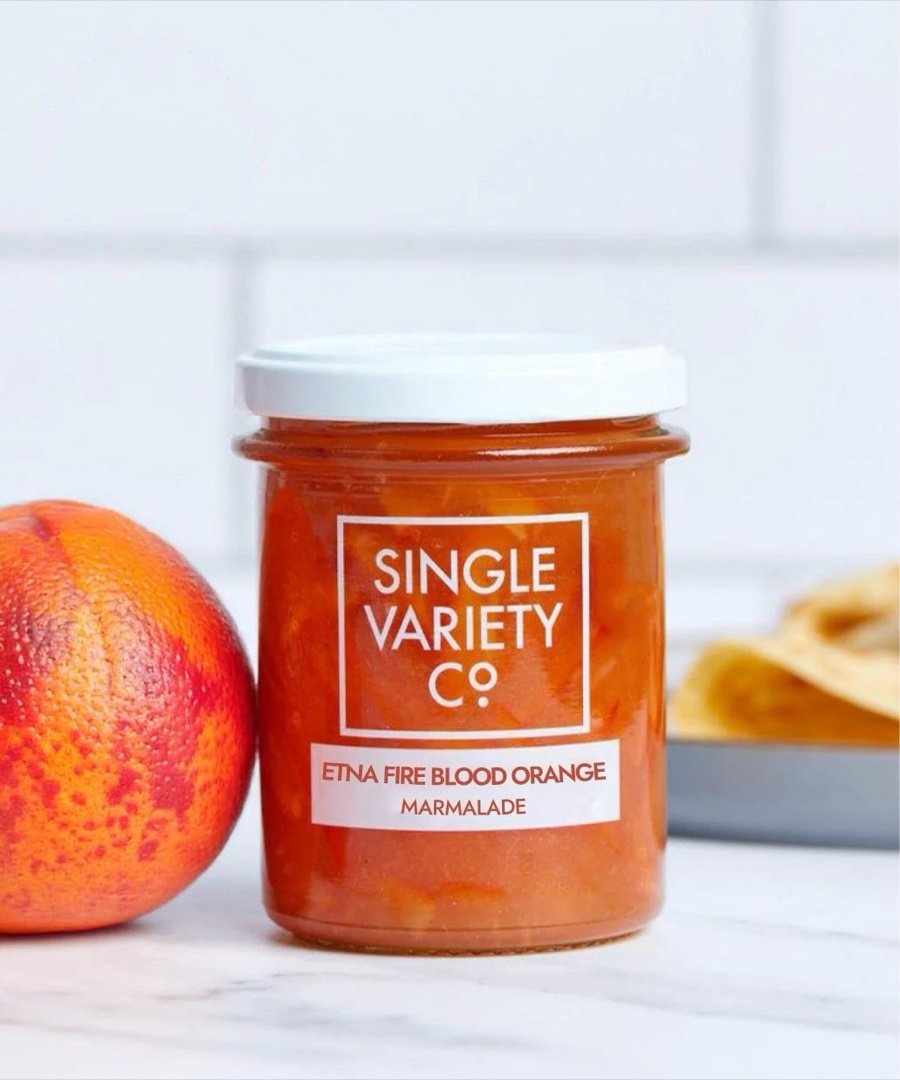
You taste the same temperature range that builds the colour. The sugar climbs as the mercury drops at night, so a good Moro lands tart and sweet at once, closer to a berry than to the flat breakfast juice most of us grew up on. In Catania they drink it as spremuta, pressed to order and served still cloudy. Further inland it goes into salads with raw fennel and black olives, or boiled down for a dark, bitter marmalade.
The season is short, and that is the point. These are winter oranges, picked from December into April, reddest in the coldest weeks of February. We buy them loose and heavy for their size, and we never trust a blood orange on sale in July. If the flesh is truly red it earned the colour in the cold. Out of season, somewhere warm, it is just an orange wearing a borrowed name.