Field Notes
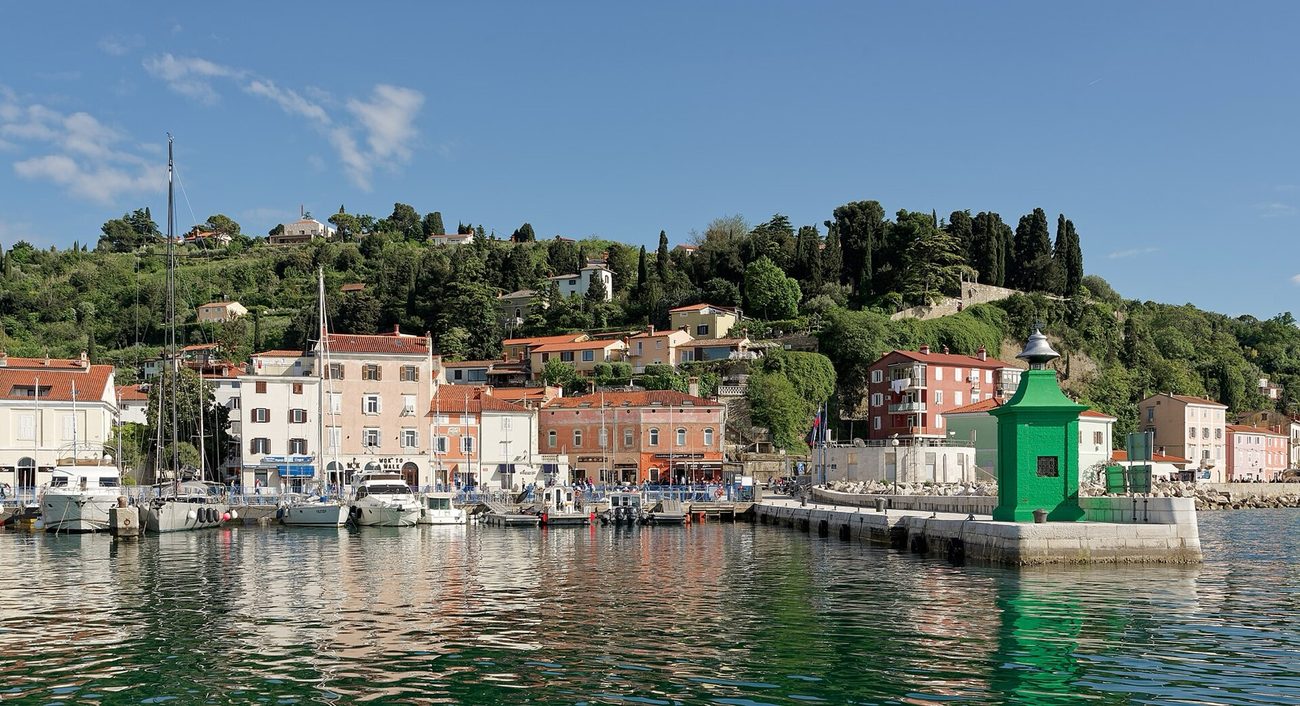
Slovenia has only a short stretch of Adriatic coast, and most of what makes it worth the drive sits on one narrow finger of land. Piran runs out to a point between two bays, the houses packed so tightly that the streets narrow to shoulder width and the sea appears at the end of them without warning. We came in the late afternoon, when the stone had gone warm and the day boats were coming back.
The town belonged to Venice from the twelfth century until the republic fell in 1797, and it has never pretended otherwise. The lion of St Mark is cut into walls and lintels. Italian is still an official language here, spoken in the older cafes and printed beneath the Slovene on every street sign. Piran feels less like a Slovenian town that borrowed a style than a Venetian one that happened to end up on the wrong side of a border.
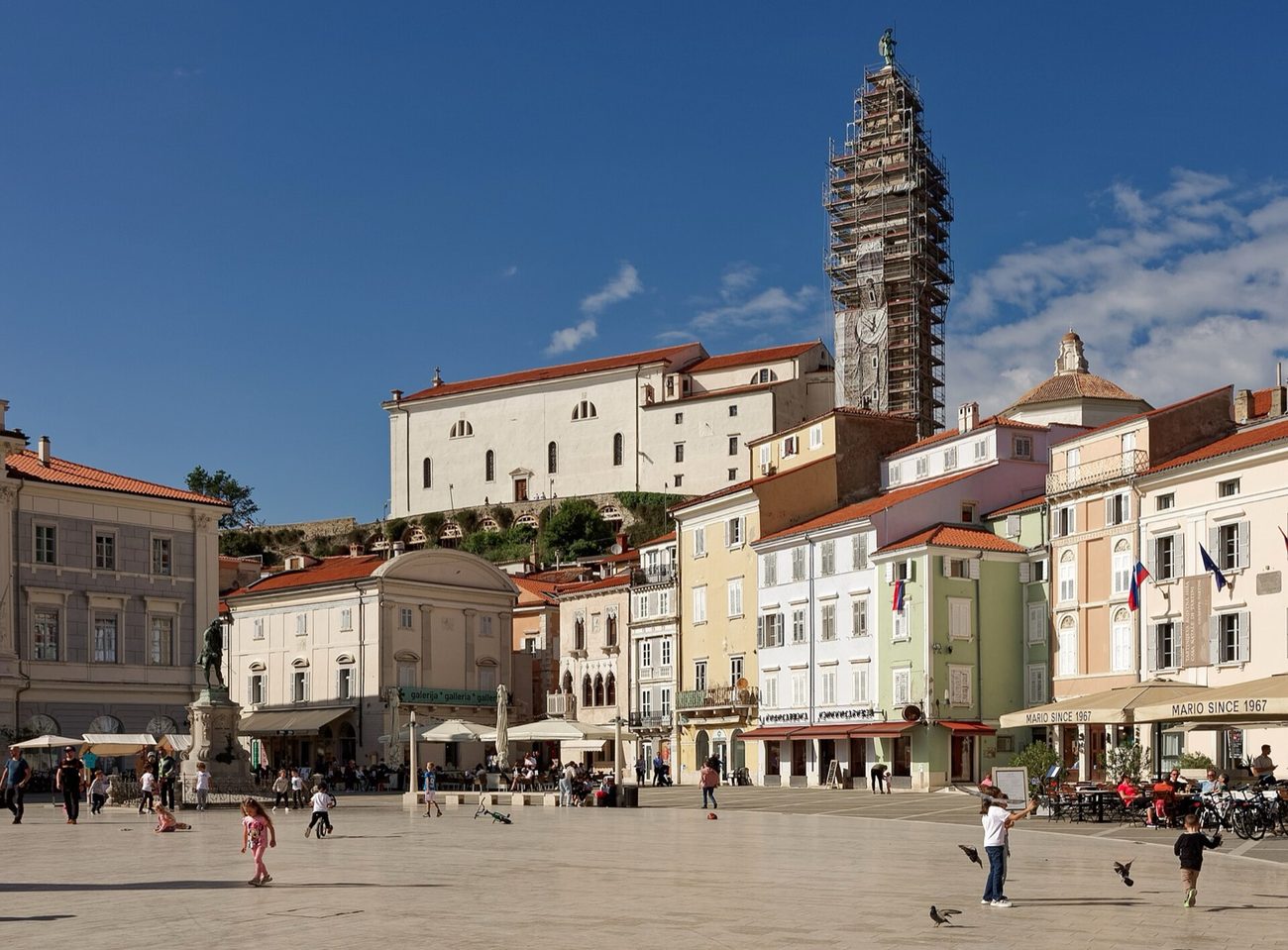
The heart of it is Tartini Square, an oval of pale marble named for Giuseppe Tartini, the violinist and composer born here in 1692. It was a harbour once, a shallow basin where fishing boats rotted and the smell offended the merchant class, so in the late nineteenth century they filled it in and paved it over. His statue stands at the centre now, bow in hand, facing the sea he grew up beside.
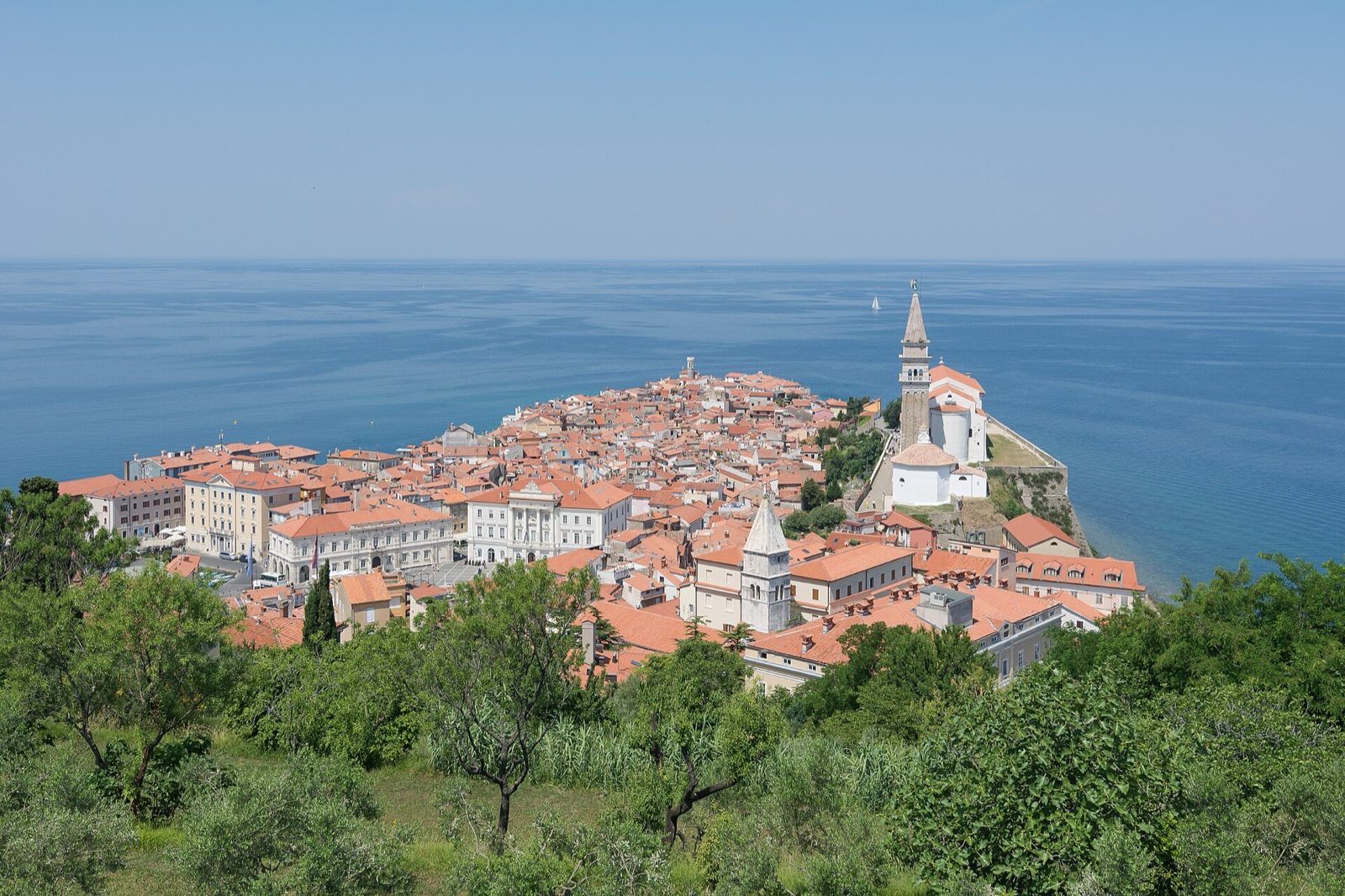
The town runs out to a point, and the streets keep narrowing until the only thing left at the end is the water.
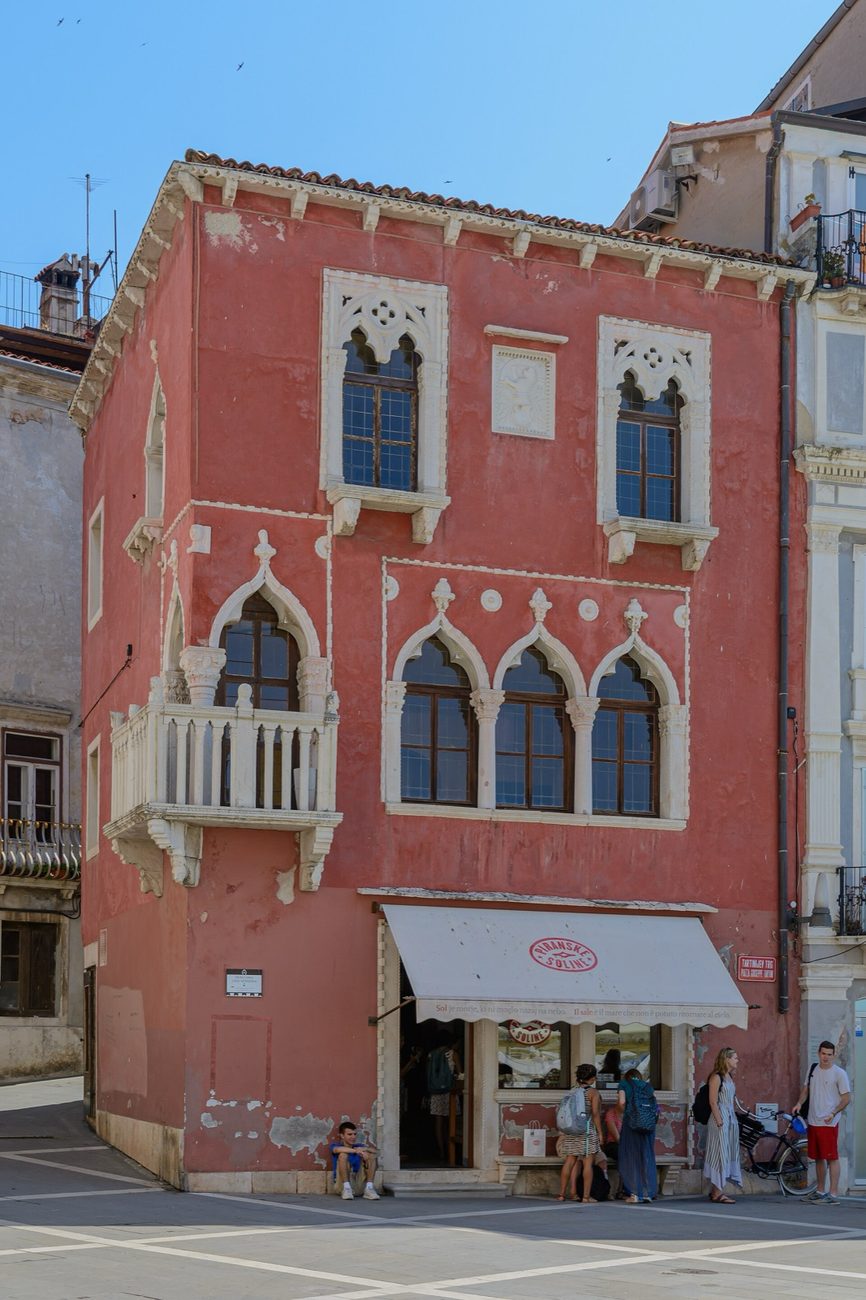
On one corner of the square stands the Venetian House, a red Gothic palace from the middle of the fifteenth century and the oldest building on the square. Between its upper windows a stone lion holds a scroll that reads Lassa pur dir, let them talk. The story goes that a Venetian merchant built it for a local woman and answered the town's gossip in stone. It is the kind of gesture the place still rewards.
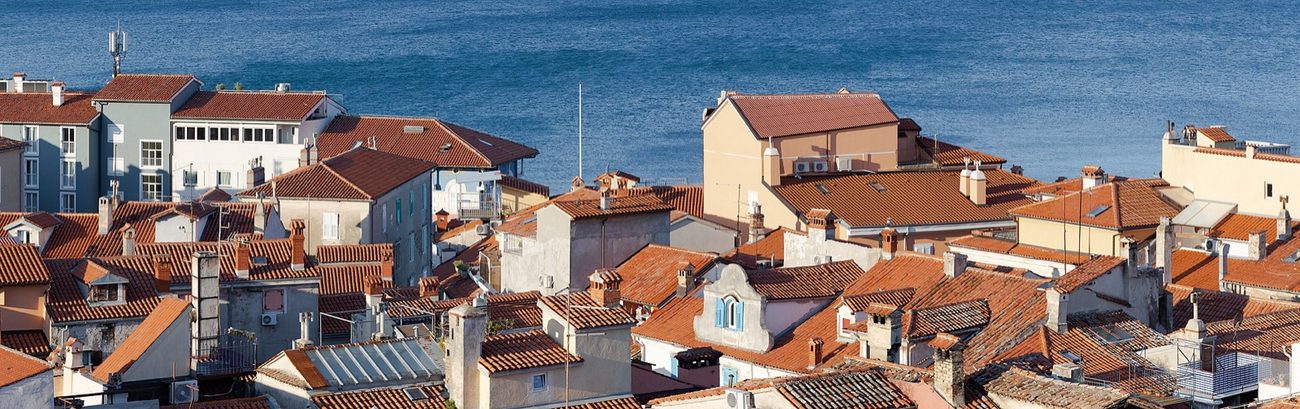
Climb to the church of St George on the ridge above and the whole shape of the town resolves: terracotta roofs falling towards the point, a bell tower modelled on the campanile in St Mark's Square, and beyond it the Adriatic running flat towards Italy on a clear evening. From up here you can see how little room there is, and how completely the sea decides everything.
We stayed for the walk back down, when the light drops into the alleys and the square empties out. Piran is small enough to cross in twenty minutes and old enough to hold you far longer. It asks for nothing but time.