Two hundred hectares, forty works
The setting is Château La Coste, a wine domaine of some two hundred hectares north of Aix-en-Provence, farmed by organic and biodynamic method and turned, over the past two decades, into one of the most ambitious art and architecture parks in Europe. Artists and architects were invited to come, walk the land and place a single work where they chose. You arrive through Tadao Ando's Art Centre, a low concrete building set in a shallow sheet of water, and from there a path of two hours and more than forty works opens across the vines.
What is out there is not decoration. Louise Bourgeois left her bronze spider crouched over a pond, its legs doubled in the still water. Ando built a chapel of concrete and glass at the end of a long walk, a room whose only argument is light. Frank Gehry, Renzo Piano, Jean Nouvel and Jean Prouvé each added a building; Richard Serra, Andy Goldsworthy and Sean Scully each added a mark. The day visitors come for exactly this. Staying the night means you have the walk to yourself at the two hours when the Provençal light is worth having, early and late.
Thirty-one suites, low across the slope
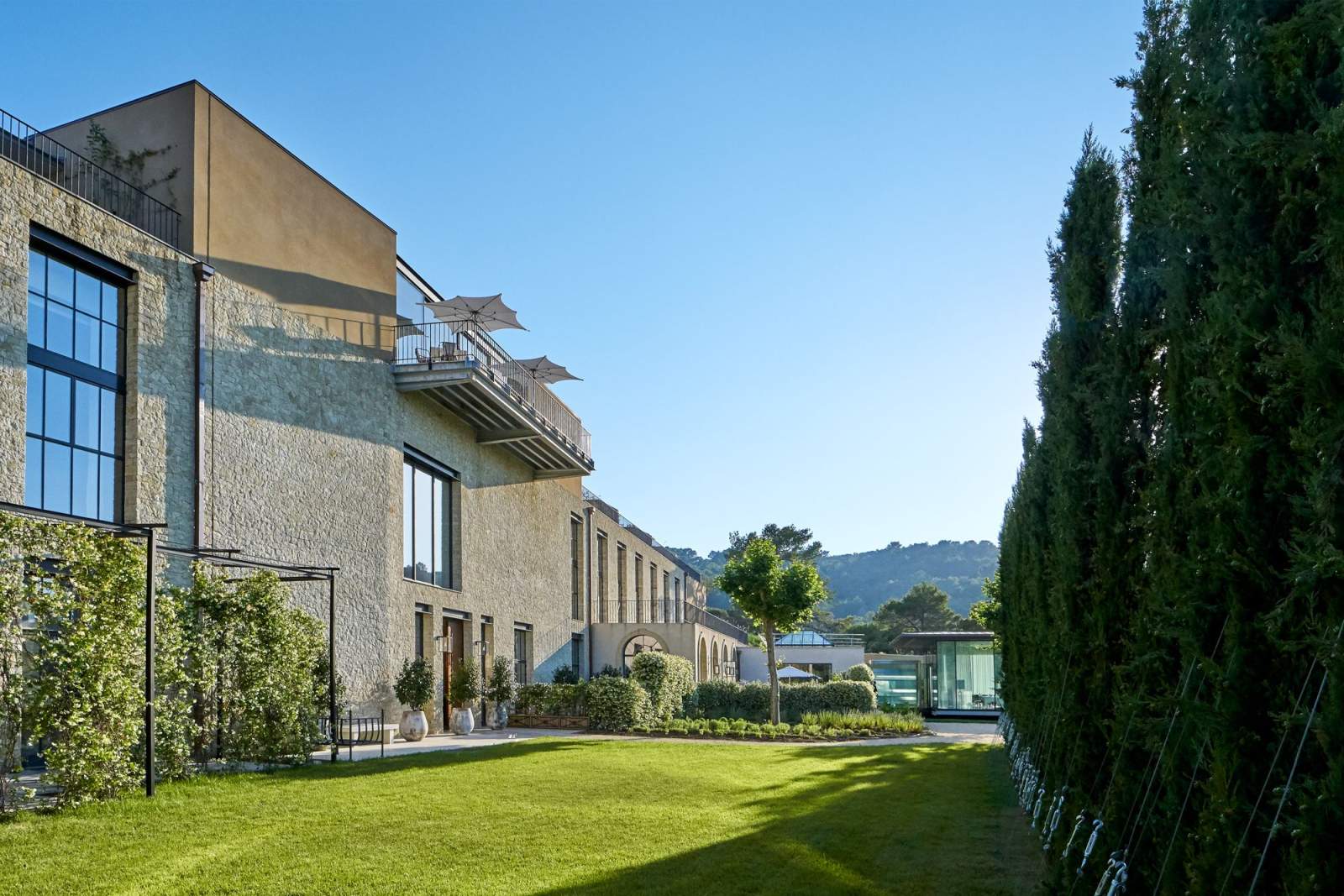
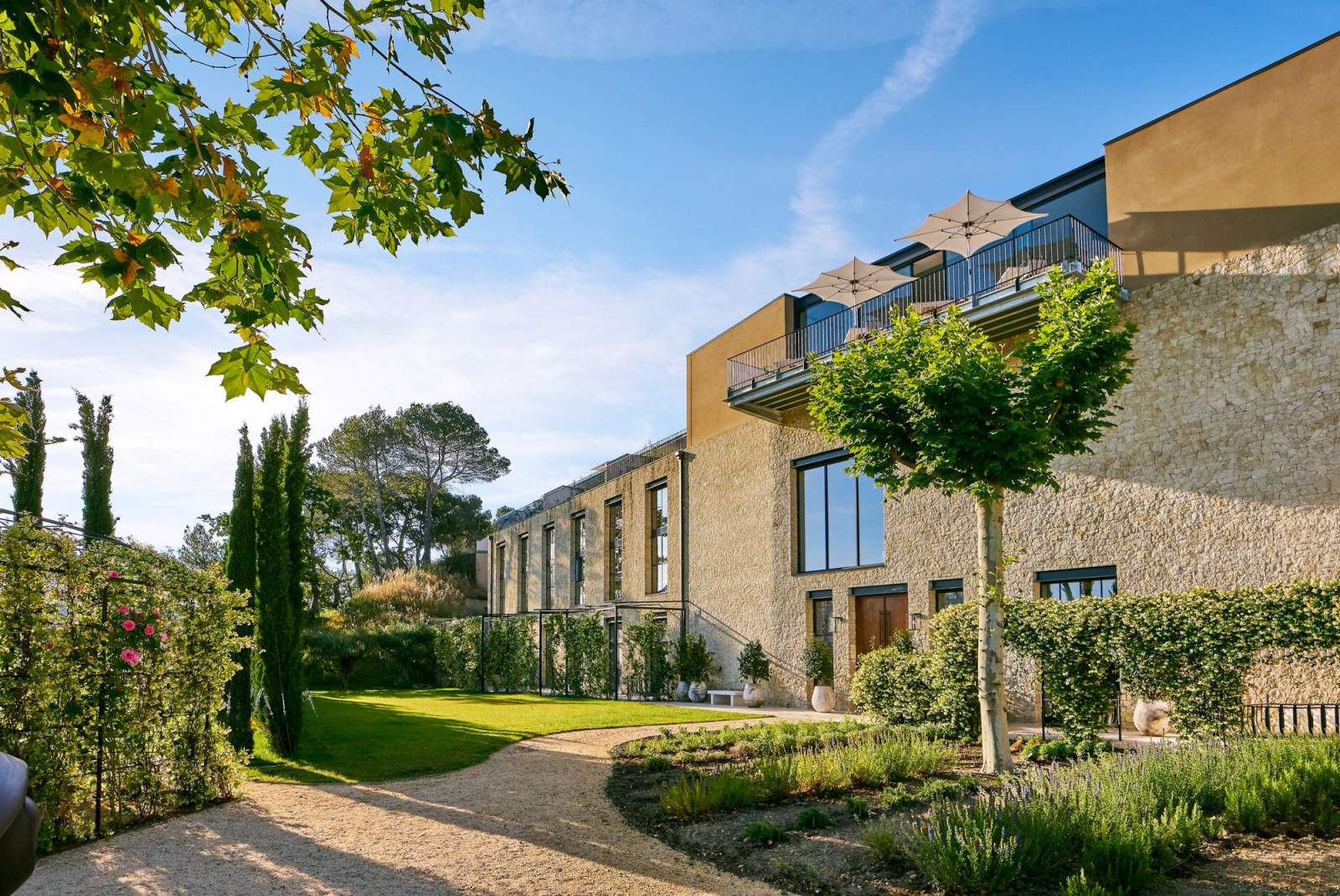
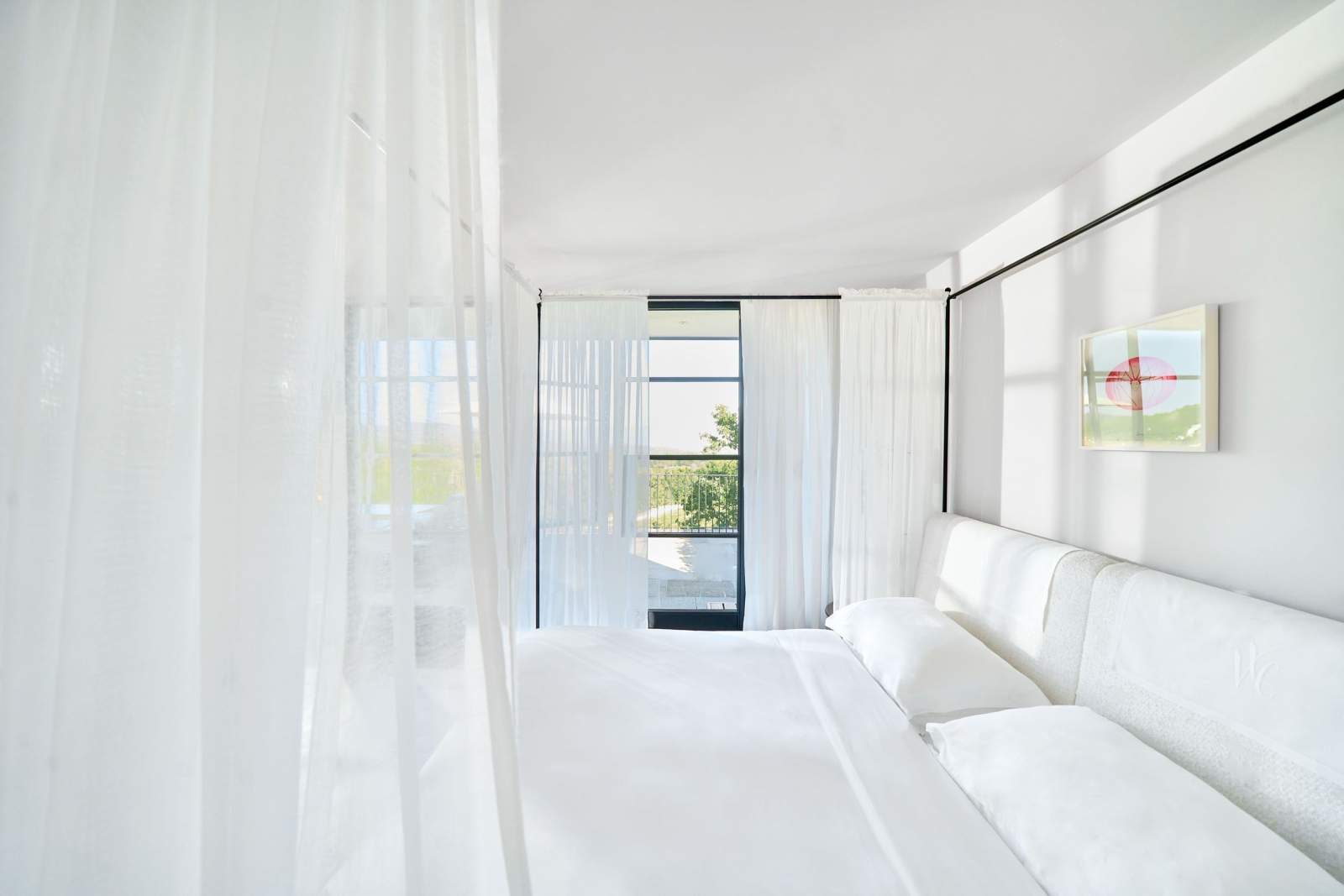
There are thirty-one suites and no more, arranged in five categories and set so far apart that the vineyard, rather than a neighbour, fills each terrace. Every one looks out over the Luberon valley and the rows of vines; several have a private pool. Inside they are pale and deliberately quiet: stone floors, white linen, a single piece of art on the wall, a wall of glass that slides back until the room and the terrace are one. The estate holds the Palace distinction, France's rank above five stars, and a spa, a library and a bar sit within the same restraint.
The restraint is the whole idea. A house with this much art in the grounds could easily have crowded the rooms to match, and it does the reverse. The suites step back so the land and the work can speak, which is the same discipline the collection is built on. You are not meant to admire the bedroom. You are meant to look past it.
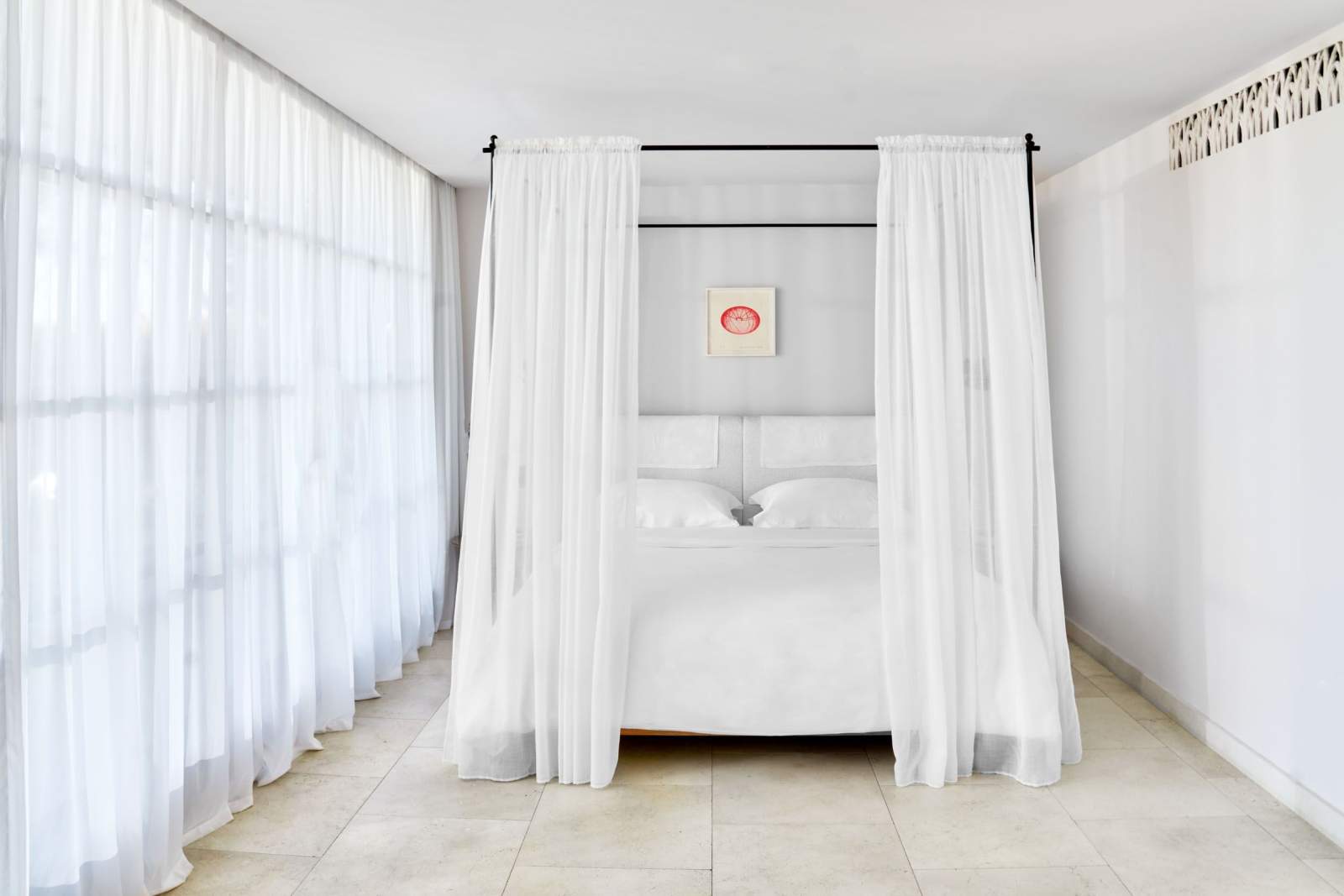
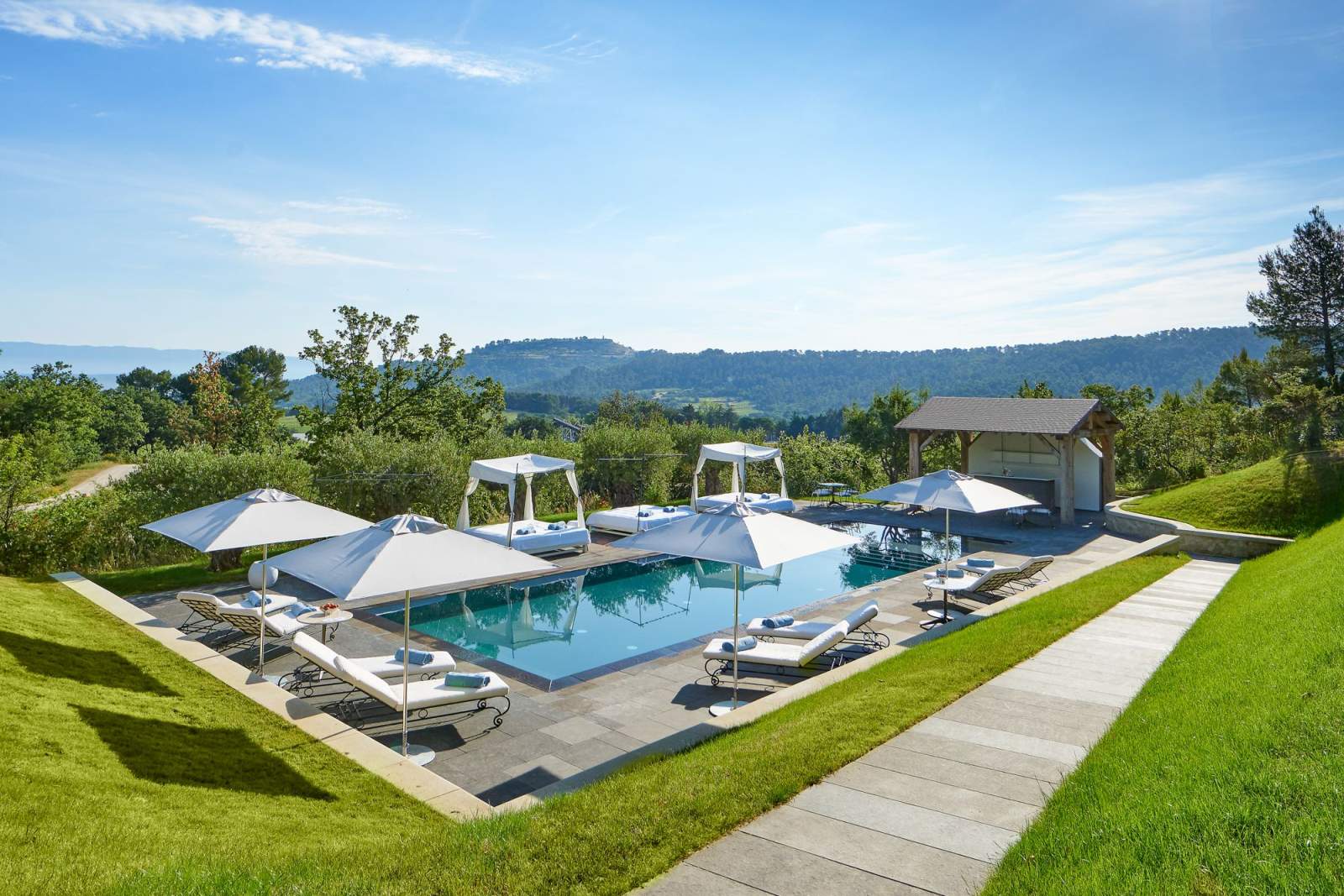
The rooms step back so the land and the art can speak.
Louison, and fire among the vines
Dinner is Louison, the hotel's restaurant, whose kitchen and wider table now answer to Florent Pietravalle, the chef who took over the estate's cooking in 2026. He works close to the garden and the season, precise and without fuss, and the wine on the list is grown on the land you can see from the glass. Nothing has to travel far to reach the plate, which in a place this considered feels less like a slogan than a fact of the address.
Beyond Louison the estate keeps a second and third register. Francis Mallmann cooks at open fire in the Argentine manner, his first kitchen in Europe, all smoke and long flame. A daytime café-restaurant sits inside Ando's Art Centre, its kitchen garden laid out behind it by the landscape designer Louis Benech. You can eat well here three ways in a day and never leave the walk.
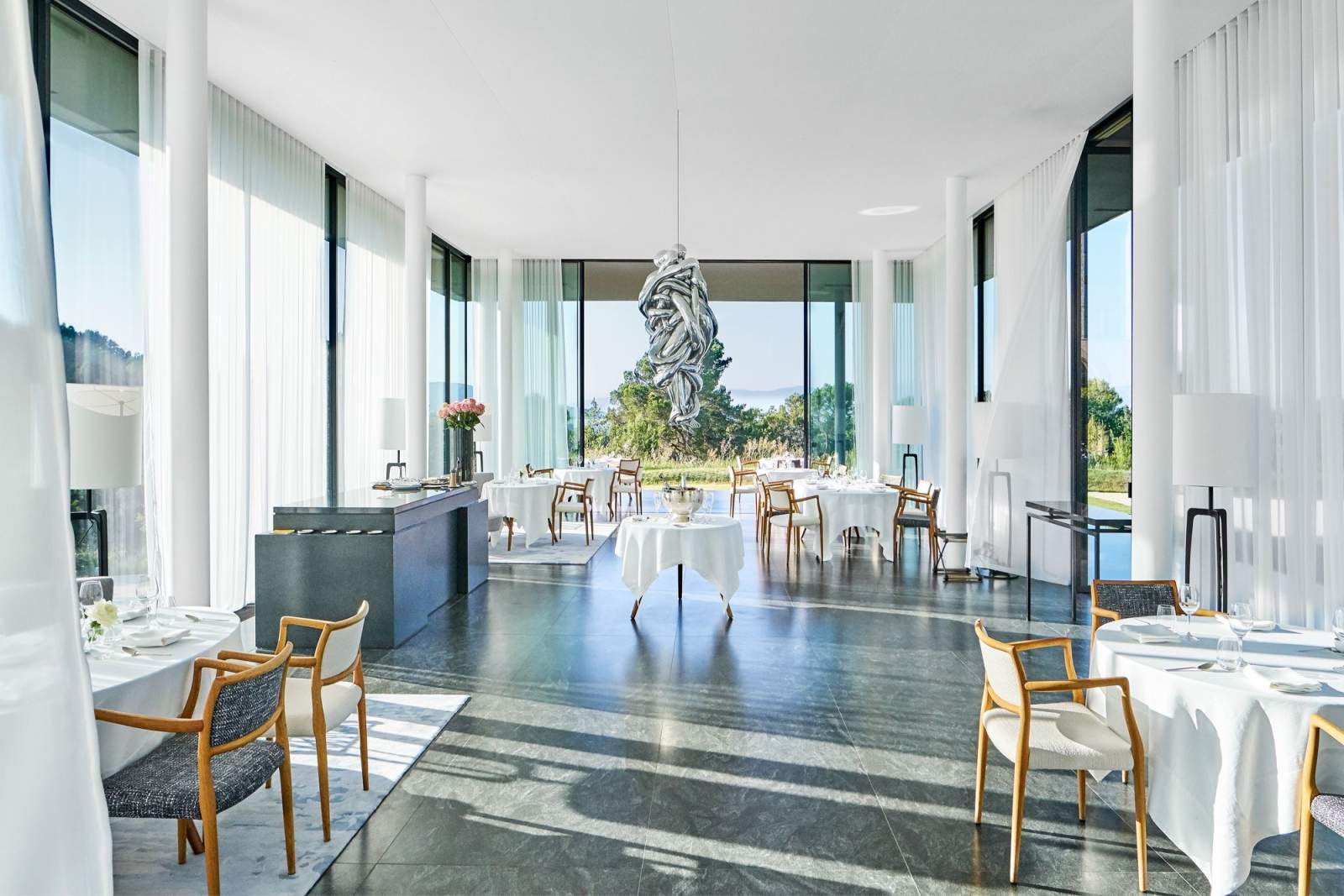
Villa La Coste is a hotel built the right way round: the vineyard and the art came first, and the rooms were added so you could stay among them. It asks you to walk and to look closely, which here is the entire point. We have not yet stayed, so this stands as a researched profile rather than a first-hand verdict. On the evidence, and on the ground it stands on, it earns the closer look.
VANE note. This is a researched profile, not yet a first-hand VANE verdict. A full review carries a stay date, an independence disclosure and the writer's own account. Photos: Villa La Coste (official), with credit.