At the head of Jezersko
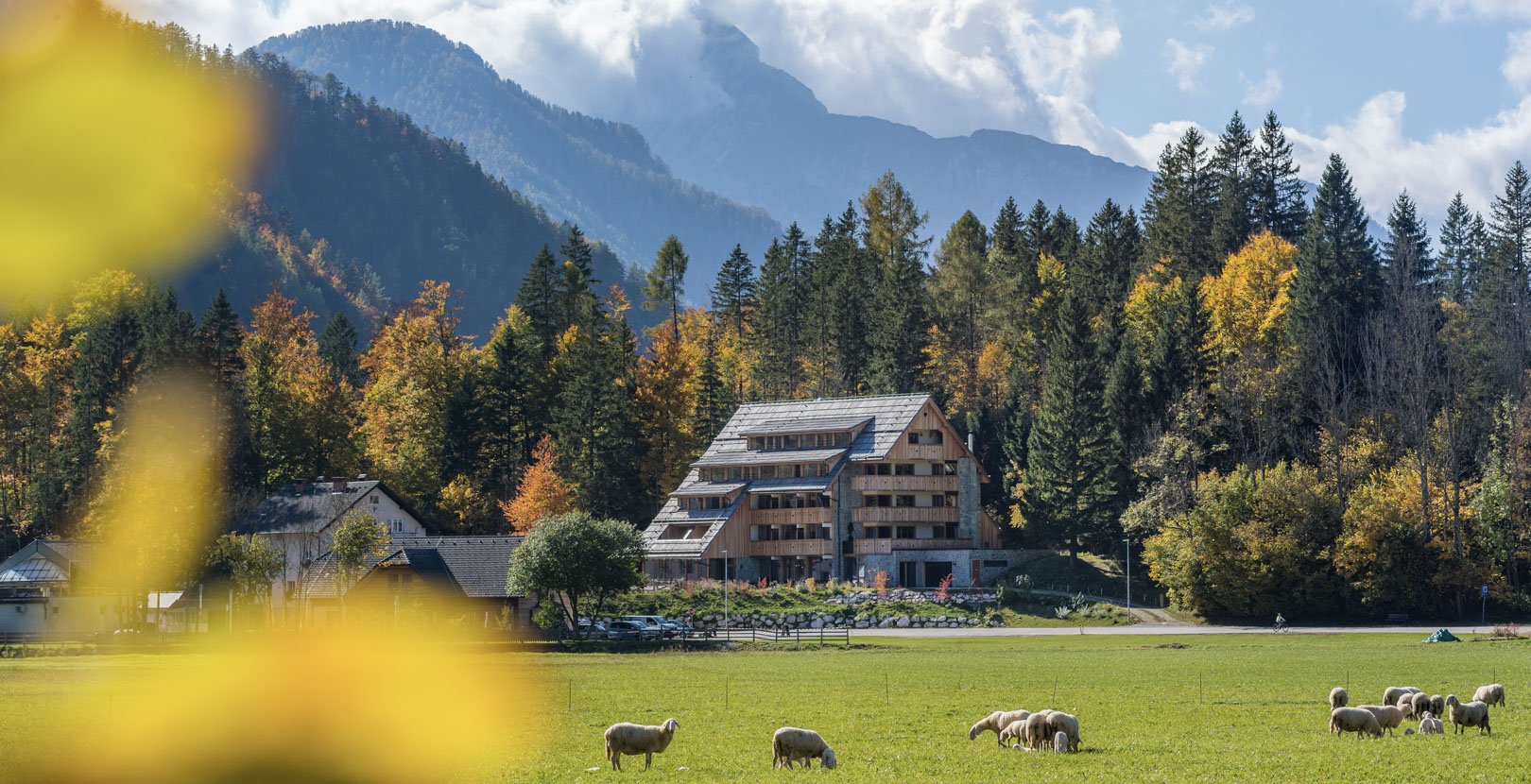
Jezersko is the sort of place road maps treat as an afterthought, a pocket of Upper Carniola pushed up against the Karawanks where Slovenia runs out and Austria begins. The Kokra threads it, meadows flatten between the peaks, and the light in autumn does something to the larches that no photograph quite holds. Vila Planinka sits at the top of the valley, four storeys of larch and spruce over a stone base, its balconies fretted with the old Alpine heart cut-outs. It was rebuilt from a much older house on the same spot, and it wears its newness lightly.
Turn it whichever way you like and the answer is the same view: forest climbing to rock, a meadow where sheep work the grass, and beyond them the ridgelines the valley is named for. The owners talk of four energy points around the building and a spring they bottle on the premises, and you can take that or leave it. What is harder to argue with is the quiet, which arrives the moment the engine goes off and does not lift again.
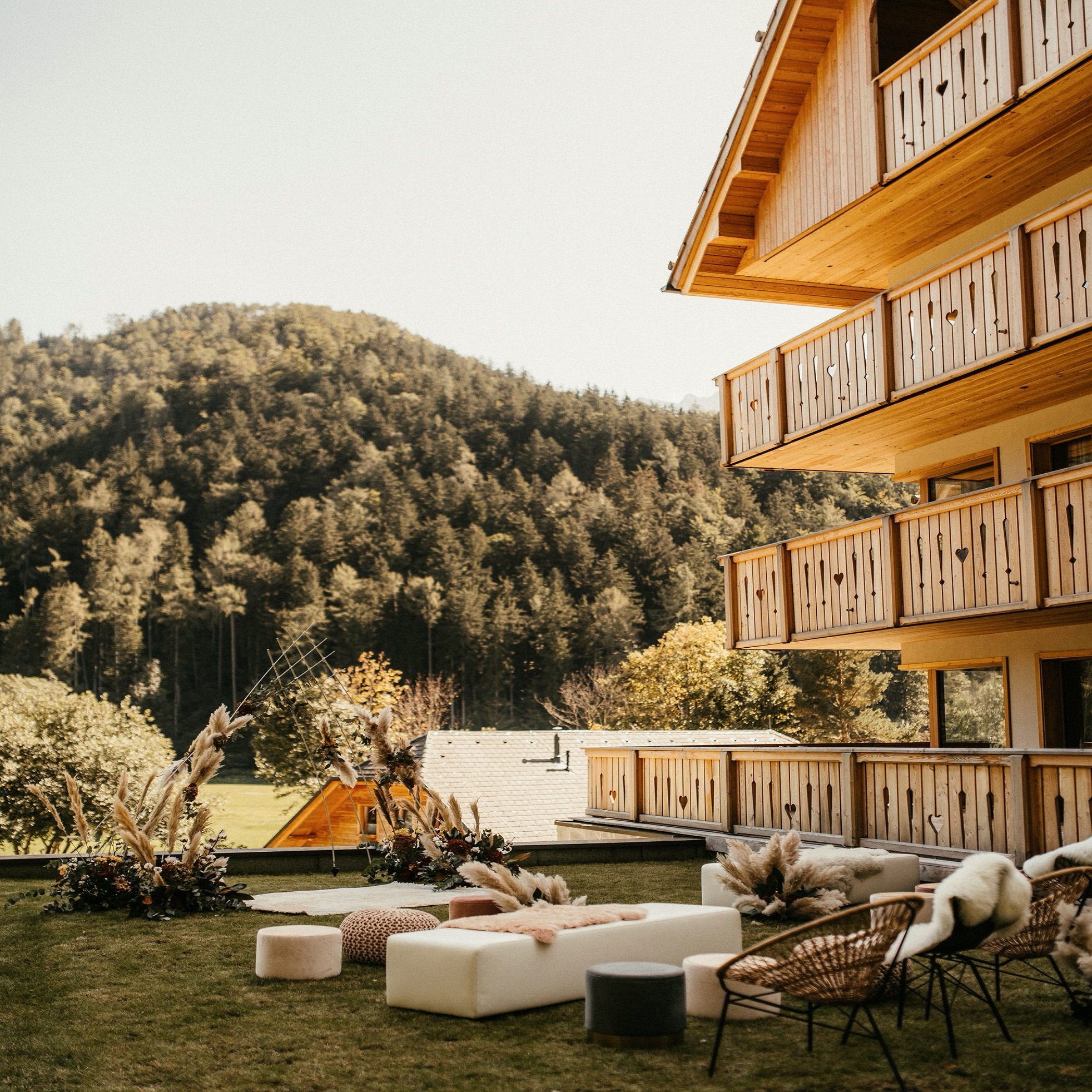
The quiet arrives the moment the engine goes off, and it does not lift again.
A house built around one stubborn rule
Most hotels sell you connection. This one takes it away and hands back something better. The rooms, a little over twenty of them across the four floors, carry no televisions and no Wi-Fi, and, less visibly, no electrical wiring buried in the walls at all. That last decision is the one the whole place turns on. It is easy to switch a router off; it is a different order of commitment to build a house so the signal has nowhere to live. After one restless evening you stop reaching for a phone that has nothing left to do, and the room gives you back a kind of sleep you had half forgotten.
Inside, the warmth is all wood. A fireplace set into a rough stone wall, feather-light pendants over a long counter, cowhide and pale linen, a bar where the day begins and ends. None of it is loud. The house is Green Key certified and runs close to plastic-free, and the care shows less in a plaque than in the plainness of the choices, the bottled valley water, the timber cut nearby, the refusal to bury a cable it did not need. Concept and setting are the same thing here, which is rarer than it sounds.
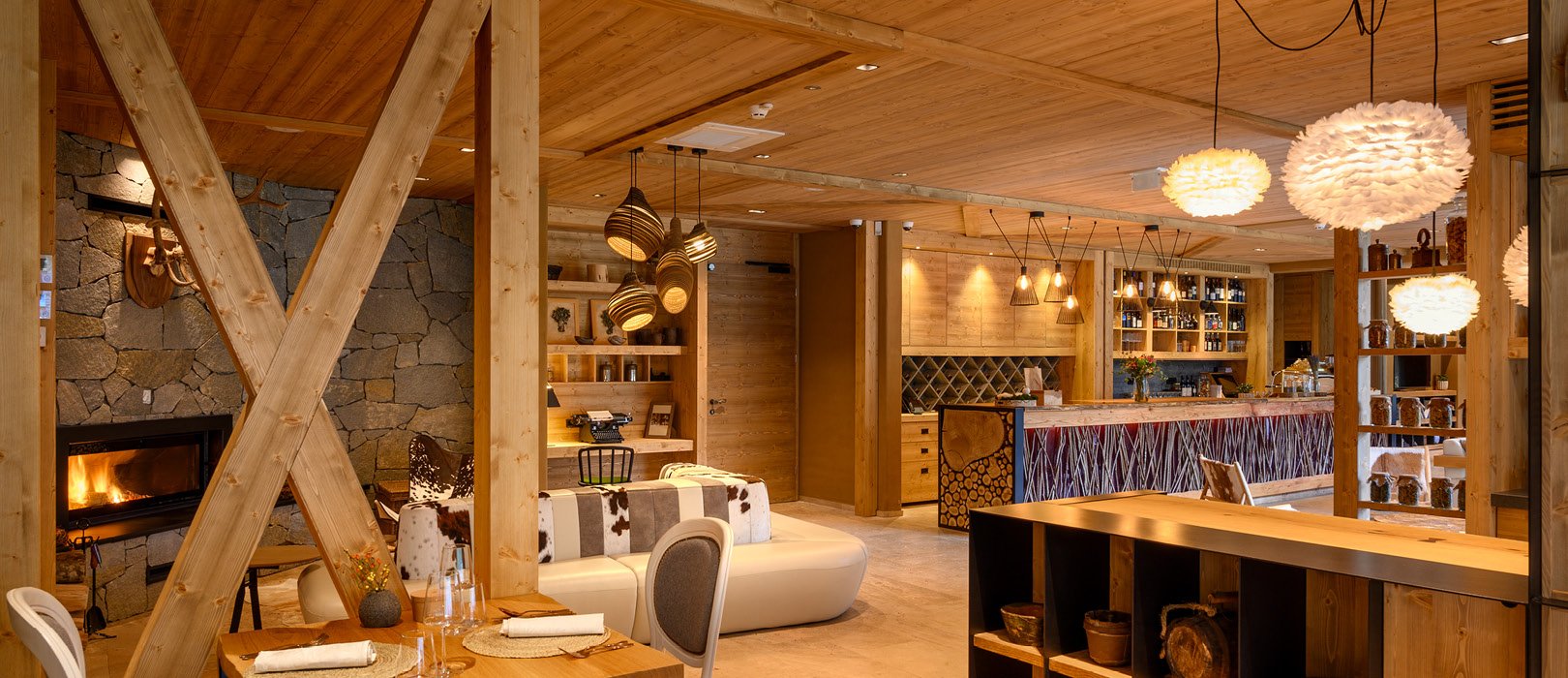
You stop reaching for a phone that has nothing left to do.
What the valley grows, and what Slovenia pours
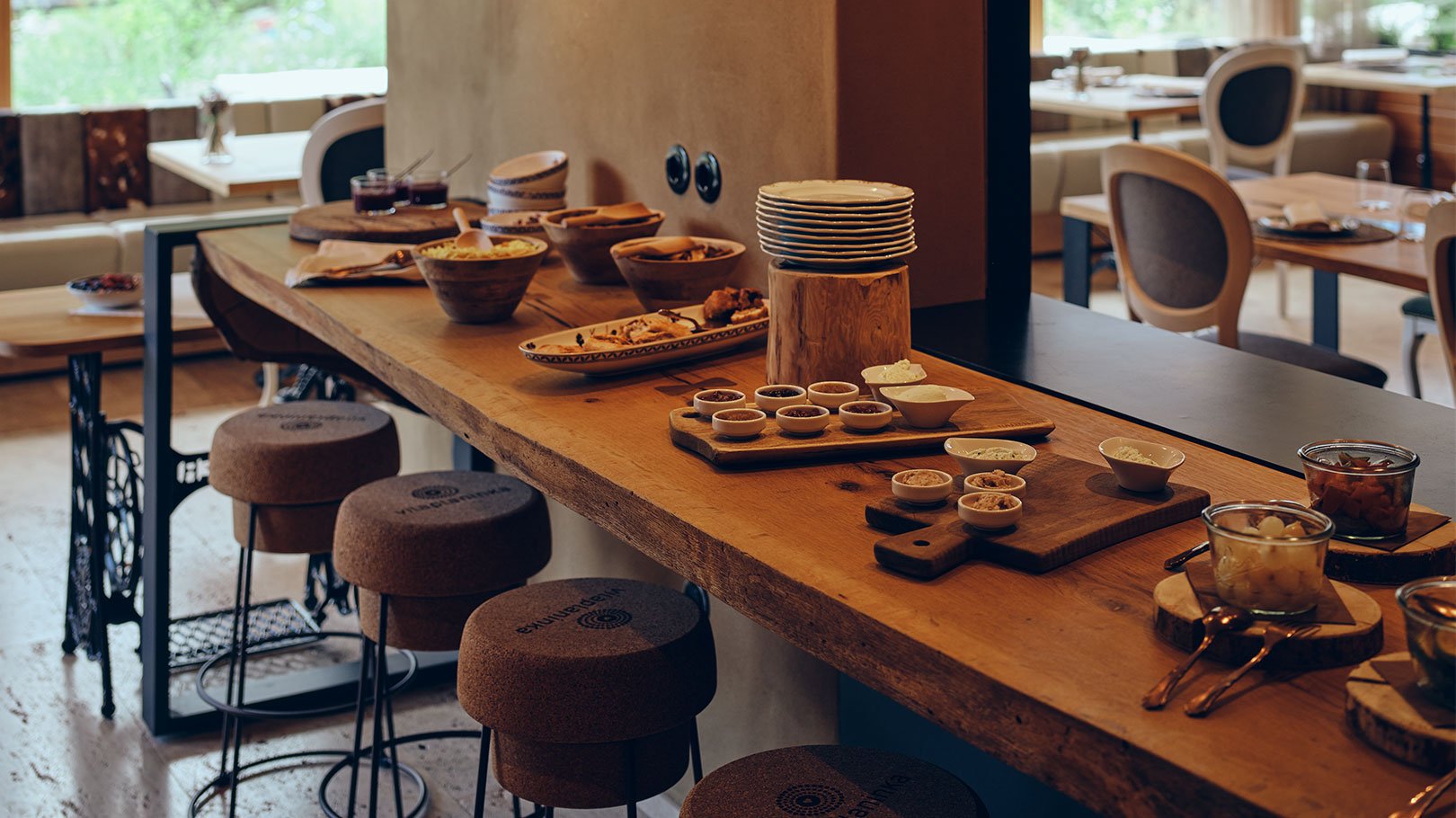
The kitchen keeps to what the valley grows and rears, and the cooking is plain in the way that takes the most confidence, ingredient first, ornament last. The Michelin guide lists the dining room in its 2026 edition; Falstaff scores it in the low nineties. Neither number is really the point, and the house seems to know it. Breakfast comes off a live-edge counter in wooden bowls and on boards, cork stools stamped with the hotel's name pulled up to the wood, the produce set out as if the mountain had left it there itself.
The real theatre is downstairs. The wine room is a climate-controlled cellar the two sommeliers half-jokingly call the sanctuary, drawn from all nine of Slovenia's growing regions, from Primorska on the Italian border to the eastern hills near Hungary, with a shelf of rare and archival bottles besides. It is a serious argument for a country whose wine still travels too little. Ask them to open something you have never heard of, and they will, and you will spend the rest of the evening glad the phone in your room does nothing.
Ask them to open something you have never heard of, and they will.
Vila Planinka is not selling thread counts or a spa menu, though it has the sauna and the treatments if you want them. What it offers is an idea you can sleep inside: that an Alpine house can be built in local timber and stone, run with real care, taught to hold its tongue, and still keep a proper table and one of the more interesting cellars in the country. The rooms are calm rather than grand, the cooking honest rather than showy, and the valley does most of the work. Come in autumn, when the larches turn and the meadows go gold, and you will stay longer than you meant to.
Photos: Vila Planinka (official), with credit.