The house in the dunes
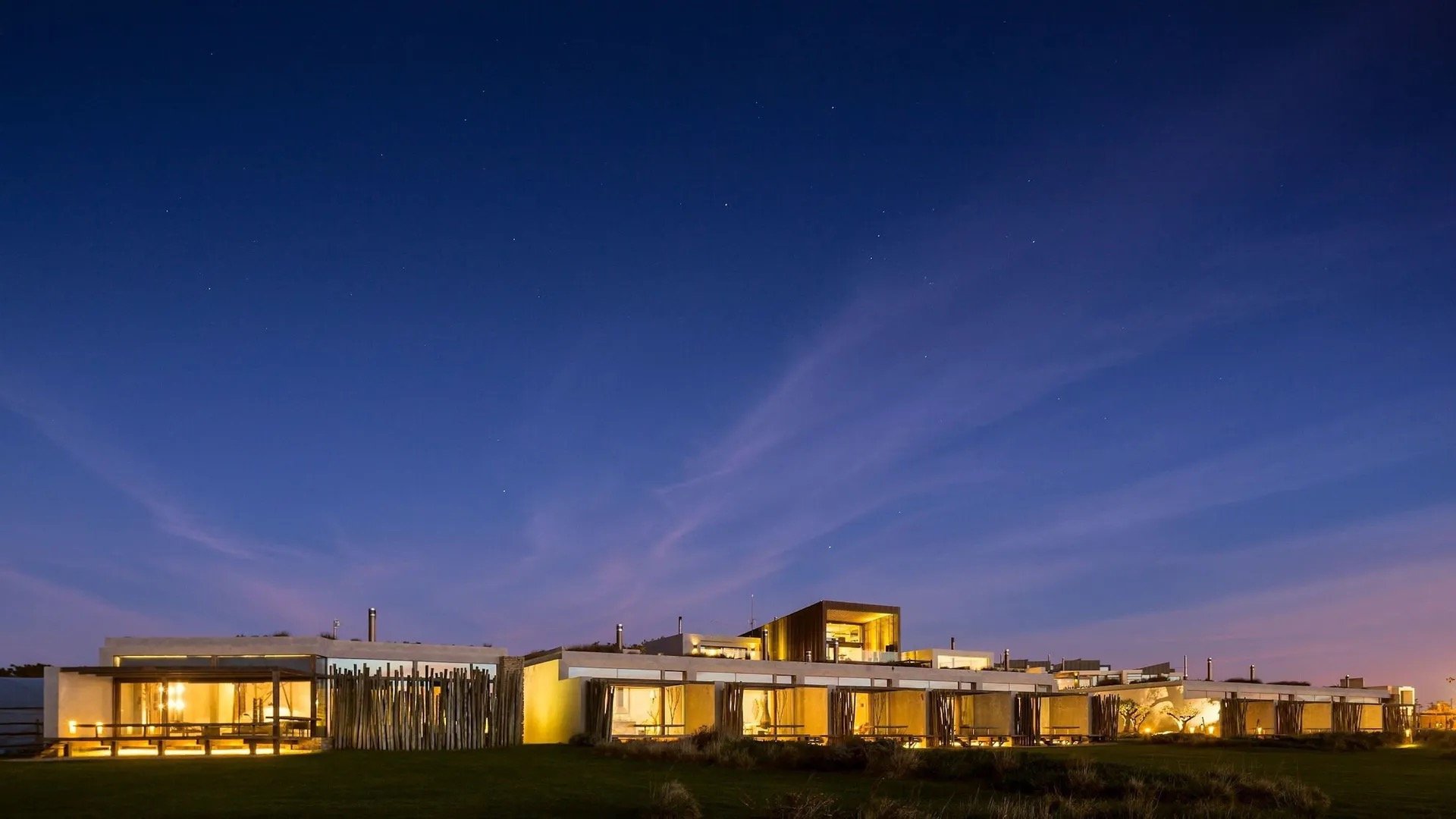
The architect Vasco Vieira set the building low against the Silver Coast, a long line of concrete and glass eased into the slope so the dunes seem to run straight through it. When a storm brought down the trees on the plot, the owners kept the fallen wood and worked it back into the walls and the furniture, and so the place carries its own history in plain sight, in the beds and the tables and the beams overhead.
There are fifteen suites in the main house, each one different, some named for gold, for the land, for a tree. You will not find a television in them, or air conditioning; the Atlantic does the cooling, and a fireplace does the rest on the nights it turns. Solar panels and geothermal wells carry most of the load the season asks of them. A scatter of villas and townhouses takes the families and the larger parties, set back among the pines. None of it announces itself. The house simply seems at ease in its own skin, and the days are meant to slow to the grasses, the dunes and the sea a short walk beyond the garden.
The storm took the trees. The house kept them.
Semear, the place that sows
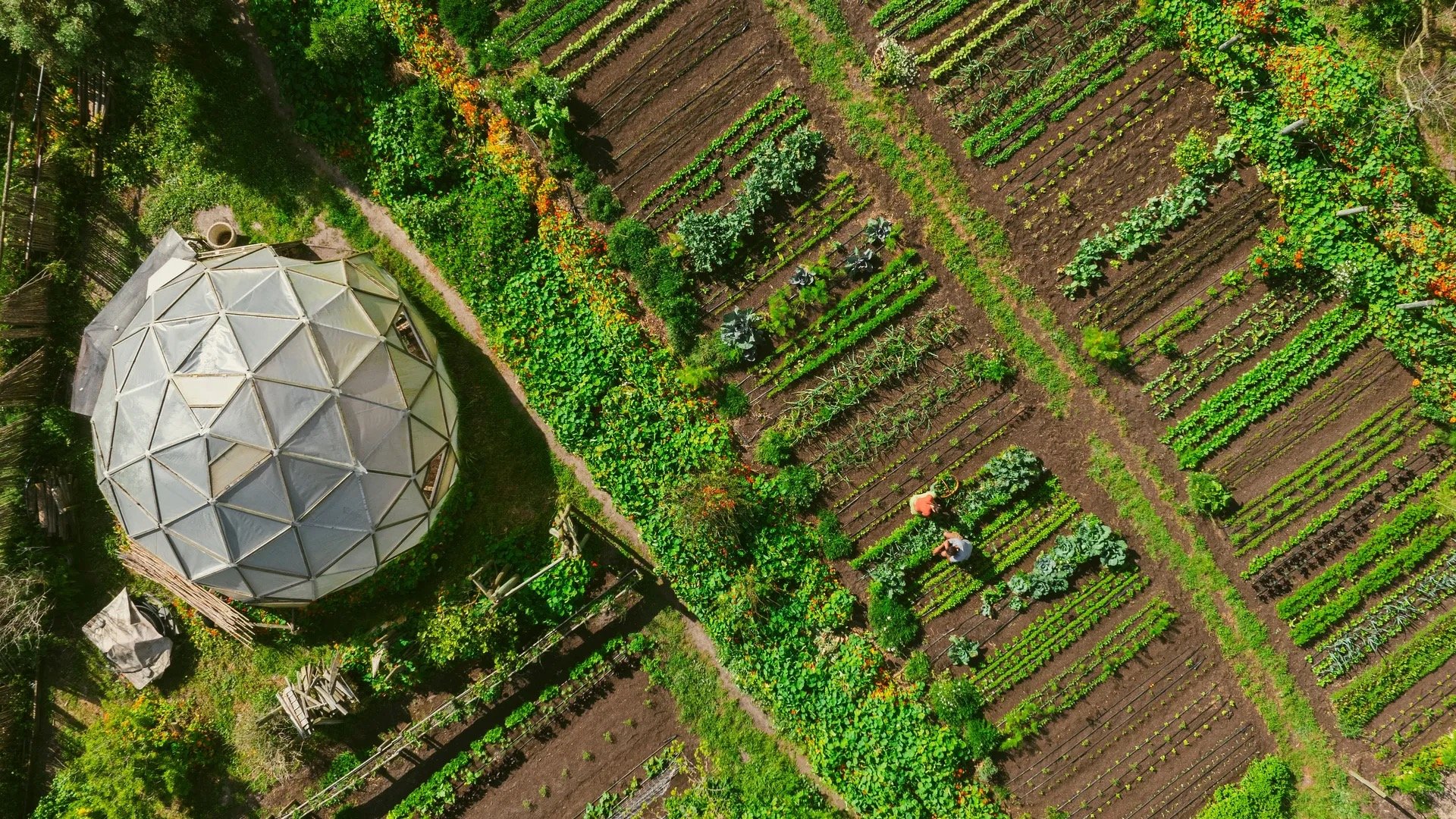
The kitchen has its own name and its own logic. Semear, the Portuguese word for to sow, cooks from the beds you can see from the terrace: rows of vegetables and herbs and flowers ranged around a geodesic dome, tended by hand and turned back into the soil at the end through the compost. What the garden does not give is landed along this coast or brought down from family fields further inland and from the farmers nearby. Meals are seasonal by necessity rather than fashion, and what is not pulled from the ground that morning is rarely far from it.
Breakfast runs long and unhurried. Dinner is candlelit and slow, sometimes laid in a room of its own, sometimes out under the dome among the plants it draws from. There is a discipline underneath all of it, a refusal to buy in what the land can be asked to grow, and it shows in the plainness of the plate rather than in any speech about it. You eat well here, and you eat close to where you are standing, which is a rarer thing than the brochures of this coast would have you believe.

Nothing here lectures you on how it lives. It simply lives that way.
Where the day goes slack
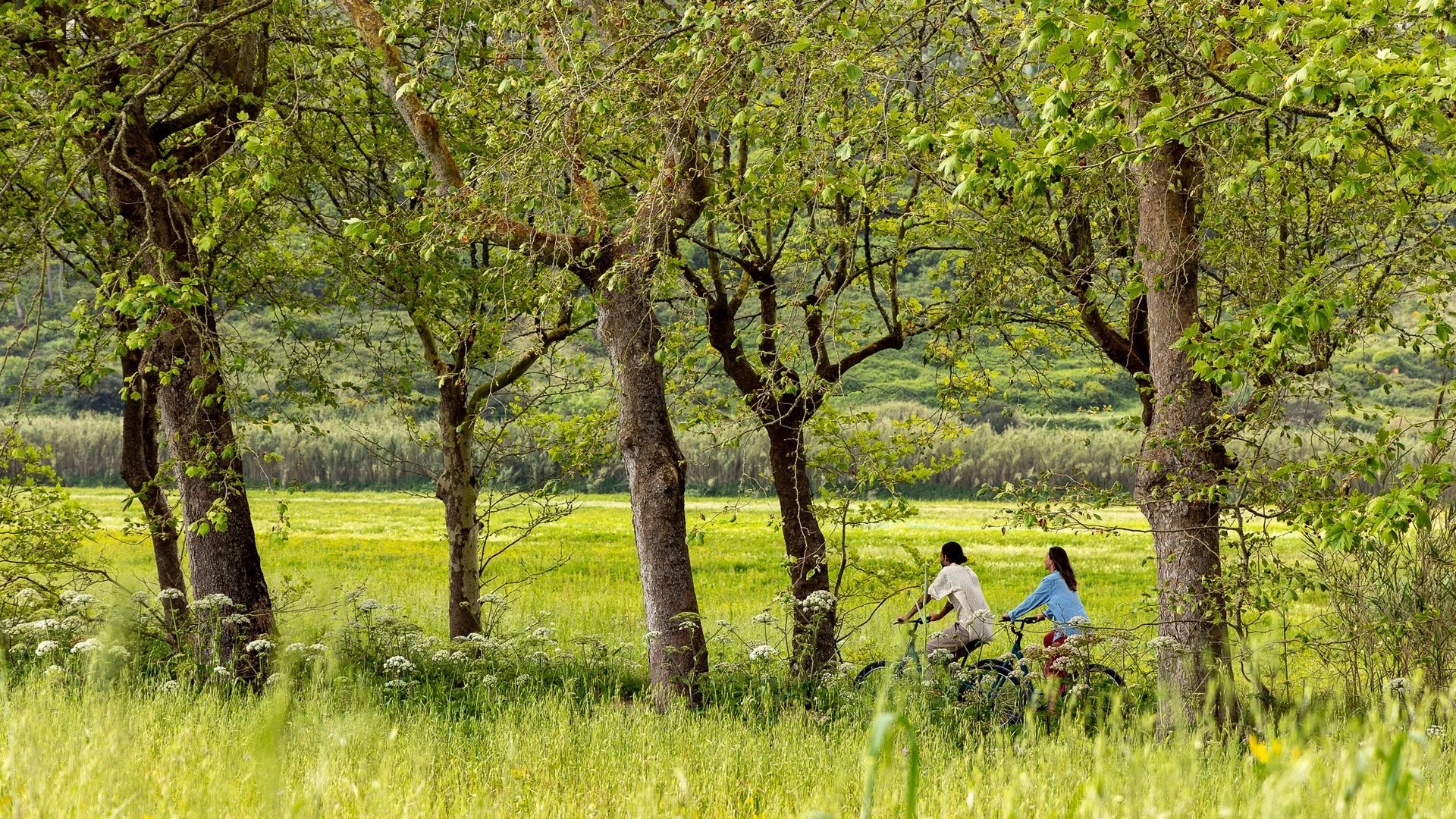
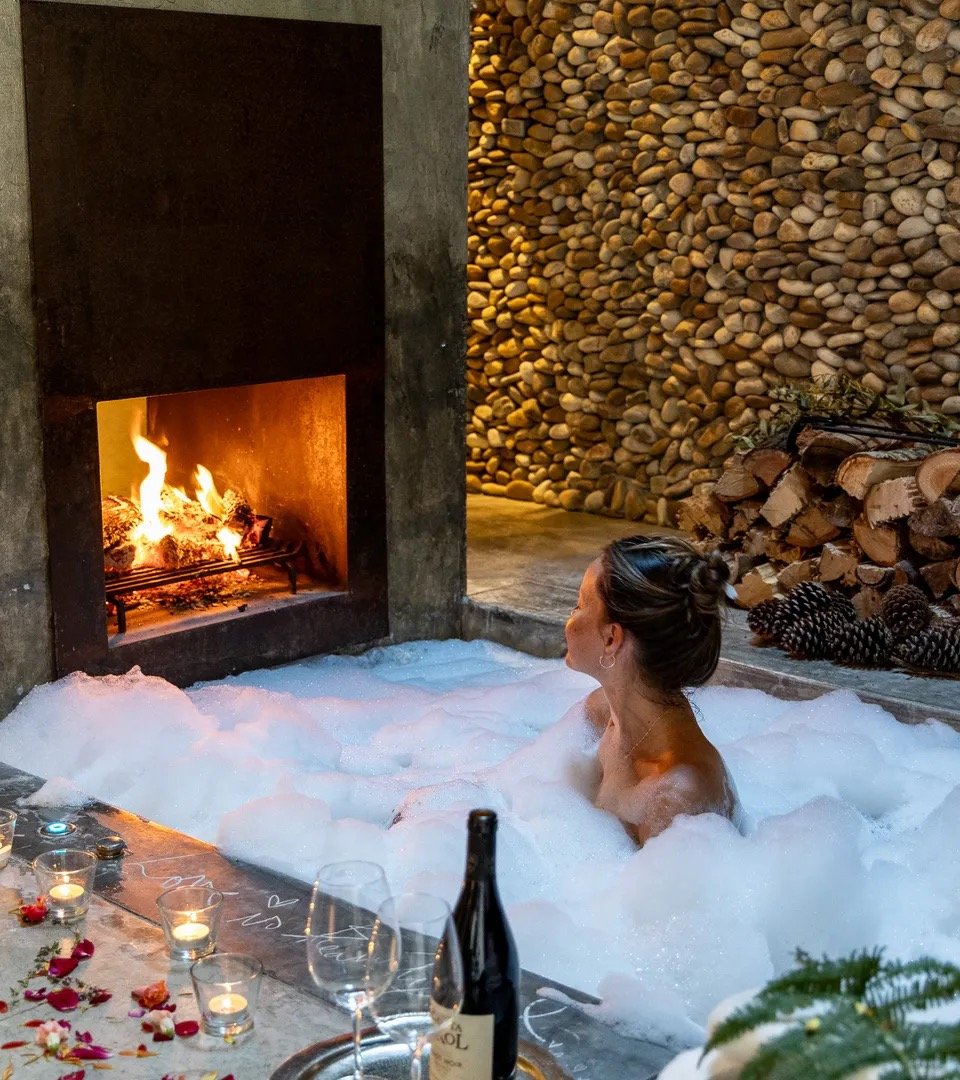
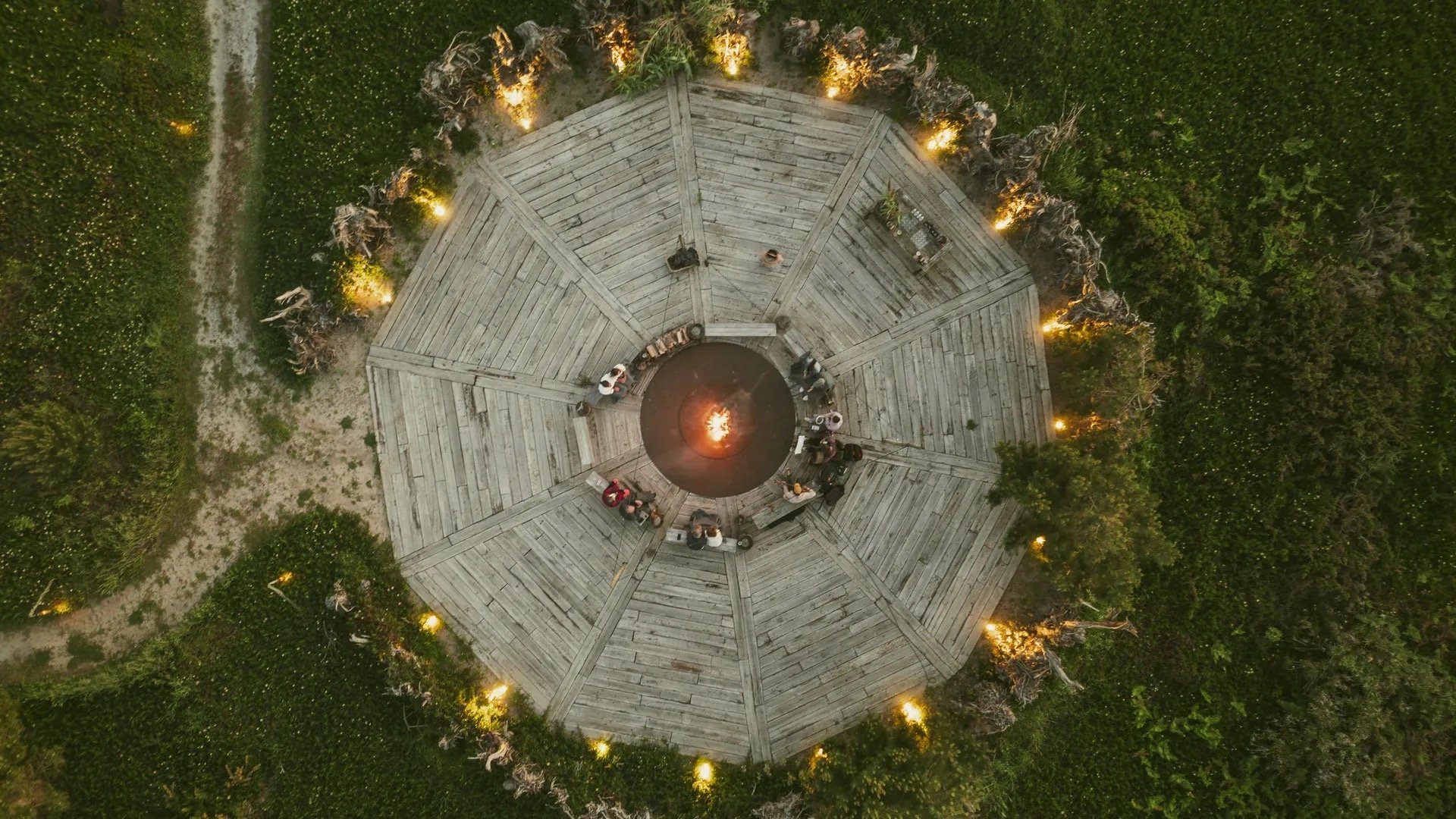
The evening has its own choreography, and none of it is rushed. There is a stone bath by an open fire, foam and candlelight against a pebble wall, and a spa with saunas and a steam room and an outdoor pool for the warmer end of the day. Out in the dunes a communal fire is lit inside a ring of timber, and the house gathers there as the light goes, the sea a dark line beyond the grasses. In the morning there are bicycles by the door, and the meadows to ride out through before the heat arrives.
The caveats are honest ones. This is a remote address, adults-led in the main house, an hour from the capital and firmly in its own weather, which turns sharper and greyer on this coast than the postcards of the Algarve suggest. Anyone after a city base or a lively beach scene should look elsewhere. Come to slow the days right down, to eat from the garden and sleep to the sound of the Atlantic, and it gives you exactly that.
Plenty of hotels talk about sustainability now, and most of it is wallpaper. Areias do Seixo built the idea in from the foundations, makes much of its own power and grows much of its own food, then keeps quiet and lets the comfort carry the argument. It is a design hotel that happens to be a working garden, an hour from Lisbon yet a long way from it in spirit. Take a suite over a villa, cycle out at dawn, and let the days go slack.
VANE note. This is a researched profile, not yet a first-hand VANE verdict. A full review carries a stay date, an independence disclosure and our own account. Photographs: Areias do Seixo (official), with credit.