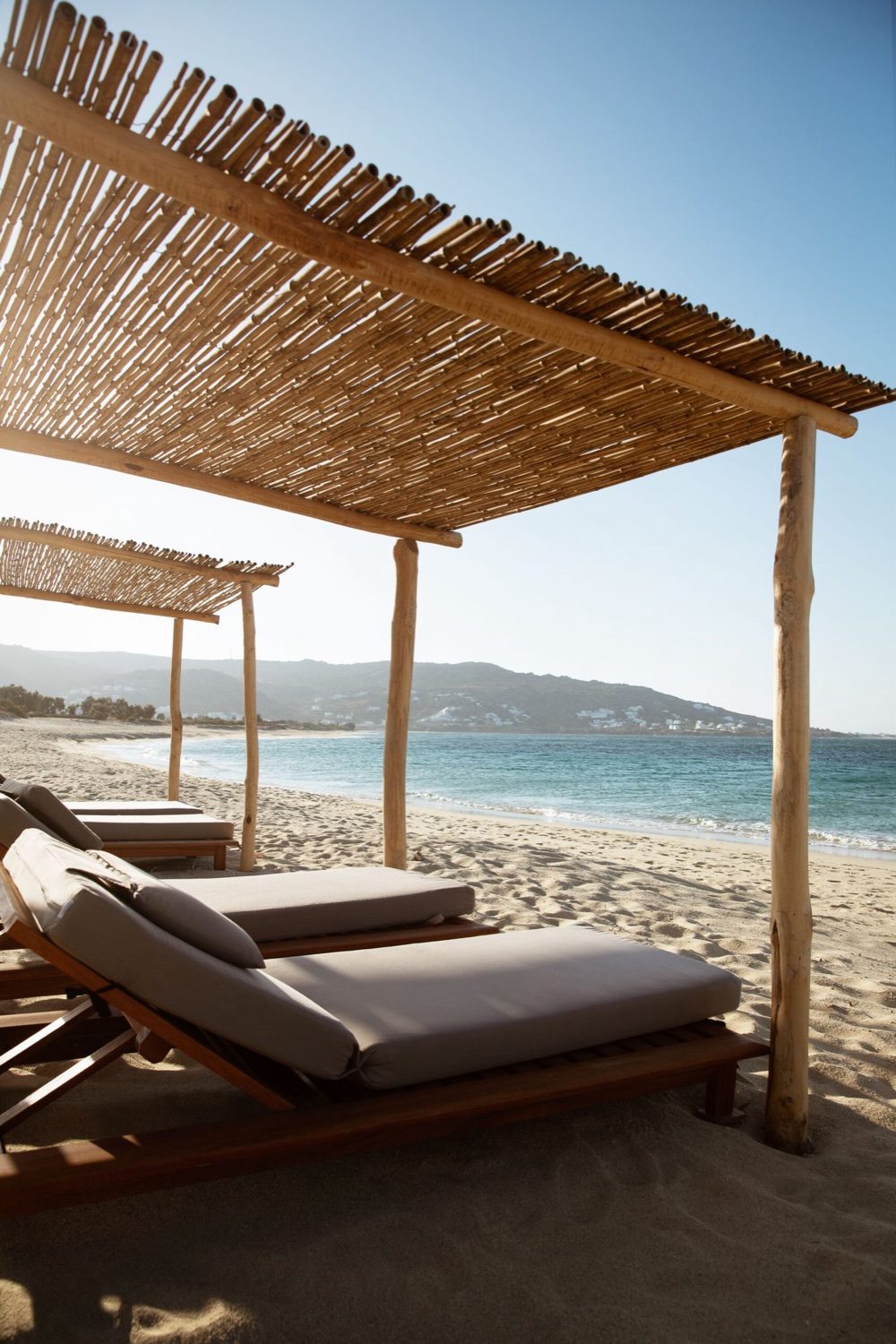
The longest beach on the island
Plaka is one of the longest and shallowest beaches in the Cyclades, a wide ribbon of pale sand where the water stays turquoise and knee-deep a long way out. It faces west, so the day ends in front of you rather than behind. Cedar and juniper hold the dunes together, and the grasses run right up to the sand. Ammothines sits behind them, low and white, close enough that the beach service reaches almost to the room.
There is no shortage of places to sleep on this coast. What Naxos does not always have is a house content to stay quiet. This one gives the sand and the light the leading part and keeps itself to the edge of the frame, which on a busy Cycladic summer is harder to do than it sounds.
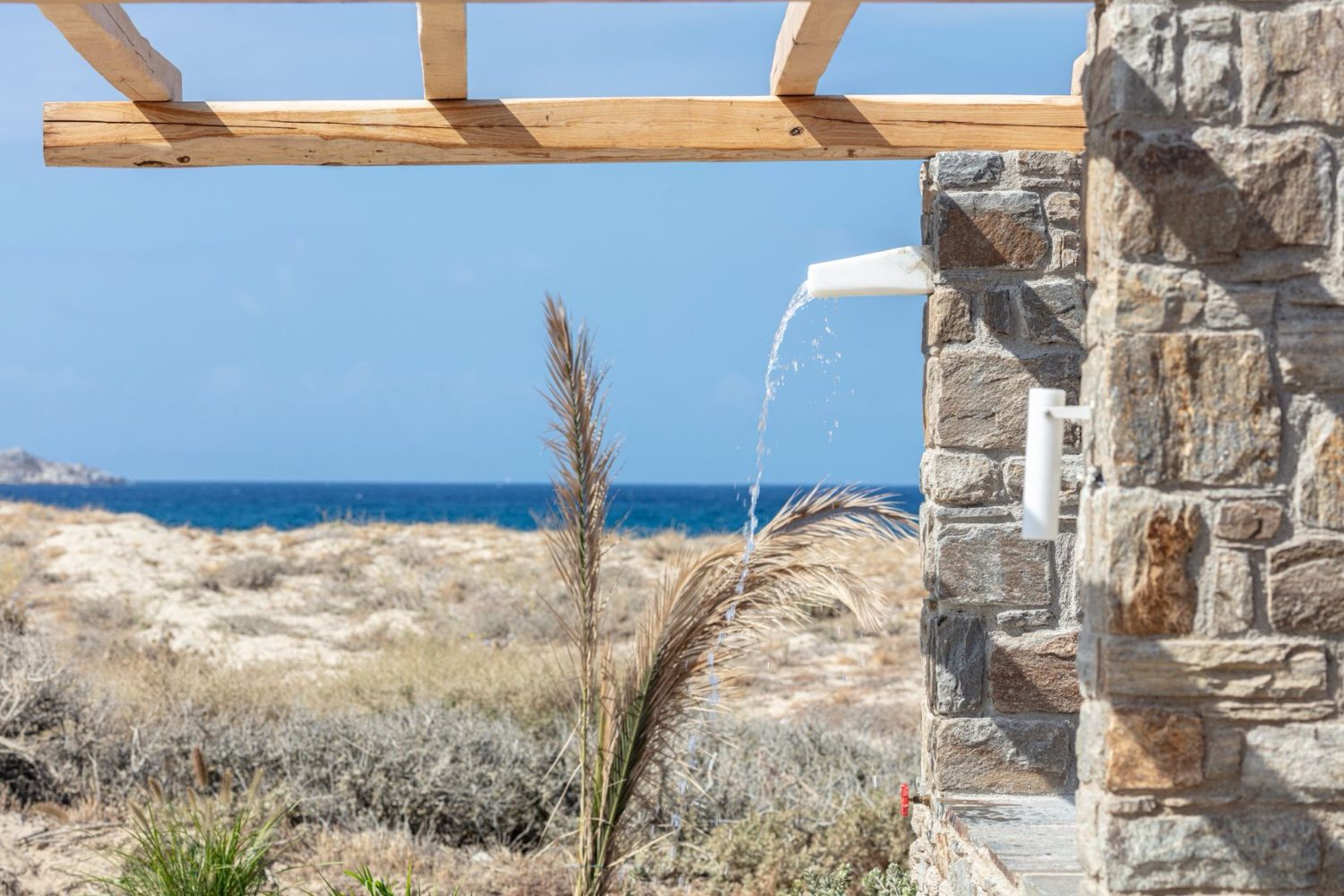
The idea is not to look at the landscape. It is to disappear into it.
Marble, worked by hand
Naxos is the marble island, the stone that gave the ancient kouroi their pale bodies, and that same white marble runs through the fifteen suites. Manolis and Odysseas Kontopoulos drew the architecture and the interiors and, working the local material by hand, gave the house its language: Cycladic arches, mild curves, sculpted forms that soften every corner. The floors are marble and wood, the beds framed in American oak, the shelves set with island pottery and plain textiles. Little of it was bought in. Most of it was made for the place.
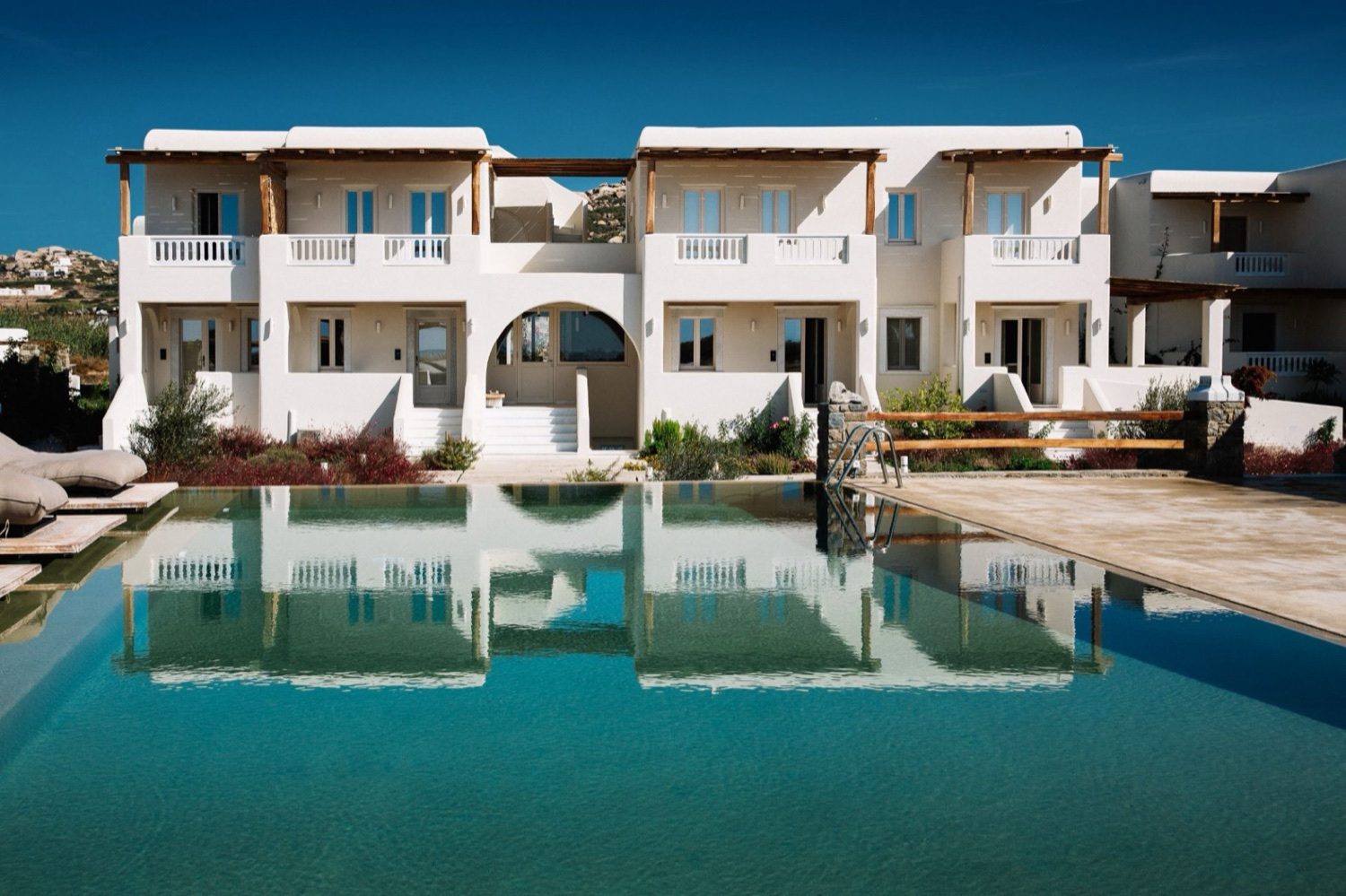
The suites are quiet and uncluttered, arranged around the pool a few steps back from the beach. Nothing shouts, there is no theme and no spectacle, only good materials and the right light. The house calls this unpretentious luxury, a phrase that usually promises more than it keeps. Here, for once, it holds.
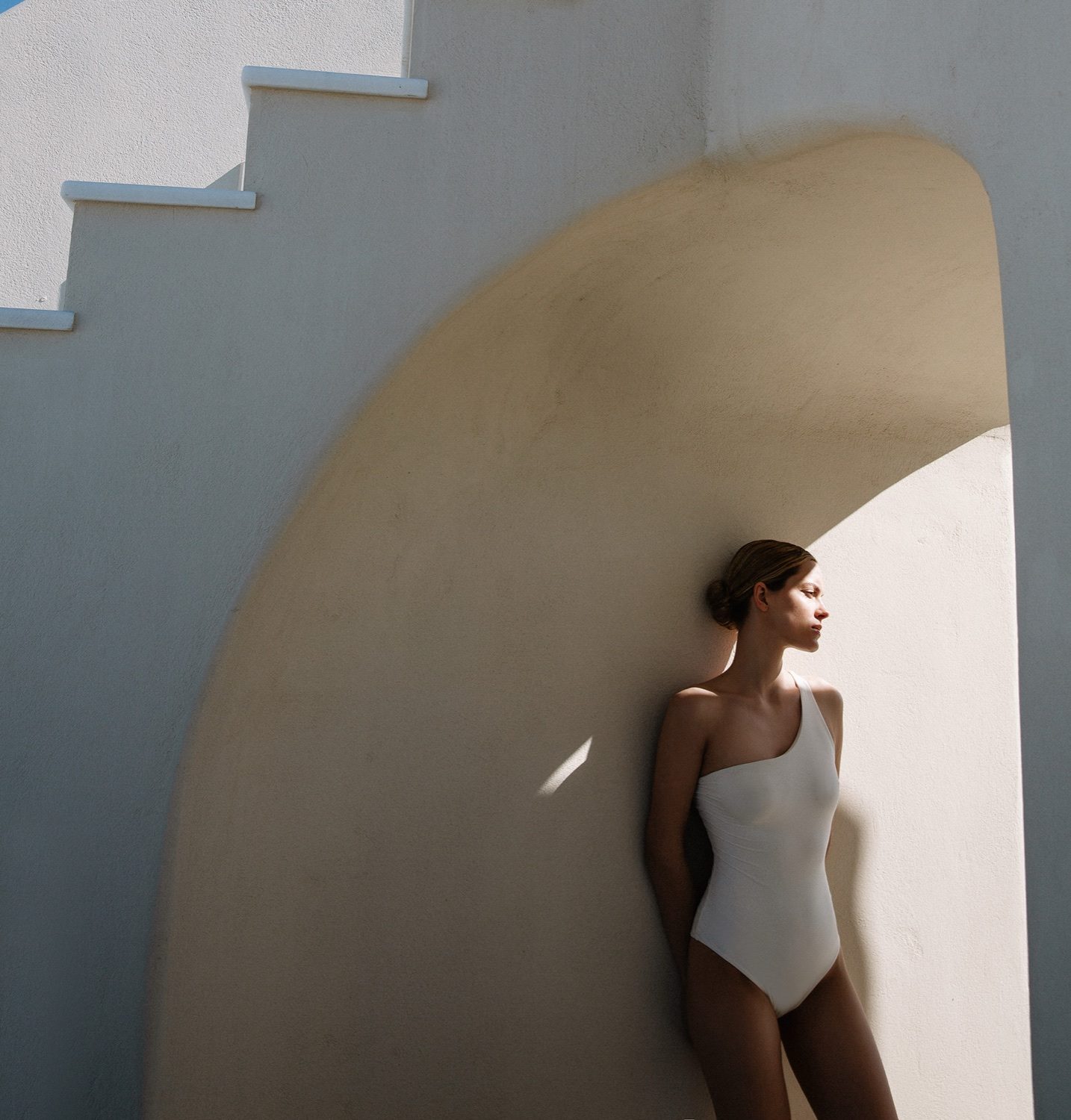
The same stone that shaped the kouroi now shapes a doorway.
Where the day is spent
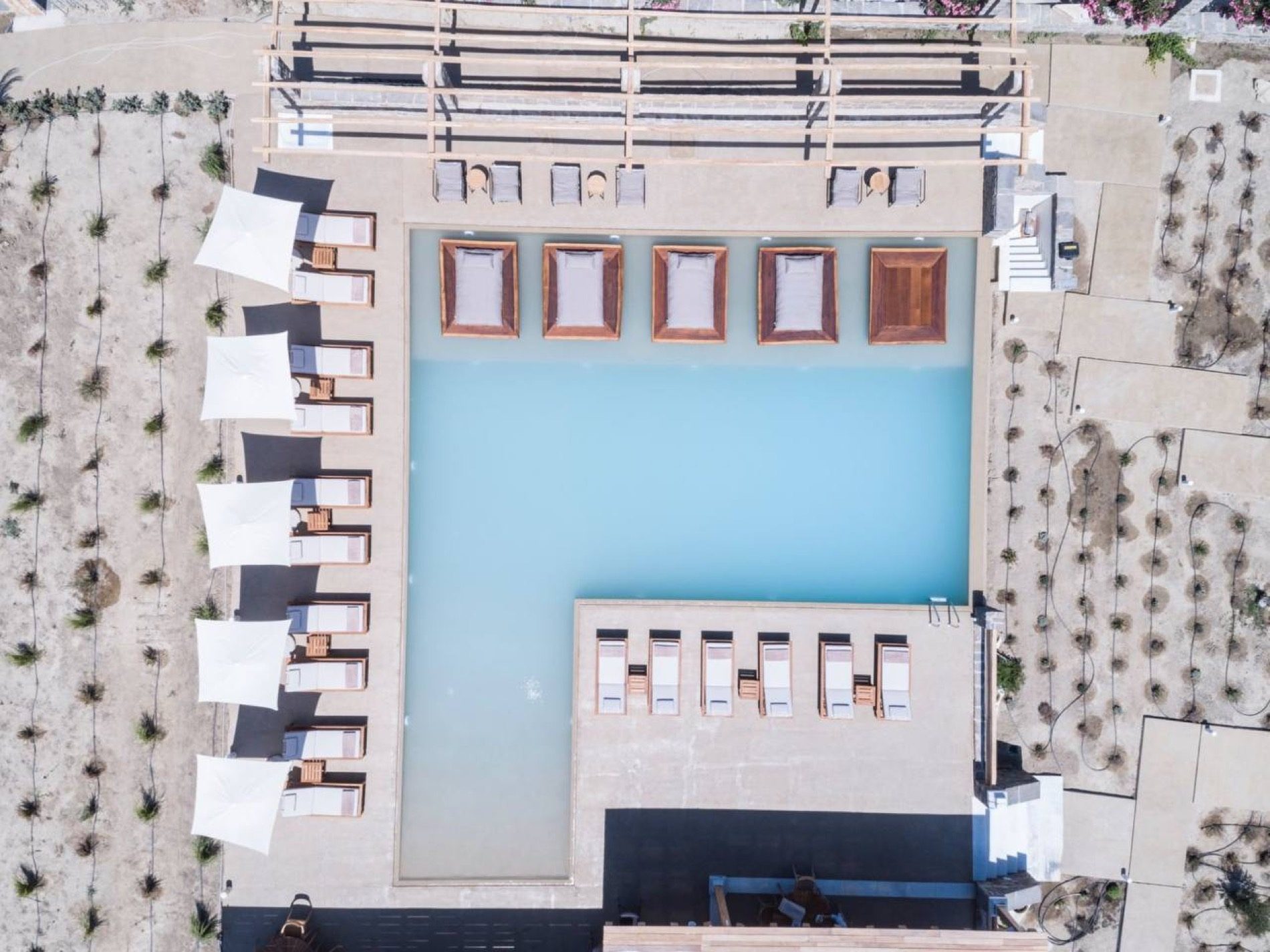
The pool is the centre of the plan, a broad sheet of water with timber daybeds set into the shallow end and sunshades ranged along the sand behind it. At dusk the pergola bar comes up in warm light while the sky over the water goes dark, and most of the house drifts back to the edge of the pool for the last hour. The kitchen keeps close to home, breakfast and the odd tailor-made dinner built on Naxian and Aegean produce rather than a long menu, with the tavernas of Plaka and Mikri Vigla a short walk along the sand for the rest.
The caveats are honest ones. This is a summer house, beach-led and west-facing, at its best from late spring to early autumn, and Plaka fills out in August. Anyone after a town base or a mountain hideaway should look elsewhere on the island. Come for the sand, the marble and the slow west light, and it gives you exactly that.
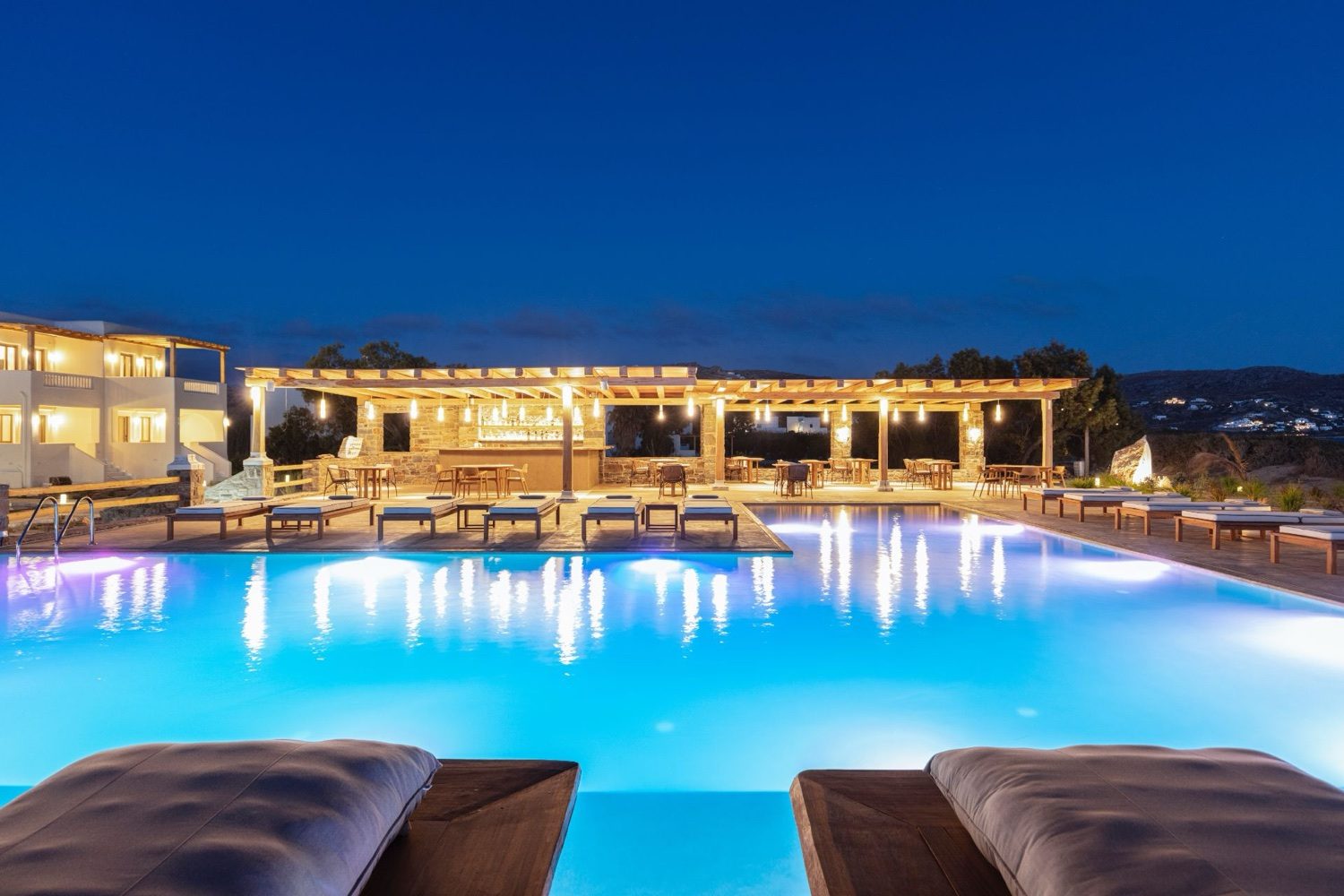
There are grander hotels on Naxos and a great many louder ones. Ammothines earns its place by restraint: design rooted in the island's own marble, a footprint kept low and close to the ground, a beachfront it treats as the event rather than the backdrop. It will not suit everyone, and it does not try to. But for the sand, the stone and the long slow sunset over Plaka, there are few better addresses on this coast.
VANE note. This is a researched profile, not yet a first-hand VANE verdict. A full review carries a stay date, an independence disclosure and our own account. Photographs: Ammothines Cycladic Suites (official), with credit.