The other bank
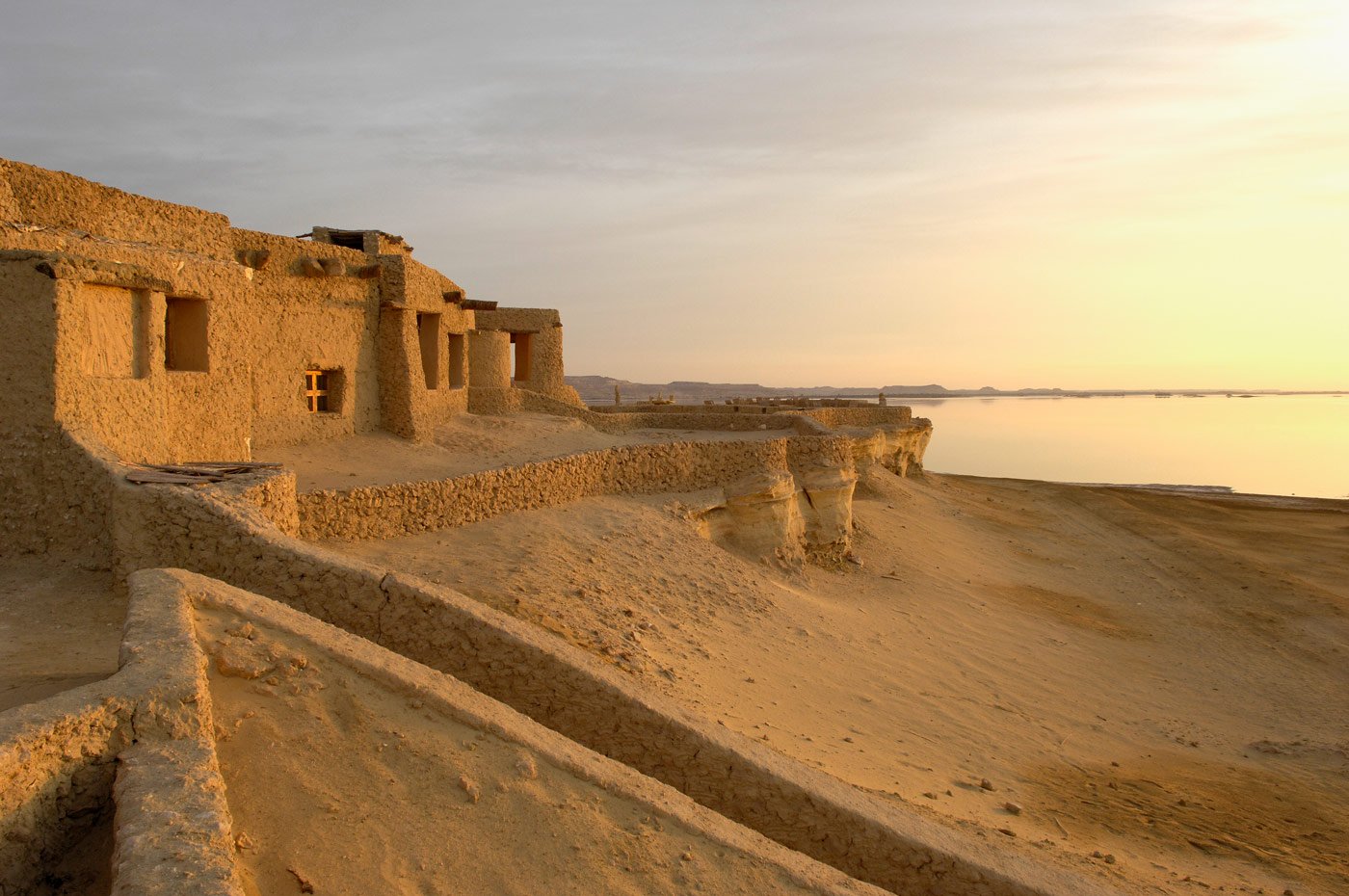
Almost everyone does Luxor from the east. It is where the trains and the flights land, where Karnak and the Temple of Luxor stand floodlit after dark, and where most of the beds are. The west bank is the older half, the side the ancient city set aside for its dead: the Valley of the Kings and the Valley of the Queens, the great mortuary temples at Medinet Habu and the Ramesseum, the Colossi of Memnon looking out over the fields. People come across for a morning, tramp through a few painted tombs before the heat closes in, and are back on the boat by lunch.
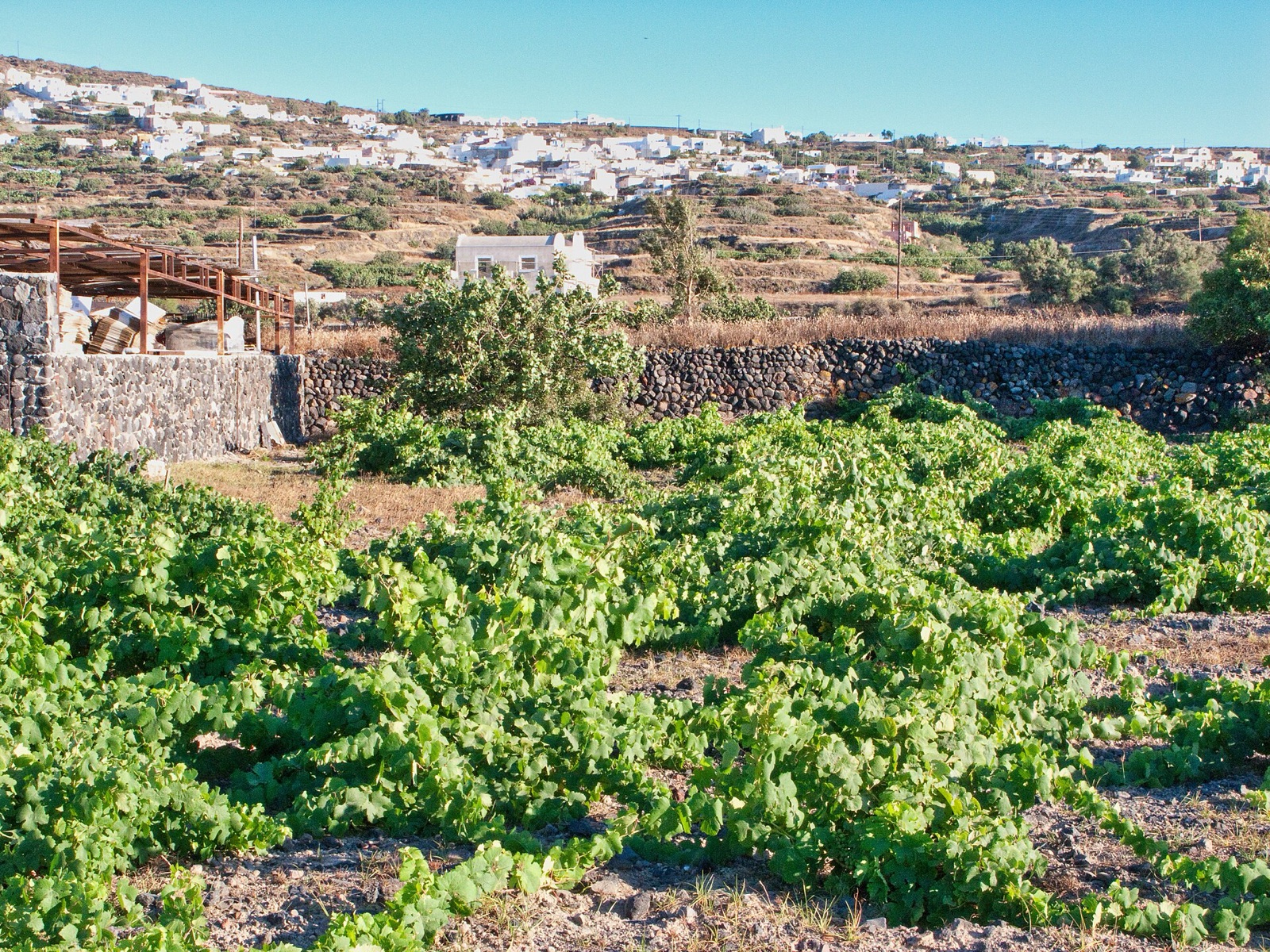
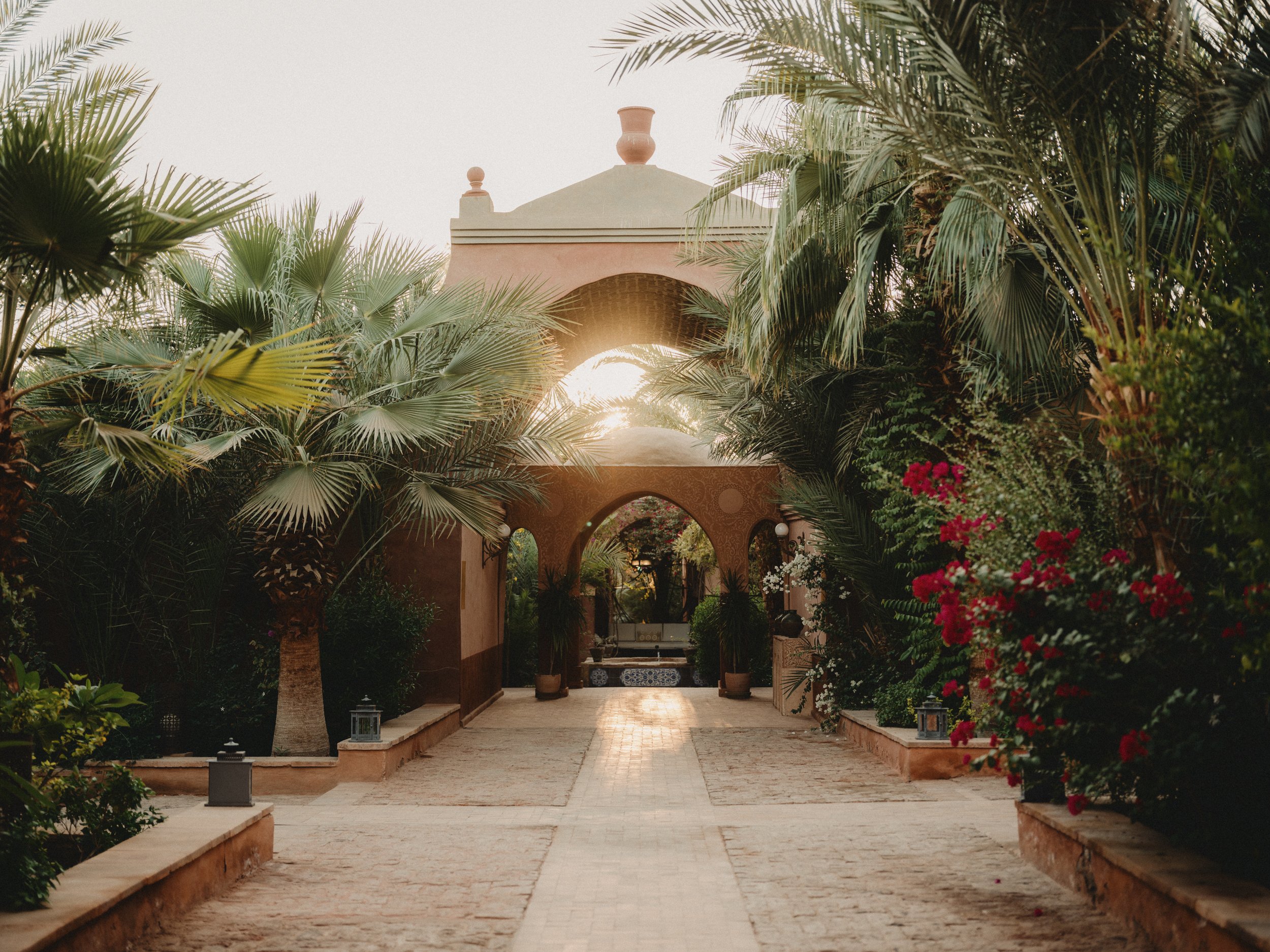
Al Moudira asks you to stay. It stands a short drive inland from the ferry, screened behind its own walls in a stretch of farmland and date palm, with the pink Theban cliffs holding the horizon. The address is the argument. From here the tombs are a few minutes away rather than a river and a queue, and the long afternoons, when the sites shut and the heat wins, are yours to spend by a pool instead of on a coach.
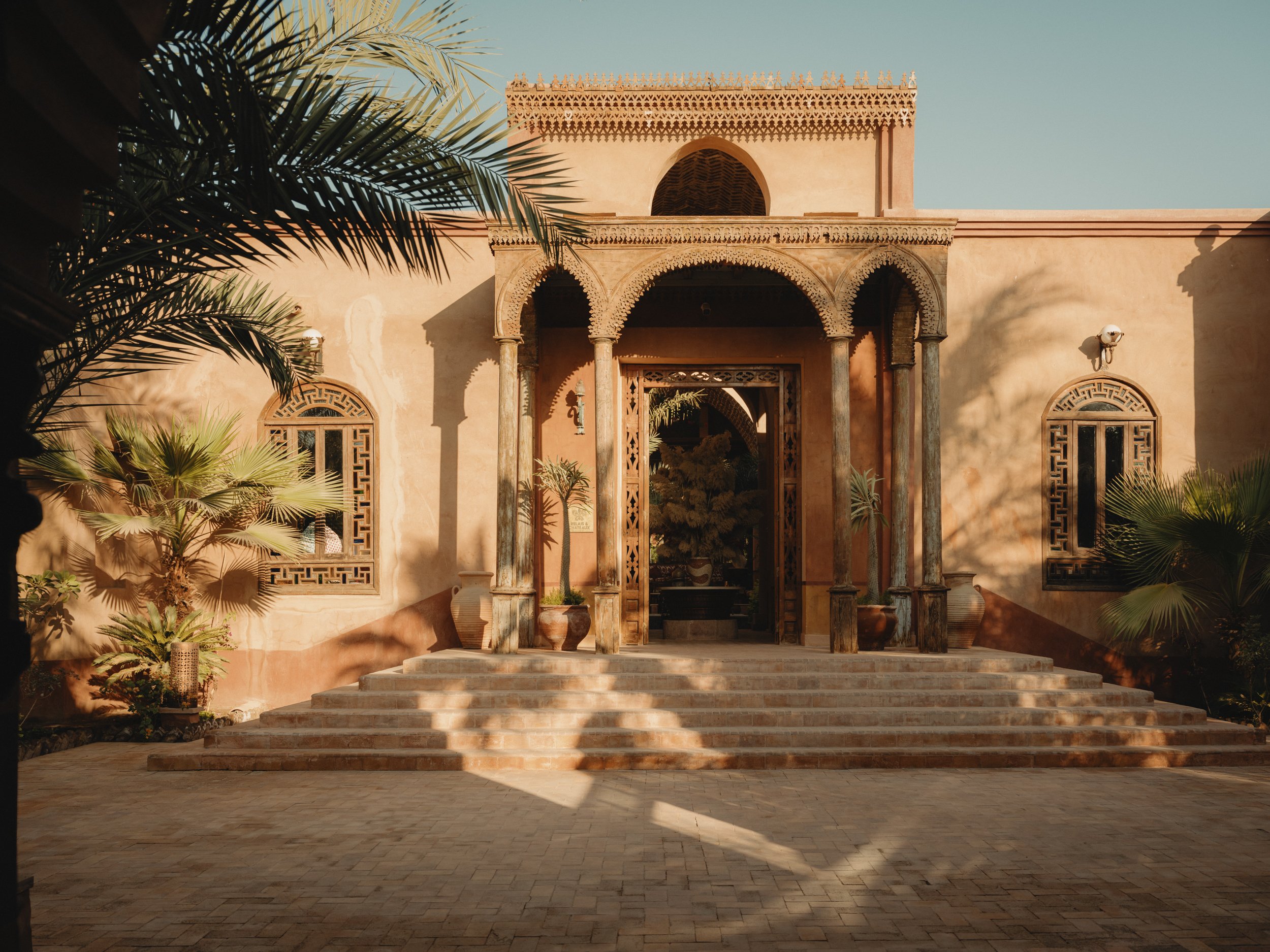
The east bank is where Luxor is seen. The west bank is where it is felt.
The woman who built it
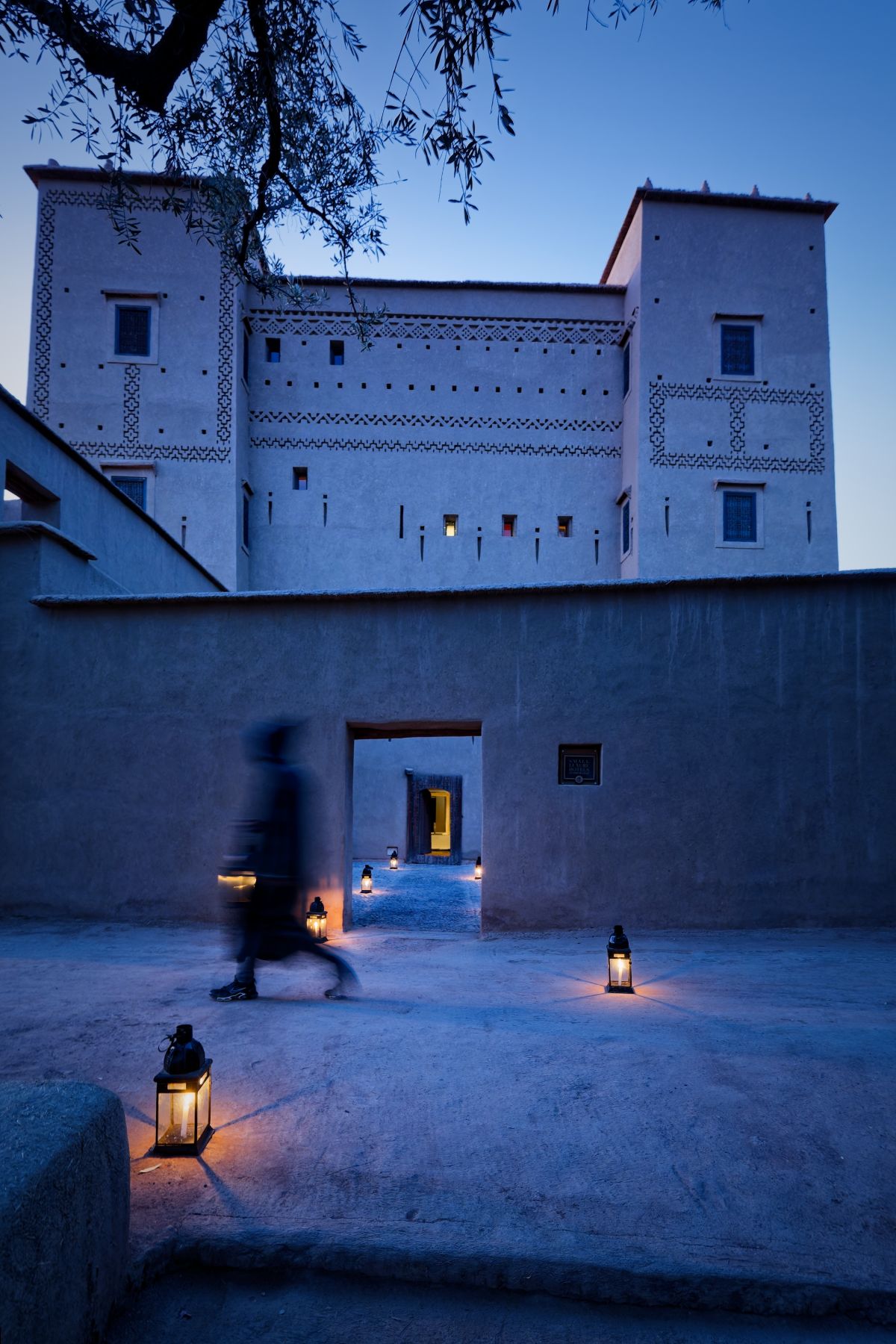
The hotel is the work of one person. Zeina Aboukheir, a Lebanese artist with a long love of Egypt, conceived the place in 1999 and opened it in 2001, working with the architect Olivier Sednaoui to raise something that would sit between a palace and a country house. She did not want a hotel that looked designed. She wanted one that looked found. The workmen and craftsmen who built it took to calling her the Moudira, the lady in charge, and the name went up on the gate.
What they made was assembled rather than drawn. Carved doors, mashrabiya screens, painted glass carried up from Alexandria, hand-cut floor tiles, and well over a thousand antique pieces gathered across Egypt and the wider region were worked into the fabric of the building. The result is a run of domed, frescoed rooms threaded through a set of planted courtyards, some fifty-odd suites in all, and no two of them the same. Thick pale walls keep the worst of the day out; the light indoors is low and cool, the kind you want to lie down in.
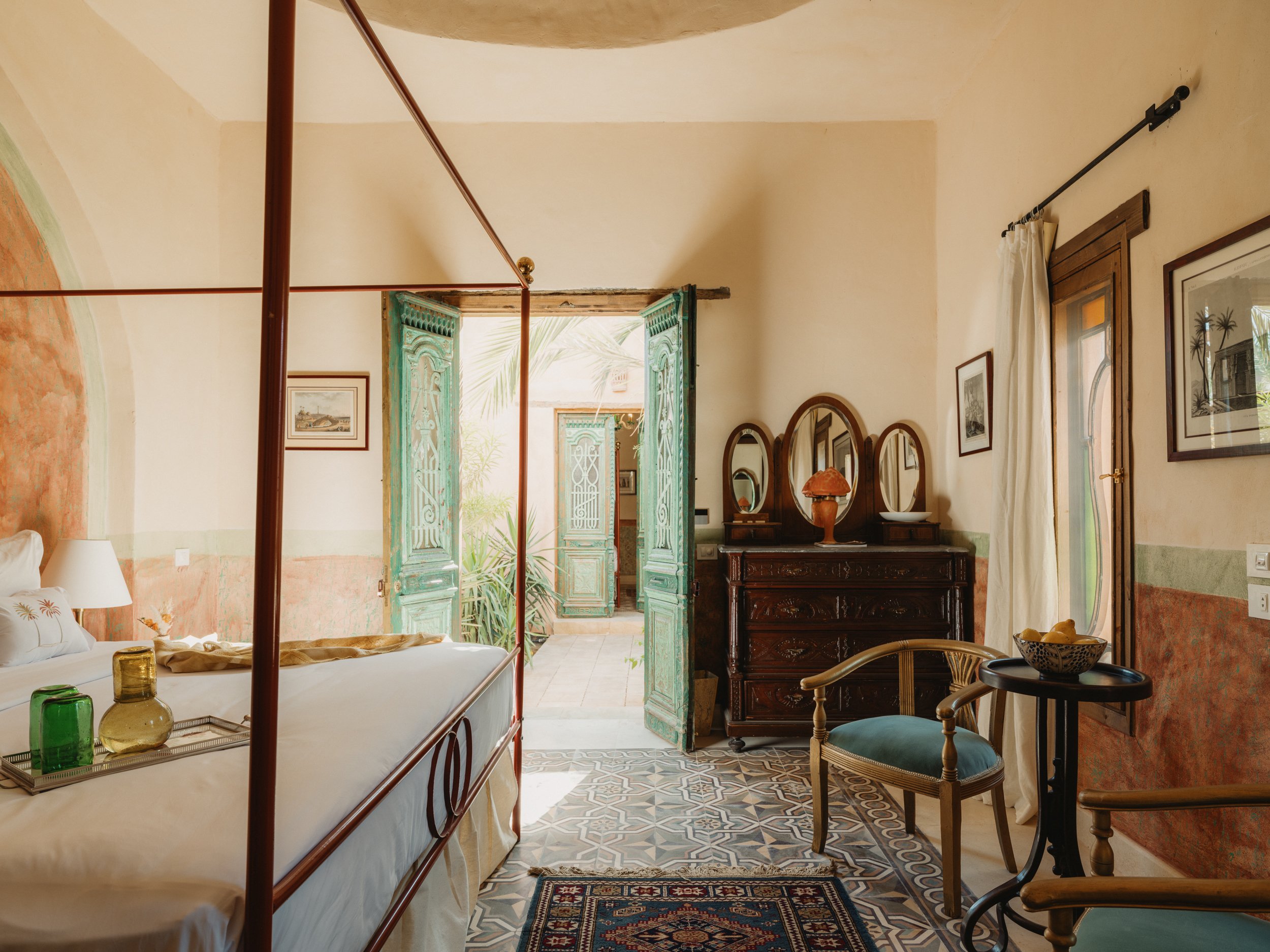
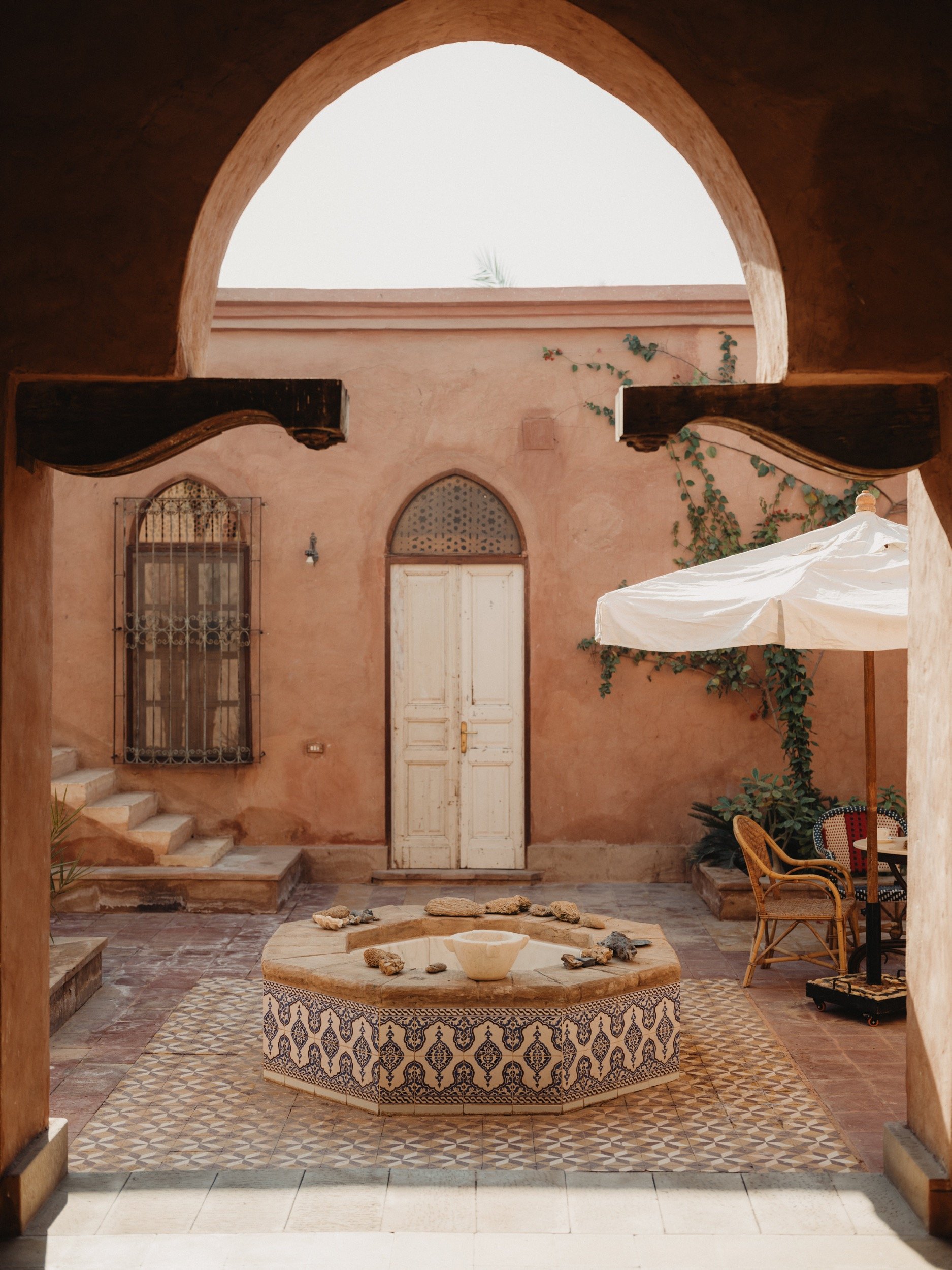
No two of the rooms are the same, which is what happens when a house is gathered rather than drawn.
Where the day goes
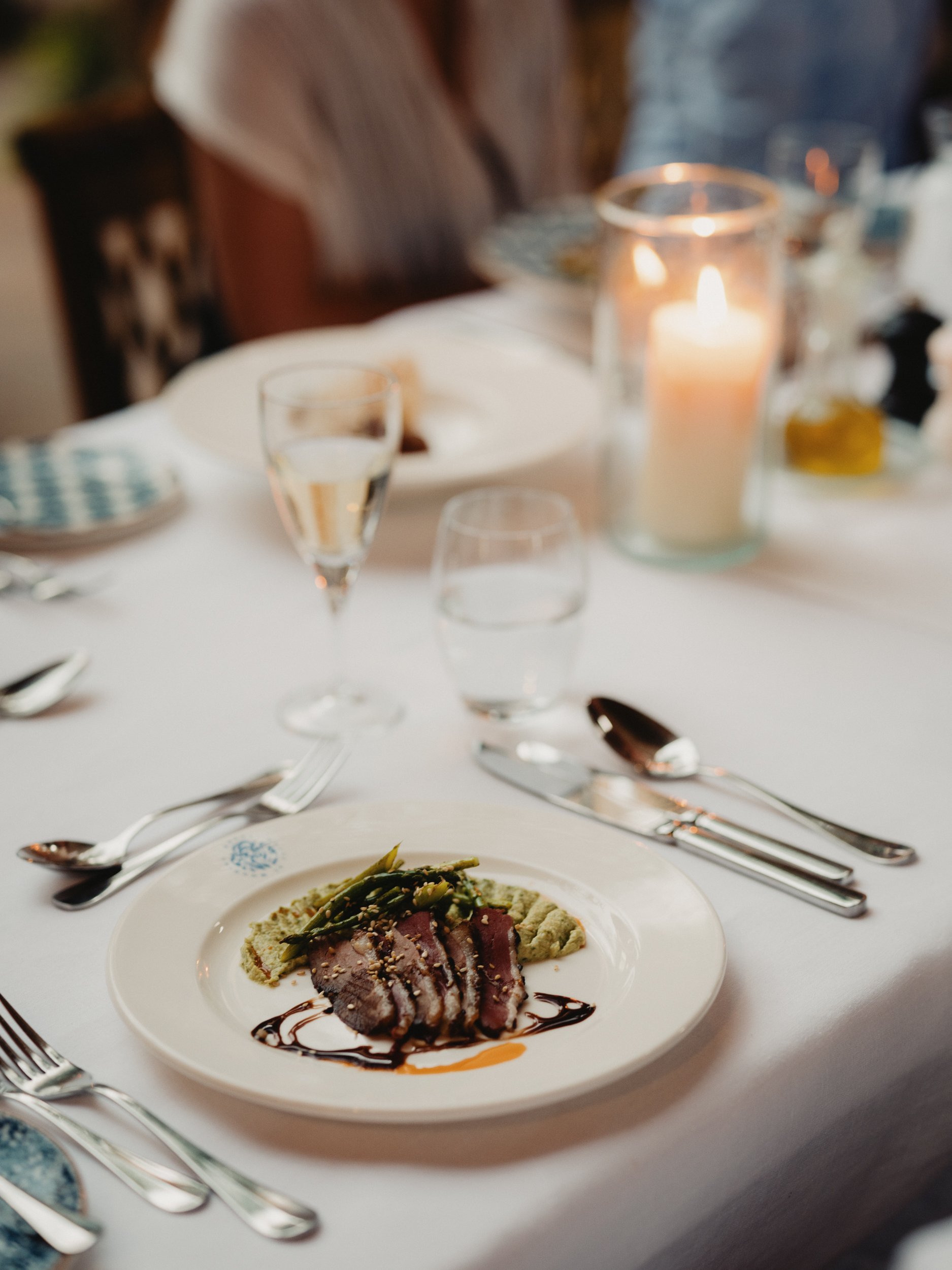
Dinner is the set piece. Tables are laid by candlelight around the main courtyard, or in the Ottoman Room when the desert cools, the cooking Egyptian and Mediterranean and leaning on the hotel's own garden for what it puts on the plate. Nothing about it strains for a star. It feeds you well, in a room you will remember, which on this side of the river counts for a great deal. Breakfast runs late under the arcades, and the bar keeps a quiet corner for the hour after the tombs.
The rest of the day arranges itself around the pool and the shade. You go out early, while the painted chambers of the Valley of the Kings are still cool and half empty, and you come back through the middle of the day to the water and the palms. Medinet Habu and the Ramesseum are close, the Colossi closer, and across the river Karnak waits for the evening, when the light softens and the crowds thin. Al Moudira is built for that rhythm, the early start and the long, slow, unhurried afternoon.
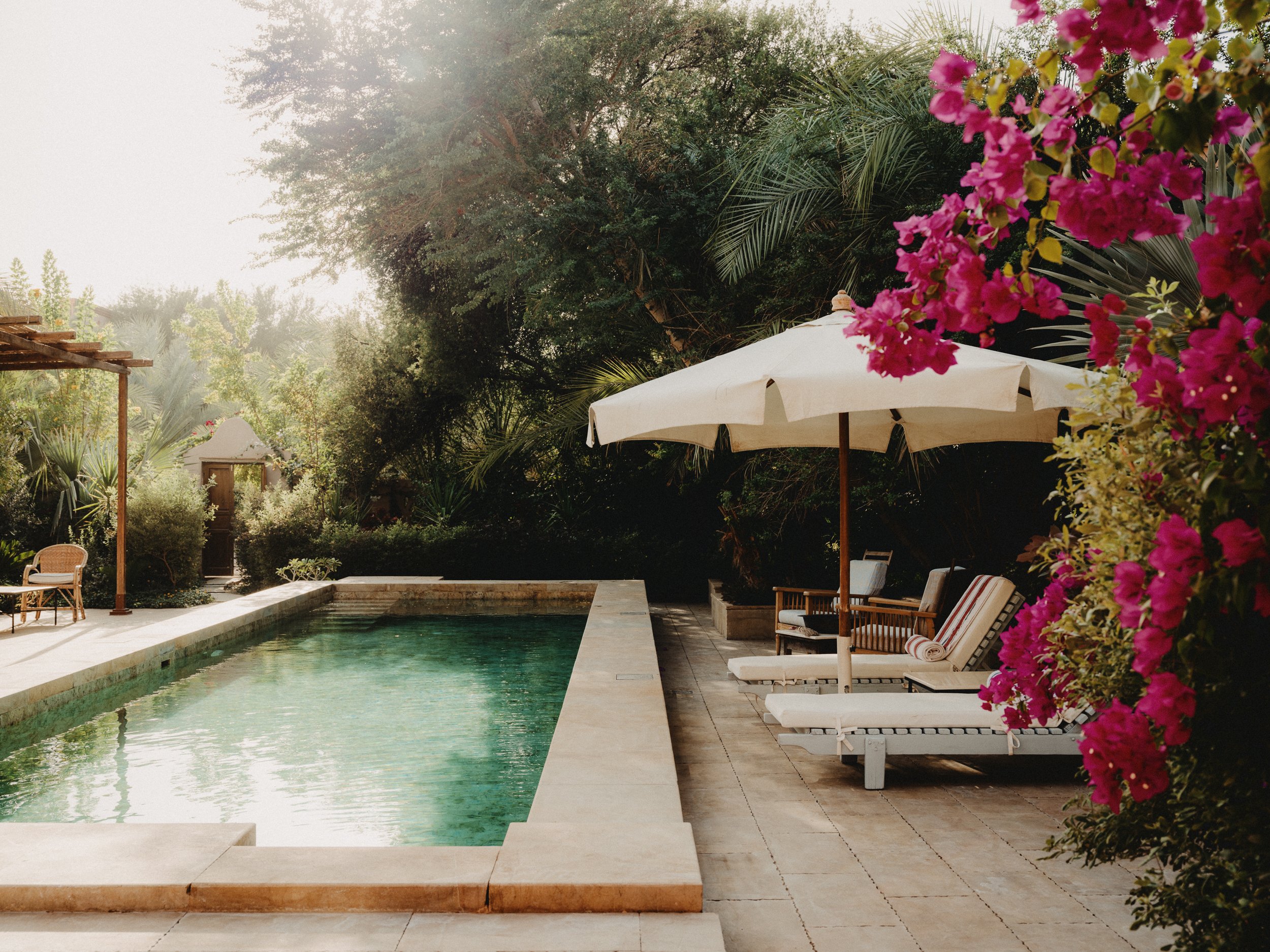
You cross for the tombs. You stay for the afternoons.
There are grander hotels in Egypt, and slicker ones. Few have this much character, and none have quite this address. Al Moudira puts the Theban necropolis on the doorstep, then hands you a big pool, a shaded courtyard and rooms that were made one at a time to come back to. It is a fair drive from the airport, and the west bank goes quiet after dark, which is rather the point. Cross for the tombs and the temples, then give the place a few nights and let Luxor slow down around you.
Photos: Al Moudira (official), with credit.