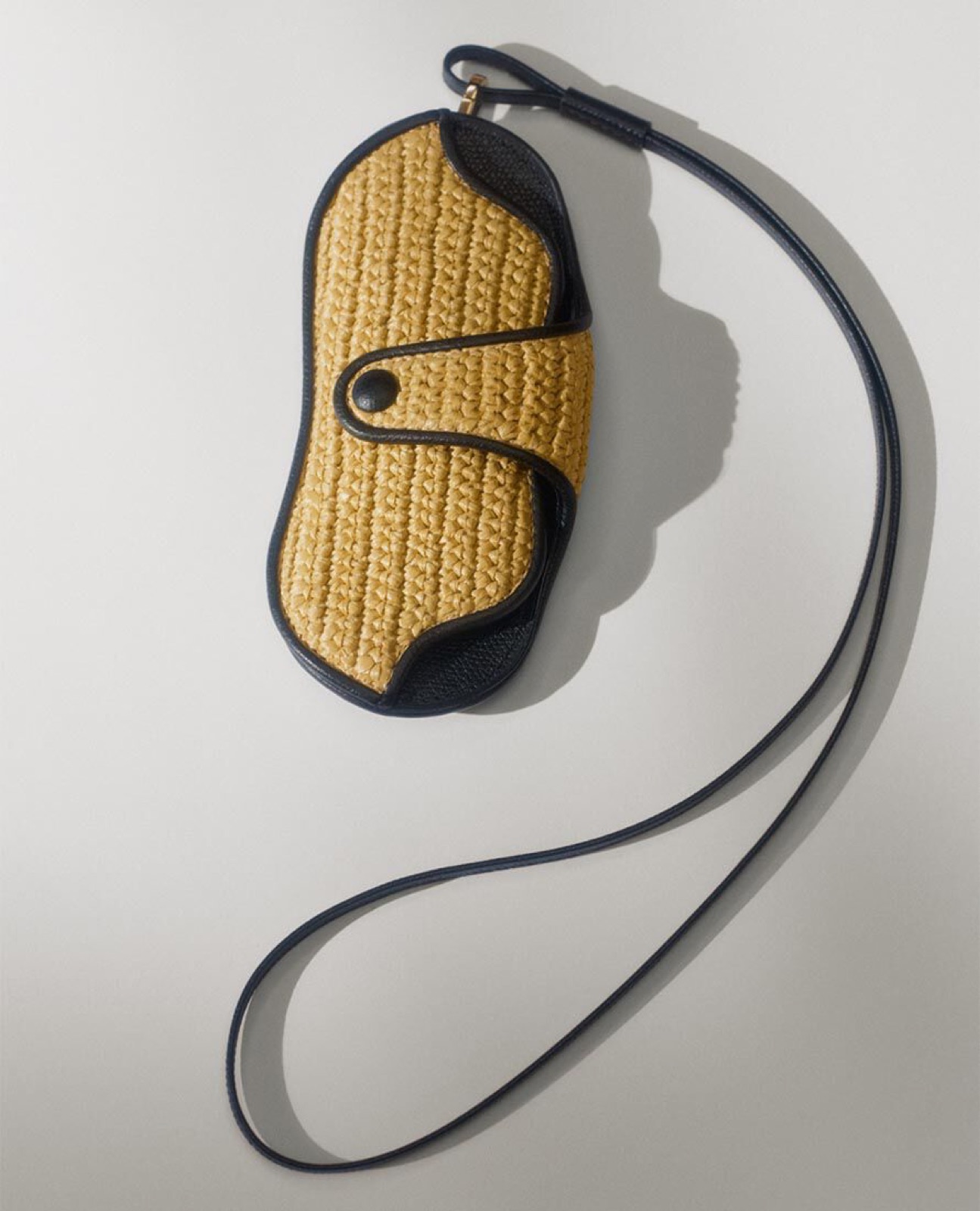
The Object
The best travel objects announce nothing. You notice them late, on the third trip, when the thing has already earned its corner of the wardrobe. Valextra makes objects like that.
The house began in 1937, when Giovanni Fontana opened a workshop on Piazza San Babila in Milan. The name is plain arithmetic: valigia, the Italian word for suitcase, plus extra. Fontana was an engineer before he was a leather man, and it shows in everything the house has made since. Corners are solved rather than decorated. The fine pinhole calf most associated with the brand, called Millepunte, hides scuffs the way good tailoring hides a heavy lunch.
We keep coming back to one piece in particular. In 1961 Valextra drew up the Soft Avietta, a bag built to the exact arithmetic of a forty-eight hour trip. Two chambers, one for clothes and one for paper, so the shirt never meets the folder. It is the rare weekend bag that respects the fact that a weekend has a shape.
Restraint is not the absence of a logo. It is the confidence to leave one off.
There is no monogram on the outside, no hardware shouting the price. Milan tends to trust that the person carrying the thing already knows what it is, and does not need the street to confirm it. The house won the first Compasso d'Oro ever awarded, in 1954, for the 24 Ore day bag, and it has kept that engineer's austerity through every change of fashion since.
Later work stayed on the same line. The Iside, from 2011, folds a rigid pyramidal profile into something you can actually carry to dinner, its geometry so exact it looks machined until you handle it. Neo Capital took a majority stake in 2013 and, to their credit, left the temperature alone. Valextra reads much the same today as it did then, cool and faintly severe.
We are wary of the word investment when it is used to sell a handbag. But there is a real argument for owning one deliberate object instead of five loud ones, and the Avietta is where we would start. It is not cheap. It is also in no hurry to be liked. You buy it once, you carry it for twenty years, and somewhere over the Alps a stranger who knows leather gives you a small, private nod.
That nod is the whole point. It is the opposite of a status bag, which needs an audience. This asks only for you, a gate, and somewhere worth the forty-eight hours.
One selection at a time, in your inbox. Subscribe →