The Object
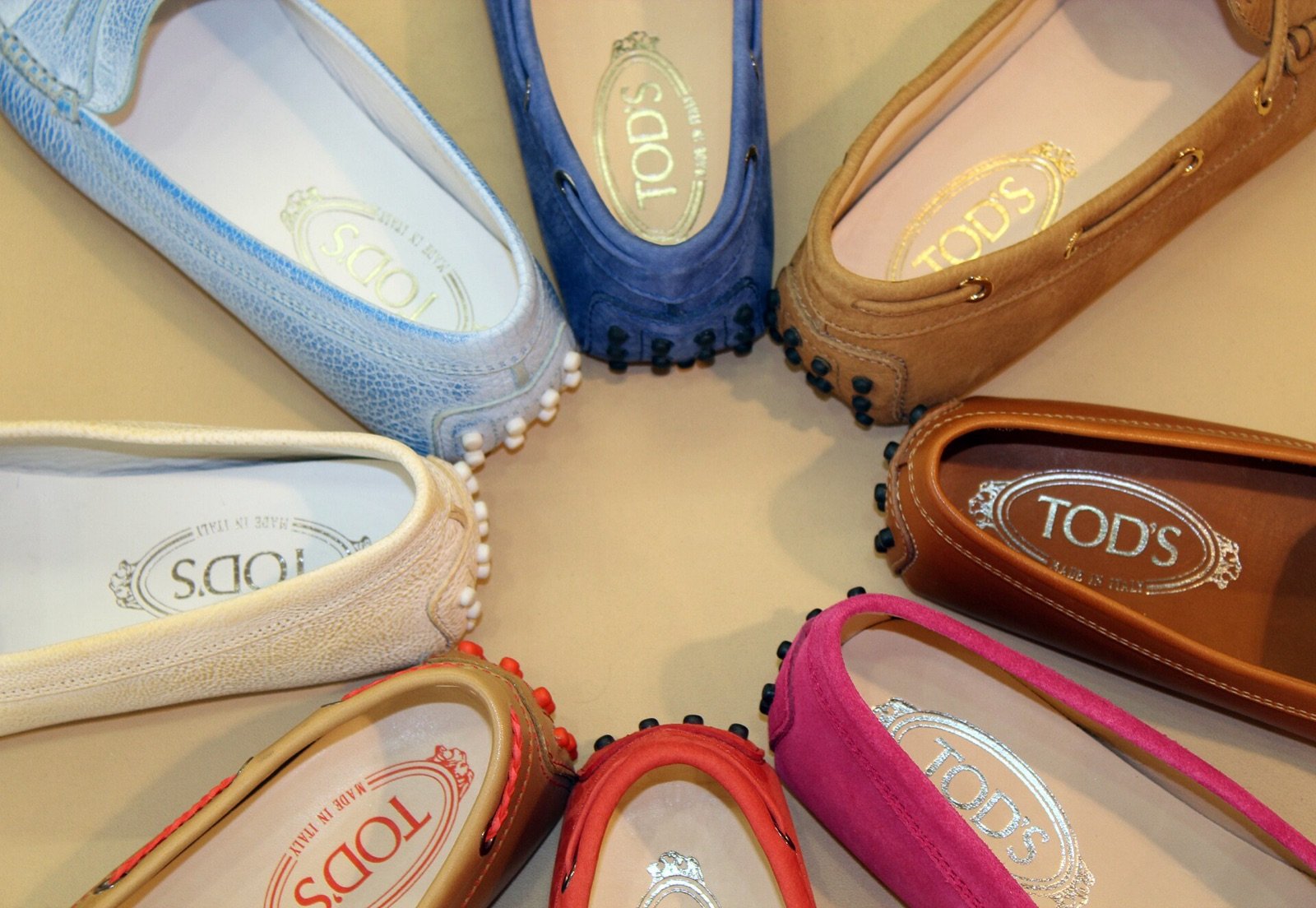
We keep a pair by the door, next to the car keys, which is roughly where they belong. The Tod's Gommino is not a shoe you reason your way into. You put it on, feel the leather give, and understand it in the first ten steps across a tiled floor.
Diego Della Valle registered the name J.P. Tod's in 1978, lifted from a Boston telephone directory because it read cleanly in any accent. The driving moccasin came a year later, in 1979. The family had been making shoes in the Marche since the 1920s, and the Gommino pointed that inheritance at one narrow act, the foot on a pedal.
Tod's did not invent the driving shoe. Italian racing drivers in the 1950s already wore narrow leather shoes with rubber nubs underneath, the better to feel the pedals. What Della Valle did was refine the idea until it could leave the car. Turn a Gommino over and you find the point of it. The sole carries 133 small rubber studs, the gommini that give the shoe its name, gomma being the Italian for rubber. They do not stop at the sole. They climb the back of the heel, so a foot braced on a floor mat still holds. The studs vary in size for grip. It is engineering dressed as a loafer.
The leather is soft and unlined, cut from as few pieces as the shape allows and hand-stitched so the seams sit where the foot flexes and nowhere it would rub. The construction has barely changed since 1979. That is rare, and it is deliberate.
A shoe you can drive in, walk a city in, and forget you are wearing. That last part is the hardest thing to build.
It became an emblem through good company. Della Valle asked Luca di Montezemolo to pass a pair to Gianni Agnelli, and the Fiat patriarch, who dressed by his own rules and broke most of the others, wore them in public. Agnelli could make a watch worn over the shirt cuff look like doctrine. The Gommino caught the same updraught. Diana followed, then Hollywood, then everyone who wanted the Agnelli ease without the Agnelli fortune.
What we like is how little it announces. In a car park above a Riviera cove at the end of August, among the loud trainers and the louder watches, the Gommino is the quiet signal that someone knows. It suits the way the Mediterranean actually moves in summer. A drive down from the hills, a long lunch, bare ankles, no socks, nothing to polish.
They are not cheap, and they do not pretend to last forever. Suede drivers rarely do. For a few summers, though, they are the most honest shoe we own, cut for a country that treats the drive to dinner as part of the dinner.