The Object
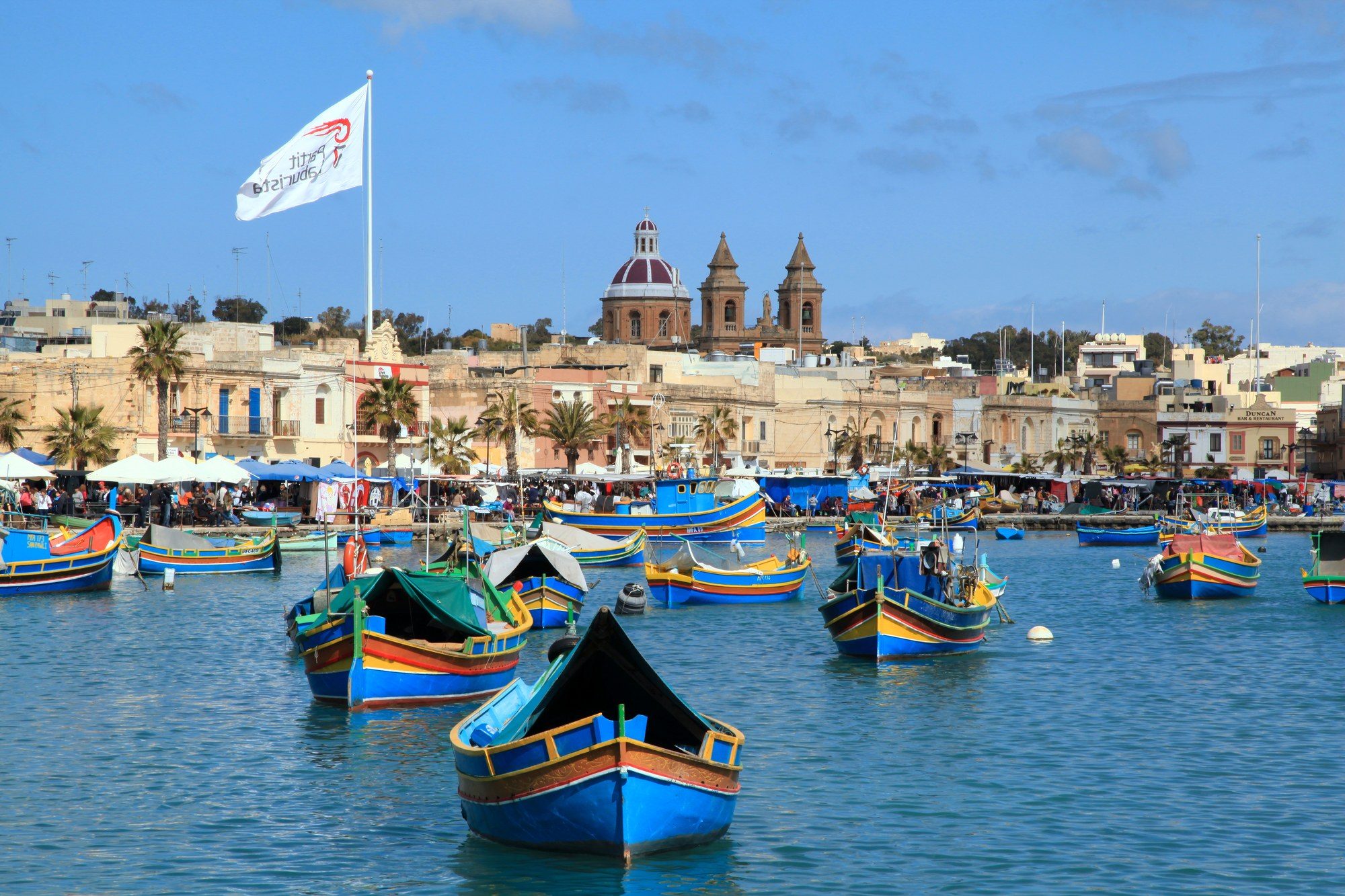
Come down to Marsaxlokk on a Sunday morning and the harbour is a paint chart. The luzzijiet ride at their moorings in yellow, red, green and blue, hulls doubling in the water, while the quay behind them fills with trays of fish still smelling of the night's work. Most of the island's fishing fleet is based here, and on Sundays the catch is sold on the stones rather than trucked to the market in Marsa.
The boat itself is a plain piece of sea logic dressed up. It is carvel-built and double-ended, pointed at bow and stern so it can take a following sea without broaching, sturdy in the beam and high enough at the freeboard to work in weather. Sails and oars gave way to diesel long ago, and a small engine now sits where the mast used to. What has not changed is the colour, or the pair of eyes painted on either side of the prow.
The colour is not decoration alone. Above the waterline runs a band, the mustaċċ, whose shade once told you where a boat came from: ochre for Marsaxlokk and Marsaskala, red for St Paul's Bay, lemon for the harbours further north, black when the family was in mourning. Anthropologists have mapped the code, building on Desmond Morris's survey of the fleet in the 1970s. It is folk heraldry, worn on the hull.
A plain piece of sea logic, dressed up in a paint chart, watching the water back.
The eyes are the part everyone photographs. They are usually said to descend from an ancient custom, the eye of Osiris or of Horus, carried west by Phoenician and Greek sailors and kept alive on Maltese wood to protect the fisherman while he works. That lineage is heritage rather than proven fact: the luzzu as a type is only about a century old, an early-twentieth-century development thought to have grown out of the Italian gozzo, which is also where its name comes from, by way of the Sicilian guzzu. The eye may be old superstition or later flourish. Either way it does the job of making you look twice.
For all its symbolism the luzzu is a tool, and tools follow their work. A few hundred are thought to remain, most still fishing, some rebuilt as passenger boats for the visitors who come for exactly this view. No new wooden ones are being built. The men who make and mend them are ageing, and the fear along the quay is that carbon-fibre hulls, cheaper and lighter and blank, will quietly finish the line.
Malta has moved to slow that. A state preservation scheme helps owners keep the old wooden boats afloat, and the craft of building a traditional Maltese boat has been entered on the national inventory of intangible cultural heritage. It is worth being precise about what that protects: the skill of the boatwright, not the object bobbing in front of you, and it is a national listing, not a UNESCO one. The luzzu is safeguarded the way a language is, by keeping people who can still speak it.
That is the reason to stand on the Marsaxlokk quay while you can. This is not a museum piece put out for the season. It is a working boat that happens to be beautiful, which is the rarest kind of beautiful there is.
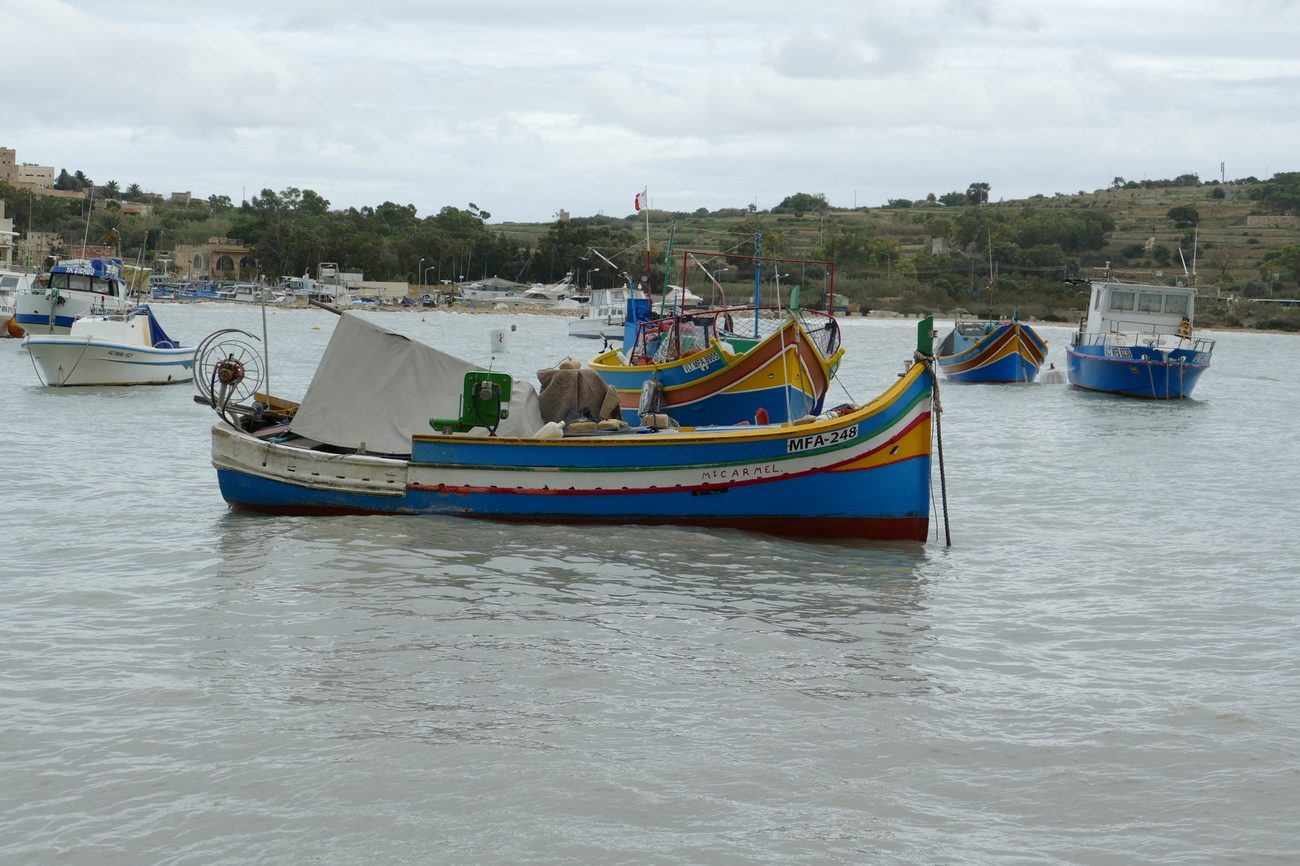
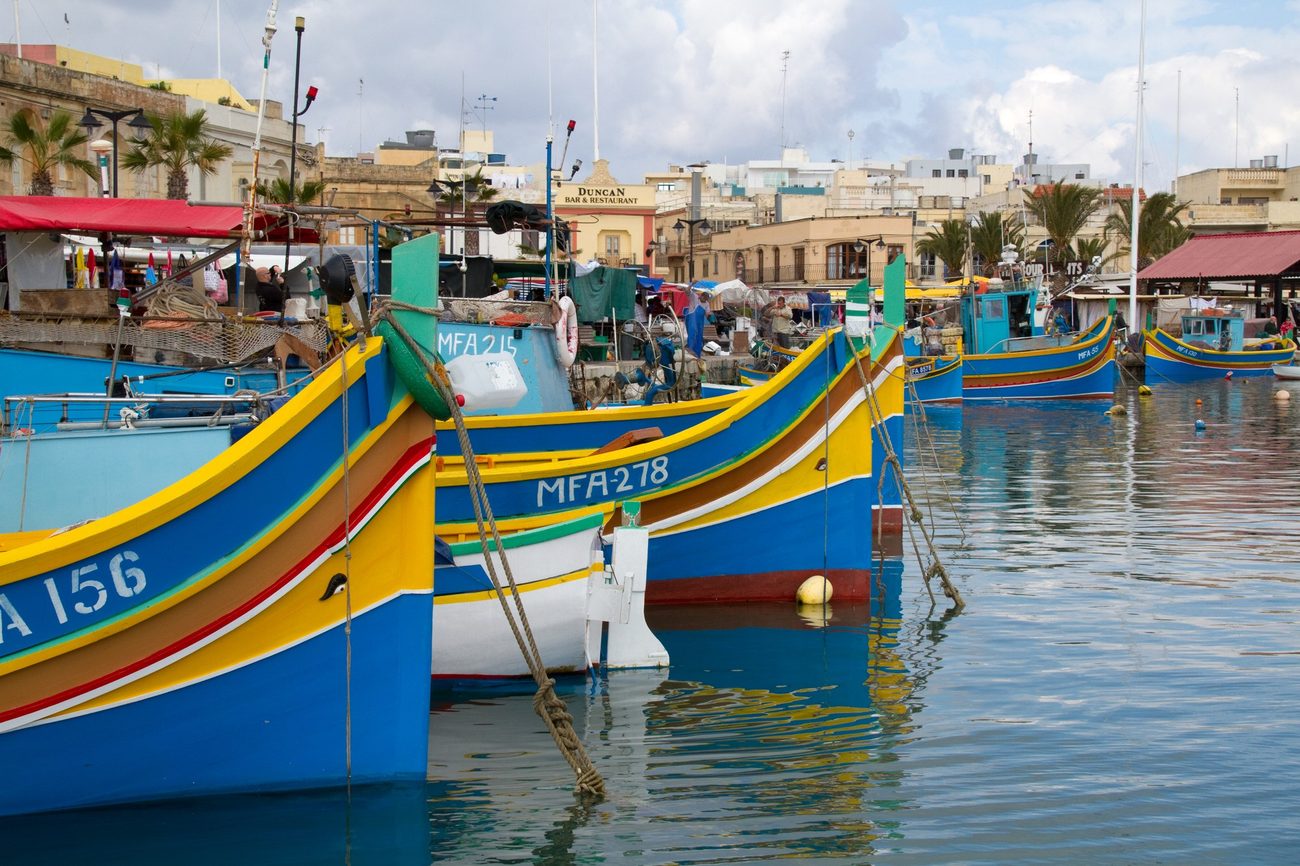
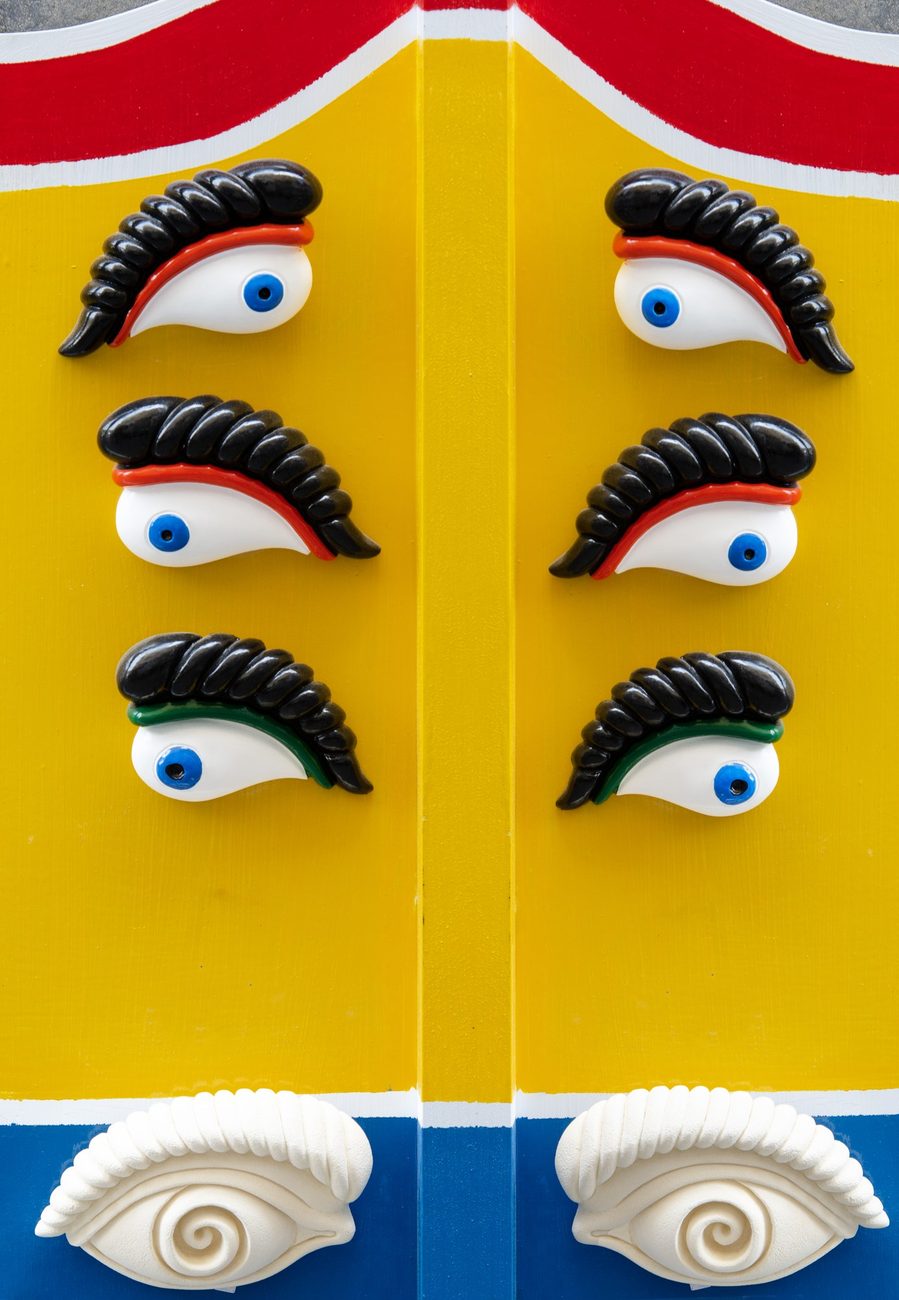
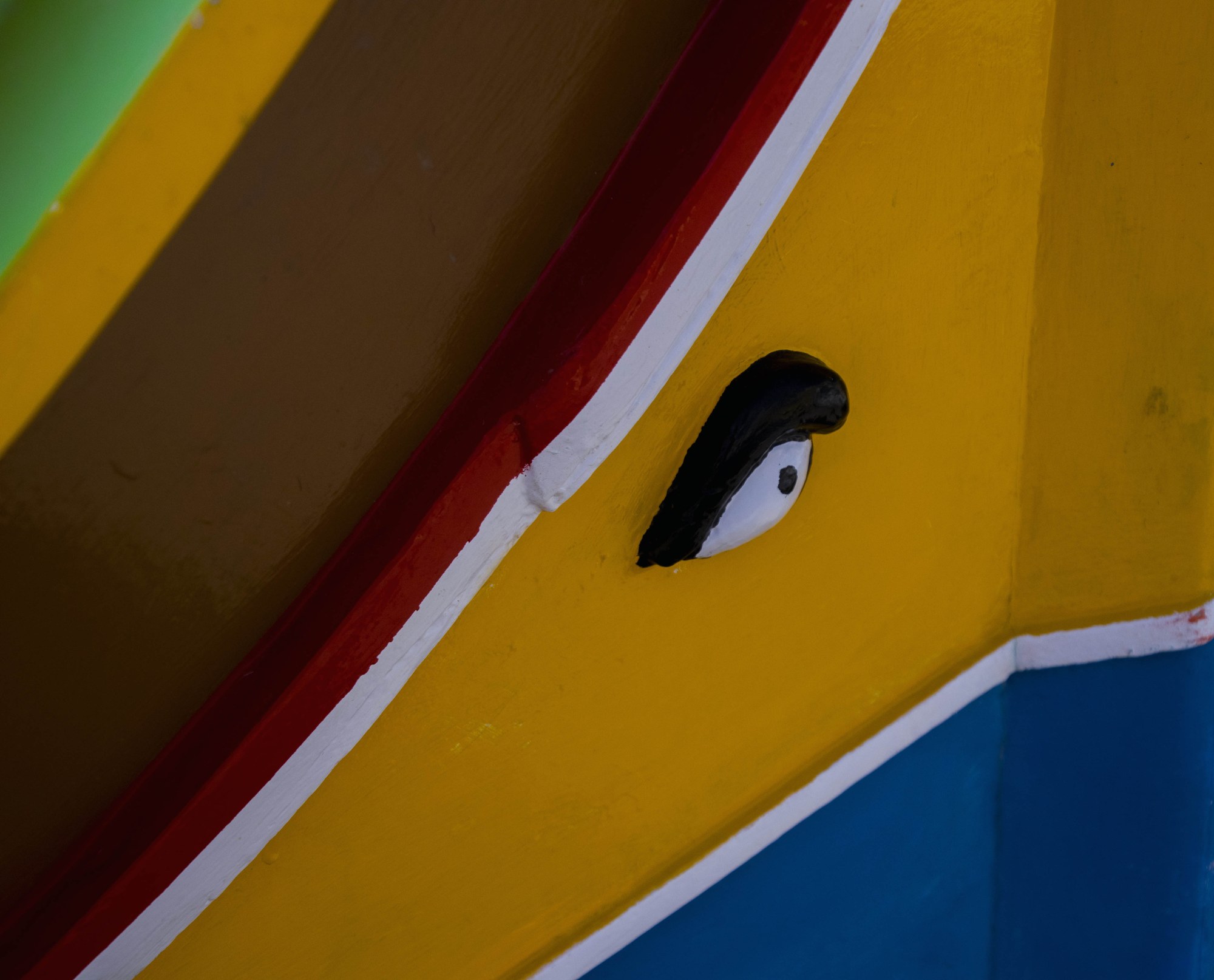
The fleet at Marsaxlokk, and the eye at the bow.
Photos: Kritzolina (CC BY-SA 4.0); Tony Hisgett (CC BY 2.0); Renata Apan (CC BY-SA 4.0); AntonellaVella (CC BY-SA 4.0), all Wikimedia Commons.